
Cardiomyopathy natural history, complications and prognosis
Editor-In-Chief: C. Michael Gibson, M.S., M.D. [1]; Associate Editor(s)-in-Chief: Lina Ya’qoub, MD; Edzel Lorraine Co, DMD, MD[2]
Overview
Cardiomyopathy will continue to progressively worsen, unless intervened on. As the function of the heart deteriorates, symptoms of heart failure become apparent. On the other hand, defects in ion channels and hypertrophic cardiomyopathy can present with fatal arrhythmias and sudden cardiac death without the preceding symptoms of heart failure. In general, complications and sequelae of cardiomyopathy include heart failure, arrythmia, thromboembolic disease, and sudden cardiac death. Prognosis of patients depends on the etiology of the cardiomyopathy and the initiation of management, whether medical, surgical or device therapy. Patients with cardiomyopathy are usually treated with medical treatment similar to heart failure patients, although some patients do not respond well to medications and continue to have worsening heart function, which may require heart transplant eventually. Those patients at high risk for fatal arrhythmias and sudden cardiac death should receive device therapy with implantable cardioverter defibrillator (ICD) or cardiac resynchronization therapy (CRT).
Natural History
- The symptoms of cardiolyopathy usually develop secondary to a predisposing factor and an underlying cause and start with symptoms such as fatigue, fever, and shortness of breath.
- Cardiomyopathy will continue to progressively worsen, unless intervened on.[1][2]
Complications
Cardiomyopathy gets worse unless treated. The most likely complications are:[3]
Prognosis
Prognosis of patients depends on the etiology of the cardiomyopathy and the initiation of management, whether medical, surgical or device therapy:
- Patients with cardiomyopathy are usually treated with medical treatment similar to heart failure patients, although some patients do not respond well to medications and continue to have worsening heart function, which may require heart transplant eventually.
- Those patients at high risk for fatal arrhythmias and sudden cardiac death should receive device therapy with implantable cardioverter defibrillator (ICD) or cardiac resynchronization therapy (CRT).[1][2][3]
-
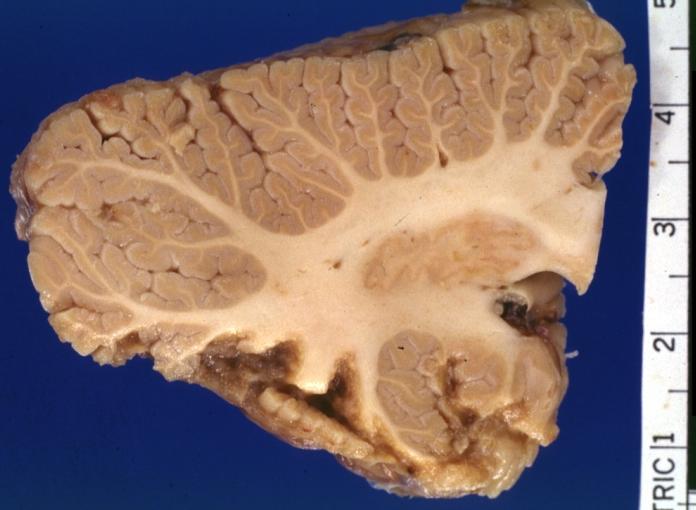 Brain: Infarct: Healing large MCA and PICA probably embolic 64 year old female chronic obstructive pulmonary disease and cardiomyopathy with atrial fibrillation
 -
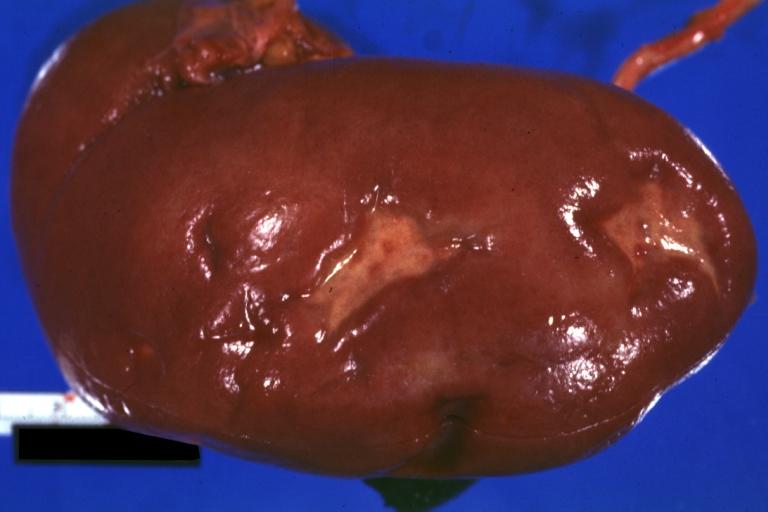 Kidney: Infarct Remote: Gross external view with capsule removed two old and very typical infarct scars 27yobf with dilated cardiomyopathy
 -
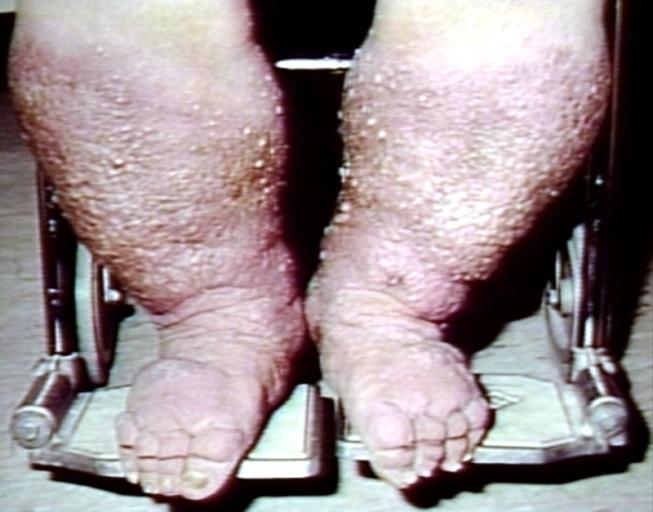 Excessive pedal edema due to right heart failure in a patient with hypertrophic cardiomyopathy (due to functional aortic stenosis from narrow outflow tract)


References
- ↑ 1.0 1.1 Sisakian H (June 2014). “Cardiomyopathies: Evolution of pathogenesis concepts and potential for new therapies”. World J Cardiol. 6 (6): 478–94. doi:10.4330/wjc.v6.i6.478. PMC 4072838. PMID 24976920.
- ↑ 2.0 2.1 Al-Khatib SM, Fonarow GC, Joglar JA, Inoue L, Mark DB, Lee KL, Kadish A, Bardy G, Sanders GD (June 2017). “Primary Prevention Implantable Cardioverter Defibrillators in Patients With Nonischemic Cardiomyopathy: A Meta-analysis”. JAMA Cardiol. 2 (6): 685–688. doi:10.1001/jamacardio.2017.0630. PMID 28355432. Vancouver style error: initials (help)
- ↑ 3.0 3.1 Wexler RK, Elton T, Pleister A, Feldman D (May 2009). “Cardiomyopathy: an overview”. Am Fam Physician. 79 (9): 778–84. PMID 20141097.
© 2026 MyEClinic – IFTM Institut für Telematik in der Medizin GmbH