
Diphyllobothriasis classification
Editor-In-Chief: C. Michael Gibson, M.S., M.D. [1]; Associate Editor(s)-in-Chief: Furqan M M. M.B.B.S[2]
Overview
There is no known classification for diphyllobothriasis but it may be classified on the basis of the organisms causing it.
Classification
Diphyllobothriasis can be classified on the basis of various species responsible for it. The species of Diphyllobothrium involved in the development of Diphyllobothriasis are:[1][2]
- Diphyllobothrium latum (the fish or broad tapeworm)
- Diphyllobothrium nihonkaiense
- Diphyllobothrium dendriticum
- Diphyllobothrium cameroni
- Diphyllobothrium cordatum
- Diphyllobothrium hians
- Diphyllobothrium lanceolatum
- Diphyllobothrium orcini
- Diphyllobothrium pacificum
- Diphyllobothrium stemmacephalum
- Diphyllobothrium scoticum
Gallery
-
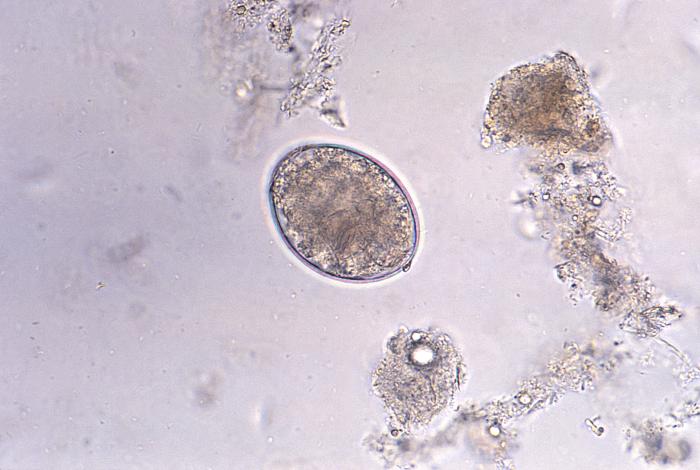 Photomicrograph reveals the presence of a cestode, Diphyllobothrium latum, or “broad” tapeworm, egg, which is described as oval or ellipsoidal, and range in size from 55µm to 75µm by 40µm to 50µm (400X mag). Source: https://phil.cdc.gov/phil/home.asp
 -
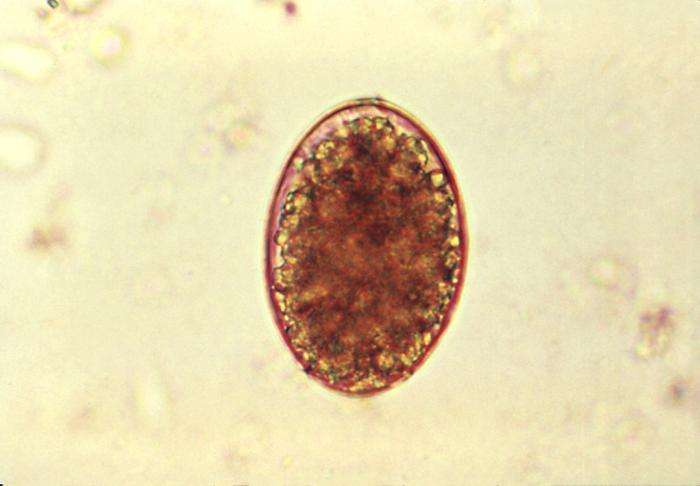 Micrograph reveals an egg of tapeworm cestode parasite Diphyllobothrium latum. Source: https://phil.cdc.gov/phil/home.asp
 -
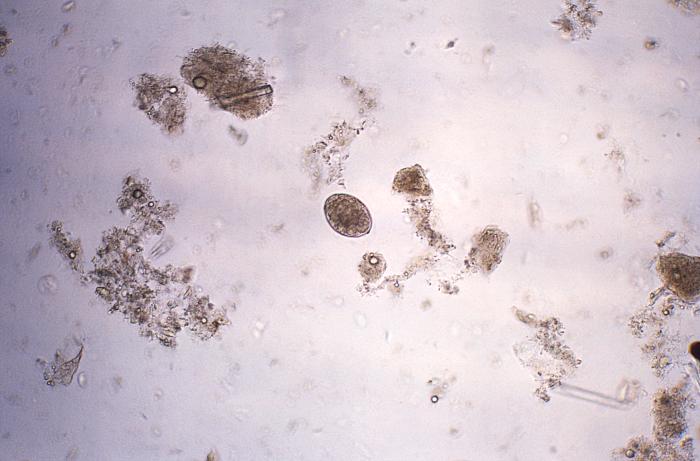 Photomicrograph revealed the presence of a cestode, Diphyllobothrium latum, or “fish” or “broad” tapeworm, egg (128X mag). Source: https://phil.cdc.gov/phil/home.asp


References
- ↑ Scholz T, Garcia HH, Kuchta R, Wicht B (2009). “Update on the human broad tapeworm (genus diphyllobothrium), including clinical relevance”. Clin. Microbiol. Rev. 22 (1): 146–60, Table of Contents. doi:10.1128/CMR.00033-08. PMC 2620636. PMID 19136438.
- ↑ Baron, Samuel (1996). Medical microbiology. Galveston, Tex: University of Texas Medical Branch at Galveston. ISBN 0963117211.
© 2026 MyEClinic – IFTM Institut für Telematik in der Medizin GmbH