
Hemangioblastoma
Editor-In-Chief: C. Michael Gibson, M.S., M.D. [1] Associate Editor(s)-in-Chief: Fahimeh Shojaei, M.D.
Overview
Hemangioblastoma of the central nervous system is a benign tumor (WHO grade I) that is typically cystic and can occur throughout the central nervous system. It is a tumor composed of hemangioblasts, a type of stem cell that normally give rise to blood vessels or blood cells. Its name breaks down to Greek roots as follows: Haema (blood), angeion (vessel), blastos (embryonic), oma (tumor).
Locations
Predominant locations include the cerebellum and spinal cord.
Causes
Hemangioblastomas can occur “sporadically”, or as a component of the von Hippel-Lindau disease (VHL).
VHL is inherited in an autosomal dominant pattern. The VHL gene behaves as a tumor suppressor, i.e. mutation of the VHL gene predisposes individuals to development of a wide variety of benign and malignant tumors. These tumors occur in target tissues such as the kidneys, adrenal gland, central nervous system and retina.
The most common tumors in VHL besides hemangioblastomas are pheochromocytomas, retinal angiomas, clear cell renal cancer and renal cysts, pancreatic cysts and pancreatic islet cell tumors, and cystadenomas of the epididymis. All of these tumors can also occur sporadically outside VHL, presumably with a similar underlying pathophysiology.)
Presentation
These tumors, whether benign (usual) or malignant (rarer), may cause clinically significant problems, for example angiomas in the brain or spinal cord may press on nerve or brain tissue.
As an angioma grows, the walls of the blood vessels may weaken and leak, causing damage to surrounding tissues. Blood leakage from angiomas in the retina can interfere with vision.
Cysts may also grow around angiomas.
Cerebral hemangioblastomas are commonly seen at MR imaging as cystic lesion with a solid enhancing mural nodule. The solid nodule give low signal on diffusion weighted imaging (DWI) with resultant increase in the apparent diffusion coefficient (ADC).
-
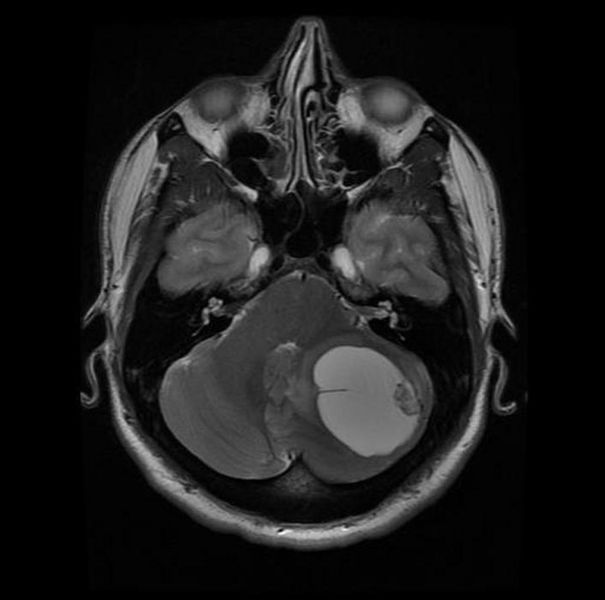 T2
T2 -
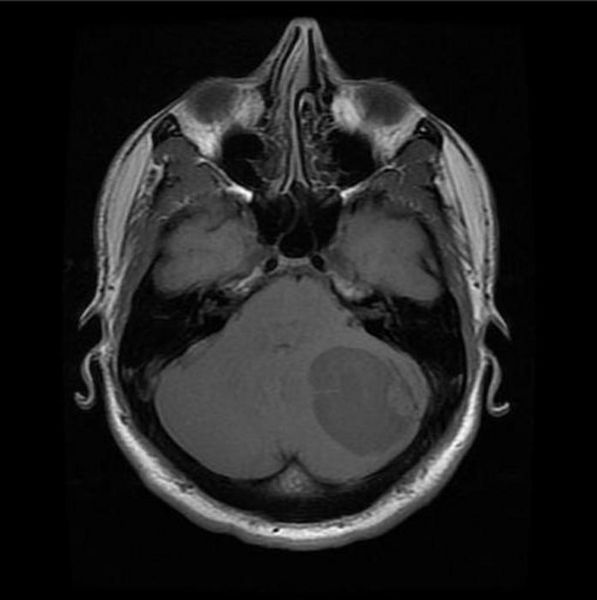 T1
T1 -
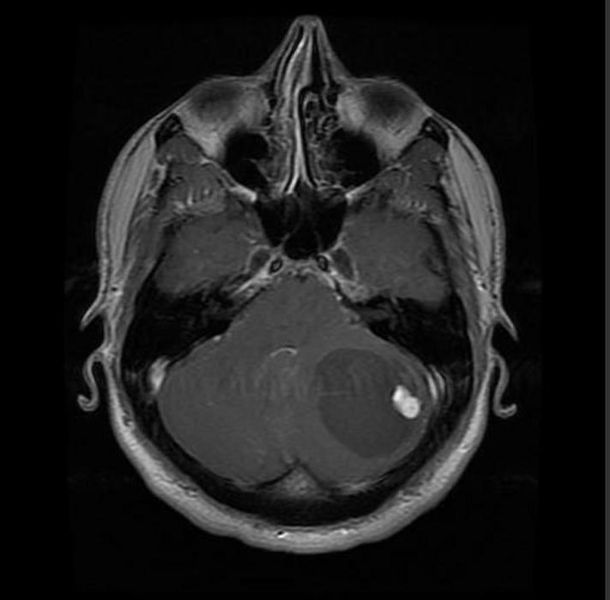 T1 with GAD
 -
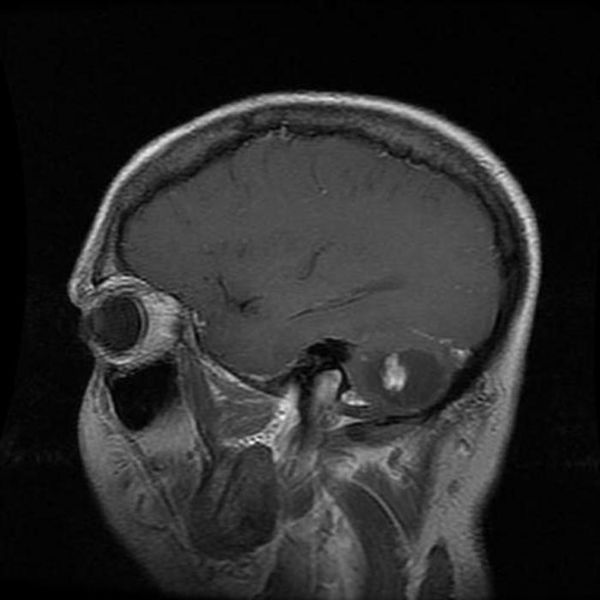 T1 with GAD


Differentiating hemangioblastoma from Other Diseases
Hemangioblastoma must be differentiated from other diseases that cause seizure, visual disturbance, and constitutional symptoms, such as:
- Oligodendroglioma
- Meningioma
- Astrocytoma
- Pituitary adenoma
- Schwannoma
- primary CNS lymphoma
- Medulloblastoma
- Ependymoma
- Craniopharyngioma
- Pinealoma
- AV malformation
- Brain aneurysm
- Bacterial brain abscess
- Tuberculosis
- Toxoplasmosis
- Hydatid cyst
- CNS cryptococcosis
- CNS aspergillosis
- Brain metastasis
For more information click here.
External links
© 2026 MyEClinic – IFTM Institut für Telematik in der Medizin GmbH