
Intracerebral hemorrhage CT
Editor-In-Chief: C. Michael Gibson, M.S., M.D. [1]; Associate Editor(s)-in-Chief: Sara Mehrsefat, M.D. [2]
Overview
CT is very sensitive for identifying acute hemorrhage and is considered the gold standard.[1][2]
CT
Noncontrast cranial CT is very sensitive for identifying acute hemorrhage and is considered the gold standard.[1][2][3]
The following information can be defined by CT scan:
- The size and location of the hematoma
- Ventricular extension of the hematoma
- Presence of edema
- Brain shifts and herniation
| Type of hemorrhage | Radiologic criteria |
|---|---|
| Hyperacute |
|
| After one week |
|
| Chronic |
|
| Hemorrhagic transformation of a cerebral infarct |
|
Images
The following are images associated with intracerebral haemorrhage.[4]
-
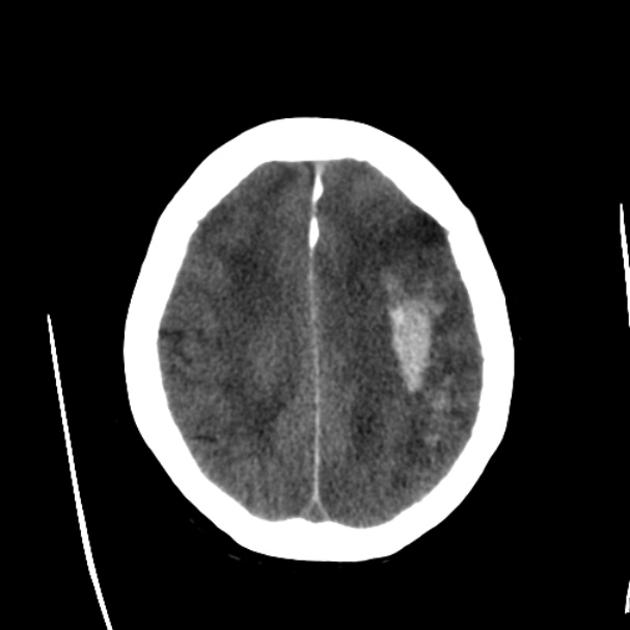 Large hemorrhagic focus in the left cerebral hemisphere that extends to the infratentorial region with a significant mass effect
 -
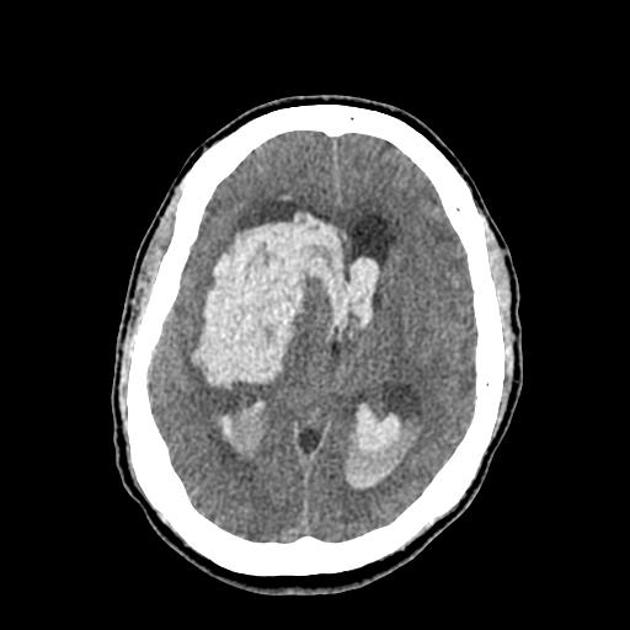 Large hemorrhagic focus in the left cerebral hemisphere that extends to the infratentorial region with a significant mass effect
 -
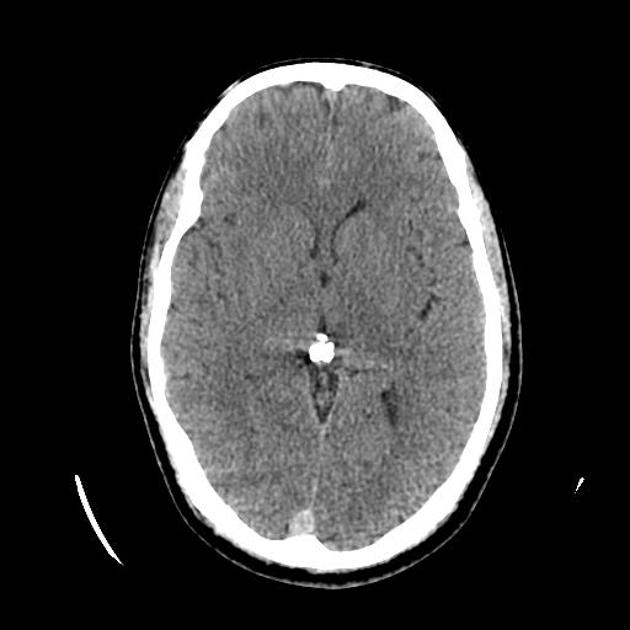 Multiple descrete bilateral supratentorial intraparenchymal cerebral haemorrhage
 -
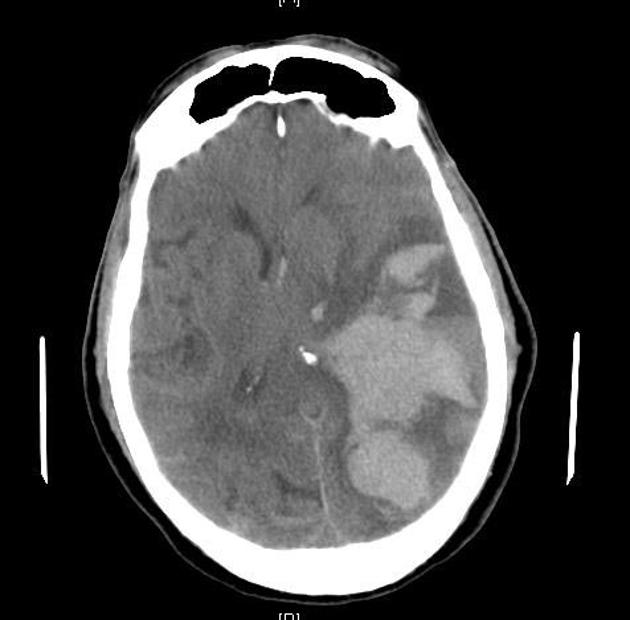 Very large intracerebral haemorrhage on the left extends to involve the ventricles. It exerts marked mass effect
 -
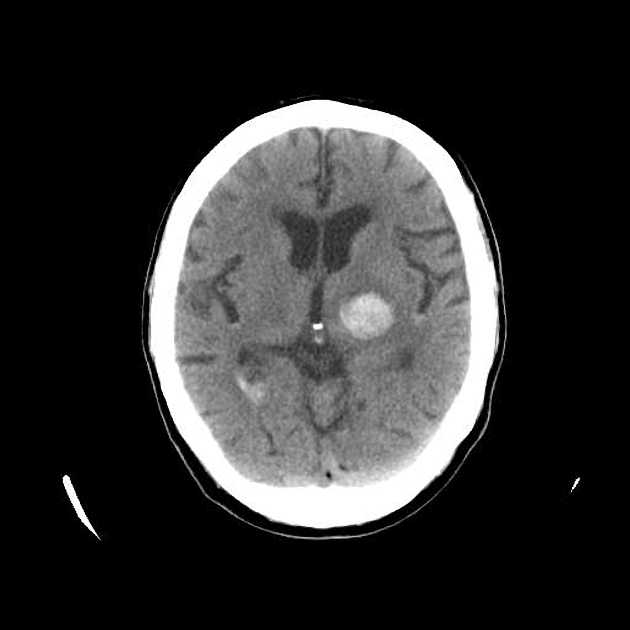 Hemorrhagic stroke in the left basal ganglia


References
- ↑ 1.0 1.1 Fiebach JB, Schellinger PD, Gass A, Kucinski T, Siebler M, Villringer A, Olkers P, Hirsch JG, Heiland S, Wilde P, Jansen O, Röther J, Hacke W, Sartor K; Kompetenznetzwerk Schlaganfall B5. Stroke magnetic resonance imaging is accurate in hyperacute intracerebral hemorrhage: a multicenter study on the validity of stroke imaging. Stroke. 2004;35:502– 506. doi: 10.1161/01.STR.0000114203.75678.8
- ↑ 2.0 2.1 Chalela JA, Kidwell CS, Nentwich LM, Luby M, Butman JA, Demchuk AM, Hill MD, Patronas N, Latour L, Warach S. Magnetic resonance imaging and computed tomography in emergency assessment of patients with suspected acute stroke: a prospective comparison. Lancet. 2007;369:293–298. doi: 10.1016/S0140-6736(07)60151-2.
- ↑ Kidwell CS, Wintermark M (2008). “Imaging of intracranial haemorrhage”. Lancet Neurol. 7 (3): 256–67. doi:10.1016/S1474-4422(08)70041-3. PMID 18275927.
- ↑ Intracerebral Hemotrrhage https://radiopaedia.org/cases/intracerebral-haemorrhage-2 Accessed on November 9, 2016
© 2026 MyEClinic – IFTM Institut für Telematik in der Medizin GmbH