
Kerley lines
Editor-In-Chief: C. Michael Gibson, M.S., M.D. [1]; Associate Editor(s)-In-Chief: Cafer Zorkun, M.D., Ph.D. [2]
Overview
Kerley lines are a sign seen on chest x-rays with interstitial pulmonary edema. They are thin linear pulmonary opacities caused by fluid or cellular infiltration into the interstitium of the lungs. They are suggestive for the diagnosis of congestive heart failure, but are also seen in various non-cardiac conditions such as pulmonary fibrosis, interstitial deposition of heavy metal particles or carcinomatosis of the lung. Chronic Kerley B lines may be caused by fibrosis or hemosiderin deposition caused by recurrent pulmonary oedema.
Kerley A lines
Kerley A lines are longer (at least 2 cm) unbranching lines coursing diagonally from the periphery toward the hila in the inner half of the lungs. They are caused by distension of anastomotic channels between peripheral and central lymphatics of the lungs. Kerley A lines are less commonly seen than Kerley B lines. Kerley A lines are never seen without Kerley B or C lines also present.
Kerley B lines
Kerley B lines are short parallel lines at the lung periphery. These lines represent distended interlobular septa, which are usually less than 1 cm in length and parallel to one another at right angles to the pleura. They are located peripherally in contact with the pleura, but are generally absent along fissural surfaces. They may be seen in any zone but are most frequently observed at the lung bases at the costophrenic angles on the PA radiograph, and in the substernal region on lateral radiographs.
Kerley C lines
Kerley C lines are the least commonly seen of the Kerley lines. They are short, fine “spider web” polygonal opacities distributed primarily in a peripheral and subpleural location. They may represent thickening of anastomotic lymphatics or superimposition of many Kerley B lines. Keyley C lines may be associated with conditions such as pulmonary fibrosis and hypersensitivity pneumonitis.
Diagnostic Findings
-
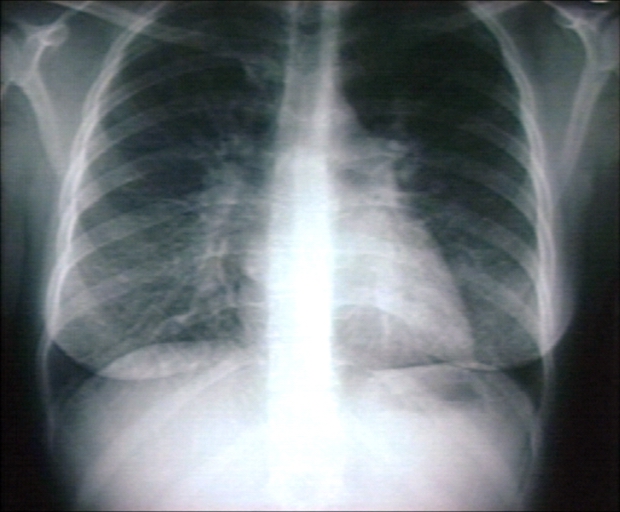 Plain film: Mitral stenosis, Kerley B lines
 -
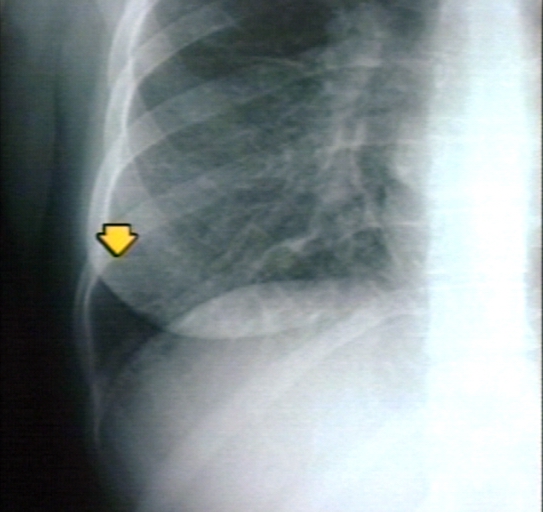 Plain film: Mitral stenosis, Kerley B lines
 -
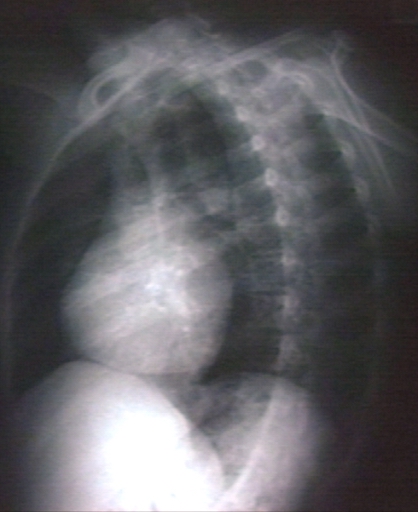 Plain film: Mitral stenosis, Kerley B lines
 -
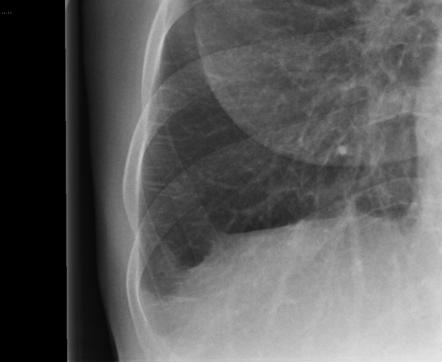 Acute heart failure due to atrial fibrillation with Kerley B lines. (Image courtesy of Radiopaedia.org)
 -
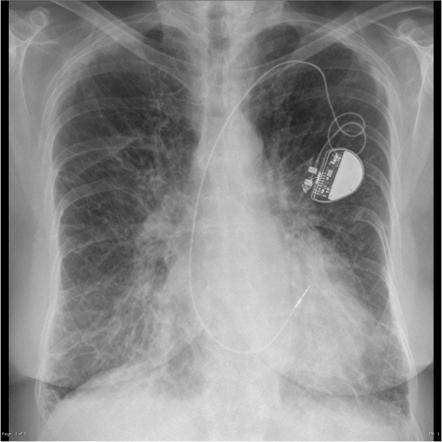 Pulmonary edema with Kerley B lines. (Image courtesy of Radiopaedia.org)
 -
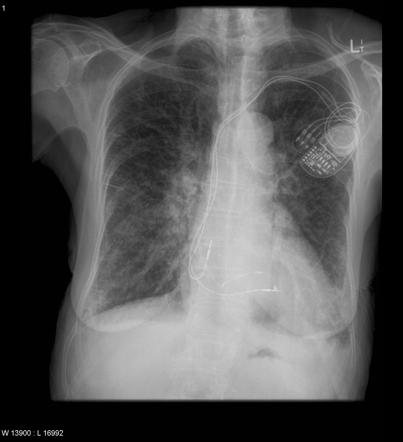 Heart failure with Kerley B lines. (Image courtesy of Radiopaedia.org)
 -
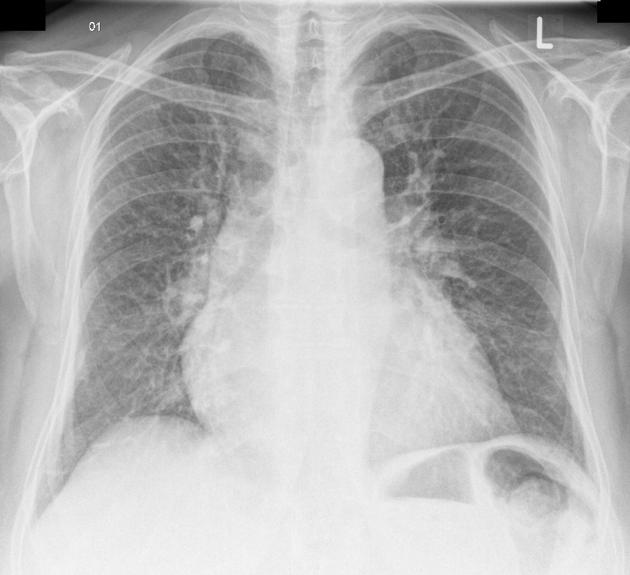 Pulmonary congestion in heart failure with Kerley B lines. (Image courtesy of Radiopaedia.org)


See also
External links
- Kerley B lines – GPnotebook.
- An example of Kerley B – hcoa.org.
- Cardiothoracic imaging – Kerley’s lines – Yale University.
- Causes of pulmonary edema – medstudents.com.br
Template:Skin and subcutaneous tissue symptoms and signs Template:Nervous and musculoskeletal system symptoms and signs Template:Urinary system symptoms and signs Template:Cognition, perception, emotional state and behaviour symptoms and signs Template:Speech and voice symptoms and signs Template:General symptoms and signs
© 2026 MyEClinic – IFTM Institut für Telematik in der Medizin GmbH