
Metastatic calcification
Editor-In-Chief: C. Michael Gibson, M.S., M.D. [1]
Overview
Metastatic calcification is deposition of calcium salts in otherwise normal tissue, because of elevated levels of calcium and other minerals in blood because of deranged metabolism, synthesis or disposal.
It occurs as opposed to dystrophic calcification where blood levels of calcium are normal.
Metastatic calcification can occur widely throughout the body but principally affects the interstitial tissues of the vasculature, kidneys, lungs, and gastric mucosa.
Dystrophic calcification occurs in necrotic tissue with normal serum calcium levels; metastatic calcification occurs in normal tissue and requires elevated serum calcium levels.
Pathological Findings
-
 This is a gross photograph of the cut section of the patient’s lung showing evidence of severe metastatic calcification. The lung tissue has a rough, firm appearance with open airways.
 -
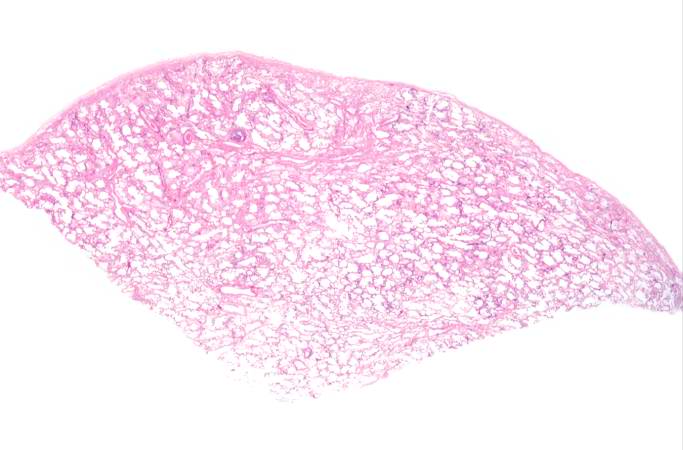 This low-power photomicrograph of the patient’s lung illustrates large, open alveolar spaces. The pleural surface is the curved surface at the top.
 -
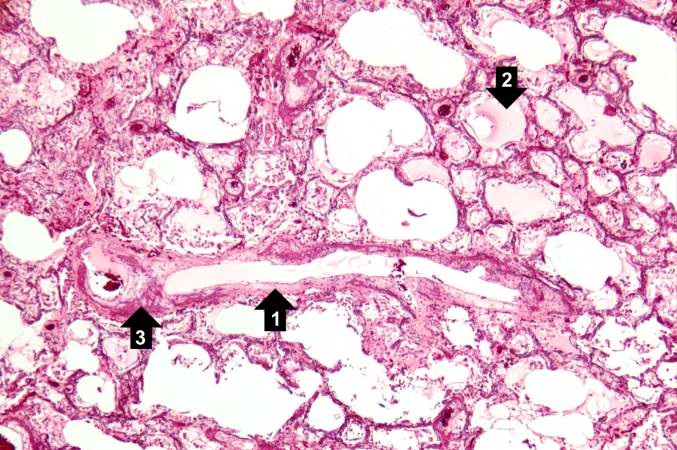 A higher-power photomicrograph shows a blood vessel cut in longitudinal section (1). Several of the alveoli are filled with a pink-staining proteinaceous fluid (2) indicative of pulmonary edema. The alveolar septa and the wall of the blood vessel have a purplish color due to massive deposition of mineral (primarily calcium) in these tissues (3).


-
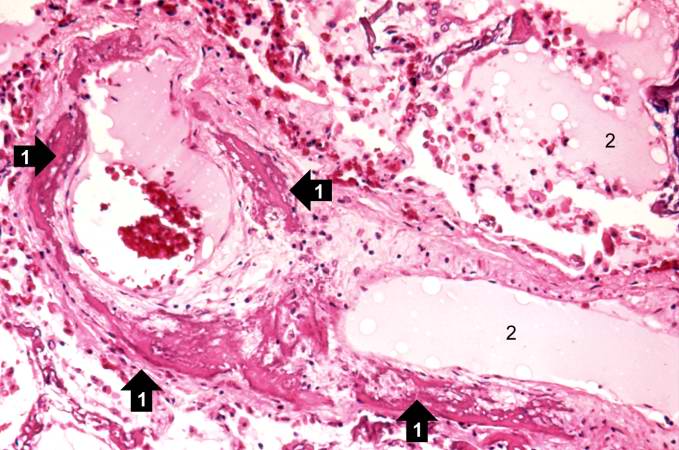 This high-power photomicrograph of a blood vessel shows calcium deposits in the vascular wall (1) and proteinaceous material (2) (from edema) within some of the alveoli. The smooth muscle in the vessel wall has been almost completely replaced by calcium deposits.
 -
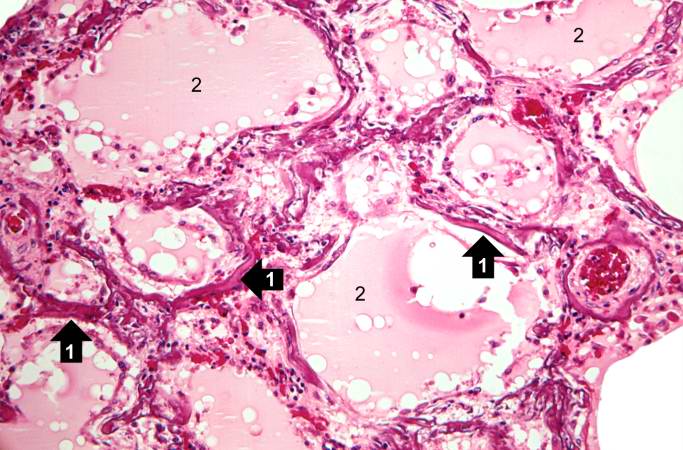 This photomicrograph demonstrates pulmonary alveoli with extensive calcium depositions (1) in the septa and protein accumulations (2) in the alveoli.


Metastatic pulmonary calcification


References
© 2026 MyEClinic – IFTM Institut für Telematik in der Medizin GmbH