
Murmur patterns
Editor-In-Chief: C. Michael Gibson, M.S., M.D. [1]
Associate Editor-In-Chief: Cafer Zorkun, M.D., Ph.D. [2]
Click here to read more about heart murmurs
Early Systolic Murmur
-
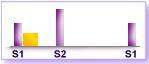 Begins with S1 and ends before or about the middle of systole.

Mid Systolic Murmur
-
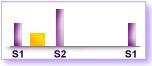 Begins after S1 and ends before S2.

Late Systolic Murmur
-
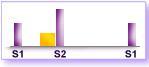 Begins at about the middle of systole and ends at the time of S2.

Holosystolic (Pansystolic) Murmur
-
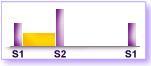 Begins with S1 and ends with, or continues somewhat beyond, S2.

Early Diastolic Murmur
-
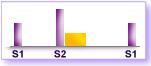 Begins with S2.

Mid Diastolic Murmur
-
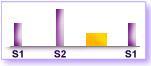 Begins after S2.

Late Diastolic Murmur
-
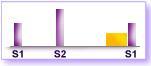 Occurs immediately prior to S1.

Continuous Murmur
-
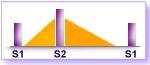 Has both systolic and diastolic components.

Crescendo
-
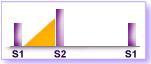 The loudness of the murmur increases progressively. The systolic component of a patent ductus arteriosus murmur is of this type.

Decrescendo
-
 The loudness of the murmur decreases progressively. The murmurs of aortic and pulmonic regurgitation are examples of this type.

Crescendo Decrescendo
-
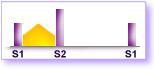 The loudness of the murmur increases and then decreases. This configuration is typical for systolic ejection murmurs.

Plateau
-
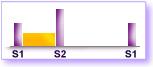 The loudness of the murmur remains relatively constant. Holosystolic murmurs are representative of this type.

Template:Skin and subcutaneous tissue symptoms and signs Template:Nervous and musculoskeletal system symptoms and signs Template:Urinary system symptoms and signs Template:Cognition, perception, emotional state and behaviour symptoms and signs Template:Speech and voice symptoms and signs Template:General symptoms and signs
© 2026 MyEClinic – IFTM Institut für Telematik in der Medizin GmbH