
Myocardial rupture pathophysiology
Editor-In-Chief: C. Michael Gibson, M.S., M.D. [1]; Associate Editor(s)-In-Chief: Cafer Zorkun, M.D., Ph.D. [2]
Overview
The most common cause of myocardial rupture is a recent myocardial infarction, with the rupture typically occurring three to five days after infarction. Other causes of rupture include cardiac trauma, endocarditis (infection of the heart),[1][2] cardiac tumors, infiltrative diseases of the heart,[1] and aortic dissection.
Pathophysiology
Myocardial Rupture of the Free Wall
-
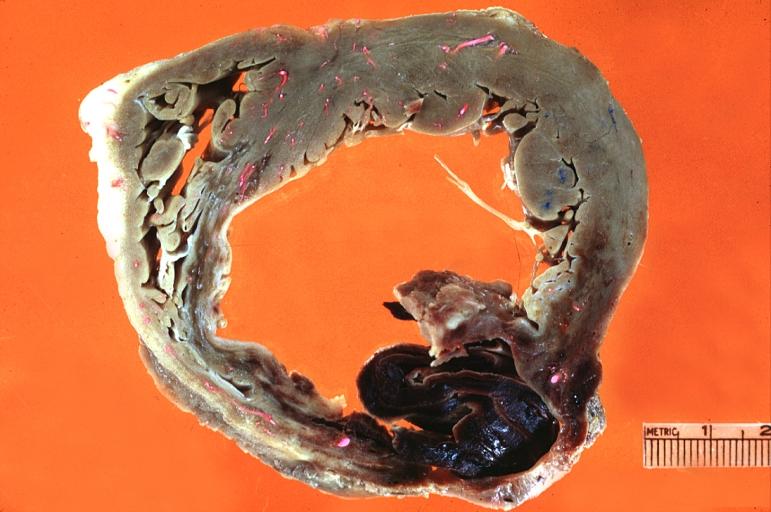 Gross horizontal section of ruptured anterolateral infarct
 -
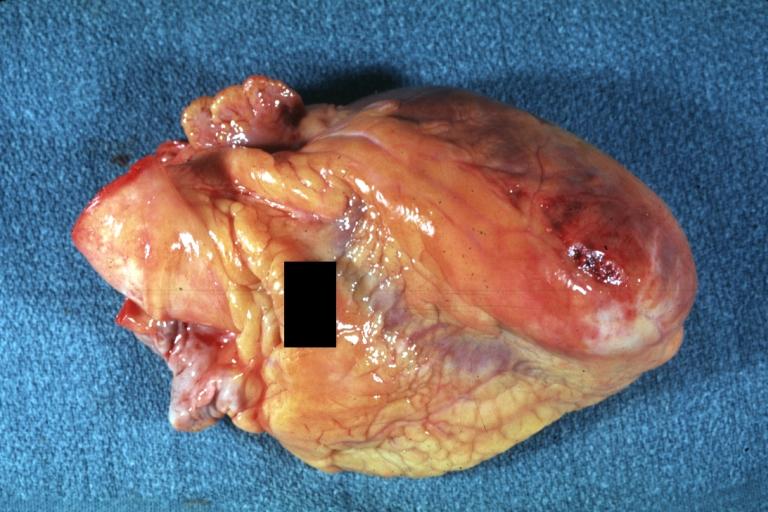 Gross, Acute MI, external view of ruptured myocardial infarction near apex


-
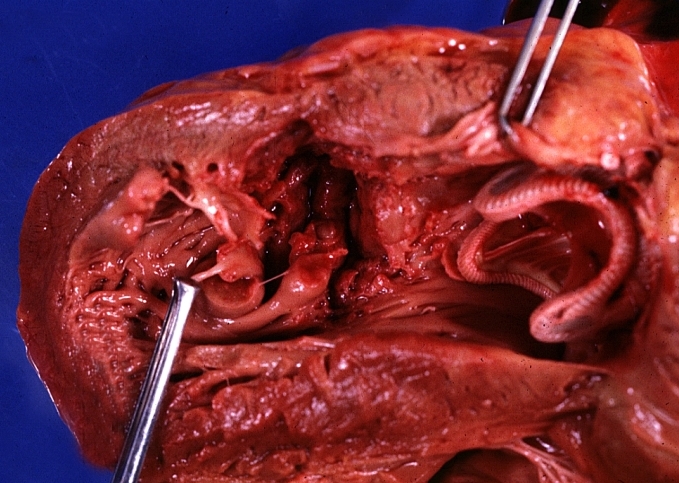 Myocardial rupture
 -
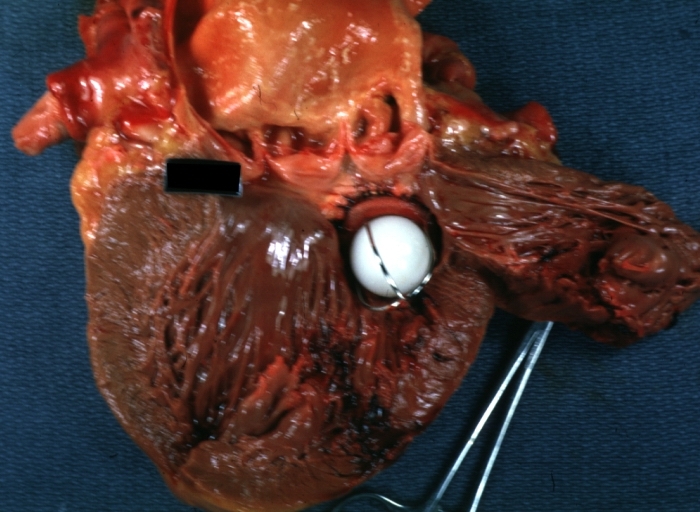 Myocardial rupture


-
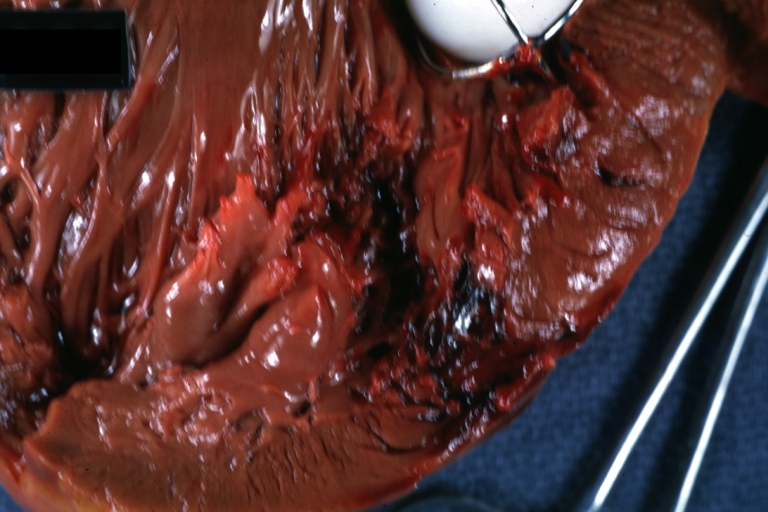 Myocardial rupture
 -
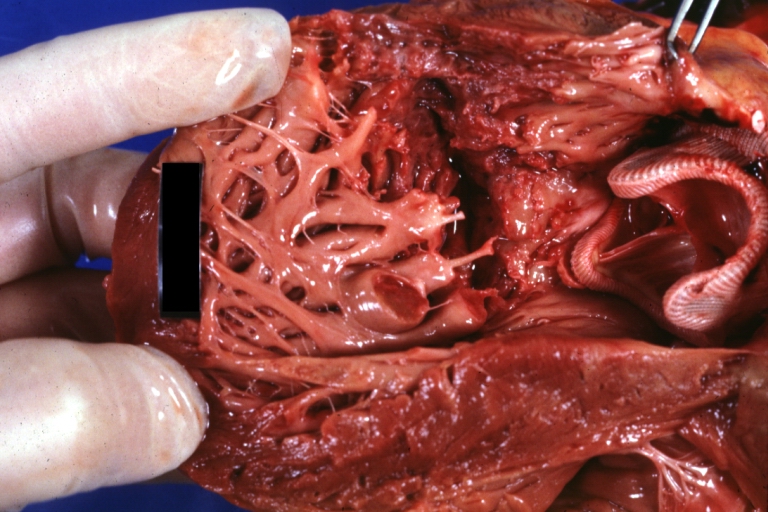 Myocardial rupture


-
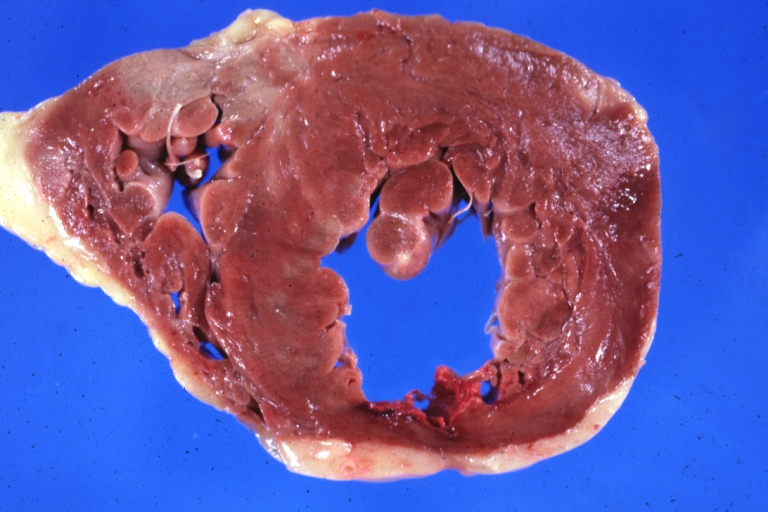 Myocardial rupture
 -
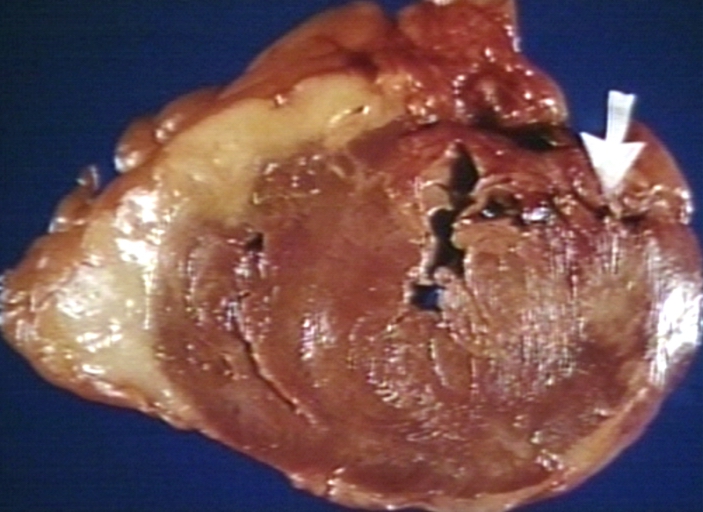 Myocardial rupture


-
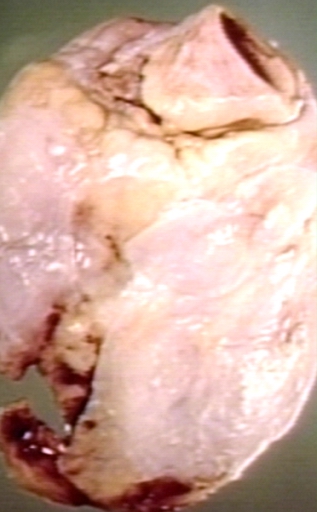 Myocardial rupture: Gun shot

Ventricular Septal Rupture
-
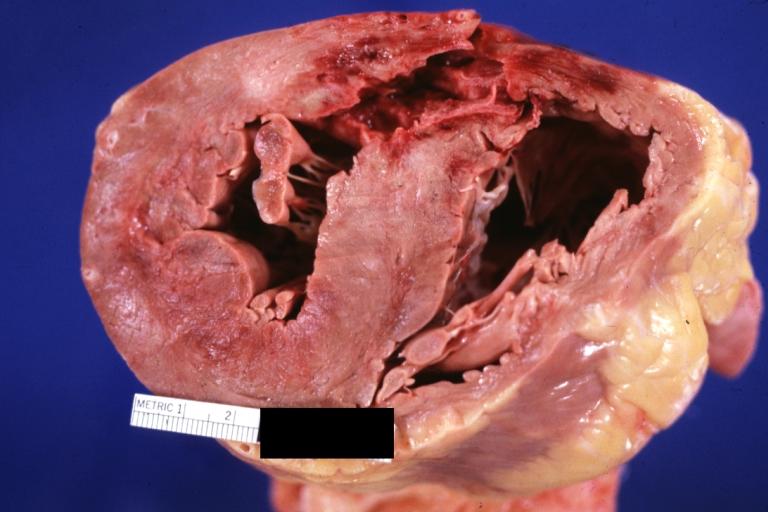 Heart, Acute MI, Ventricular septum rupture at posterior wall.

-
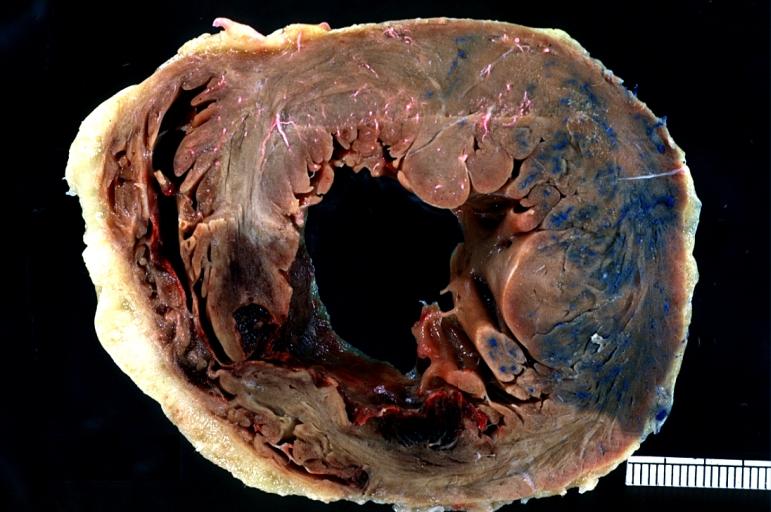 Gross; acute myocardial infarction with ventricular septal rupture

-
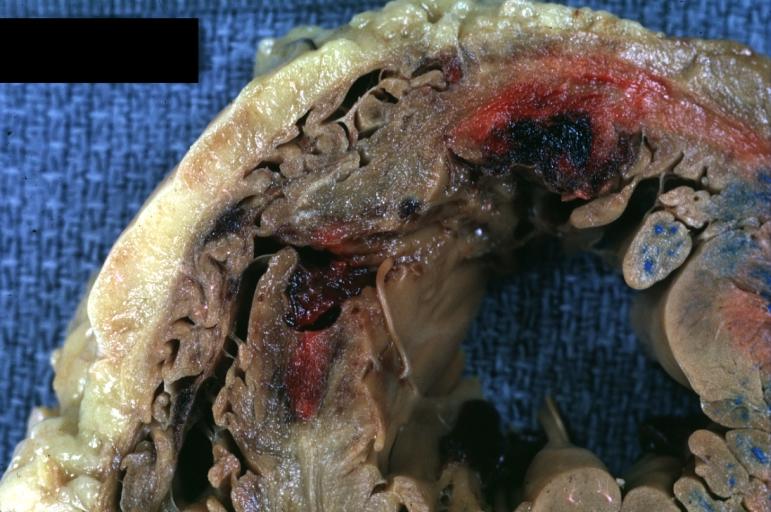 Acute MI, rupture of the ventricular septum. A close up view.

References
- ↑ 1.0 1.1 Lin TH, Su HM, Voon WC, Lai HM, Yen HW, Lai WT, Sheu SH. (2006). “Association between hypertension and primary mitral chordae tendinae rupture”. Am J Hypertens. 19 (1): 75–9. PMID 16461195.
- ↑ de Diego C, Marcos-Alberca P, Pai RK. (2006). “Giant periprosthetic vegetation associated with pseudoaneurysmal-like rupture” (PDF). Eur Heart J. 27 (8): 912. PMID 16569654.
© 2026 MyEClinic – IFTM Institut für Telematik in der Medizin GmbH