
Nabothian cyst
For patient information, click here
Editor-In-Chief: C. Michael Gibson, M.S., M.D. [1]
Overview
A nabothian cyst is a mucus-filled cyst on the surface of the cervix. They are most often caused when new tissue growth blocks the nabothian glands of the cervix; this traps mucosal secretions in small (usually 2-10 mm in diameter) subdermal pockets.
Historical perspective
Nabothian cysts are also known as nabothian follicles, mucinous retention cysts, or epithelial inclusion cysts. They are named after German anatomist Martin Naboth (1675-1721), who who wrote about them in a 1707 treatise tiled De sterilitate mulierum. However, they were earlier described by French surgeon Guillaume Desnoues (1650-1735).[1]
Clinical presentation
Nabothian cysts appear most often as firm bumps on the cervix’s surface. A woman may notice the cyst when inserting a diaphragm or cervical cap, or when doing the cervix check as part of fertility awareness.[2] A gynecologist may notice the cysts during a pelvic exam.
Diagnosis
Nabothian cysts are considered harmless and usually disappear on their own. Some women notice they appear and disappear in relation to their menstrual cycle. If a woman is not sure the anomaly she has found on her cervix is a nabothian cyst, a visit to a doctor is recommended to rule out other conditions.[2]
ATYPICAL, Multiple large nabothian cysts are noted
-
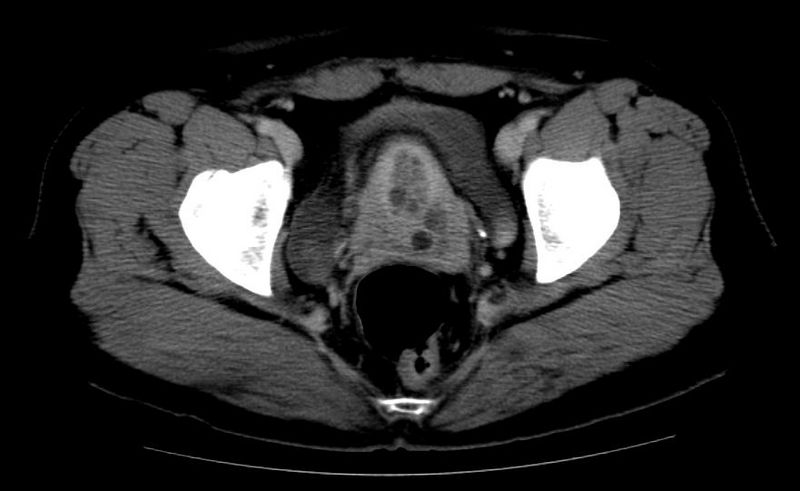 CT
CT -
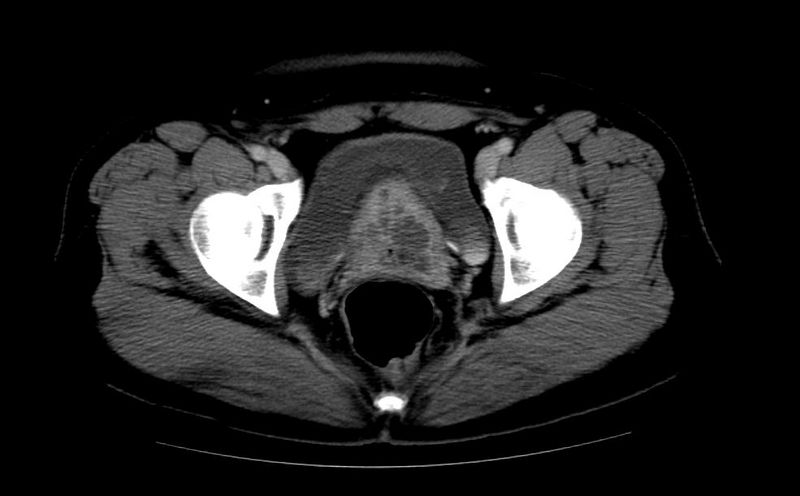 CT
CT -
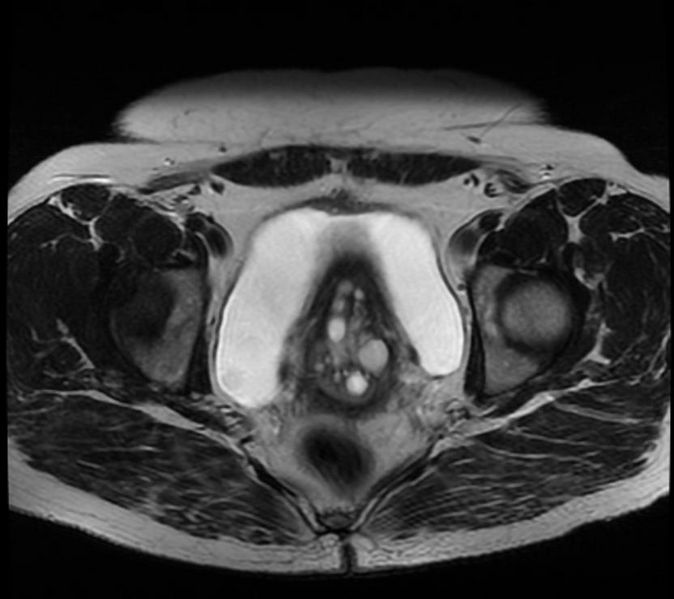 MRI
MRI -
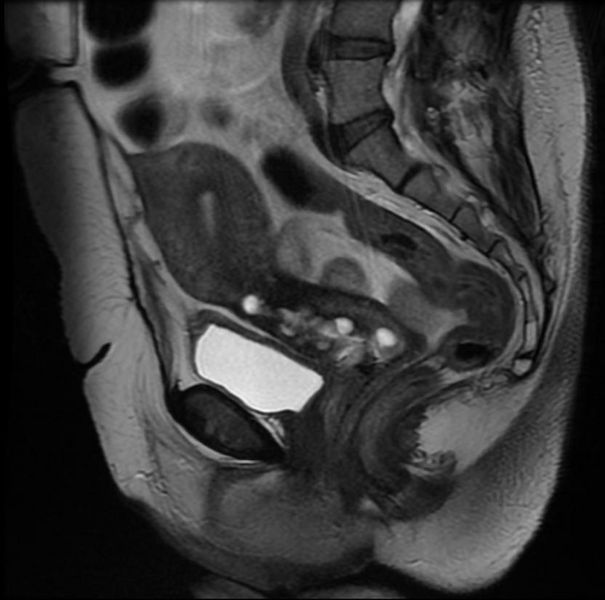 MRI
MRI -
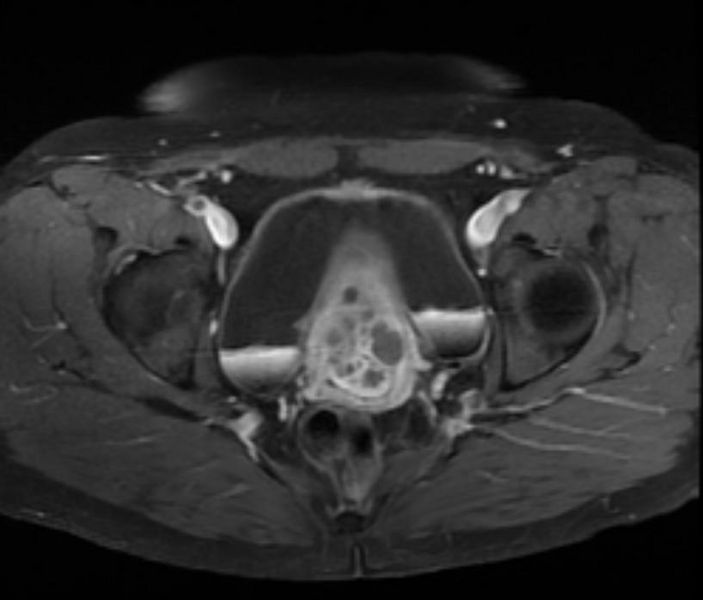 MRI
MRI


Treatment
Nabothian cysts are not considered problematic unless they grow very large and present secondary symptoms. A gynecologist may wish to perform a colposcopy or biopsy on a nabothian cyst to check for cancer or other problems. Two methods for removing these cysts include electrocautery and cryofreezing.
Complication
Rarely, nabothian cysts have a correlation with chronic cervicitis, an inflammatory infection of the cervix.
See also
Footnotes
- ↑ “Nabothian Cysts”. Who Named It?. 2007. Retrieved 2007-06-22.
- ↑ 2.0 2.1 Weschler, Toni (2002). Taking Charge of Your Fertility (Revised Edition ed.). New York: HarperCollins. pp. pp.227–228, 330. ISBN 0-06-093764-5.
© 2026 MyEClinic – IFTM Institut für Telematik in der Medizin GmbH