
Polydactyly
Editor-In-Chief: C. Michael Gibson, M.S., M.D. [1]; Associate Editor-In-Chief: Cafer Zorkun, M.D., Ph.D. [2] Kiran Singh, M.D. [3]
Overview
Polydactyly or polydactylism (from the Greek poly = “many” + daktylos = “finger”), also known as hyperdactyly, is a congenital physical anomaly consisting of supernumerary fingers or toes. When each hand or foot has six digits, it is sometimes called “sexdactyly“, “hexadactyly”, or “hexadactylism”. Although the condition is usually not life-threatening or even particularly debilitating, most people in Western societies have the extra digits removed surgically.
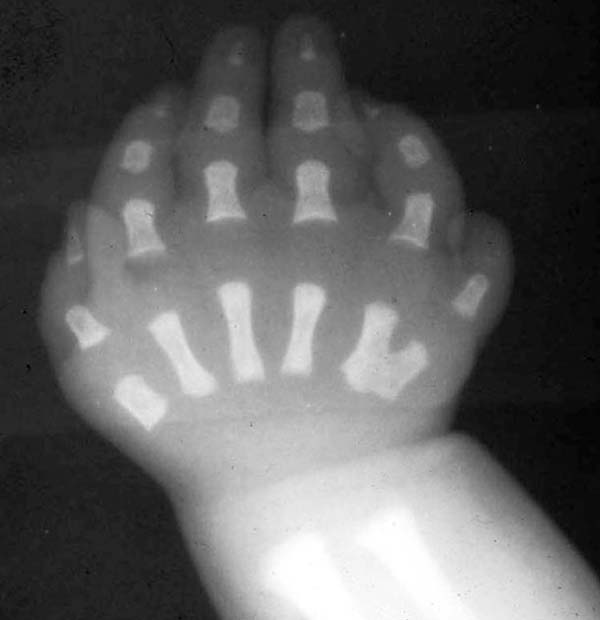
The extra digit is usually a small piece of soft tissue; occasionally it may contain bone without joints; rarely it may be a complete, functioning digit. The extra digit is most common on the ulnar (little finger) side of the hand, less common on the radial (thumb) side, and very rarely within the middle three digits. The extra digit is most commonly an abnormal fork in an existing digit, or it may rarely originate at the wrist like a normal digit does.
Polydactyly can occur by itself, or more commonly, as one feature of a syndrome of congenital anomalies. When it occurs by itself, it is associated with autosomal dominant mutations in single genes, i.e. it is not a multifactorial trait. [4] But mutation in a variety of genes can give rise to polydactyly. Typically the mutated gene is involved in developmental patterning, and a syndrome of congenital anomalies results, of which polydactyly is one feature.
The condition has an incidence of 1 in every 500 live births[1] although the frequency is higher in some groups (an example is the Amish in the United States, due to the founder effect).
Types of polydactyly
- Polydactyly with cleft lip/palate and psychomotor retardation (Varadi-Papp Syndrome)
- Polydactyly myopia syndrome
- Polydactyly postaxial dental and vertebral
- Polydactyly postaxial with median cleft of upper lip
- Polydactyly postaxial
- Polydactyly preaxial type 1
- Polydactyly syndrome middle ray duplication
- Polydactyly visceral anomalies cleft lip palate
Diagnosis
Physical Examination
Extremities
-
![Rudimentary polydactyly. Adapted from Dermatology Atlas.[2]](https://www.wikidoc.org/images/a/a7/Rudimentary_polydactyly01.jpg) Rudimentary polydactyly. Adapted from Dermatology Atlas.[2]
Rudimentary polydactyly. Adapted from Dermatology Atlas.[2] -
![Rudimentary polydactyly. Adapted from Dermatology Atlas.[2]](https://www.wikidoc.org/images/8/8b/Rudimentary_polydactyly02.jpg) Rudimentary polydactyly. Adapted from Dermatology Atlas.[2]
Rudimentary polydactyly. Adapted from Dermatology Atlas.[2] -
![Rudimentary polydactyly. Adapted from Dermatology Atlas.[2]](https://www.wikidoc.org/images/b/b8/Rudimentary_polydactyly03.jpg) Rudimentary polydactyly. Adapted from Dermatology Atlas.[2]
Rudimentary polydactyly. Adapted from Dermatology Atlas.[2] -
![Rudimentary polydactyly. Adapted from Dermatology Atlas.[2]](https://www.wikidoc.org/images/f/fb/Rudimentary_polydactyly04.jpg) Rudimentary polydactyly. Adapted from Dermatology Atlas.[2]
Rudimentary polydactyly. Adapted from Dermatology Atlas.[2] -
![Rudimentary polydactyly. Adapted from Dermatology Atlas.[2]](https://www.wikidoc.org/images/2/2e/Rudimentary_polydactyly05.jpg) Rudimentary polydactyly. Adapted from Dermatology Atlas.[2]
Rudimentary polydactyly. Adapted from Dermatology Atlas.[2] -
![Rudimentary polydactyly. Adapted from Dermatology Atlas.[2]](https://www.wikidoc.org/images/1/10/Rudimentary_polydactyly06.jpg) Rudimentary polydactyly. Adapted from Dermatology Atlas.[2]
Rudimentary polydactyly. Adapted from Dermatology Atlas.[2] -
![Rudimentary polydactyly. Adapted from Dermatology Atlas.[2]](https://www.wikidoc.org/images/a/a0/Rudimentary_polydactyly07.jpg) Rudimentary polydactyly. Adapted from Dermatology Atlas.[2]
Rudimentary polydactyly. Adapted from Dermatology Atlas.[2] -
![Rudimentary polydactyly. Adapted from Dermatology Atlas.[2]](https://www.wikidoc.org/images/e/e9/Rudimentary_polydactyly08.jpg) Rudimentary polydactyly. Adapted from Dermatology Atlas.[2]
Rudimentary polydactyly. Adapted from Dermatology Atlas.[2] -
![Rudimentary polydactyly. Adapted from Dermatology Atlas.[2]](https://www.wikidoc.org/images/7/7c/Rudimentary_polydactyly09.jpg) Rudimentary polydactyly. Adapted from Dermatology Atlas.[2]
Rudimentary polydactyly. Adapted from Dermatology Atlas.[2] -
![Rudimentary polydactyly. Adapted from Dermatology Atlas.[2]](https://www.wikidoc.org/images/d/df/Rudimentary_polydactyly10.jpg) Rudimentary polydactyly. Adapted from Dermatology Atlas.[2]
Rudimentary polydactyly. Adapted from Dermatology Atlas.[2] -
![Rudimentary polydactyly. Adapted from Dermatology Atlas.[2]](https://www.wikidoc.org/images/8/87/Rudimentary_polydactyly11.jpg) Rudimentary polydactyly. Adapted from Dermatology Atlas.[2]
Rudimentary polydactyly. Adapted from Dermatology Atlas.[2]
![Rudimentary polydactyly. Adapted from Dermatology Atlas.[2]](https://www.wikidoc.org/index.php/File%3ARudimentary_polydactyly01.jpg)
![Rudimentary polydactyly. Adapted from Dermatology Atlas.[2]](https://www.wikidoc.org/index.php/File%3ARudimentary_polydactyly02.jpg)
![Rudimentary polydactyly. Adapted from Dermatology Atlas.[2]](https://www.wikidoc.org/index.php/File%3ARudimentary_polydactyly03.jpg)
![Rudimentary polydactyly. Adapted from Dermatology Atlas.[2]](https://www.wikidoc.org/index.php/File%3ARudimentary_polydactyly04.jpg)
![Rudimentary polydactyly. Adapted from Dermatology Atlas.[2]](https://www.wikidoc.org/index.php/File%3ARudimentary_polydactyly05.jpg)
![Rudimentary polydactyly. Adapted from Dermatology Atlas.[2]](https://www.wikidoc.org/index.php/File%3ARudimentary_polydactyly06.jpg)
![Rudimentary polydactyly. Adapted from Dermatology Atlas.[2]](https://www.wikidoc.org/index.php/File%3ARudimentary_polydactyly07.jpg)
![Rudimentary polydactyly. Adapted from Dermatology Atlas.[2]](https://www.wikidoc.org/index.php/File%3ARudimentary_polydactyly08.jpg)
![Rudimentary polydactyly. Adapted from Dermatology Atlas.[2]](https://www.wikidoc.org/index.php/File%3ARudimentary_polydactyly09.jpg)
![Rudimentary polydactyly. Adapted from Dermatology Atlas.[2]](https://www.wikidoc.org/index.php/File%3ARudimentary_polydactyly10.jpg)
![Rudimentary polydactyly. Adapted from Dermatology Atlas.[2]](https://www.wikidoc.org/index.php/File%3ARudimentary_polydactyly11.jpg)
Examples
-
-
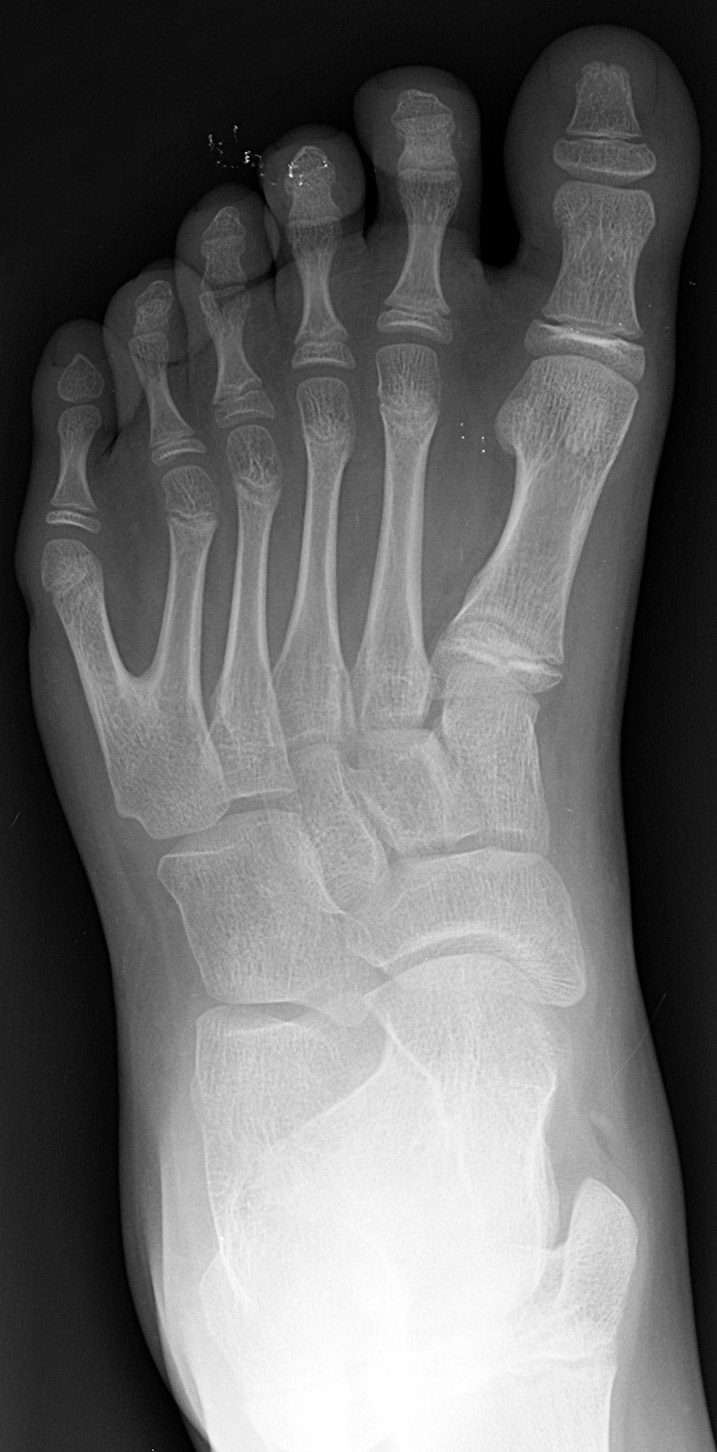 Left foot with postaxial polydactyly of 5th ray
 -
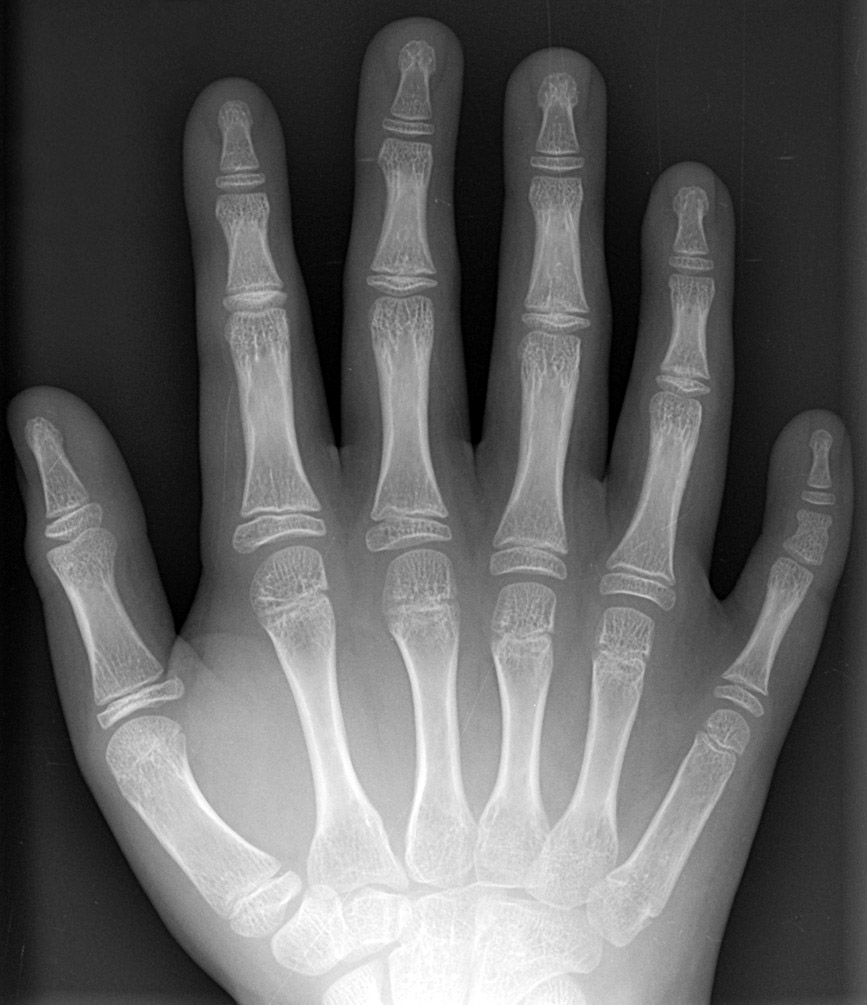 Right hand with mid-ray duplication


References
See also
- Syndactyly.
- Dactyly.
- Polycephaly = extra head(s).
- Polymelia = extra limb(s).
- Supernumerary body part.
External links
© 2026 MyEClinic – IFTM Institut für Telematik in der Medizin GmbH