

Health Dictionary
Reliable, easy-to-read patient information on common medical conditions — written in plain language, free of jargon, and grounded in current evidence. Browse the most frequent diagnoses, understand what they mean for everyday life, and learn which steps and questions help you have a focused conversation with your doctor.
Abdominal aortic aneurysm CT
Introduction
Overview
Overview
Although CT scanning provides detailed anatomic information and is valuable in planning abdominal aortic aneurysm repair, it is not used as a screening tool because of the potential nephrotoxicity associated with the dye load, the cost, and the exposure to radiation.
Limitations of CT Scanning
Limitations of CT Scanning
The limitations include:
- Potential nephrotoxicity associated with the dye load
- Cost
- Exposure to radiation
- Suboptimal visualization of the origins of the aortic branch vessels
- Occasionally, inaccurate localization of the aneurysmal neck[1]
CT Examples
CT Examples
-
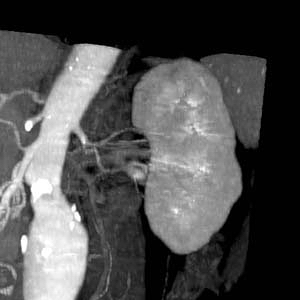 Abdominal Aortic Aneurysm
 -
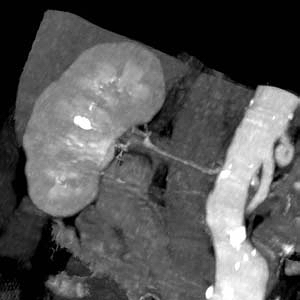 Abdominal Aortic Aneurysm


-
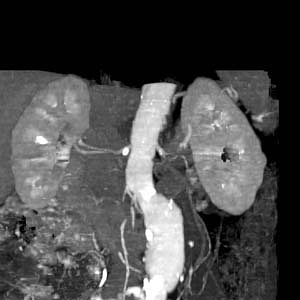 Abdominal Aortic Aneurysm
 -
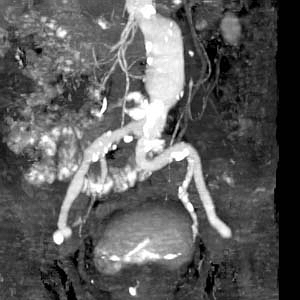 Abdominal Aortic Aneurysm


-
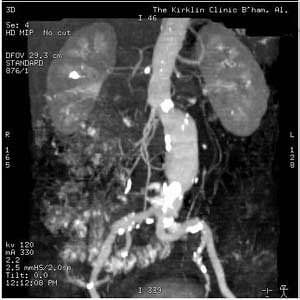 Abdominal Aortic Aneurysm
 -
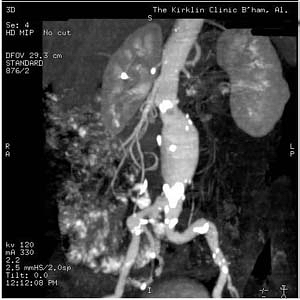 Abdominal Aortic Aneurysm


-
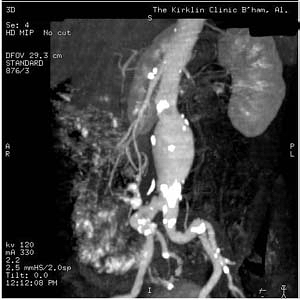 Abdominal Aortic Aneurysm
 -
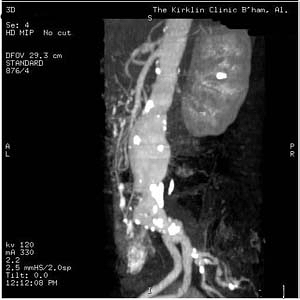 Abdominal Aortic Aneurysm


Copyleft image obtained courtesy of Radswiki:
-
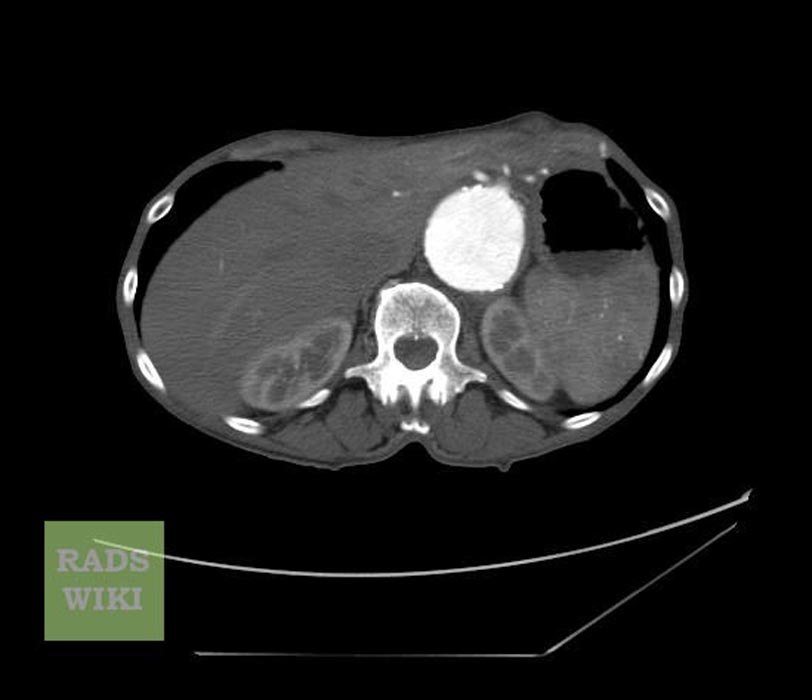 CT: a large abdominal aortic aneurysm
 -
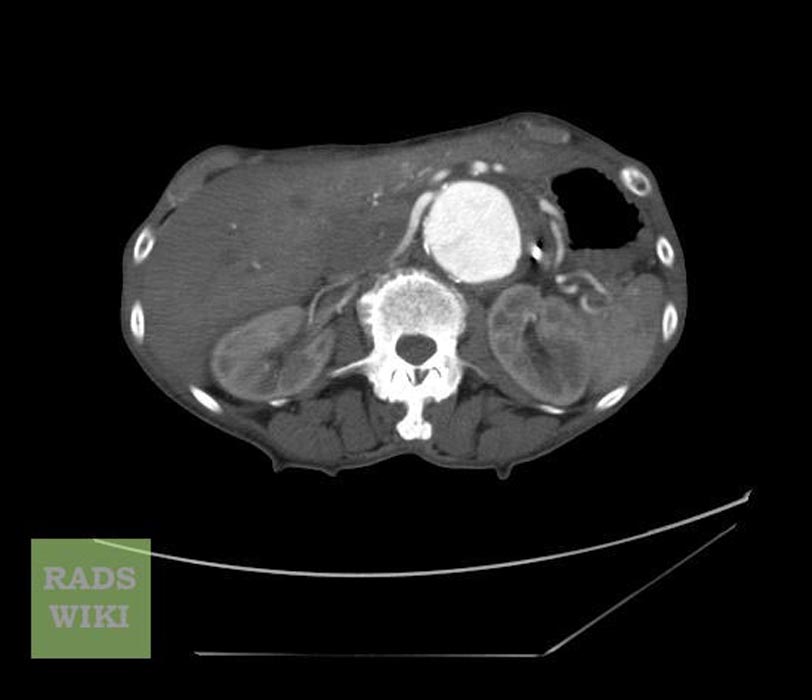 CT: a large abdominal aortic aneurysm
 -
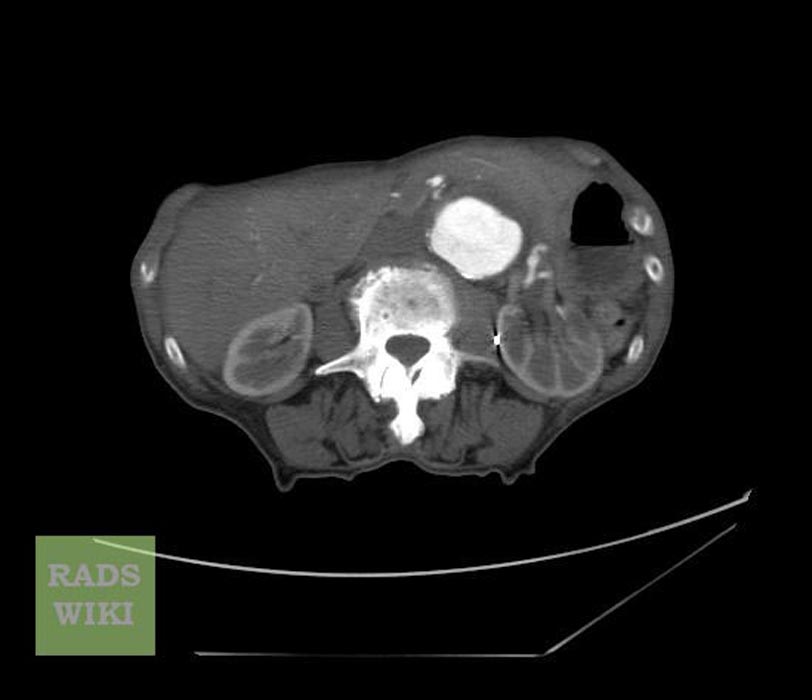 CT: a large abdominal aortic aneurysm


-
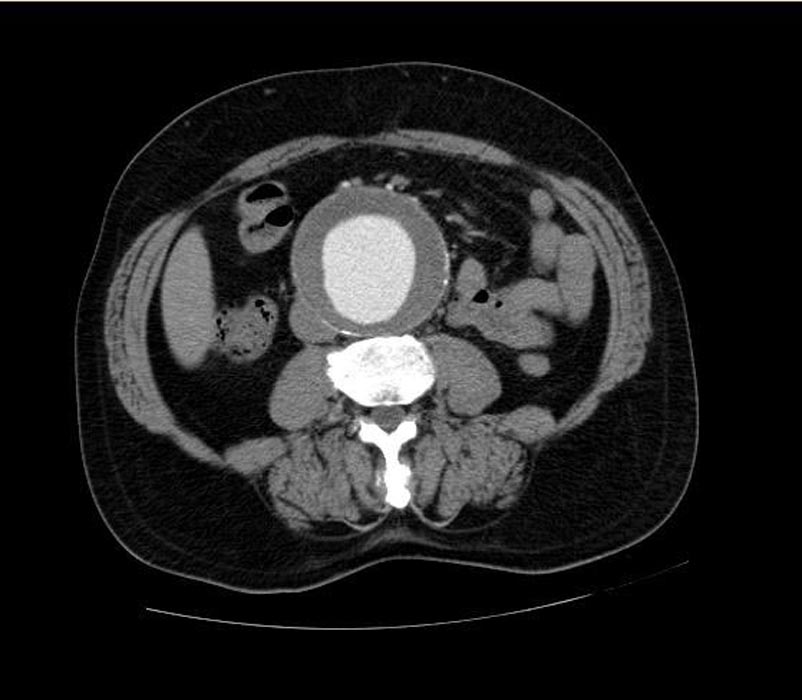 CT: a large abdominal aortic aneurysm
 -
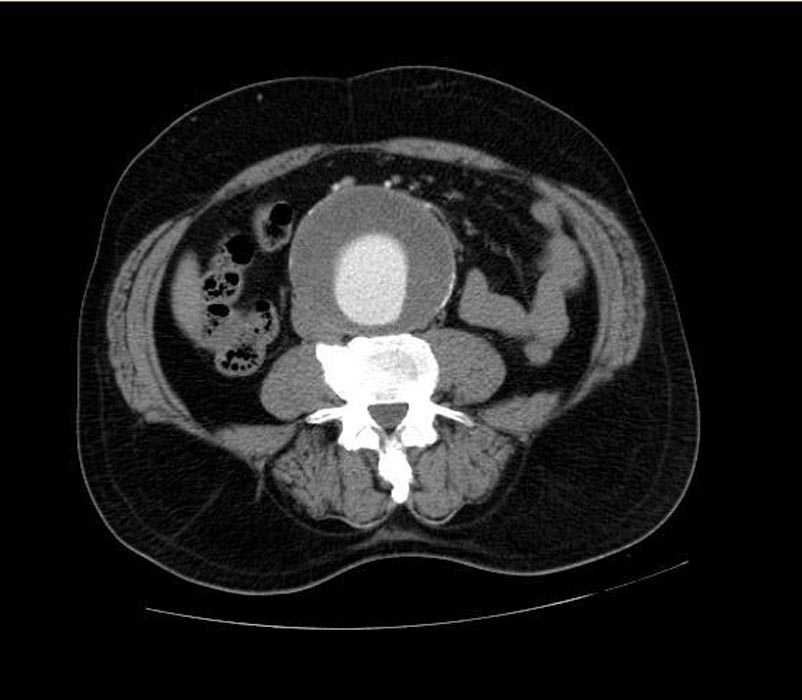 CT: a large abdominal aortic aneurysm


-
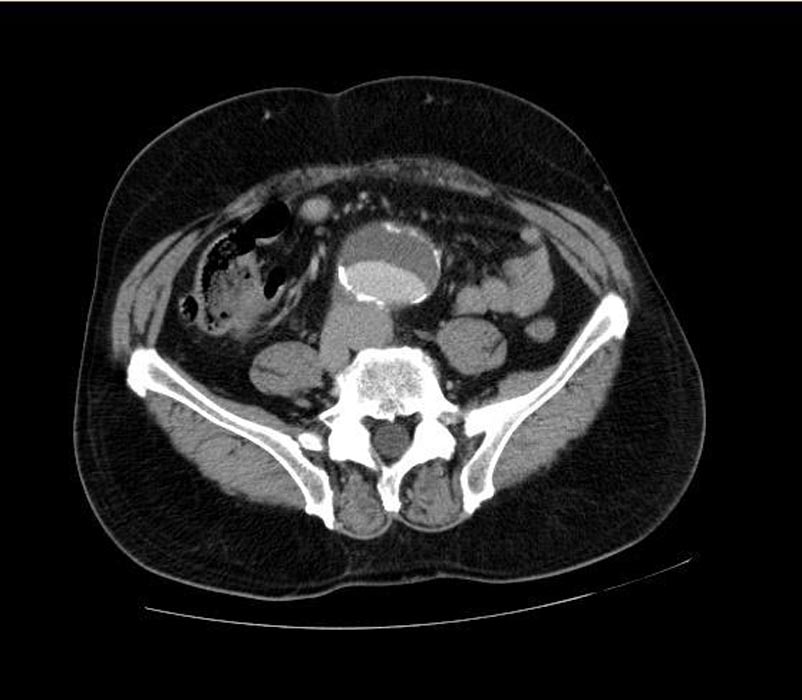 CT: a large abdominal aortic aneurysm
 -
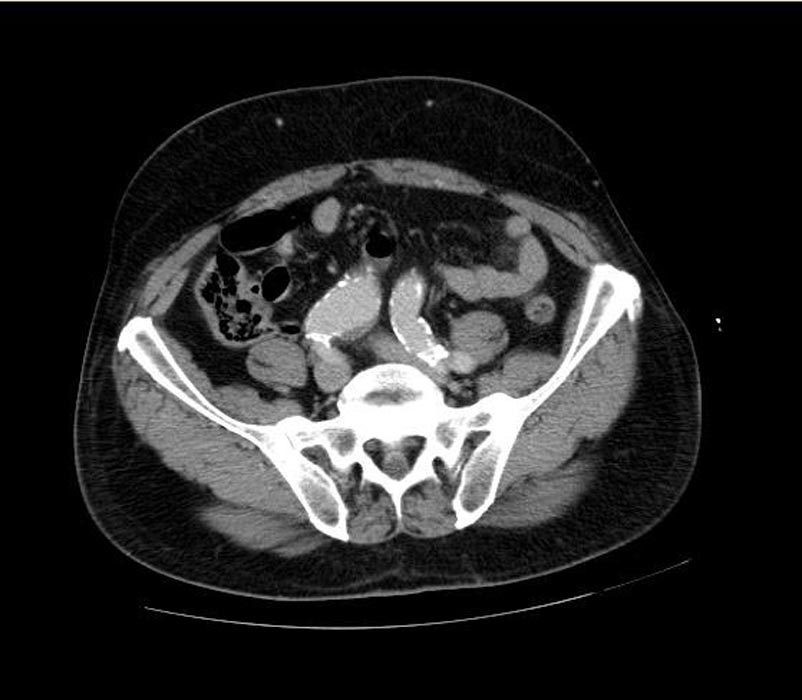 CT: a large abdominal aortic aneurysm


-
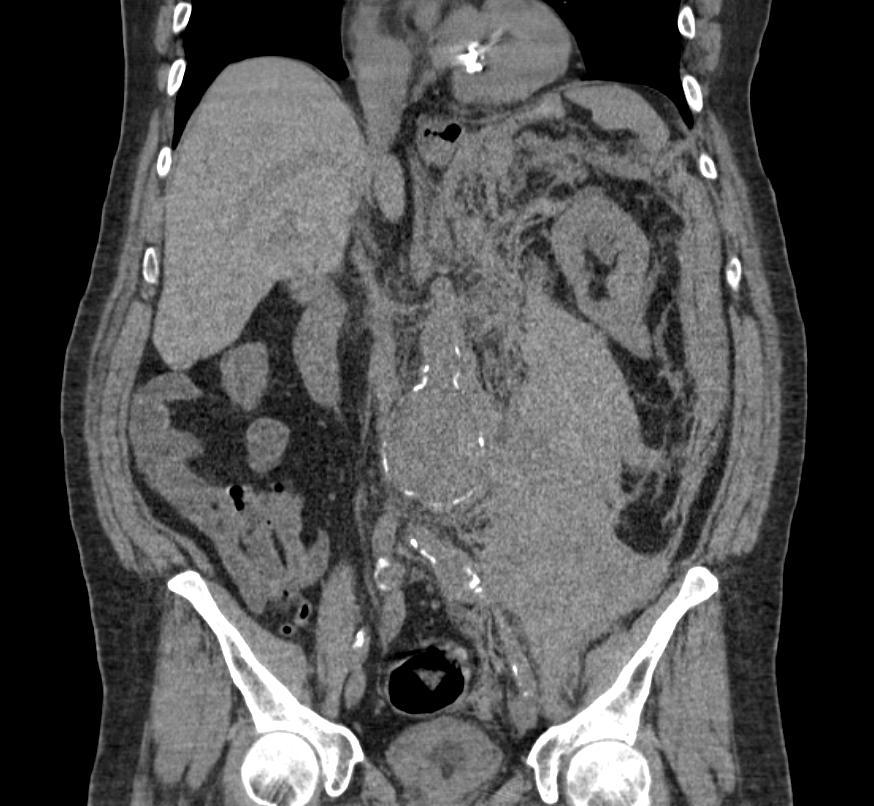 Ruptured abdominal aortic aneurysm
 -
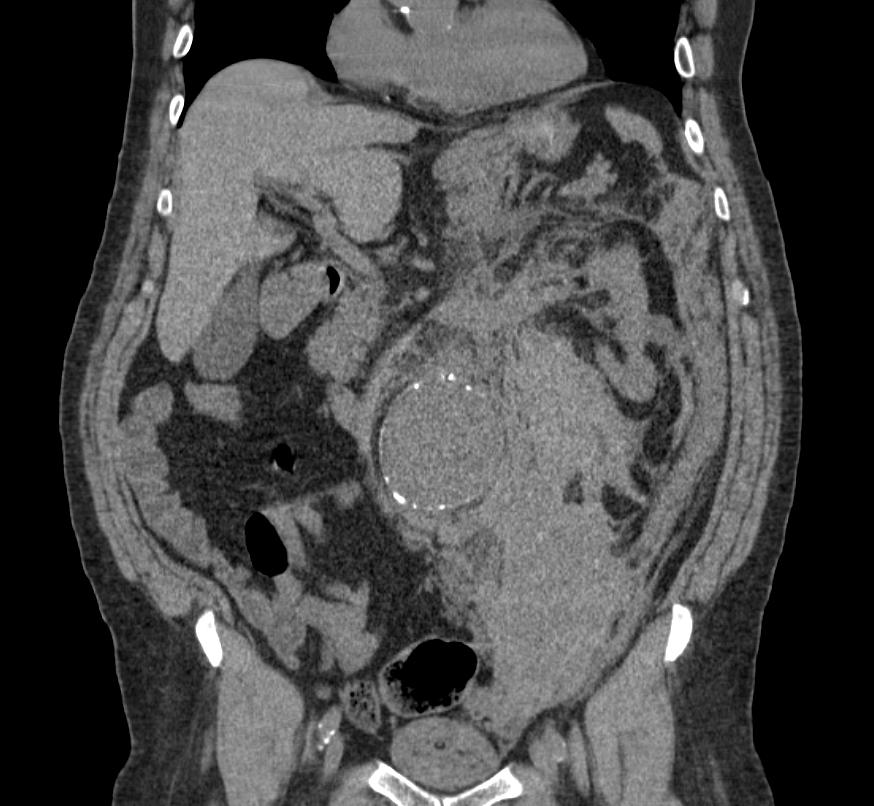 Ruptured abdominal aortic aneurysm


-
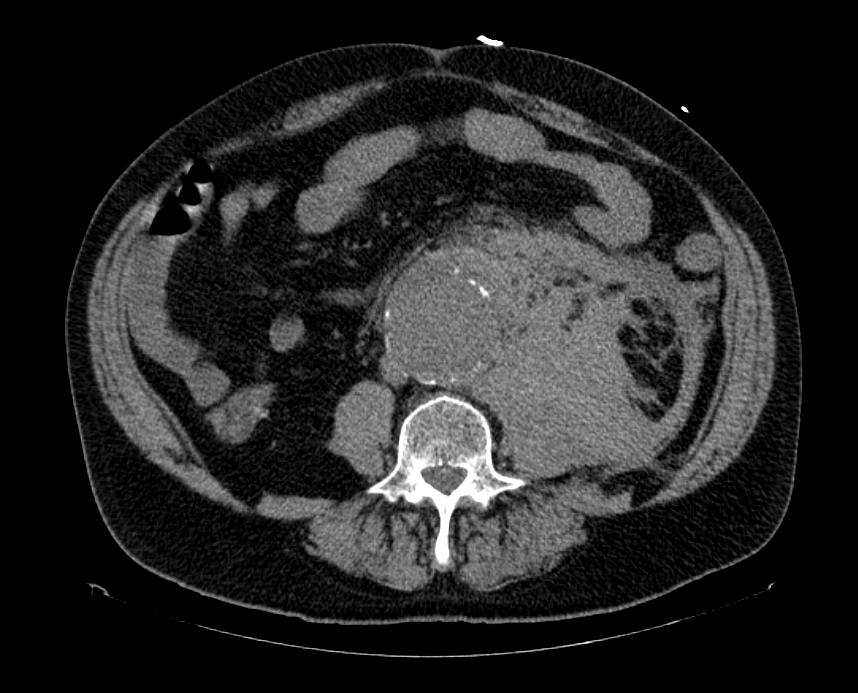 Ruptured abdominal aortic aneurysm
 -
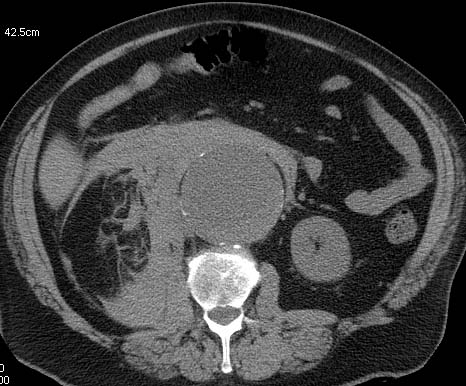 This patient presented with acute abdominal pain and hypotension. His non-contrast CT shows a large AAA and extensive periaortic haematoma. A thick (but subtle) hyperdense crescent is present within the aortic wall posteriorly and laterally which represents acute intramural hematoma, a sign of acute or impending rupture. (Image courtesy of Dr Donna D’Souza)


References
References
Editor-In-Chief: C. Michael Gibson, M.S., M.D. [1]; Cafer Zorkun, M.D., Ph.D. [2]