

Health Dictionary
Reliable, easy-to-read patient information on common medical conditions — written in plain language, free of jargon, and grounded in current evidence. Browse the most frequent diagnoses, understand what they mean for everyday life, and learn which steps and questions help you have a focused conversation with your doctor.
Alveolar process of maxilla
Introduction
Overview
Overview
The alveolar process is the thickened ridge of bone that contains the tooth sockets on bones that bear teeth. It is also referred to as the alveolar bone. In humans, the tooth-bearing bones are the maxilla and the mandible.
On the maxilla, the alveolar process is a ridge on the inferior surface, and on the mandible it is a ridge on the superior surface. It makes up the thickest part of the maxilla.
The buccinator muscle attaches to the alveolar processes of both the maxilla and mandible.
-
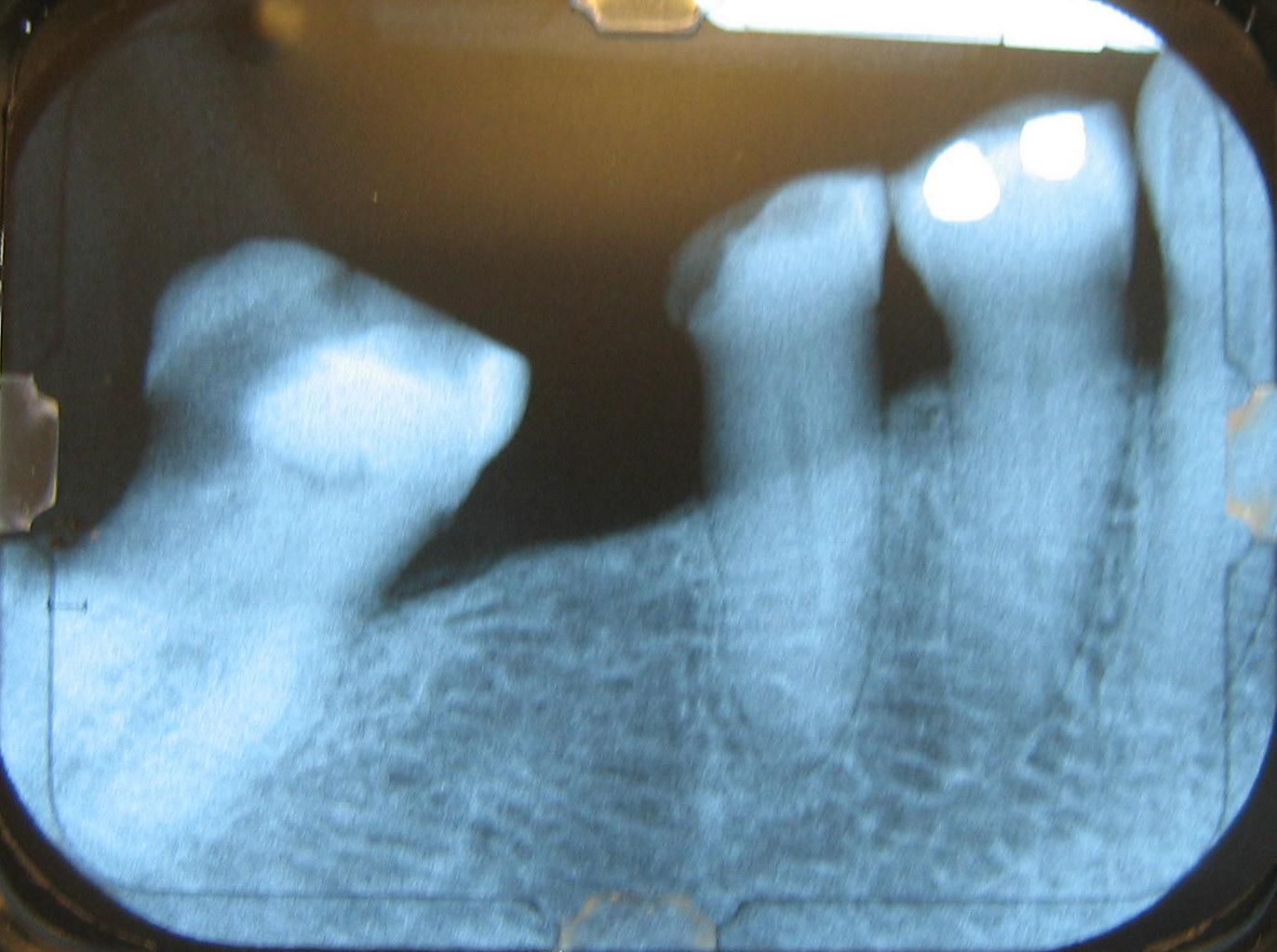 This X-ray film reveals some bone loss in the lower right mandible. The associated teeth exhibit poor crown-to-root ratios and may be subject to secondary occlusal trauma.

References
References
- Cate, A.R. Ten. Oral Histology: development, structure, and function. 5th ed. 1998. ISBN 0-8151-2952-1.
- Gray, Henry. Anatomy of the Human Body. (1918). ISBN 1-58734-102-6
- “Process, alveolar.” Stedman’s Medical Dictionary, 27th ed. (2000). ISBN 0-683-40007-X