

Health Dictionary
Reliable, easy-to-read patient information on common medical conditions — written in plain language, free of jargon, and grounded in current evidence. Browse the most frequent diagnoses, understand what they mean for everyday life, and learn which steps and questions help you have a focused conversation with your doctor.
Bursitis physical examination
Introduction
Overview
Overview
Physical examination of patients with bursitis is usually remarkable for redness, swelling, reduced range of motion, and warmth over the involved joint. However, physical examination findings may vary based on the particular bursitis subtype.
Physical examination
Physical examination
Physical examination of patients with bursitis is usually remarkable for redness, swelling, reduced range of motion, and warmth over the involved joint. However, physical examination findings may vary based on the particular bursitis subtype.
| Type of Bursitis | Physical examination | Maneuver |
|---|---|---|
| Subacromial bursitis[1] |
|
|
| Olecranon bursitis[2][3] |
|
|
| Trochanteric bursitis[4][5] |
|
|
| Prepatellar bursitis[6][7] |
|
|
| Retrocalcaneal bursitis[8][9] |
|
-
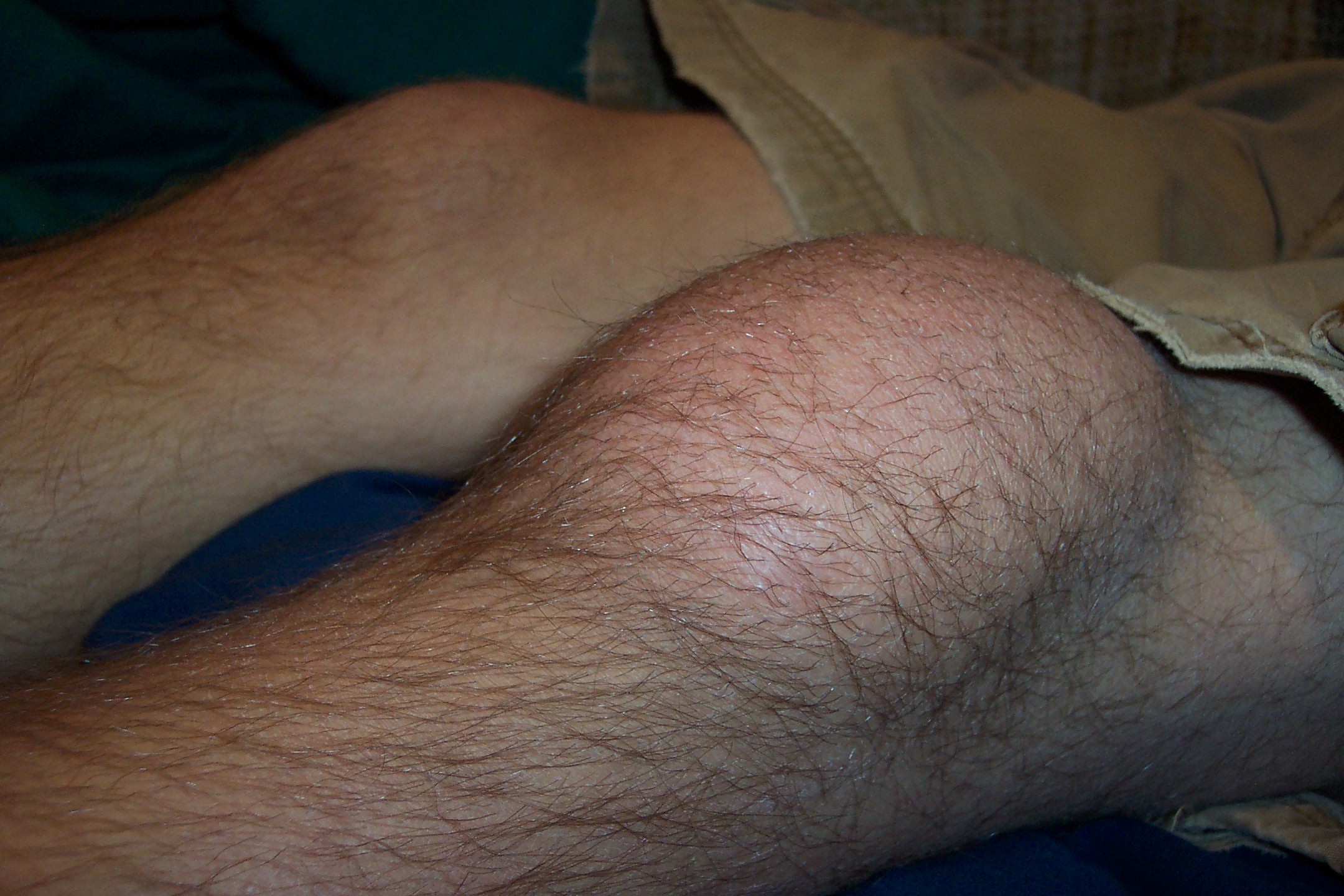 Prepatellar bursitis<ref> Wikipedia.Prepatellar bursitis. https://en.wikipedia.org/wiki/Prepatellar_bursitis#/media/File:Prepatellar_bursitis.JPG Accessed on August 25, 2016</red>
 -
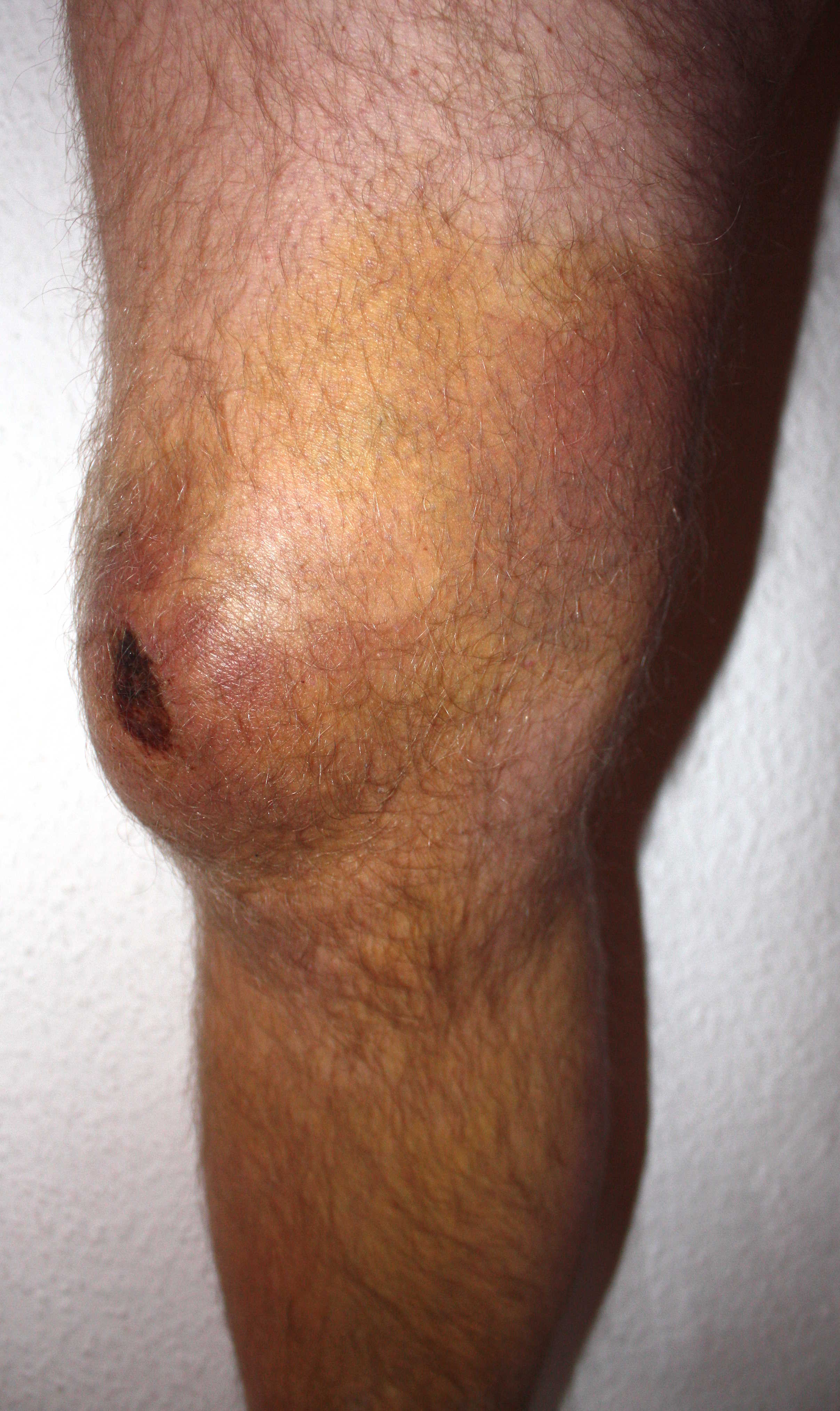 Prepatellar bursitis
 -
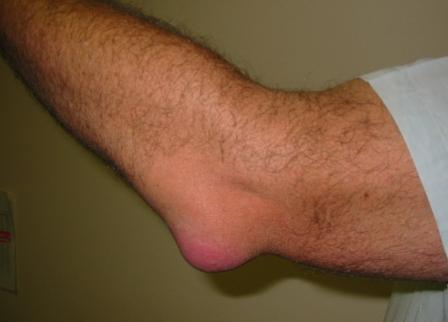 Olecranon bursitis<ref> Wikipedia.Prepatellar bursitis. https://en.wikipedia.org/wiki/Bursitis#/media/File:Bursitis_Elbow_WC.JPG Accessed on August 25, 2016</red>
 -
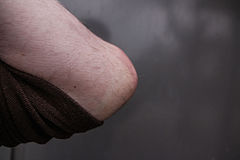 Olecranon bursitis


References
References
- ↑ Walker‐Bone, Karen, et al. “Prevalence and impact of musculoskeletal disorders of the upper limb in the general population.
- ↑ Stell IM (1996). “Septic and non-septic olecranon bursitis in the accident and emergency department–an approach to management”. J Accid Emerg Med. 13 (5): 351–3. PMC 1342774. PMID 8894865.
- ↑ Lockman L (2010). “Treating nonseptic olecranon bursitis: a 3-step technique”. Can Fam Physician. 56 (11): 1157. PMC 2980436. PMID 21075998.
- ↑ Brinks A, van Rijn RM, Bohnen AM, Slee GL, Verhaar JA, Koes BW; et al. (2007). “Effect of corticosteroid injection for trochanter pain syndrome: design of a randomised clinical trial in general practice”. BMC Musculoskelet Disord. 8: 95. doi:10.1186/1471-2474-8-95. PMC 2045096. PMID 17880718.
- ↑ Karpinski MR, Piggott H (1985). “Greater trochanteric pain syndrome. A report of 15 cases”. J Bone Joint Surg Br. 67 (5): 762–3. PMID 4055877.
- ↑ Aaron, Daniel L., et al. “Four common types of bursitis: diagnosis and management.” Journal of the American Academy of Orthopaedic Surgeons 19.6 (2011): 359-367.
- ↑ Huang, Yu-Chih, and Wen-Lin Yeh. “Endoscopic treatment of prepatellar bursitis.” International orthopaedics 35.3 (2011): 355-358.
- ↑ Fauci, Anthony S., and Carol Langford. Harrison’s rheumatology. McGraw Hill Professional, 2010.
- ↑ Lyman, Jeffrey, Paul S. Weinhold, and Louis C. Almekinders. “Strain behavior of the distal Achilles tendon implications for insertional Achilles tendinopathy.” The American Journal of Sports Medicine 32.2 (2004): 457-461.
Editor-In-Chief: C. Michael Gibson, M.S., M.D. [1]; Associate Editor(s)-in-Chief: Sara Mehrsefat, M.D. [2]