

Health Dictionary
Reliable, easy-to-read patient information on common medical conditions — written in plain language, free of jargon, and grounded in current evidence. Browse the most frequent diagnoses, understand what they mean for everyday life, and learn which steps and questions help you have a focused conversation with your doctor.
Chickenpox epidemiology and demographics
Introduction
Overview
Overview
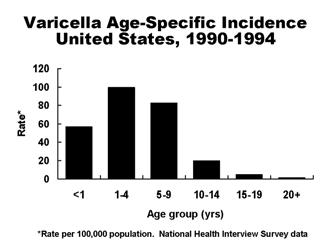
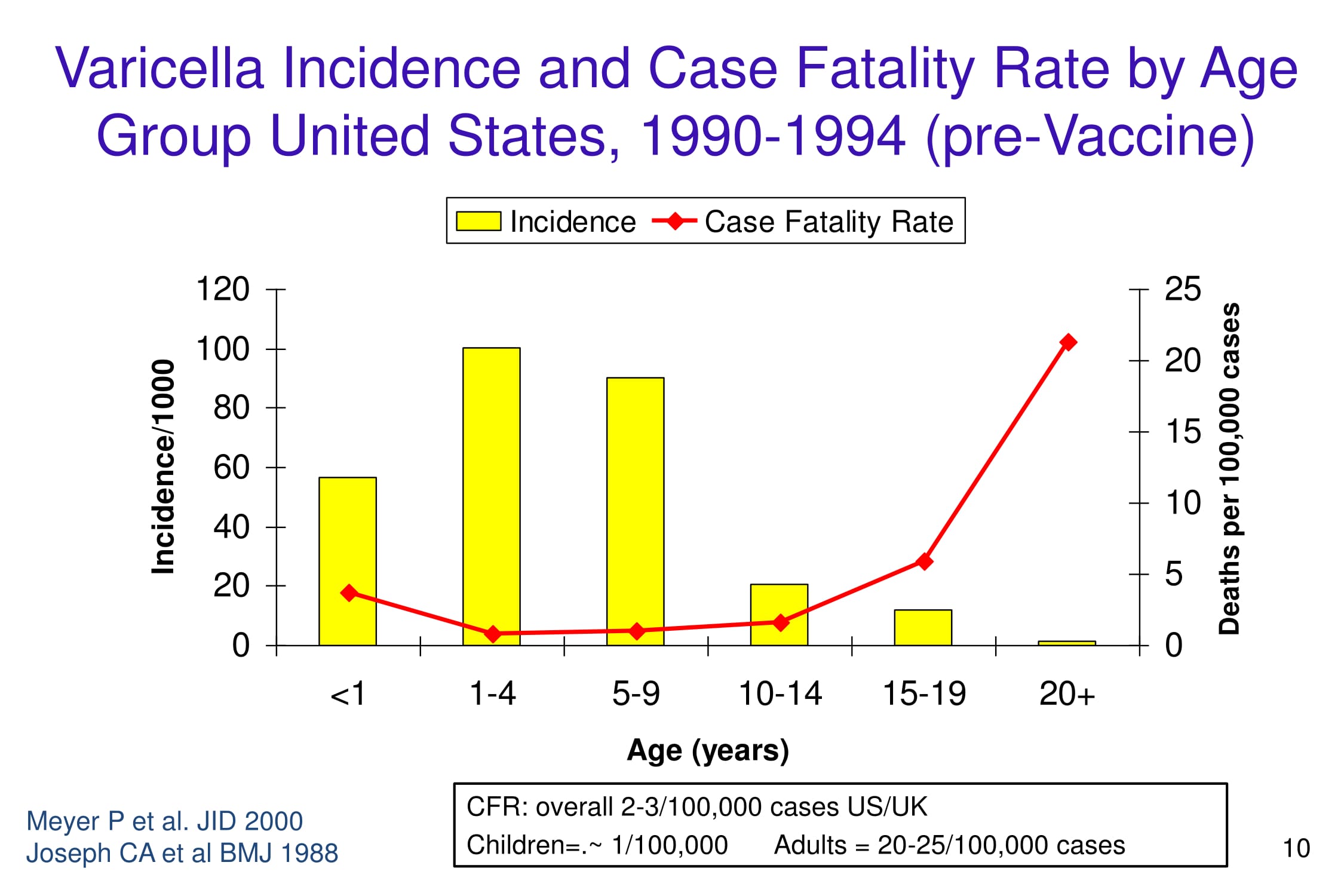
The incidence of chickenpox varies among various age groups. Varicella commonly affects children less than 10 years of age with the highest incidence among children 1-4 years of age. The incidence of chickenpox for children between 0 to 4 years of age is 5234 per 100,000 individuals. Between the years 1990-1994, the case fatality rate of chickenpox in the US/UK was 2-3 per 100,000 individuals. In developed countries, chickenpox causes around 3 deaths per 100,000 individuals.
Epidemiology
Epidemiology
Incidence
The incidence of chickenpox varies among various age groups. The incidence rates per 100,000 persons in each age group were as follow:
- For age groups 0 to 4 years 5234 per 100,000 individuals
- For age groups 5 to 9 years 4132 per 100,000 individuals
- For age groups 10 to 14 years 1404 per 100,000 individuals
- For age groups 15 to 19 years 610 per 100,000 individuals
- For age groups >20 years 175 per 100,000 individuals
The rates of incidence of chickenpox declines for older age groups.[1]

Case Fatality Rate
Between the years 1990-1994, case fatality rate in the US/UK is 2-3 per 100,000.
- The case fatality rate among children was 1 per 100,000.
- In 2008 the case fatality rate in Brazil estimated case fatality rate is 4 per 100,000. [2]
- In 2000 the case fatality rate in Guinea Bissau was approximately 129 per 100,000 cases, 50 times higher than US/UK.
- In 1970, the case fatality rate in India among adults was 52 per 100,000 cases, 20 times higher than US/UK.
- Worldwide, the case fatality rate among adults was 20-25 per 100,000. [2]

Demographics
Demographics
Age
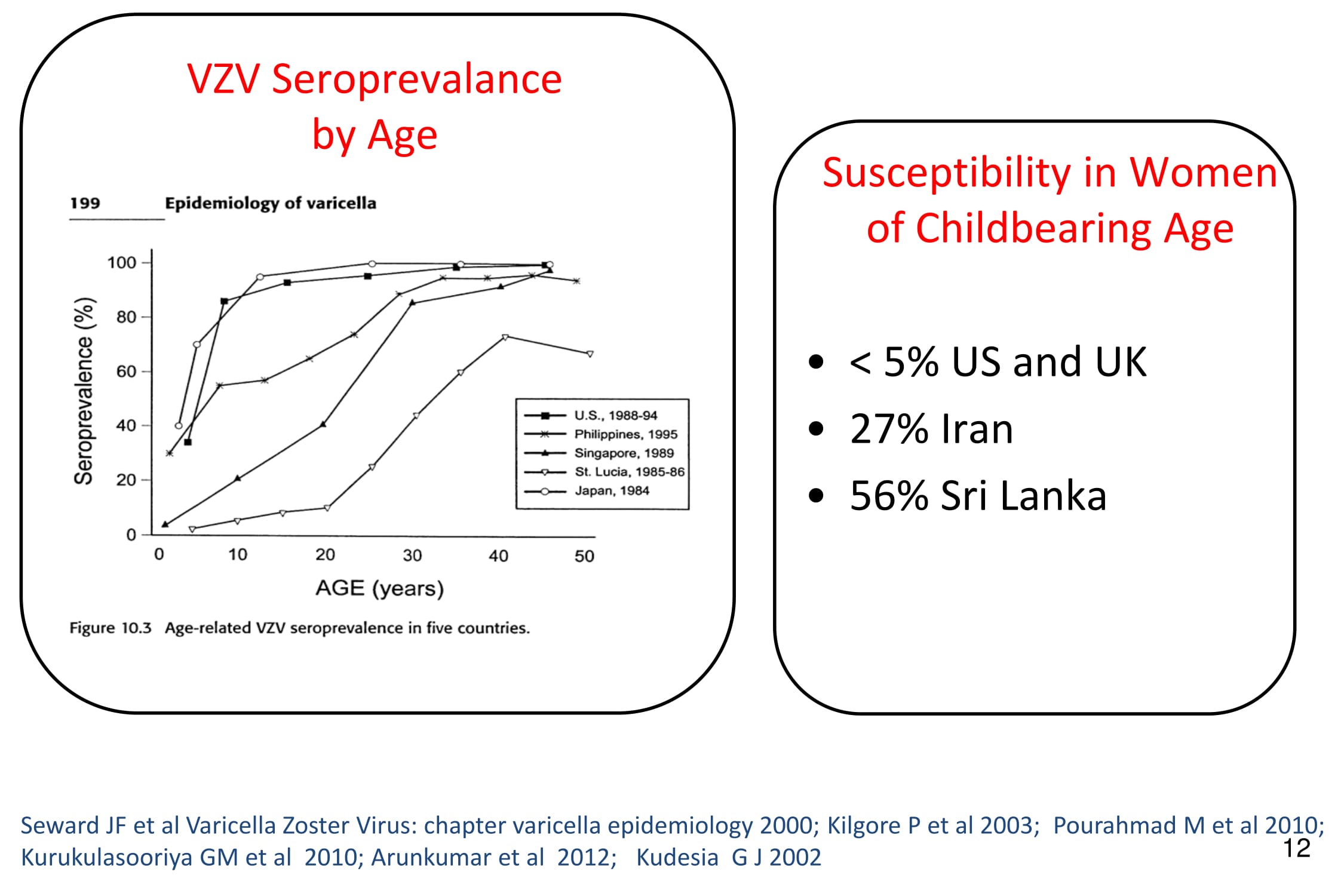
- The prevalence of chicken pox decreases with age.
- Varicella commonly affects children less than 10 years of age with the highest incidence among children 1-4 years of age.


Gender
- The prevalence and incidence of chickenpox generally do not vary by gender.
- Chickenpox is more prevalent in females between the ages of 15 – 24 as compared to males.[3]
Race
- There is no racial predilection for chickenpox.
Developed Countries
The epidemiology and demographics of chickenpox in developed countries are as follows:[2]
- Incidence
- 1500 – 1600 per 100,000 persons per year
- Case-fatality rate
- 3 deaths per 100,000 cases
Gallery
Gallery
-
-
-
-
-
-
![Varicella cases and states reporting, United States, 1972-1996. From Public Health Image Library (PHIL). [4]](https://www.wikidoc.org/images/2/26/Chickenpox40.jpeg) Varicella cases and states reporting, United States, 1972-1996. From Public Health Image Library (PHIL). [4]
Varicella cases and states reporting, United States, 1972-1996. From Public Health Image Library (PHIL). [4]

![Varicella cases and states reporting, United States, 1972-1996. From Public Health Image Library (PHIL). [4]](https://www.wikidoc.org/index.php/File%3AChickenpox40.jpeg)
References
References
- ↑ Choo PW, Donahue JG, Manson JE, Platt R (1995). “The epidemiology of varicella and its complications”. J. Infect. Dis. 172 (3): 706–12. PMID 7658062.
- ↑ 2.0 2.1 2.2 “www.who.int” (PDF).
- ↑ Fleming DM, Cross KW, Cobb WA, Chapman RS (2004). “Gender difference in the incidence of shingles”. Epidemiol. Infect. 132 (1): 1–5. PMC 2870070. PMID 14979582.
- ↑ “Public Health Image Library (PHIL)”.
Editor-In-Chief:
C. Michael Gibson, M.S., M.D. [1]; Associate Editor(s)-in-Chief: Aravind Reddy Kothagadi M.B.B.S[2]