

Health Dictionary
Reliable, easy-to-read patient information on common medical conditions — written in plain language, free of jargon, and grounded in current evidence. Browse the most frequent diagnoses, understand what they mean for everyday life, and learn which steps and questions help you have a focused conversation with your doctor.
Cleft lip and palate history and symptoms
Introduction
Overview
Overview
History and Symptoms
History and Symptoms
A child may have one or more of these conditions at birth.
A cleft lip may be just a small notch in the lip. It may also be a complete split in the lip that goes all the way to the base of the nose.
A cleft palate can be on one or both sides of the roof of the mouth. It may go the full length of the palate.
Other symptoms include:
- Misaligned teeth
- Change in nose shape (amount of distortion varies)
A direct result of an open connection between the oral cavity and nasal cavity is velopharyngeal insufficiency (VPI). Because of the gap, air leaks into the nasal cavity resulting in a hypernasal voice resonance and nasal emissions.[1] Secondary effects of VPI include speech articulation errors (e.g., distortions, substitutions, and omissions) and compensatory misarticulations (e.g., glottal stops and posterior nasal fricatives).[2].
Other problems that may arise because of a cleft lip or palate are:
- Failure to gain weight
- Feeding problems
- Poor growth
- Recurrent ear infections
-
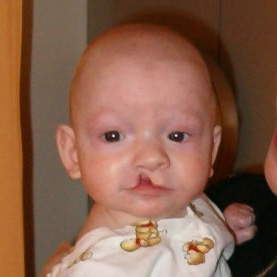 3 months old boy before going into surgery to have his unilateral incomplete cleft lip repaired.
 -
 The same boy, 1 month after the surgery.
 -
 Again the same boy, age 1.5 years old. Note how the scar gets less visible with age.


References
References
- ↑ Sloan GM (2000). “Posterior pharyngeal flap and sphincter pharyngoplasty: the state of the art”. Cleft Palate Craniofac. J. 37 (2): 112–22. PMID 10749049.
- ↑ Hill, J.S. (2001). Velopharyngeal insufficiency: An update on diagnostic and surgical techniques. Current Opinion in Otolaryngology and Head and Neck Surgery, 9, 365-368.
Editor-In-Chief: C. Michael Gibson, M.S., M.D. [1]