

Health Dictionary
Reliable, easy-to-read patient information on common medical conditions — written in plain language, free of jargon, and grounded in current evidence. Browse the most frequent diagnoses, understand what they mean for everyday life, and learn which steps and questions help you have a focused conversation with your doctor.
Colloid cyst of third ventricle
Introduction
Overview
Overview
A colloid cyst is a cyst containing gelatinous material in the brain. It is almost always found just posterior to the foramen of Monro in the anterior aspect of the third ventricle, originating from the roof of the ventricle. Because of its location it can cause obstructive hydrocephalus and increased intracranial pressure. These cysts account for approximately 1% of all intracranial tumors. Symptoms can include headache, vertigo, memory deficits, diplopia and behavioral disturbances. The developmental origin is unclear, though they may be of endodermal origin, which would explain the mucin-producing, ciliated cell type. These cysts can be surgically resected, and opinion is divided about the advisability of this.
Diagnosis
Diagnosis
CT
- Hyperdense mass in the anterior third ventricle
- Hyperdensity is due to high protein concentration
- Cyst rim may faintly enhance
MRI
- T1: High T1 signal in 50% of cases
- T2: The higher the protein concentration, the lower the signal intensity.
-
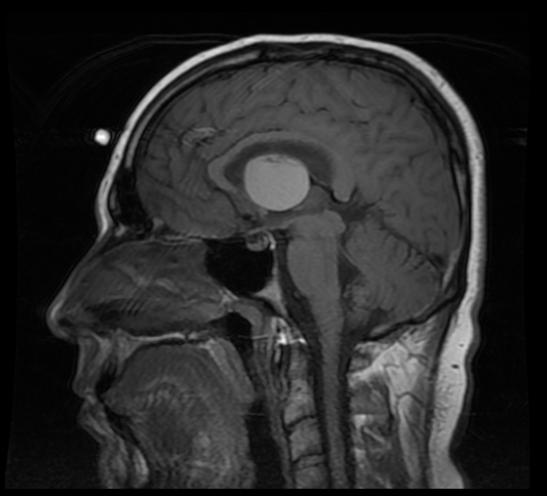 Colloid cyst
 -
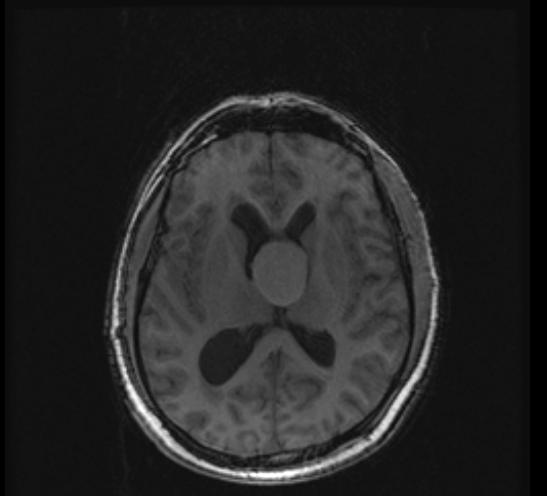 Colloid cyst
 -
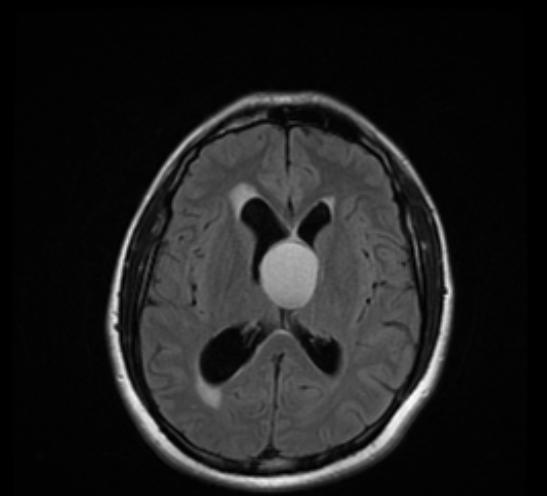 Colloid cyst


External links
External links
Editor-In-Chief: C. Michael Gibson, M.S., M.D. [1]