

Health Dictionary
Reliable, easy-to-read patient information on common medical conditions — written in plain language, free of jargon, and grounded in current evidence. Browse the most frequent diagnoses, understand what they mean for everyday life, and learn which steps and questions help you have a focused conversation with your doctor.
Congenital diaphragmatic hernia other diagnostic studies
Introduction
Overview
Overview
Diagnostic studied that can be utilized include high resolution ultrasound, chorionic villus sampling, amniocentesis, microarray analysis, and karyotyping. Although these studies are not necessarily diagnostic for CDH, they help identify underlying genetic defects which have a high correlation rate with diaphragmatic hernia’s.
Other Diagnostic Studies
Other Diagnostic Studies
- High resolution Ultrasound: assess for birth defects that may have been overlooked in initial ultrasounds; often done at 18-22 weeks[1]
- Chorionic villus sampling: collecting a sample of placenta tissues to determine the presence or absence of genetic or chromosomal disorders; performed between 10-12 weeks
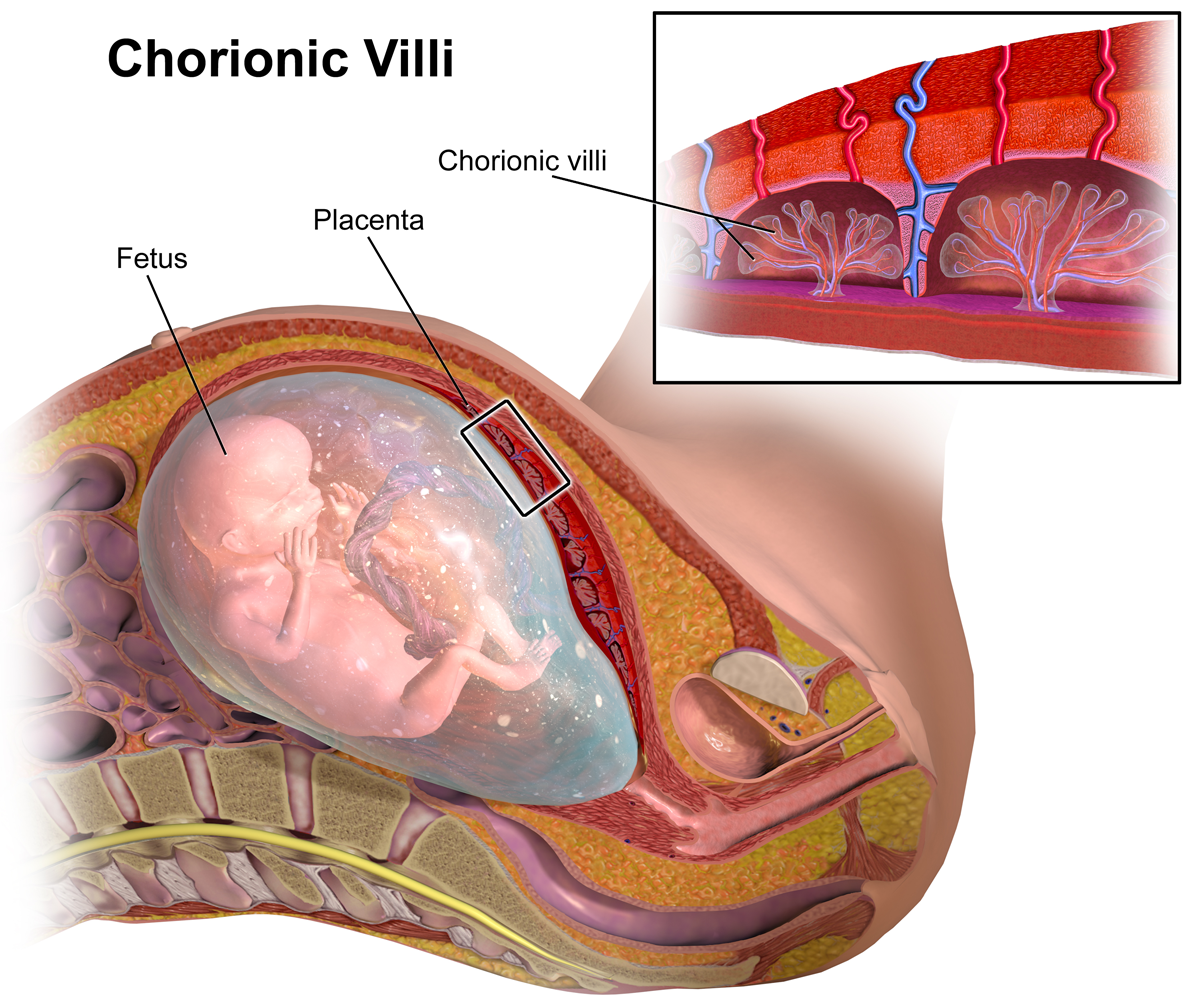
Chorionic Villus Sampling - Amniocentesis: process by which fluid containing cells surrounding the baby is collected. These cells can then be tested for genetic defects. Due to the higher risk carried by this procedure, it is not a routine one and is performed only when indicated after other abnormal tests; often performed between 15-18 weeks of gestation
- Chromosomal microarray analysis: Single Nucleotide Polymorphisms (SNPs) can detect microdeletions and microduplications
- Karyotyping: a process by which chromosomes are identified and sorted[2]


References
References
- ↑ https://www.cdc.gov/ncbddd/birthdefects/diagnosis.html. Missing or empty
|title=(help) - ↑ Shemilt L, Verbanis E, Schwenke J, Estandarte AK, Xiong G, Harder R; et al. (2015). “Karyotyping human chromosomes by optical and X-ray ptychography methods”. Biophys J. 108 (3): 706–13. doi:10.1016/j.bpj.2014.11.3456. PMC 4317545. PMID 25650937.
Editor-In-Chief: C. Michael Gibson, M.S., M.D. [1]; Associate Editor(s)-in-Chief: Arooj Naz, M.B.B.S