

Health Dictionary
Reliable, easy-to-read patient information on common medical conditions — written in plain language, free of jargon, and grounded in current evidence. Browse the most frequent diagnoses, understand what they mean for everyday life, and learn which steps and questions help you have a focused conversation with your doctor.
Courvoisier's sign
Introduction
Courvoisier’s law (or Courvoisier syndrome, or Courvoisier’s sign) states that in the presence of a palpable gall bladder, jaundice is unlikely to be caused by gallstones. This is because gallstones are formed over a longer period of time, and this results in a shrunken, fibrotic gall bladder which does not distend easily. Therefore the gall bladder is more often enlarged in pathologies that cause obstruction of the biliary tree over a shorter period of time such as pancreatic malignancy.[1]
It is named for Ludwig Georg Courvoisier.[2]
(Images courtesy of Charlie Goldberg, M.D., UCSD School of Medicine and VA Medical Center, San Diego, California)
-
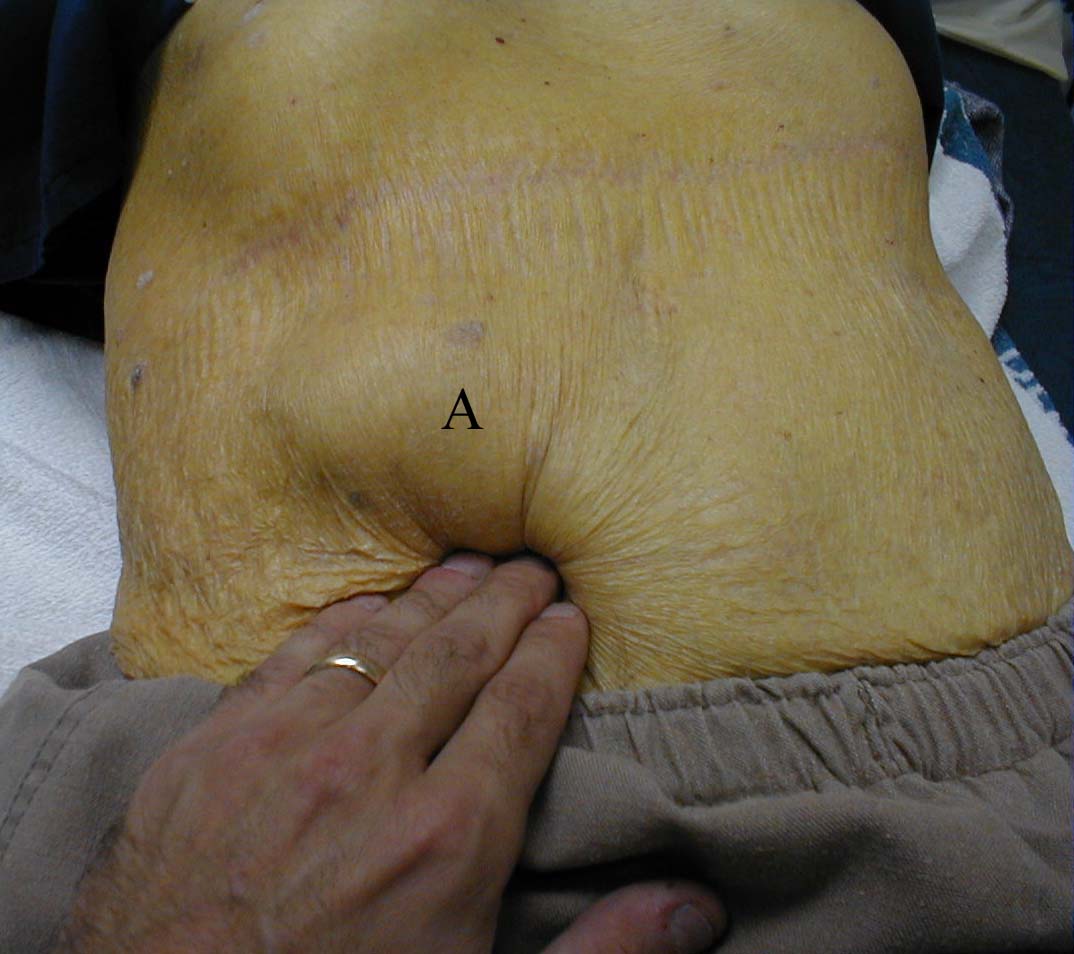 Cholangiocarcinoma has caused patient’s gall bladder to become markedly dilated, and therefore, easily palpable (A). Note skin is also jaundiced due to biliary tract obstruction.
 -
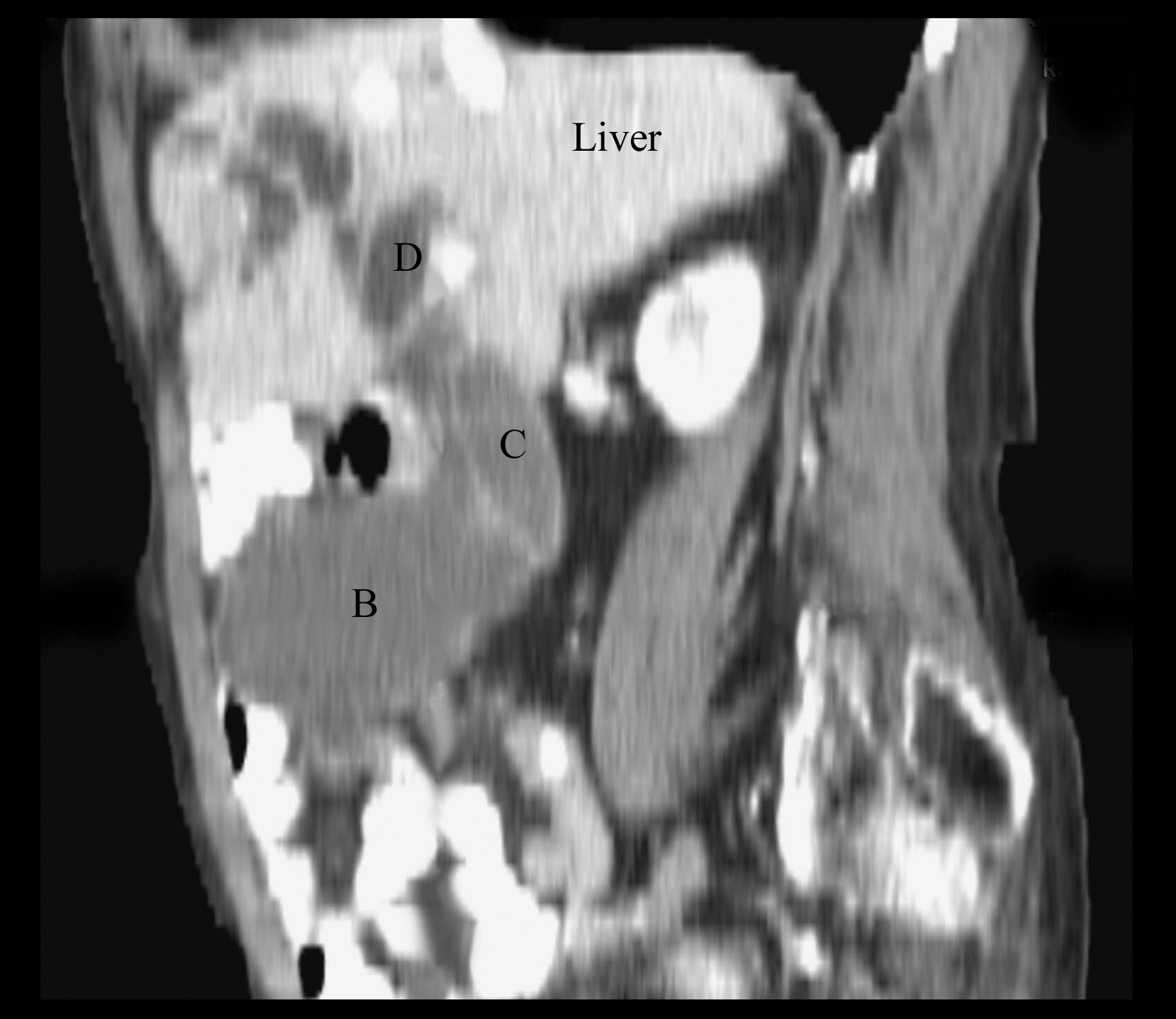 CT sagital image demonstrates dilated gall bladder (B), dilated common bile duct (C), and dilated intrahepatic ducts (D). Courvoisier described the same findings in patients with pancreatic cancer.


References
References
- ↑ Parmar MS (2003). “Courvoisier’s law”. CMAJ. 168 (7): 876–7. PMC 151998. PMID 12668550. Unknown parameter
|month=ignored (help) - ↑ Template:WhoNamedIt
External links
External links
- CancerHelp.org
- WhoNamedIt
- PMID 6822180
- Bio of Courvoisier
Template:Eponymous medical signs for digestive system and general abdominal signs
Editor-In-Chief: C. Michael Gibson, M.S., M.D. [1]