

Health Dictionary
Reliable, easy-to-read patient information on common medical conditions — written in plain language, free of jargon, and grounded in current evidence. Browse the most frequent diagnoses, understand what they mean for everyday life, and learn which steps and questions help you have a focused conversation with your doctor.
Epicardial
Introduction
Epicardial is a term used by some cardiac surgeons meaning ” on the outside of the cardiac muscle“.
Pathological Findings
Pathological Findings
-
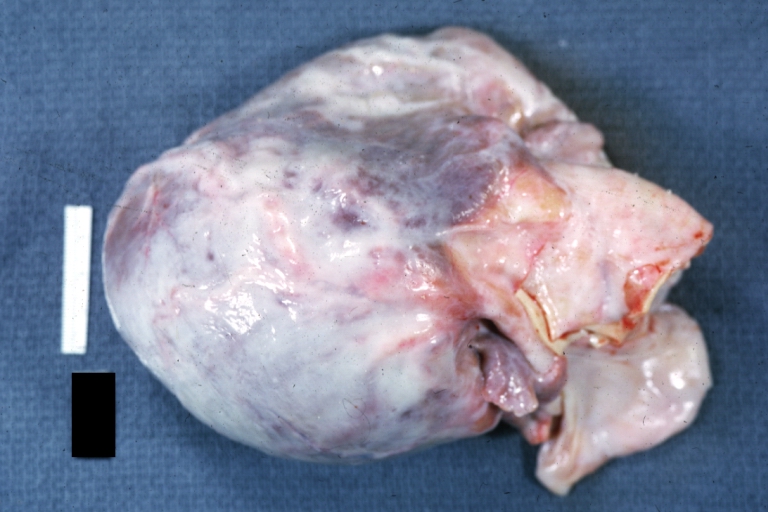 Epicardial Scarring: Gross, marked thickening of epicardium, sugar-coated appearance cause unknown
 -
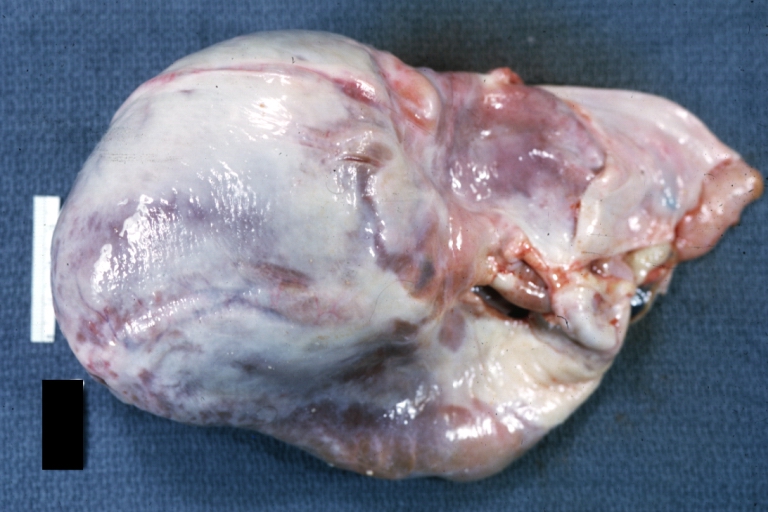 Epicardial Scarring: Gross, marked thickening of epicardium, sugar-coated appearance


-
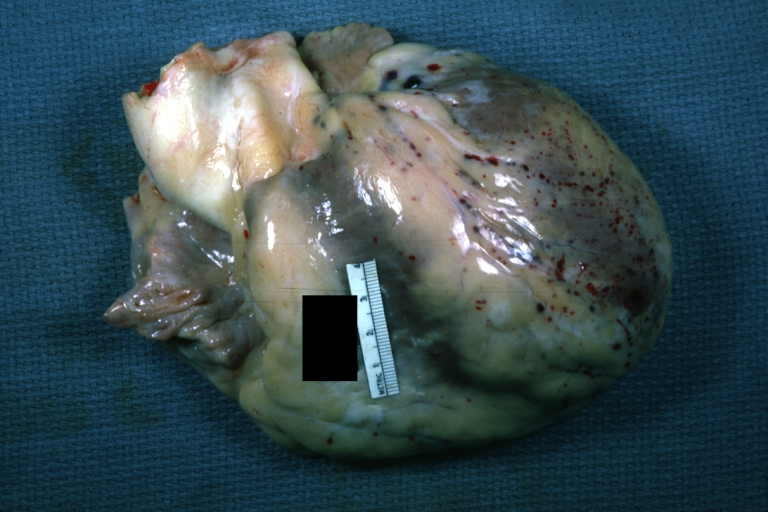 Epicardial petechiae: Gross, an excellent example of infarct heart with petechiae.
 -
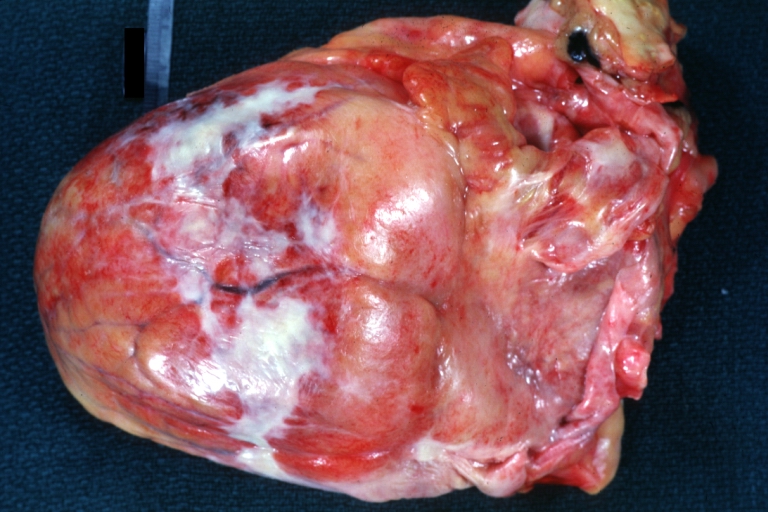 Heart: Soldiers Patch: Gross, natural color, large area of epicardial fibrosis over mid-portion of left ventricle.


-
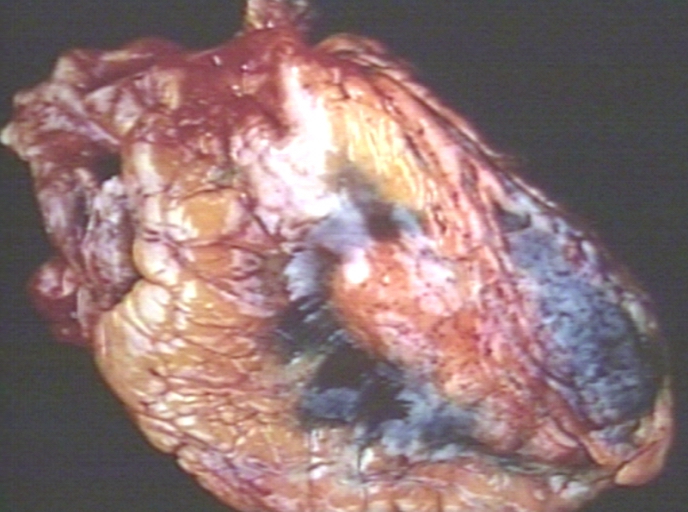 Disseminated intravascular coagulation; External surface of the heart showing epicardial petechiae
 -
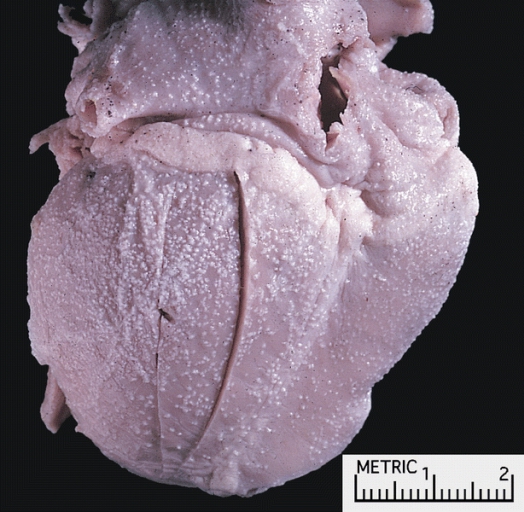 Cardiac rhabdomyoma: Note the multiple, minute tumors studding the epicardial surface. This pattern of involvement is typical in patients with tuberous sclerosis.


-
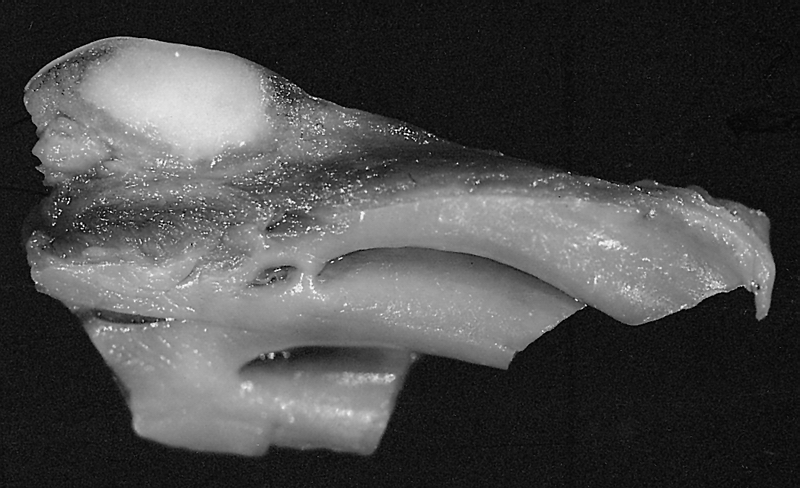 Granular cell tumor: Localized epicardial tumor: Note the cut surface of circumscribed white tumor on the epicardial surface and the underlying right ventricular trabeculations.
 -
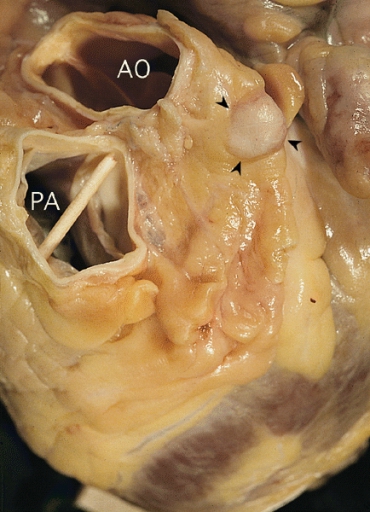 Granular cell tumor: Localized epicardial tumor (arrowheads) overlying the left main coronary artery close to its takeoff. Note aorta (AO) posterior to the pulmonary artery (PA).


-
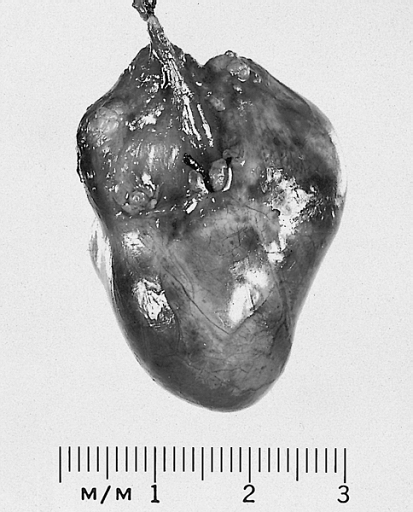 Bronchogenic cyst: This example was removed from the epicardial surface of a 13-year-old.
 -
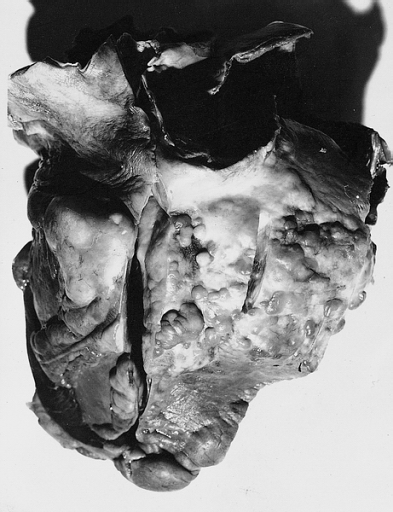 Liposarcoma, Heart: Gross specimen demonstrates the posterior wall of the heart studded with multiple epicardial nodules over the right and left ventricles.


-
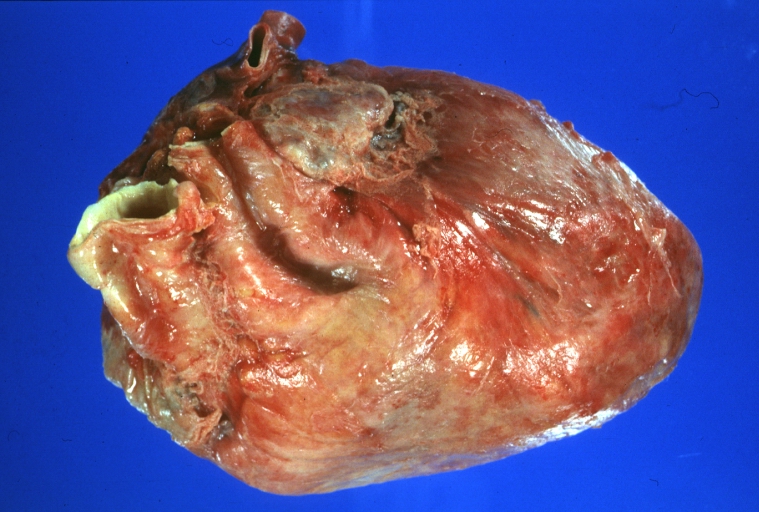 Acute myocardial infarction with epicardial fibrin
 -
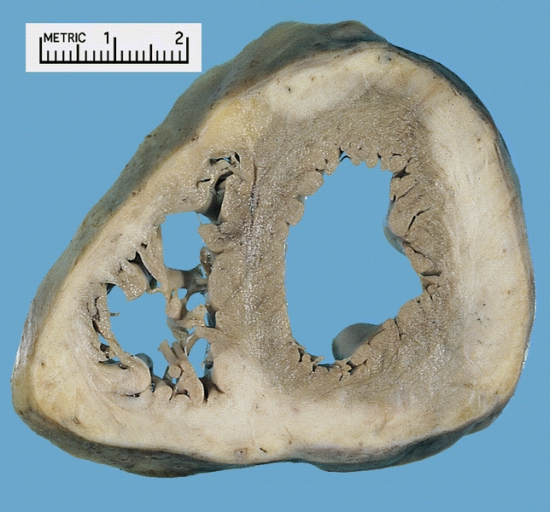 The heart in Leukemia: Note the biventricular, predominantly subepicardial diffuse infiltrates. The patient was a 45-year-old man with acute myelogenous leukemia who died with disseminated disease.


Editor-In-Chief: C. Michael Gibson, M.S., M.D. [1]