Health Dictionary Find a Doctor

Glioma MRI

Editor-In-Chief: C. Michael Gibson, M.S., M.D. [1]; Associate Editor-In-Chief: Cafer Zorkun, M.D., Ph.D. [2], Sujit Routray, M.D. [3]

Overview

Overview

Brain MRI may be diagnostic of glioma. The MRI findings of glioma vary with the tumor grade and type.[1][2][3][4][5][6]

MRI

MRI

  • Brain MRI may be diagnostic of glioma.
  • The MRI findings of glioma vary with the tumor grade and type. Common findings are listed below:[1][2][3][4][5][6]
Type of glioma MRI findings

Pilocytic astrocytoma

1. T1: Iso- to hypointense solid component
2. T2: Hyperintense solid component

Low-grade astrocytoma

1. T1:
  • Isointense to hypointense
  • Confined to the white matter and causes expansion of the adjacent cortex
2. T2/FLAIR:
  • Mass-like hyperintense signals
  • Confined to the white matter and causes expansion of the adjacent cortex
  • Cortex can also be involved in late cases in comparison to the oligodendroglioma, which is a cortical based tumor from the start
  • Microcystic changes along the line of spread
  • High T2 signal (not related to cellularity or cellular atypia, but rather edema, demyelination, and other degenerative changes)
3. DWI:
  • No restricted diffusion
  • Increased diffusibility
4. T1 C+ (Gd): No enhancement
5. MR spectroscopy:
6. MR perfusion: No elevation of rCBV

Anaplastic astrocytoma

1. T1: Hypointense
2. T2: Hyperintense but can be heterogeneous, if calcification of blood present
3. T1 C+ (Gd):
  • Variable enhancement
  • Presence of ring enhancement suggests central necrosis
4. MR spectroscopy:
  • Increased choline/creatine ratio
  • NAA preserved or mildly depressed
  • No significant lactate
  • Intermediate levels of myo-inositol (lower than low grade, higher than glioblastoma)
5. MR perfusion: Elevated cerebral blood volume

Glioblastoma multiforme

1. T1:
  • Hypo- to isointense mass within white matter
  • Central heterogenous signal (necrosis, intratumoral hemorrhage)
2. T1 C+ (Gd):
  • Variable enhancement
  • Typically peripheral and irregular with nodular components
  • Completely surrounds necrosis
3. T2/FLAIR:
  • Hyperintense
  • Surrounded by vasogenic edema
  • Flow voids
4. GE/SWI:
  • Susceptibility artifact on T2 from blood products or calcification
  • Low intensity rim from blood product
  • Located inside the peripheral enhancing component
  • Absent dual rim sign
5. DWI/ADC:
  • Solid component
  • Elevated signal on DWI is common in solid / enhancing component
  • Diffusion restriction is typically intermediate similar to normal white matter, but significantly elevated compared to surrounding vasogenic edema
  • ADC values correlate with grade:
  • WHO IV (GBM) = 745 ± 135 x 10-6 mm2/s
  • WHO III (anaplastic) = 1067 ± 276 x 10-6 mm2/s
  • WHO II (low grade) = 1273 ± 293 x 10-6 mm2/s
  • ADC threshold value of 1185 x 10-6 mm2/s sensitivity (97.6%) and specificity (53.1%) in the discrimination of high-grade (WHO grade III & IV) and low-grade (WHO grade II) gliomas
6. Non-enhancing necrotic / cystic component: Vast majority (>90%) have facilitated diffusion (ADC values > 1000 x 10-6 mm2/s)
7. MR perfusion: rCBV elevated compared to lower grade tumors and normal brain
8. MR spectroscopy:

Oligodendroglioma

1. T1: Hypointense
2. T2: Hyperintense
3. SWI: Calcium seen as areas of “blooming”
4. T1 C+ (Gd): Contrast enhancement is common
5. DWI: No diffusion restriction
6. MR perfusion: increased vascularity “chicken wire” network of vascularity results in elevated relative cerebral blood volume (rCBV)

Ependymoma

1. T1: Iso- to hypointense solid component
2. T2: Hyperintense to white matter
3. SWI: Foci of blooming from hemorrhage or calcification
4. T1 C+ (Gd): Heterogenous enhancement
5. DWI/ADC: Restricted diffusion in solid components
6. MR spectroscopy:


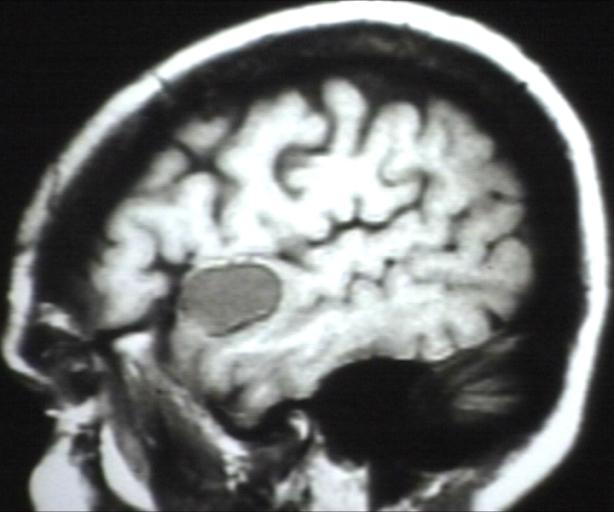
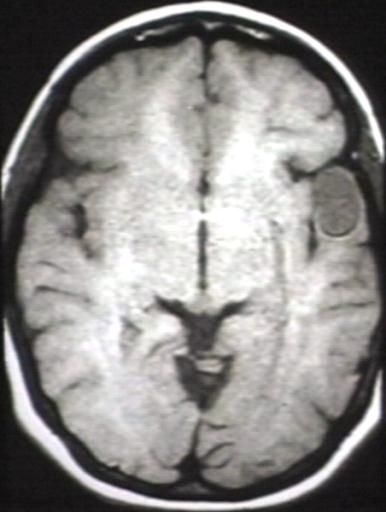
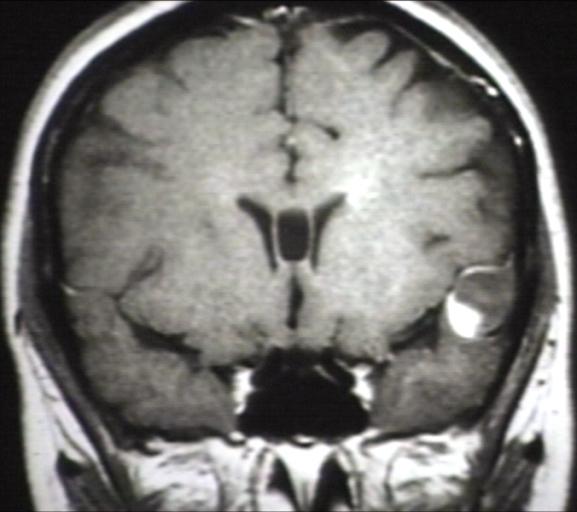
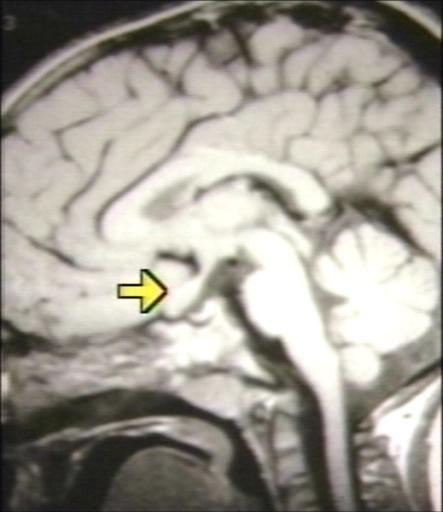
Images shown below are courtesy of Professor Peter Anderson DVM PhD and published with permission © PEIR, University of Alabama at Birmingham, Department of Pathology

References

References

  1. 1.0 1.1 Radiological findings of pilocytic astrocytoma. Dr Bruno Di Muzio and Dr Frank Gaillard et al. Radiopaedia.org 2015. http://radiopaedia.org/articles/pilocytic-astrocytoma
  2. 2.0 2.1 Radiological findings of low grade infiltrative astrocytoma. Dr Henry Knipe and Dr Frank Gaillard et al. http://radiopaedia.org/articles/low-grade-infiltrative-astrocytoma
  3. 3.0 3.1 Radiological findings of anaplastic astrocytoma. Dr Bruno Di Muzio and Dr Frank Gaillard et al. http://radiopaedia.org/articles/anaplastic-astrocytoma
  4. 4.0 4.1 Radiological findings of glioblastoma. Dr Dylan Kurda and Dr Frank Gaillard et al. http://radiopaedia.org/articles/glioblastoma
  5. 5.0 5.1 Radiological findings of oligodendroglioma. Dr Henry Knipe and Dr Frank Gaillard et al. http://radiopaedia.org/articles/oligodendroglioma
  6. 6.0 6.1 Radiological findings of ependymoma. Dr Bruno Di Muzio and Dr Frank Gaillard et al. Radiopaedia.org 2015. http://radiopaedia.org/articles/ependymoma


Template:WikiDoc Sources

Looking for the patient version?

Back to the patient-friendly article

© 2026 MyEClinic – IFTM Institut für Telematik in der Medizin GmbH