

Health Dictionary
Reliable, easy-to-read patient information on common medical conditions — written in plain language, free of jargon, and grounded in current evidence. Browse the most frequent diagnoses, understand what they mean for everyday life, and learn which steps and questions help you have a focused conversation with your doctor.
Graves' disease physical examination
Introduction
Overview
Overview
Some of the physical examination findings in Graves’ disease include tachycardia, stare, eyelid lag, proptosis, goiter, resting tremor, hyperreflexia, and a warm, moist, and smooth skin.
Physical Examination
Physical Examination
- Signs include tachycardia, stare, eyelid lag, proptosis, goiter, resting tremor, hyperreflexia, and warm, moist, and smooth skin. [1]
- Rare findings (in <1% of patients) include localized dermopathy (i.e., pretibial myxedema) and thyroid acropachy (i.e., clubbing).
- Goiter (an enlarged thyroid gland, sometimes detectable as a swelling in the neck) and exophthalmos (protuberance of one or both eyes) may be seen on physical examination.
-
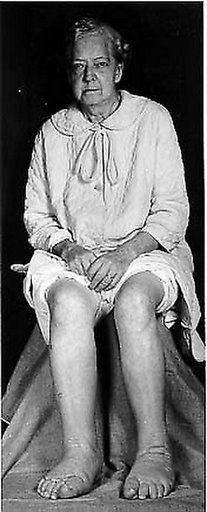 Pretibial myxedema (Grave’s Disease)
 -
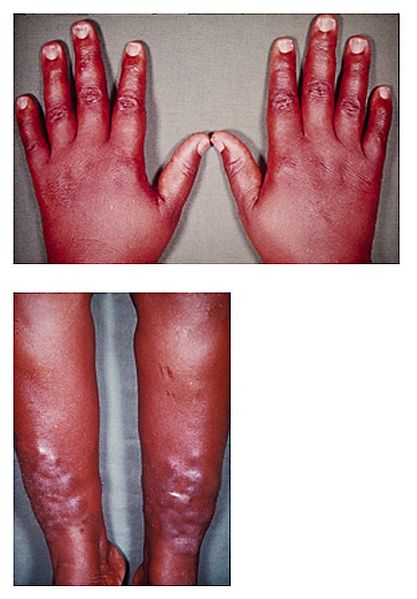 Pretibial myxedema and acropachy of hyperthyroidism


References
References
- ↑ Terry J. Smith & Laszlo Hegedus (2016). “Graves’ Disease”. The New England journal of medicine. 375 (16): 1552–1565. doi:10.1056/NEJMra1510030. PMID 27797318. Unknown parameter
|month=ignored (help)
Editor-In-Chief: C. Michael Gibson, M.S., M.D. [1],Associate Editor(s)-in-Chief: Seyedmahdi Pahlavani, M.D. [2]