

Health Dictionary
Reliable, easy-to-read patient information on common medical conditions — written in plain language, free of jargon, and grounded in current evidence. Browse the most frequent diagnoses, understand what they mean for everyday life, and learn which steps and questions help you have a focused conversation with your doctor.
Hamartoma MRI
Introduction
Overview
Overview
MRI is the modality of choice for assessment of hypothalamic, spleen, kidney, and other abdominal hamartomas. On MRI, hamartoma is characterized by a heterogeneous signal in T1 and high signal due to fat and cartilaginous components in T2.
MRI
MRI
MRI may be helpful in the diagnosis of hamartomas. Findings on MRI suggestive of hamartomas include:[1][2][3]
- T1: isointense to cerebral cortex
- T1 contrast: no contrast enhancement
- T2: iso to hyperintense to cerebral cortex, the higher the proportion of glial cells, the higher the T2 signal.
- MR spectroscopy
Gallery
Gallery
Hypothalamic Hamartoma
-
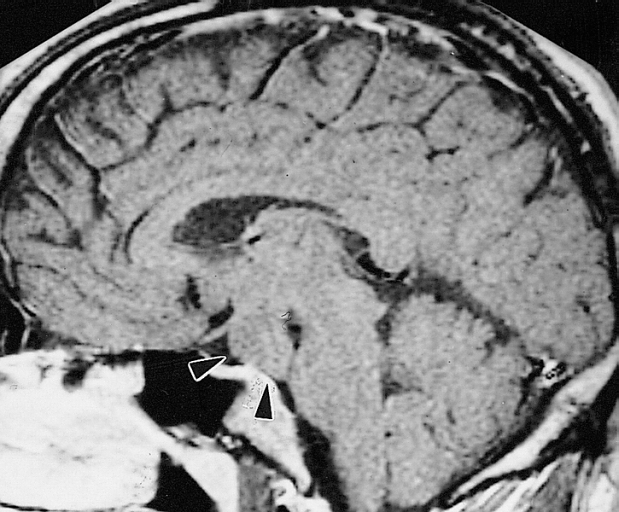 MRI showing hypothalamic hamartoma(Images courtesy of RadsWiki)

Biliar Hamartomas
-
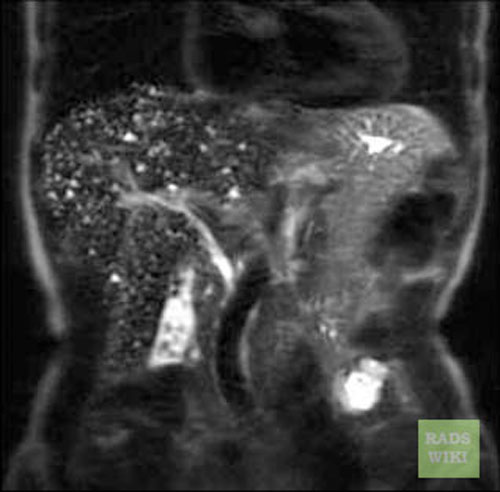 Biliary hamartomas(Images courtesy of RadsWiki)
 -
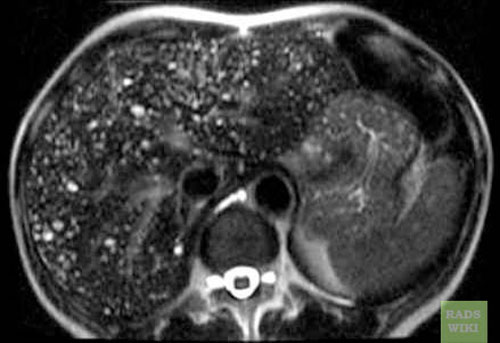 Biliary hamartomas(Images courtesy of RadsWiki)
 -
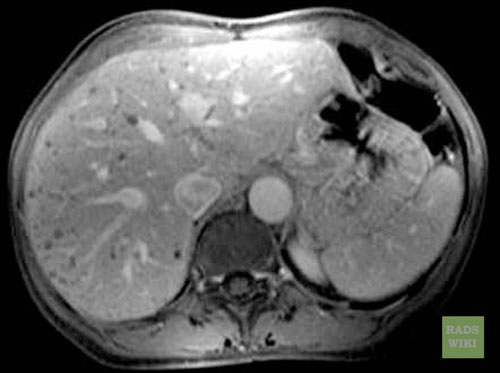 Biliary hamartomas(Images courtesy of RadsWiki)
 -
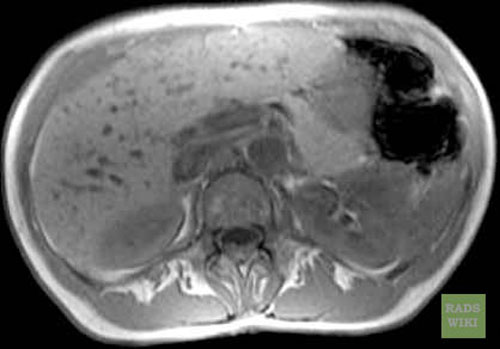 Biliary hamartomas(Images courtesy of RadsWiki)


References
References
- ↑ Hypothalamic hamartoma.Dr Donna D’Souza et al. Radiopedia.http://radiopaedia.org/articles/pulmonary-hamartoma-1 Accessed on December 09, 2015
- ↑ Leiter Herrán F, Restrepo CS, Alvarez Gómez DI, Suby-Long T, Ocazionez D, Vargas D (March 2017). “Hamartomas from head to toe: an imaging overview”. Br J Radiol. 90 (1071): 20160607. doi:10.1259/bjr.20160607. PMC 5601532. PMID 27936889.
- ↑ Saleem SN, Said AH, Lee DH (2007). “Lesions of the hypothalamus: MR imaging diagnostic features”. Radiographics. 27 (4): 1087–108. doi:10.1148/rg.274065123. PMID 17620469.
Editor-In-Chief: C. Michael Gibson, M.S., M.D. [1]Associate Editor(s)-in-Chief: Maria Fernanda Villarreal, M.D. [2] Vamsikrishna Gunnam M.B.B.S [3]