

Health Dictionary
Reliable, easy-to-read patient information on common medical conditions — written in plain language, free of jargon, and grounded in current evidence. Browse the most frequent diagnoses, understand what they mean for everyday life, and learn which steps and questions help you have a focused conversation with your doctor.
Hirschsprung's disease other imaging findings
Introduction
Overview
Overview
Barium enema is the mainstay of Hirschsprung’s disease diagnosis. Barium enema findings suggestive of Hirschsprung’s disease include a transition zone between the narrow and dilated portions of the colon in the shape of an inverted cone, which is the most characteristic radiologic finding.
Other Imaging Findings
Other Imaging Findings
Barium Enema
- Barium enema studies demonstrate patency of the colon, which is short but usually normal in caliber.
- A transition zone between the narrow and dilated portions of the colon in the shape of an inverted cone is the most characteristic radiologic finding.
- When this transition zone is observed, the examination should be discontinued because filling of proximal dilated bowel beyond the transition zone may lead to impaction.
- Radiologic diagnosis of total colonic aganglionosis is difficult. Findings from barium enema examination may be normal or may show a short colon of normal caliber, microcolon, or a transition zone in the ileum.[1]
-
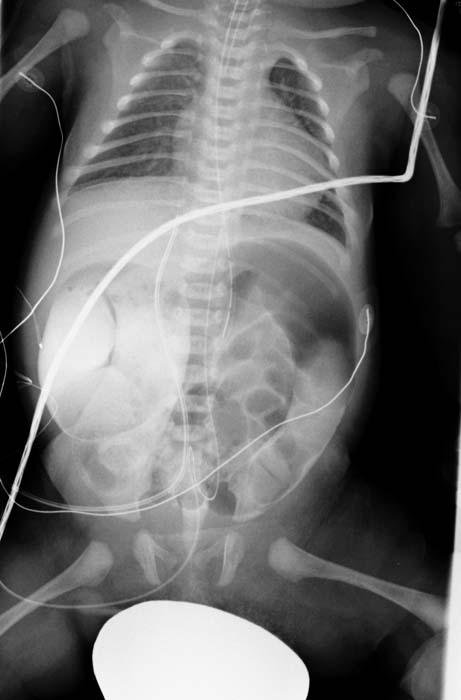 Case courtesy of Radswiki, Radiopaedia.org, rID: 11495
 -
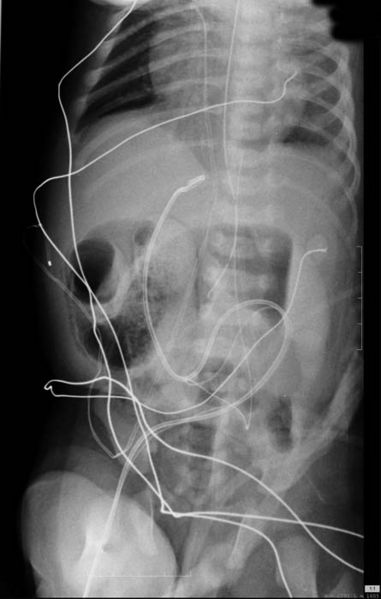 Case courtesy of Radswiki, Radiopaedia.org, rID: 11495
 -
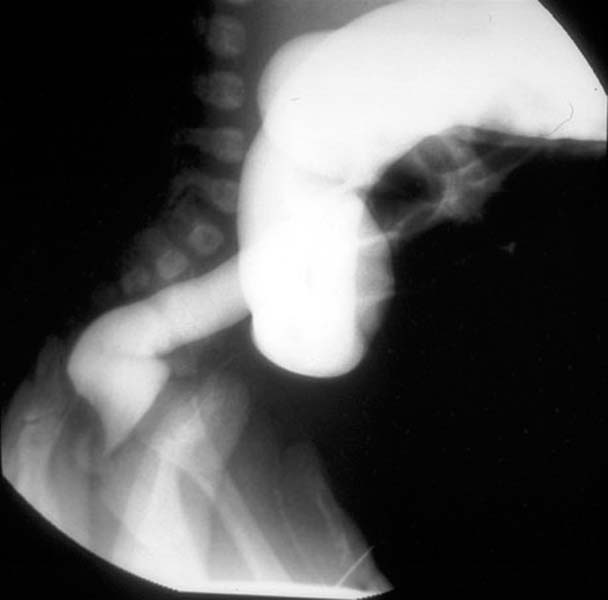 Case courtesy of Radswiki, Radiopaedia.org, rID: 11495
 -
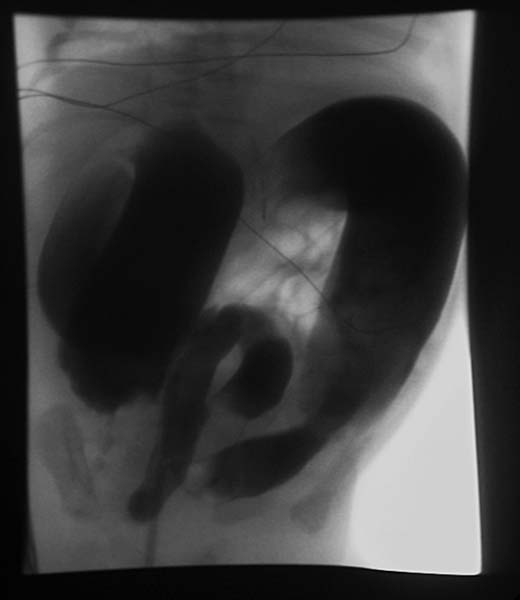 Case courtesy of Radswiki, Radiopaedia.org, rID: 11495


References
References
- ↑ Burkardt DD, Graham JM, Short SS, Frykman PK (2014). “Advances in Hirschsprung disease genetics and treatment strategies: an update for the primary care pediatrician”. Clin Pediatr (Phila). 53 (1): 71–81. doi:10.1177/0009922813500846. PMID 24002048.
Editor-In-Chief: C. Michael Gibson, M.S., M.D. [1] ; Associate Editor(s)-in-Chief: Aditya Ganti M.B.B.S. [2]