

Health Dictionary
Reliable, easy-to-read patient information on common medical conditions — written in plain language, free of jargon, and grounded in current evidence. Browse the most frequent diagnoses, understand what they mean for everyday life, and learn which steps and questions help you have a focused conversation with your doctor.
Ingrown nail pathophysiology
Introduction
Pathophysiology
Pathophysiology
If an ingrown nail is left untreated, there exists a high risk of dangerous infection. The mechanism of how and why this infection occurs is as follows: When the skin around the nail gets infected, it begins to swell up and put even more pressure against the nail. Ingrown nails can produce a spear shaped wedge of nail on the lateral side of the toe which will progressively become more embedded into the toe tissue as the nail grows forward. In the worst case, the swelling will begin putting sideways pressure on the nail, causing it to grow at a slant. This will cause both sides of the nail to eventually become ingrown and swollen. Eventually the swollen parts of the skin will begin to harden and fold over the nail.
Gross Pathology
-
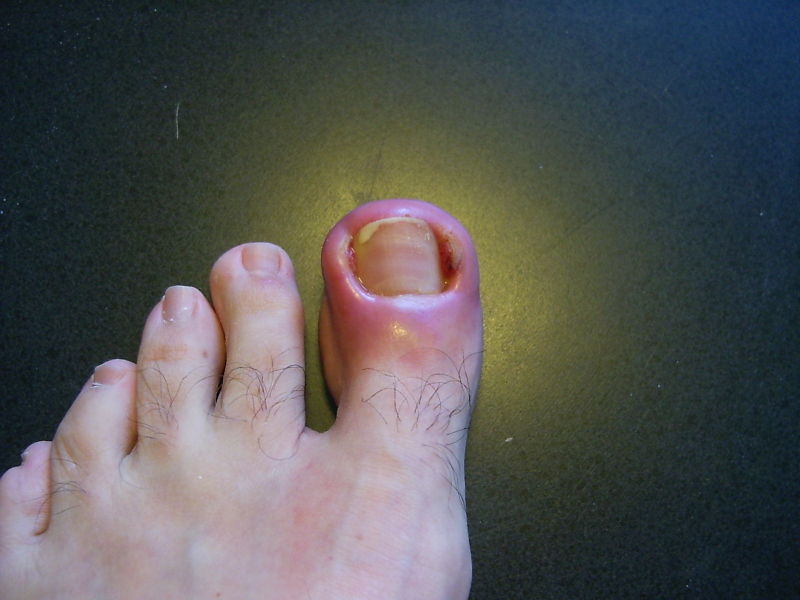 Chronically ingrown toenail (that twice had failed wedge resections on both sides)
 -
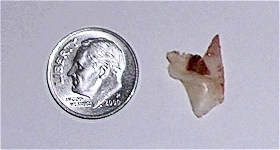 A resected wedge from the left side of the left big toe, shown to scale.
 -
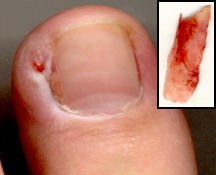 Post-surgery toe with removed nail shard


References
References
Editor-In-Chief: C. Michael Gibson, M.S., M.D. [1]