

Health Dictionary
Reliable, easy-to-read patient information on common medical conditions — written in plain language, free of jargon, and grounded in current evidence. Browse the most frequent diagnoses, understand what they mean for everyday life, and learn which steps and questions help you have a focused conversation with your doctor.
Lymphangioma physical examination
Introduction
Overview
Overview
Lymphangioma patients often appear healthy. Physical examination of patients with lymphangioma is usually remarkable for painless, compressible, soft neck mass that often transilluminates is a diagnostic finding on physical exam.
Physical Examination
Physical Examination
Physical examination of patients with lymphangioma is usually normal except cystic swellings found in the residing organs.[1]
Appearance of the Patient
- Patients with lymphangioma usually appear normal.
Vital Signs
- No fever
- Normal Heart rate with regular pulse
- Normal respiration rate
- Within normal range
Skin
- Skin examination of patients with lymphangioma is usually normal or the skin overlying cystic swelling may look bluish.
-
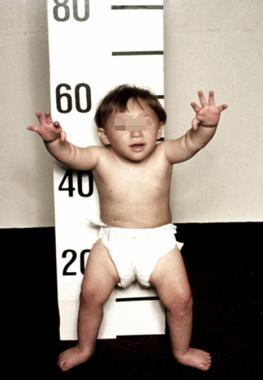 Description (Adapted from Dermatology Atlas)

HEENT
- HEENT examination of patients with lymphangioma is usually normal.
- No Abnormalities of the head/hair
- No Evidence of trauma
- No Icteric sclera
- No Nystagmus
- Extra-ocular movements may be abnormal depending on retro-orbital location of lymphangioma
- Pupils reactive to light / reactive to accommodation
- Hearing acuity is normal
- Weber test is normal
- Rinne test is normal
- No Exudate from the ear canal
- No Tenderness upon palpation of the ear pinnae/tragus (anterior to ear canal)
- No Inflamed nares / congested nares
- No Purulent exudate from the nares
- No Facial tenderness
- No Erythematous throat with/without tonsillar swelling, exudates, and/or petechiae
Neck
- Neck examination of patients with lymphangioma may show soft cystic swelling.
- No Jugular venous distension
- No Carotid bruits may be auscultated unilaterally/bilaterally using the bell/diaphragm of the otoscope
- No Lymphadenopathy (describe location, size, tenderness, mobility, and symmetry)
- No Thyromegaly / thyroid nodules
- No Hepatojugular reflux
Lungs
- Asymmetric chest expansion OR decreased chest expansion depending on location of lymphangioma
- Lungs are hyporesonant.
- No Fine/coarse crackles upon auscultation of the lung bases/apices unilaterally/bilaterally
- No Rhonchi
- Vesicular breath sounds OR distant breath sounds may be heard.
- Wheezing may be present
- Egophony absent
- Bronchophony present
- Reduced tactile fremitus
Heart
- Cardiovascular examination of patients with lymphangioma is usually normal.
Abdomen
- Abdominal examination of patients with lymphangioma is usually normal.
Back
- Back examination of patients with lymphangioma is usually normal.
Genitourinary
- Genitourinary examination of patients with lymphangioma is usually normal.
Neuromuscular
- Neuromuscular examination of patients with lymphangioma is usually normal.
Extremities
- Extremities examination of patients with lymphangioma is usually normal.
References
References
- ↑ Patoulias D, Patoulias I, Kaselas C, Kalogirou M, Kyriakos C, Konstantinos F, Feidantsis T, Eleni P (2017). “Cystic Lymphangioma of the Chest Wall in a 5-Year-Old Male Patient: A Rare and Atypical Localization-A Case Report and Comprehensive Review of the Literature”. Case Rep Pediatr. 2017: 2083204. doi:10.1155/2017/2083204. PMC 5672607. PMID 29201481.
Editor-In-Chief: C. Michael Gibson, M.S., M.D. [1]; Associate Editor(s)-in-Chief: Badria Munir M.B.B.S.[2]