

Health Dictionary
Reliable, easy-to-read patient information on common medical conditions — written in plain language, free of jargon, and grounded in current evidence. Browse the most frequent diagnoses, understand what they mean for everyday life, and learn which steps and questions help you have a focused conversation with your doctor.
Lymphoblast
Introduction

Overview
Overview
Lymphoblasts are immature cells which typically differentiate to form mature lymphocytes. Normally lymphoblasts are found in the bone marrow, but in acute lymphoblastic leukemia (ALL), lymphoblasts proliferate uncontrollably and are found in large numbers in the peripheral blood.
Although commonly lymphoblast refers to a precursor cell in the maturation of leukocytes, the usage of this term is sometimes inconsistent. The Chronic Lymphocytic Leukemia Research Consortium defines a lymphoblast as “A lymphocyte that has become larger after being stimulated by an antigen. Lymphoblasts look like immature lymphocytes, and were once thought to be precursor cells.”[1]. Commonly, when speaking about leukemia, “blast” is used as an abbreviation for lymphoblasts.
Additional images
Additional images
-
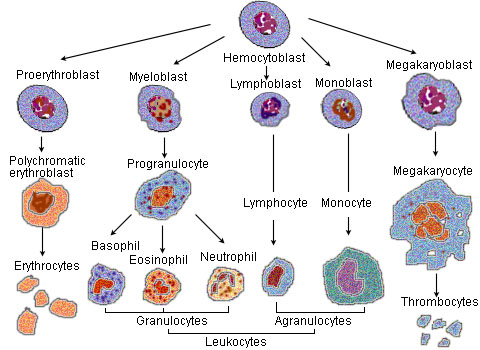 Blood cell lineage

They are 2.5 nanometers in size