

Health Dictionary
Reliable, easy-to-read patient information on common medical conditions — written in plain language, free of jargon, and grounded in current evidence. Browse the most frequent diagnoses, understand what they mean for everyday life, and learn which steps and questions help you have a focused conversation with your doctor.
Monoblasts
Introduction

Monoblasts are normally found in bone marrow and do not appear in the normal peripheral blood. They mature into monocytes which in turn develop into macrophages.
Structure
Structure
A typical monoblast is about 12 to 20 µm in diameter, has a nuclear to cytoplasm ration of 4:1 to 3:1, and, like most myeloid blasts, has a round to oval nucleus with fine chromatin structure. One to four nucleoli are usually visible. The nucleus can be central or eccentric and it can show evidence of indentation or folding. The cytoplasm is agranular, stains moderately to lightly basophilic, and often has an intensely stained periphery and a prominent perinuclear zone.
Maturation
Maturation
The monoblast is the first stage of monocyte-macrophage maturation. The developmental stages of the monoblast are: CFU-GM (pluripotential hemopoietic stem cell or hemocytoblast) -> monoblast -> promonocyte -> monocyte-> macrophage.
Additional images
Additional images
-
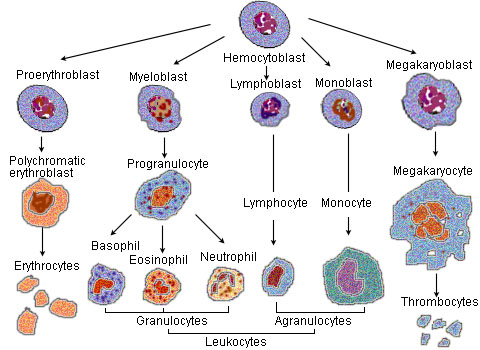 Blood cell lineage
 -
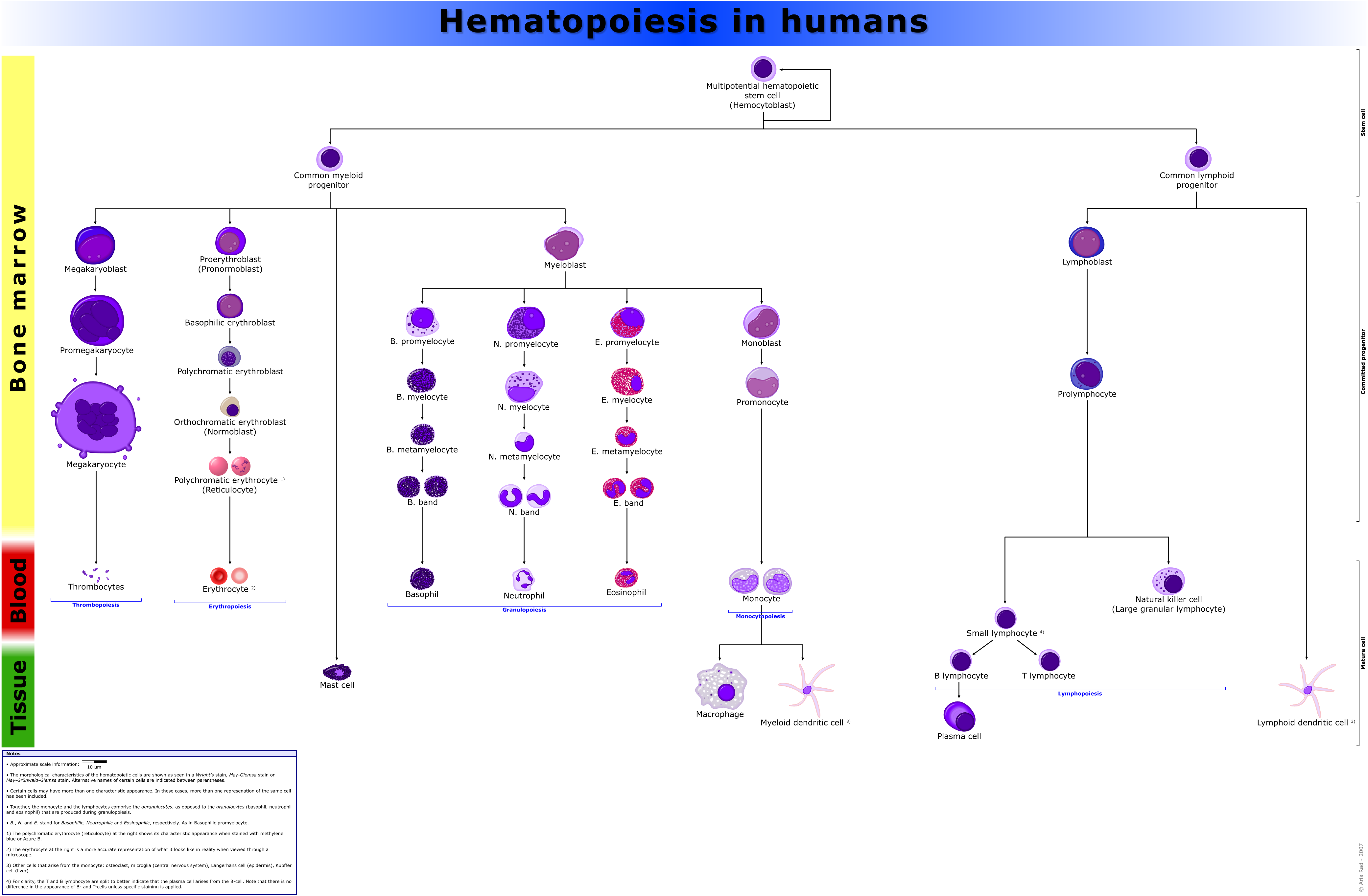 Hematopoiesis


See also
See also
Editor-In-Chief: C. Michael Gibson, M.S., M.D. [1]