

Health Dictionary
Reliable, easy-to-read patient information on common medical conditions — written in plain language, free of jargon, and grounded in current evidence. Browse the most frequent diagnoses, understand what they mean for everyday life, and learn which steps and questions help you have a focused conversation with your doctor.
Naboth's glands
Introduction
For patient information, click here
Overview
Overview
A nabothian cyst is a mucus-filled cyst on the surface of the cervix. They are most often caused when new tissue growth blocks the nabothian glands of the cervix; this traps mucosal secretions in small (usually 2-10 mm in diameter) subdermal pockets.
Historical perspective
Historical perspective
Nabothian cysts are also known as nabothian follicles, mucinous retention cysts, or epithelial inclusion cysts. They are named after German anatomist Martin Naboth (1675-1721), who who wrote about them in a 1707 treatise tiled De sterilitate mulierum. However, they were earlier described by French surgeon Guillaume Desnoues (1650-1735).[1]
Clinical presentation
Clinical presentation
Nabothian cysts appear most often as firm bumps on the cervix’s surface. A woman may notice the cyst when inserting a diaphragm or cervical cap, or when doing the cervix check as part of fertility awareness.[2] A gynecologist may notice the cysts during a pelvic exam.
Diagnosis
Diagnosis
Nabothian cysts are considered harmless and usually disappear on their own. Some women notice they appear and disappear in relation to their menstrual cycle. If a woman is not sure the anomaly she has found on her cervix is a nabothian cyst, a visit to a doctor is recommended to rule out other conditions.[2]
ATYPICAL, Multiple large nabothian cysts are noted
-
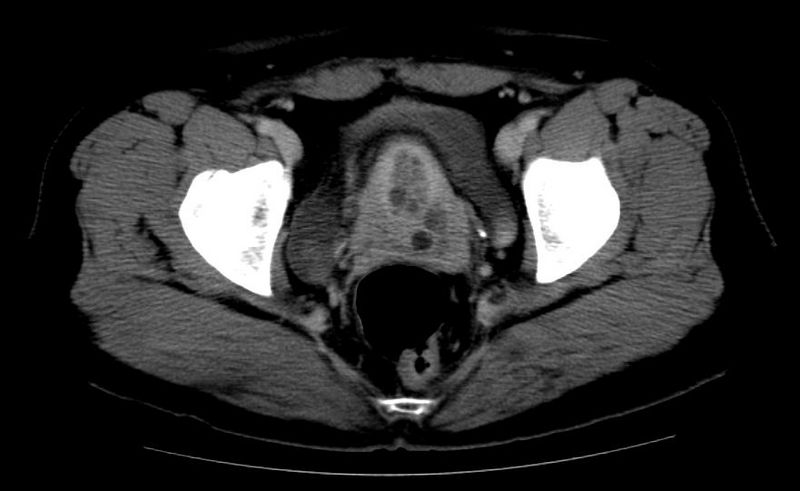 CT
CT -
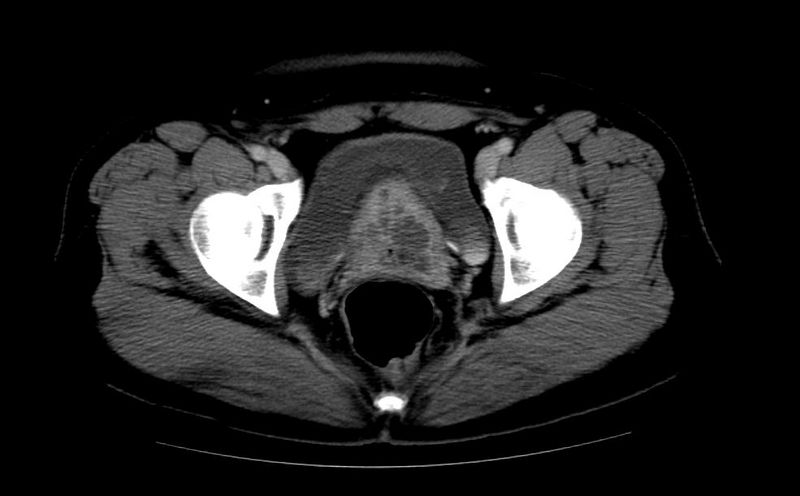 CT
CT -
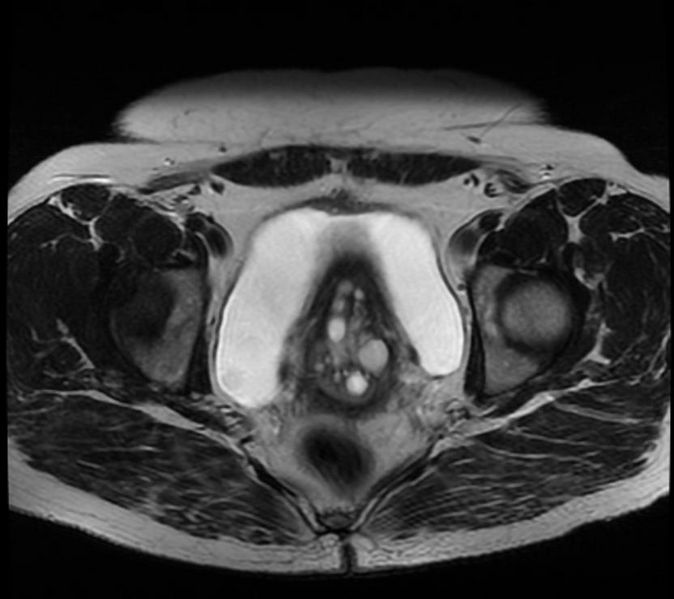 MRI
MRI -
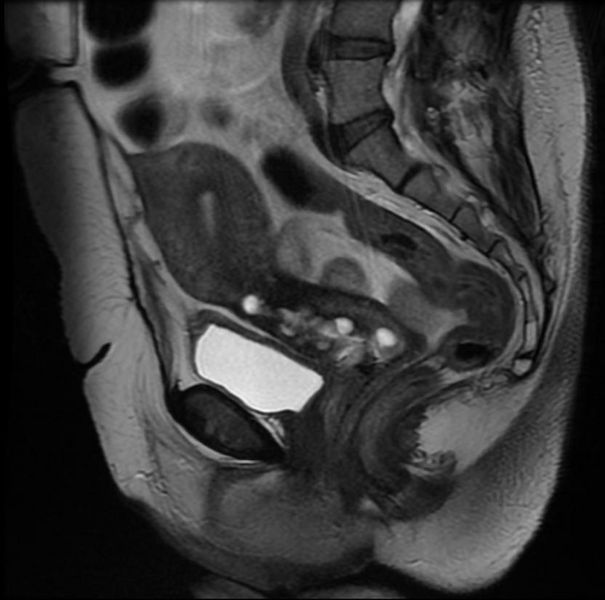 MRI
MRI -
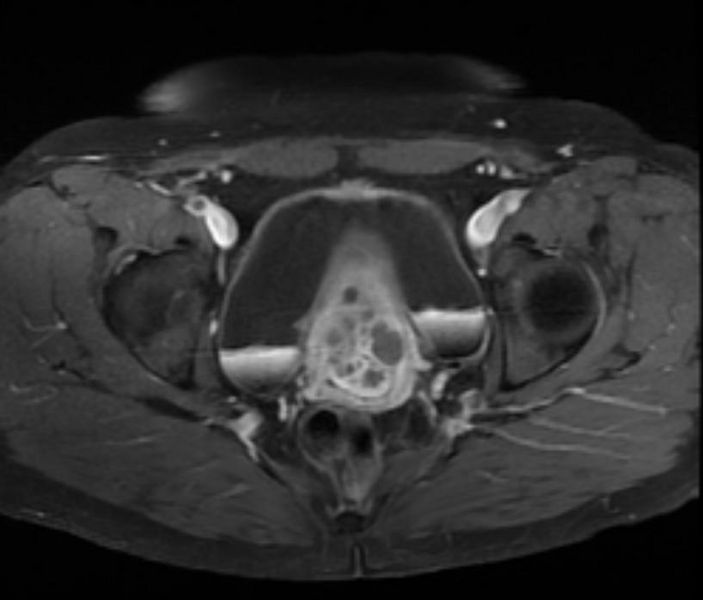 MRI
MRI


Treatment
Treatment
Nabothian cysts are not considered problematic unless they grow very large and present secondary symptoms. A gynecologist may wish to perform a colposcopy or biopsy on a nabothian cyst to check for cancer or other problems. Two methods for removing these cysts include electrocautery and cryofreezing.
Complication
Complication
Rarely, nabothian cysts have a correlation with chronic cervicitis, an inflammatory infection of the cervix.
Footnotes
Footnotes
- ↑ “Nabothian Cysts”. Who Named It?. 2007. Retrieved 2007-06-22.
- ↑ 2.0 2.1 Weschler, Toni (2002). Taking Charge of Your Fertility (Revised Edition ed.). New York: HarperCollins. pp. pp.227–228, 330. ISBN 0-06-093764-5.
Editor-In-Chief: C. Michael Gibson, M.S., M.D. [1]