

Health Dictionary
Reliable, easy-to-read patient information on common medical conditions — written in plain language, free of jargon, and grounded in current evidence. Browse the most frequent diagnoses, understand what they mean for everyday life, and learn which steps and questions help you have a focused conversation with your doctor.
Parotid duct
Introduction
Overview
Overview
The parotid duct is also known as koslo’s duct. Saliva from the parotid gland passes through it to the mouth.
It pierces the buccal fat, buccopharyngeal fascia and buccinator muscle then opens into the vestibule of the mouth opposite the upper 2nd molar tooth. The buccinator acts as a valve which prevents inflation of the duct during blowing. Running along with the duct superiorly is the transverse facial artery and upper buccal nerve, inferiorly is the lower buccal nerve.
Pathology
Pathology
Blockage, whether caused by salivary duct stones or external compression, may cause pain and swelling of the parotid gland (parotitis)
Eponym
Eponym
It is named after Niels Stensen (1638-1686), a Danish anatomist credited with its discovery.
Additional images
Additional images
-
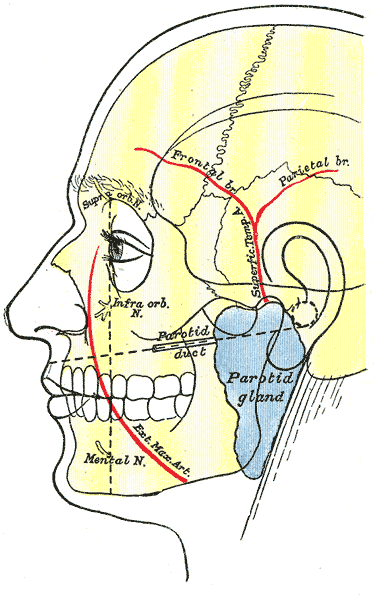 Outline of side of face, showing chief surface markings.
 -
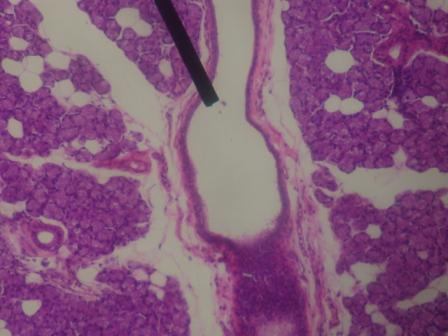 interlobular duct.
 -
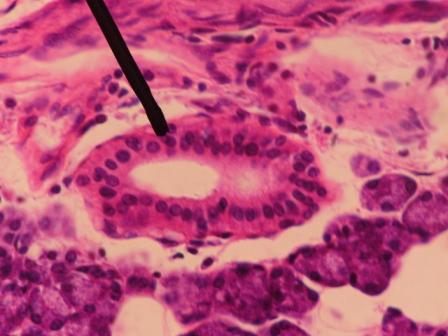 striated duct.


External links
External links
- Diagram at MSU
- ent/178 at eMedicine – Parotid duct injuries
- Template:WhoNamedIt
Editor-In-Chief: Template:Infobox Anatomy C. Michael Gibson, M.S., M.D. [1]