

Health Dictionary
Reliable, easy-to-read patient information on common medical conditions — written in plain language, free of jargon, and grounded in current evidence. Browse the most frequent diagnoses, understand what they mean for everyday life, and learn which steps and questions help you have a focused conversation with your doctor.
Patellar tendon rupture
Introduction
Patellar tendon rupture is an injury occurring in the knee.
The patellar tendon attaches to the tibial tubercle on the front of the tibia just below the front of the knee, and is connected to the bottom of the patella, above which are attached to the quadriceps tendon, followed by the quadriceps muscle, large muscles on the front of the thigh. This structure allows the knee to flex and extend, allowing use of basic functions such as walking, running, etc.
Diagnosis
Diagnosis
When rupture occurs, the patella loses support from the tibia and moves toward the hip when the quadriceps muscle contract, hindering the leg’s ability to extend. This means that those affected cannot stand, as their knee buckles and gives way when they attempt to.
Through X-Ray scans, Patellar Tendon Rupture is diagnosed by recognizing that the patella has moved upward along the thigh.
(Images courtesy of RadsWiki)
-
 MRI: Patellar tendon rupture
 -
 MRI: Patellar tendon rupture


-
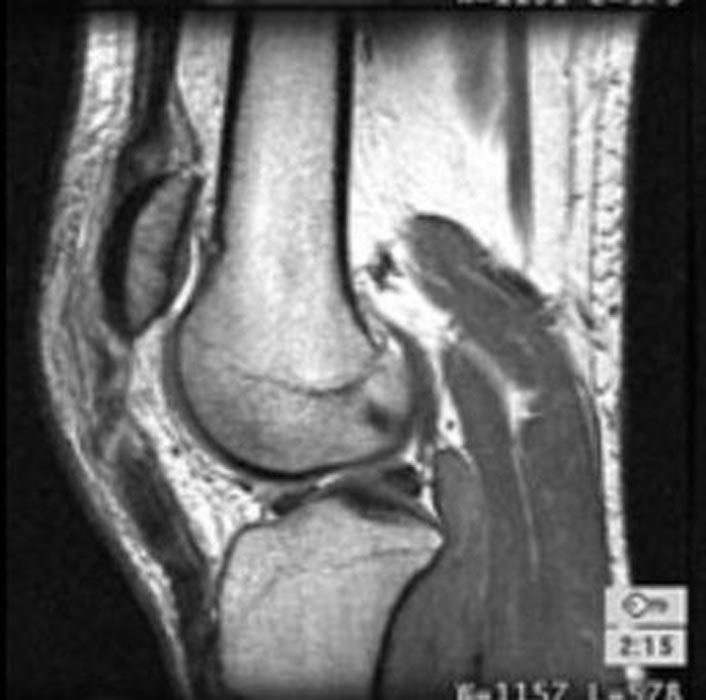 MRI: Patellar tendon rupture
 -
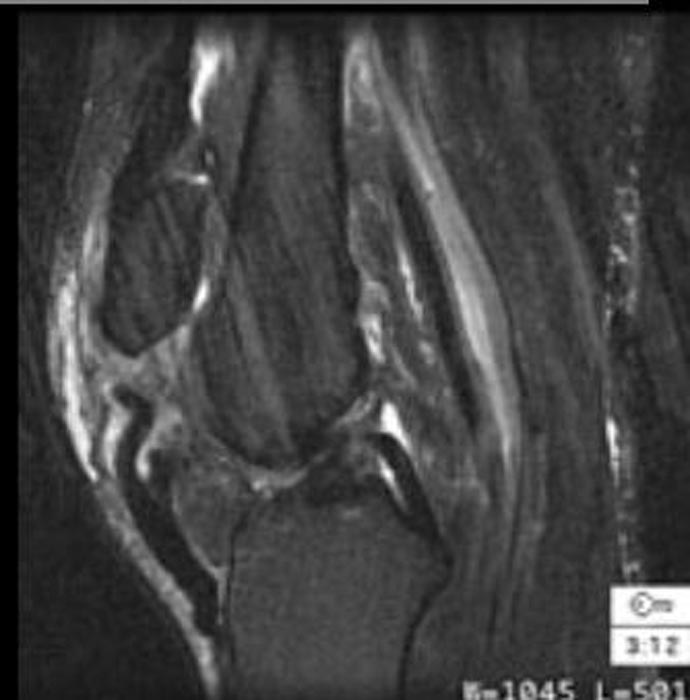 MRI: Patellar tendon rupture


-
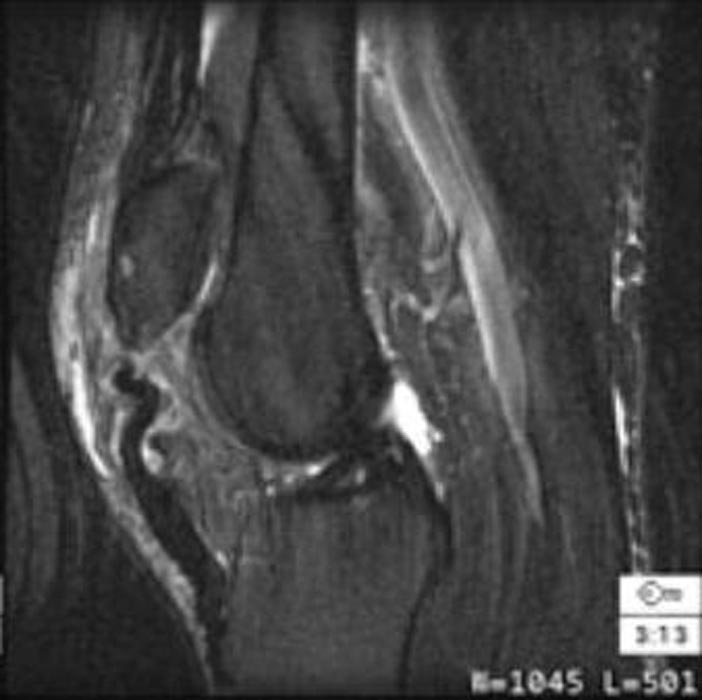 MRI: Patellar tendon rupture
 -
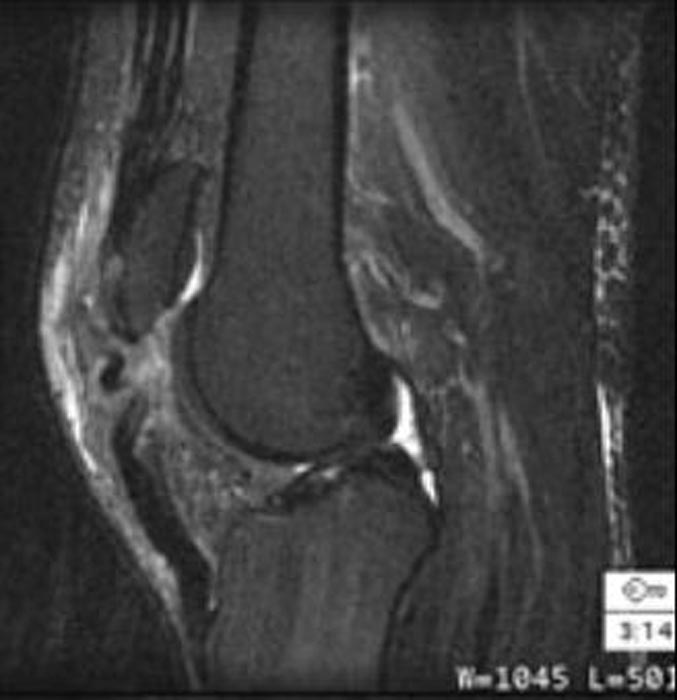 MRI: Patellar tendon rupture


Treatment
Treatment
Patellar tendon rupture must be treated through surgery.
Surgery
An incision is made in the skin over the rupture, the site of which is identified. The tendons are retracted so surgeons may inspect the femur. The tendon ends are then sewn together.
A cast or brace is then put over where the operation took place. The cast or brace remains for at least 6 weeks followed by an unidentified time of rehabilitation of the knee.
Side Effects
The usual risks of surgery are involved including: infection, stiffness, suture reaction, failure of satisfactory healing, risks of anesthesia, phlebitis, pulmonary embolus, and persistent pain or weakness after the injury and repair.
Complications
Complications
Patella alta
(Images courtesy of RadsWiki)
-
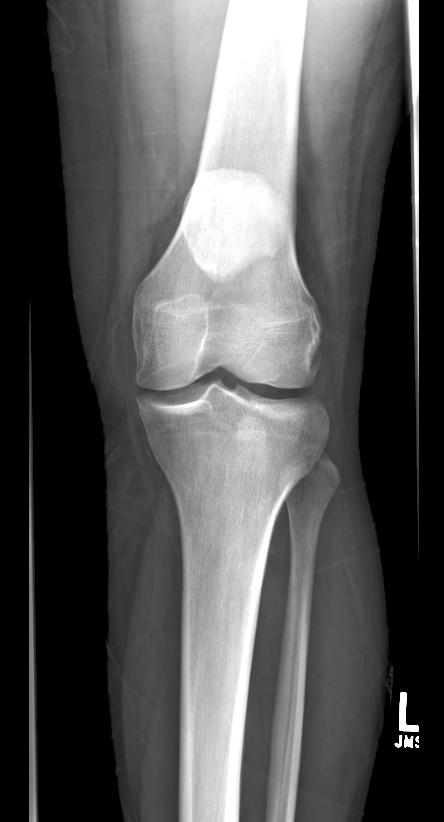 X-ray: Patella alta secondary to patellar tendon rupture
 -
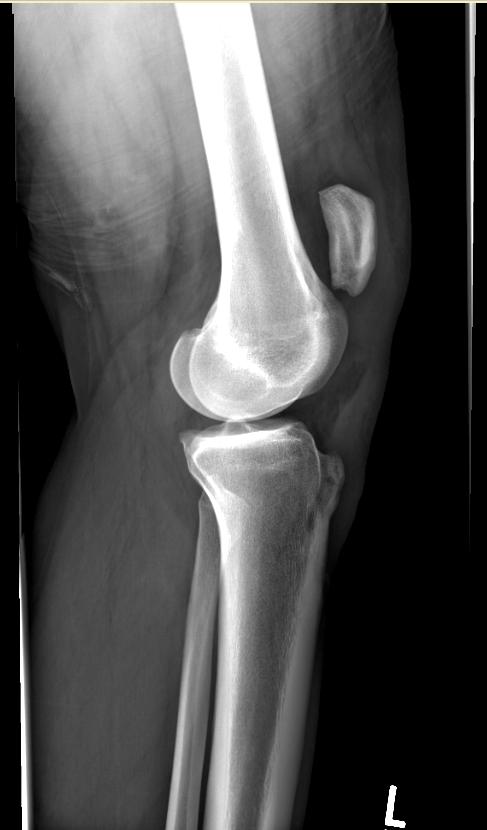 X-ray: Patella alta secondary to patellar tendon rupture


-
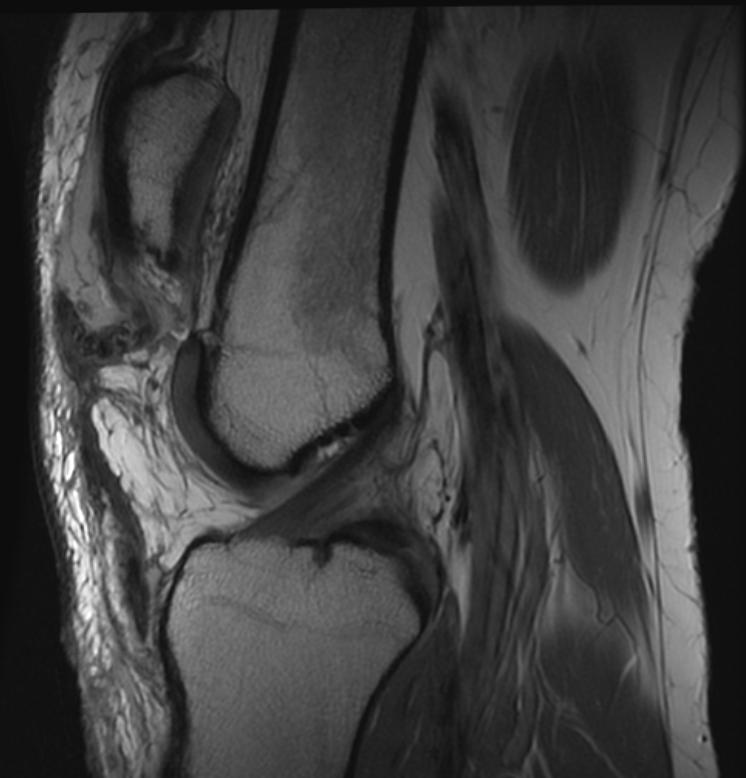 MRI: Patella alta secondary to patellar tendon rupture
 -
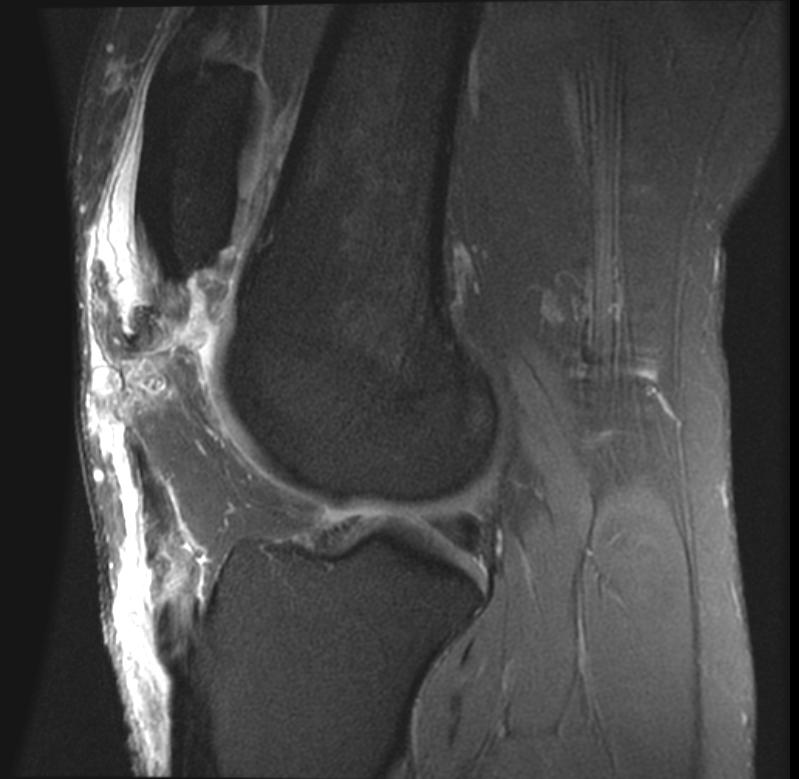 MRI: Patella alta secondary to patellar tendon rupture


External Links
External Links
Editor-In-Chief: C. Michael Gibson, M.S., M.D. [1]