

Health Dictionary
Reliable, easy-to-read patient information on common medical conditions — written in plain language, free of jargon, and grounded in current evidence. Browse the most frequent diagnoses, understand what they mean for everyday life, and learn which steps and questions help you have a focused conversation with your doctor.
Sublingual gland
Introduction
Overview
Overview
The sublingual glands are salivary glands in the mouth.
They lie anterior to the submandibular gland under the tongue, beneath the mucous membrane of the floor of the mouth.
They are drained by 8-20 excretory ducts.
The largest duct, the sublingual duct (of Bartholin) joins the submandibular duct to drain through the sublingual caruncle.
The sublingual gland consists mostly of Mucous acini capped with serous demilunes and is therefore categorized as a mixed gland.
Most of the remaining small sublingual ducts open separately into the mouth on an elevated crest of mucous membrane, the sublingual fold (plica), caused by the gland and on either side of the frenulum linguae.
The chorda tympani nerve (from the facial nerve via the lingual nerve) is secretomotor to the sublingual glands.
Additional images
Additional images
-
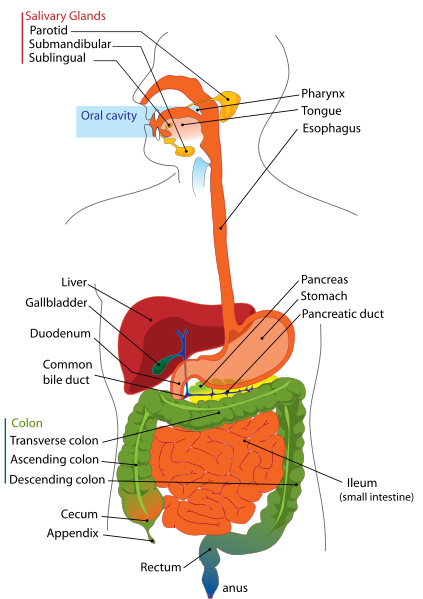 Digestive system
 -
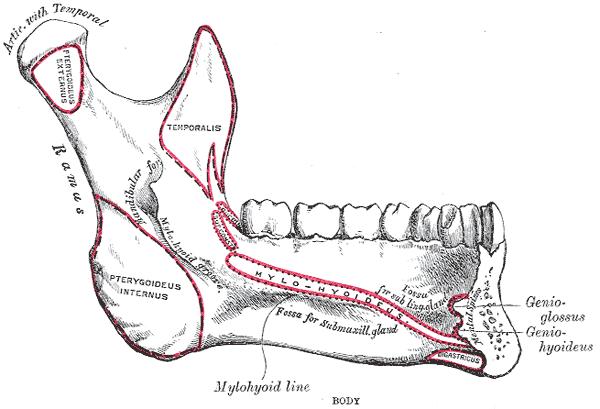 Mandible. Inner surface. Side view.


External links
External links
- Diagram at scopevic.org.au
- Template:SUNYAnatomyLabs – “Oral Cavity: Glands”
- Template:EMedicineDictionary
- Template:NormanAnatomy (Template:NormanAnatomyFig)
- Template:RocheLexicon
- Histology at usc.edu
Template:Head and neck general
de:Glandula sublingualis
it:Ghiandola sottolinguale
sr:Подјезична жлезда
Editor-In-Chief: C. Michael Gibson, M.S., M.D. [1]