

Health Dictionary
Reliable, easy-to-read patient information on common medical conditions — written in plain language, free of jargon, and grounded in current evidence. Browse the most frequent diagnoses, understand what they mean for everyday life, and learn which steps and questions help you have a focused conversation with your doctor.
Tear duct
Introduction
Overview
Overview
The nasolacrimal duct carries tears from the lacrimal sac into the nasal cavity. Excess tears flow through nasolacrimal duct which opens in the nose. This is the reason the nose starts to run when a person is crying, or why you can sometimes taste eye drops.
Like the lacrimal sac, the duct is lined by stratified columnar epithelium containing mucus-secreting goblet cells, and is surrounded by connective tissue.
Obstruction of the nasolacrimal duct leads to the excess overflow of tears called epiphora. Persons with dry eye conditions can be fitted with punctal plugs that seal the ducts to limit the amount of fluid drainage and retain moisture.
The canal containing the nasolacrimal duct is called the nasolacrimal canal.
Additional images
Additional images
-
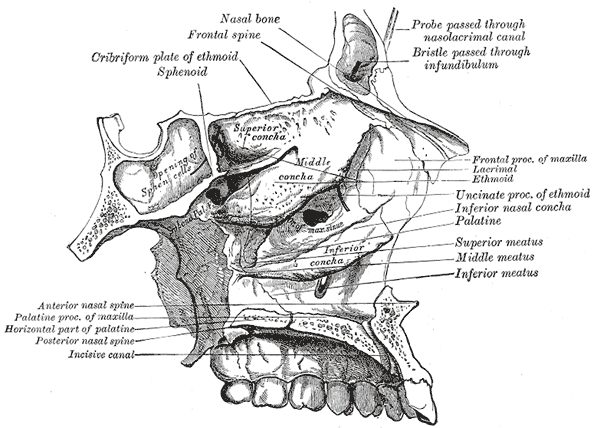 Roof, floor, and lateral wall of left nasal cavity.
