

Health Dictionary
Reliable, easy-to-read patient information on common medical conditions — written in plain language, free of jargon, and grounded in current evidence. Browse the most frequent diagnoses, understand what they mean for everyday life, and learn which steps and questions help you have a focused conversation with your doctor.
Anterior cerebral artery
Introduction
In human anatomy, the anterior cerebral artery supplies oxygen to most medial portions of frontal lobes and superior medial parietal lobes. It arises from the internal carotid artery and is part of the Circle of Willis.
The left and right anterior cerebral arteries are connected by the anterior communicating artery.
Areas supplied
Areas supplied
Areas supplied by the anterior cerebral artery include:
- The medial surface of the frontal and parietal lobes
- The anterior four- fifths of the corpus callosum
- Approximately 1 inch of the frontal and parietal cortex
- Anterior portions of the basal ganglia and internal capsule
Occlusion
Occlusion
Occlusion of the anterior cerebral artery may result in the following defects:
- Paralysis of the contralateral foot and leg
- Sensory loss in the contralateral foot and leg
- Urinary incontinence which usually occurs with bilateral damage
Branches
Branches
The anterior cerebral artery branches into e.g. the following arteries:
Additional images
Additional images
-
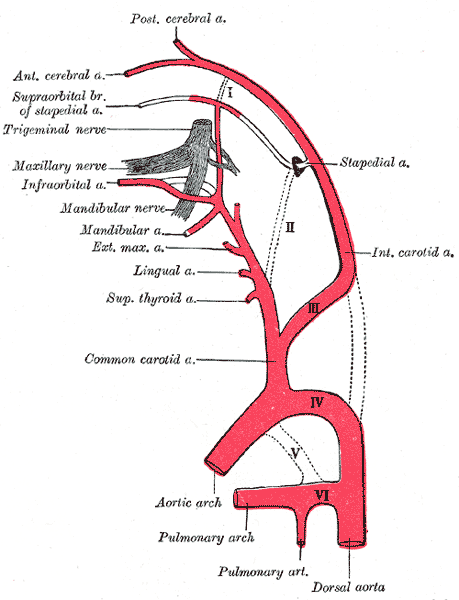 Diagram showing the origins of the main branches of the carotid arteries.
 -
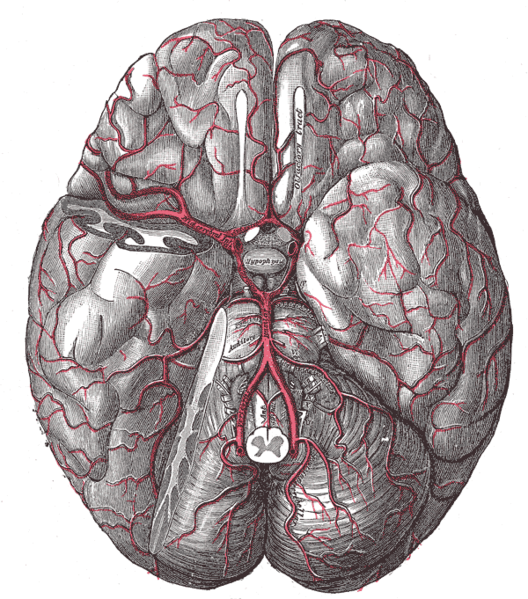 The arteries of the base of the brain.
 -
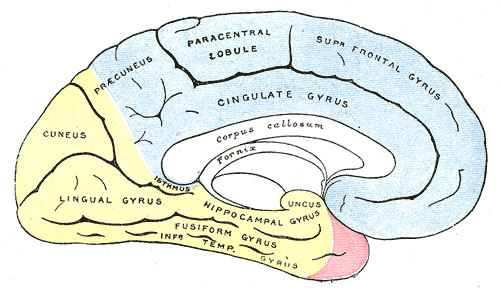 Medial surface of cerebral hemisphere, showing areas supplied by cerebral arteries.
 -
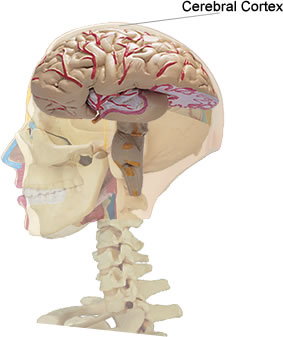 Location of the cerebral cortex


Editor-In-Chief: C. Michael Gibson, M.S., M.D. [1]