

Health Dictionary
Reliable, easy-to-read patient information on common medical conditions — written in plain language, free of jargon, and grounded in current evidence. Browse the most frequent diagnoses, understand what they mean for everyday life, and learn which steps and questions help you have a focused conversation with your doctor.
Chronic bacterial prostatitis
Introduction
For patient information page, click here
Overview
Please help WikiDoc by adding more content here. It’s easy! Click here to learn about editing.
Overview
Chronic bacterial prostatitis is a bacterial infection of the prostate gland. Chronic bacterial prostatitis is swelling and irritation (inflammation) of the prostate gland that develops slowly and continues for a long period of time. It is a chronic infection of the prostate gland.
References
Editor-In-Chief: C. Michael Gibson, M.S., M.D. [1]
Historical Perspective
Please help WikiDoc by adding content here. It’s easy! Click here to learn about editing.
References
Pathophysiology
Please help WikiDoc by adding content here. It’s easy! Click here to learn about editing.
References
Causes
Causes
Chronic prostatitis is usually caused by a chronic bacterial infection of the prostate gland. It may occur with or follow:
- Acute prostatitis
- Epididymitis
- Urinary tract infection that often returns (is recurrent)
- Urethritis
The most common bacteria species that cause chronic prostatitis include:
References
Editor-In-Chief: C. Michael Gibson, M.S., M.D. [1]
Differentiating Chronic Bacterial Prostatitis from other Diseases
Please help WikiDoc by adding more content here. It’s easy! Click here to learn about editing.
Differentiating Chronic bacterial prostatitis from other Diseases
It should be distinguished from other forms of prostatitis such as acute bacterial prostatitis and chronic pelvic pain syndrome (CPPS).
References
Editor-In-Chief: C. Michael Gibson, M.S., M.D. [1]
Epidemiology and Demographics
Please help WikiDoc by adding content here. It’s easy! Click here to learn about editing.
References
Risk Factors
Risk Factors
- Age over 30
- Certain sexual practices (such as anal sex without a condom)
- Excessive alcohol intake
- Injury to the perineum (the area between the scrotum and anus)
- These factors may cause congestion of the prostate gland, which produces a breeding ground for bacteria.
Other possible causes are related to stress and tightness of the pelvic muscles.
References
Editor-In-Chief: C. Michael Gibson, M.S., M.D. [1]
Screening
Please help WikiDoc by adding content here. It’s easy! Click here to learn about editing.
References
Natural History, Complications and Prognosis
Please help WikiDoc by more adding content here. It’s easy! Click here to learn about editing.
Natural History, Complications and Prognosis
It is common for symptoms to return. Over time, the relapse rate is high, exceeding 50%. A 2007 study showed that repeated courses of combination antibiotics may eradicate infection in 83.9% of patients with clinical remission extending throughout a follow-up period of 30 months for 94% of these patients.[1]
If the prostate is very large, it can slow urine flow through the urethra and cause the backward flow (reflux) of urine toward the kidneys, which can cause kidney damage.
If the flow of urine completely stops, it is considered an emergency.
References
- ↑ Magri V, Trinchieri A, Pozzi G; et al. (2007). “Efficacy of repeated cycles of combination therapy for the eradication of infecting organisms in chronic bacterial prostatitis”. Int. J. Antimicrob. Agents. 29 (5): 549–56. doi:10.1016/j.ijantimicag.2006.09.027. PMID 17336504. Unknown parameter
|month=ignored (help)
Editor-In-Chief: C. Michael Gibson, M.S., M.D. [1]
Diagnosis
Diagnosis
History and Symptoms | Physical Examination | Laboratory Findings | X Ray | CT | MRI | Ultrasound | Other Imaging Findings | Other Diagnostic Studies
Treatment
Treatment
Medical Therapy | Surgery | Primary Prevention | Secondary Prevention | Cost-Effectiveness of Therapy | Future or Investigational Therapies
Additional images
Additional images
-
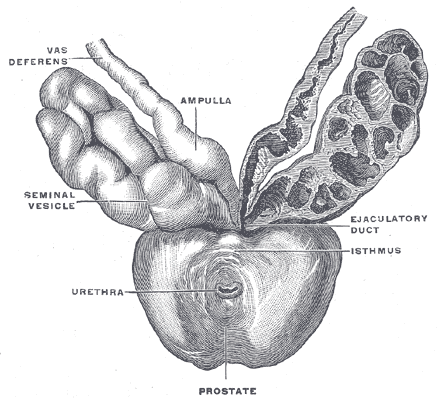 Prostate, urethra, and seminal vesicles.
 -
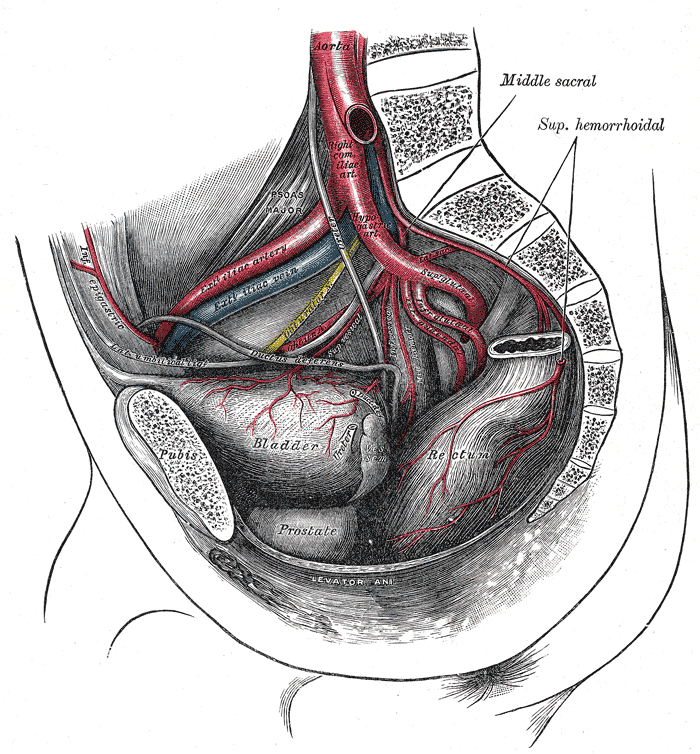 The arteries of the pelvis.
 -
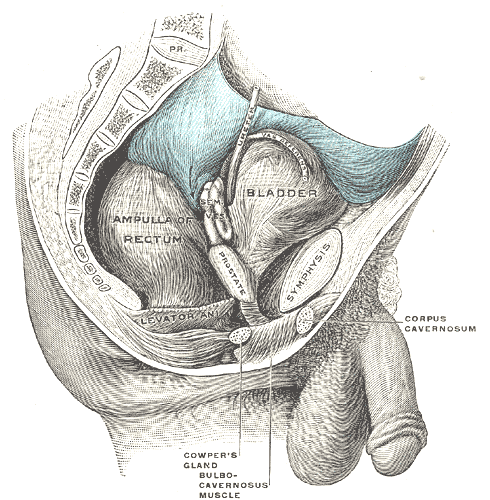 Male pelvic organs seen from right side.


Template:Diseases of the pelvis, genitals and breasts
de:Prostatitis it:Prostatite nl:Prostatitis fi:Eturauhasen tulehdus
Editor-In-Chief: C. Michael Gibson, M.S., M.D. [1]