

Health Dictionary
Reliable, easy-to-read patient information on common medical conditions — written in plain language, free of jargon, and grounded in current evidence. Browse the most frequent diagnoses, understand what they mean for everyday life, and learn which steps and questions help you have a focused conversation with your doctor.
Primary amyloidosis physical examination
Introduction
Overview
Overview
Common findings in primary amyloidosis include petechiae, ecchymosis, parotid gland enlargement, increased intraocular pressure, enlarged tongue, hepatomegaly, carpal tunnel syndrome, and Raynaud’s phenomenon.
Physical Examination
Physical Examination
Vitals
Skin
- The most common skin findings are
- Petechiae (small red blood spots).
- Ecchymoses (small, flat blood spots that are round or irregular shape and bluish/purplish in colour)
- Waxy papular nodules can be seen around the eye lids, neck and also in the groin.
- Brittle nails.
- Edema due to heart failure
- Patches of hair loss can be seen.
- Nail dystrophy
- Cutis laxa[1]
Head
- Parotid gland enlargement
- Submandibular gland enlargement
Ear


Eyes
- Raised intraocular pressure may be present.
- Peri-orbital purpura[1]
Throat
- Enlarged tongue
- Macroglossia[1]
Abdomen
- Hepatomegaly
- Splenomegaly
Extremities
- Carpal tunnel syndrome
- Numbness of the fingers and toes
- Raynaud phenomenon
Macular Amyloidosis
-
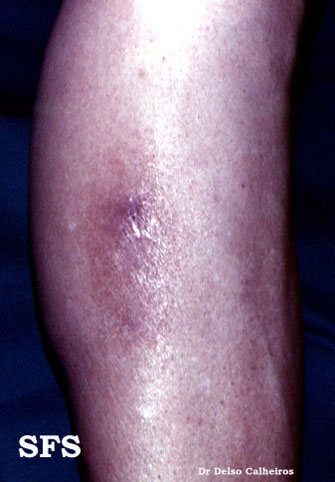 Macular Amyloidosis
Adapted from Dermatology Atlas -
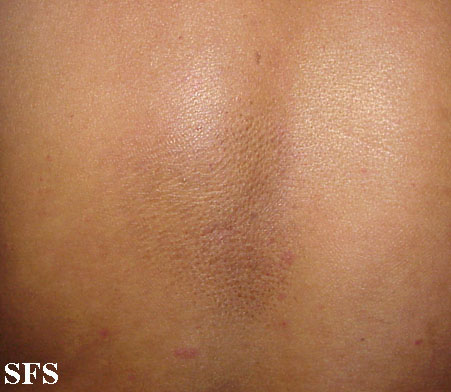 Macular Amyloidosis
Adapted from Dermatology Atlas -
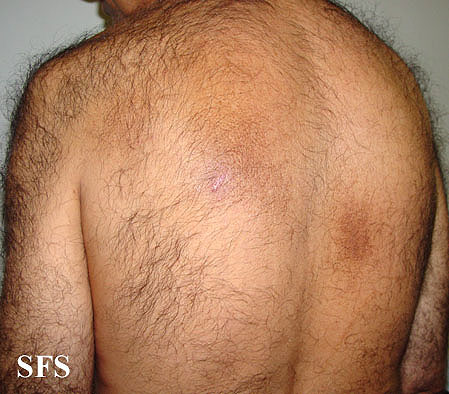 Macular Amyloidosis
Adapted from Dermatology Atlas -
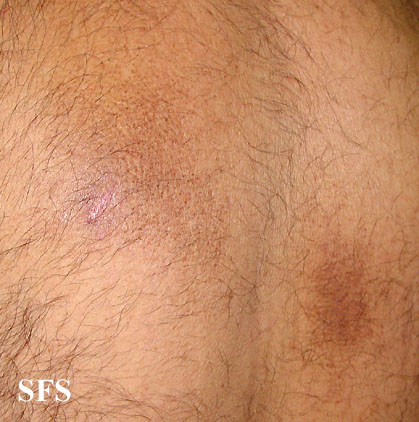 Macular Amyloidosis
Adapted from Dermatology Atlas -
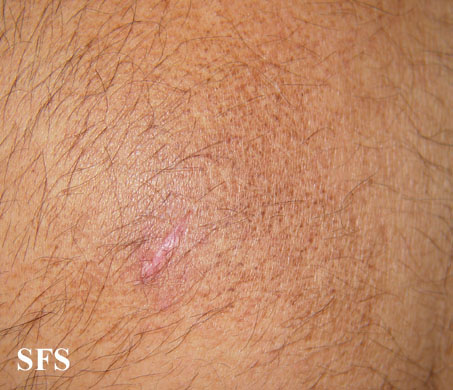 Macular Amyloidosis
Adapted from Dermatology Atlas


Nodular Amyloidosis
-
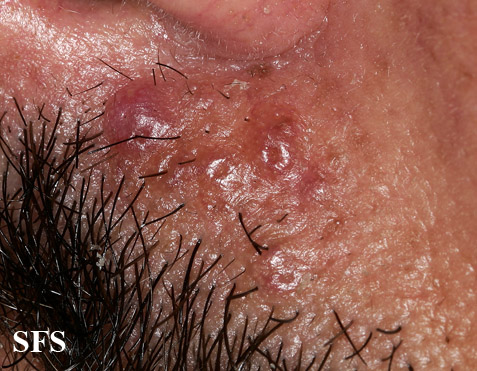 Nodular Amyloidosis
Adapted from Dermatology Atlas -
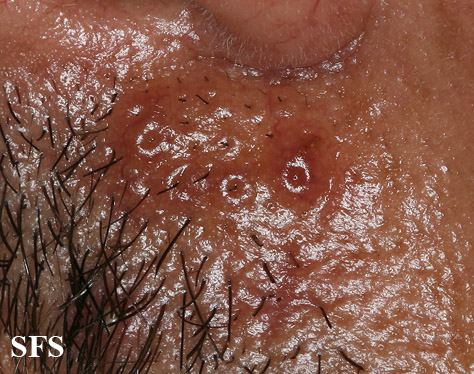 Nodular Amyloidosis
Adapted from Dermatology Atlas -
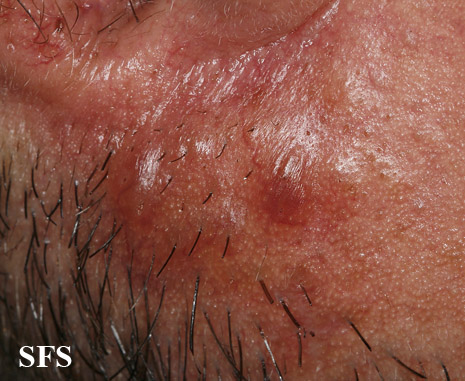 Nodular Amyloidosis
Adapted from Dermatology Atlas -
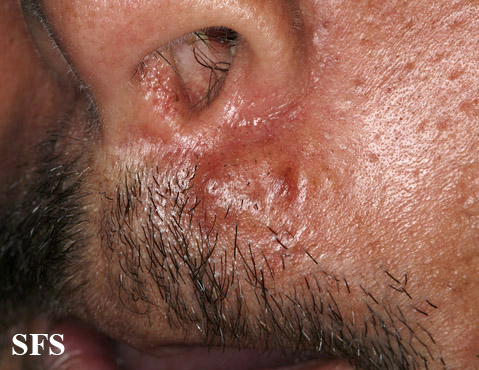 Nodular Amyloidosis
Adapted from Dermatology Atlas


Editor-In-Chief: C. Michael Gibson, M.S., M.D. [1]; Associate Editor(s)-in-Chief: Jesus Rosario Hernandez, M.D. [2]