

Health Dictionary
Reliable, easy-to-read patient information on common medical conditions — written in plain language, free of jargon, and grounded in current evidence. Browse the most frequent diagnoses, understand what they mean for everyday life, and learn which steps and questions help you have a focused conversation with your doctor.
Sciatic artery
Introduction
The inferior gluteal artery (sciatic artery), the larger of the two terminal branches of the anterior trunk of the internal iliac artery, is distributed chiefly to the buttock and back of the thigh.
It passes down on the sacral plexus of nerves and the Piriformis, behind the internal pudendal artery, to the lower part of the greater sciatic foramen, through which it escapes from the pelvis between the Piriformis and Coccygeus.
It then descends in the interval between the greater trochanter of the femur and tuberosity of the ischium, accompanied by the sciatic and posterior femoral cutaneous nerves, and covered by the Glutæus maximus, and is continued down the back of the thigh, supplying the skin, and anastomosing with branches of the perforating arteries.
Additional images
Additional images
-
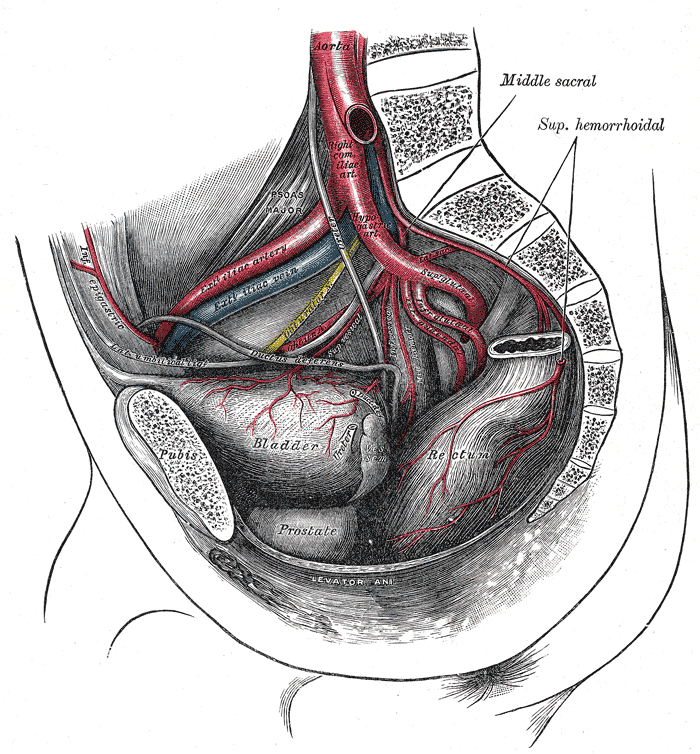 The arteries of the pelvis.
 -
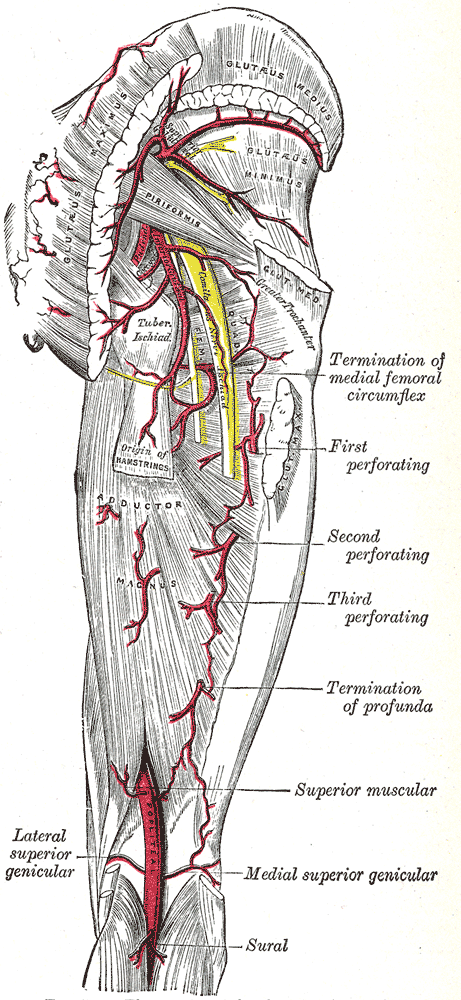 The arteries of the gluteal and posterior femoral regions.
 -
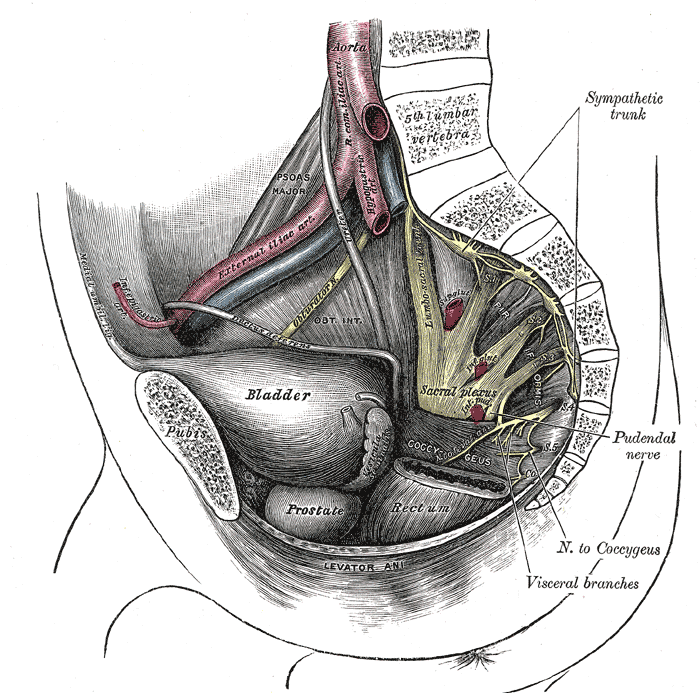 Dissection of side wall of pelvis showing sacral and pudendal plexuses.


External links
External links
- Template:DukeOrtho
- Template:SUNYAnatomyFigs – “Sagittal view of the internal iliac artery and its branches in the female pelvis. “
- Template:NormanAnatomy (Template:NormanAnatomyFig)
Editor-In-Chief: C. Michael Gibson, M.S., M.D. [1]