

Health Dictionary
Reliable, easy-to-read patient information on common medical conditions — written in plain language, free of jargon, and grounded in current evidence. Browse the most frequent diagnoses, understand what they mean for everyday life, and learn which steps and questions help you have a focused conversation with your doctor.
Testicular torsion ultrasound
Introduction
Steven C. Campbell, M.D., Ph.D.
Ultrasound
Ultrasound
Emergency testing for torsion may be indicated when the onset of pain is sudden and/or severe, or the test results available during the initial examination do not enable a diagnosis of urethritis or urinary tract infection to be made. A doppler ultrasound scan of the scrotum, if available, is of immense help in the diagnosis by showing the presence or absence of blood flow to the testicle. Dizziness and nausea are often present when there is an absence of blood supply to the testicle, as well as a tremendous amount of pain. If the diagnosis is questionable, an expert should be consulted immediately, because testicular viability may be compromised. If physical examination suggests a compromised blood supply and the patient has had such symptoms for a significant period of time, medical personnel may choose to bring the patient directly to surgery without an ultrasound since the time required for ultrasound testing could affect testicular viability.
Ultrasound images showing right testicular torsion
-
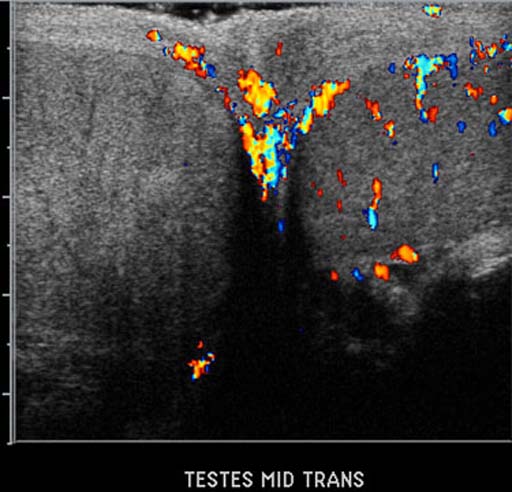 Image courtesy of RadsWiki and copylefted
 -
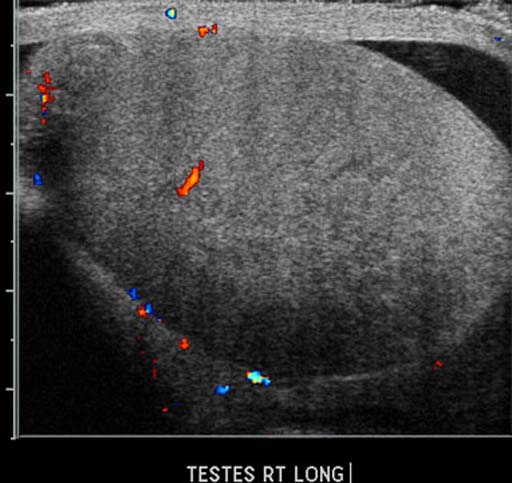 Image courtesy of RadsWiki and copylefted
 -
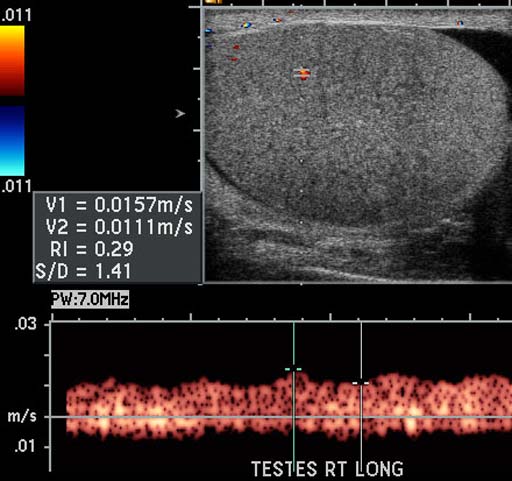 Image courtesy of RadsWiki and copylefted


Color Doppler sonography (color printout of an ultrasound echo test) is used to identify the absence of blood flow typically found in a twisted testicle, which distinguishes the condition from epididymitis. [1]
References
References
- ↑ Arce J, Cortés M, Vargas J (2002). “Sonographic diagnosis of acute spermatic cord torsion. Rotation of the cord: a key to the diagnosis”. Pediatr Radiol. 32 (7): 485–91. PMID 12107581.