

Health Dictionary
Reliable, easy-to-read patient information on common medical conditions — written in plain language, free of jargon, and grounded in current evidence. Browse the most frequent diagnoses, understand what they mean for everyday life, and learn which steps and questions help you have a focused conversation with your doctor.
Hepatotoxicity
Introduction
Template:See Also Template:See Also For patient information on this topic click here.
Synonyms and keywords: Hepatogenous Poisoning; Toxic Liver Disease; Toxin-Induced Liver Disease; Toxic liver disease with cholestasis; Toxic liver disease with hepatitis
Overview
Please help WikiDoc by adding content here. It’s easy! Click here to learn about editing.
Overview
Hepatotoxicity implies chemical-driven liver damage. The liver plays a central role in transforming and clearing chemicals and is susceptible to the toxicity from these agents. Certain medicinal agents when taken in overdoses and sometime even when introduced within therapeutic ranges may injure the organ. Other chemical agents such as those used in laboratories and industries, natural chemicals (e.g. microcystins) and herbal remedies can also induce hepatotoxicity. Chemicals that cause liver injury are called hepatotoxins.
Historical Perspective
Classification
Pathophysiology
Causes
More than 900 drugs have been implicated in causing liver injury[1] and it is the most common reason for a drug to be withdrawn from the market. Chemicals often cause subclinical injury to liver which manifests only as abnormal liver enzyme tests. Drug induced liver injury is responsible for 5% of all hospital admissions and 50% of all acute liver failures.[2][3]
Differentiating Hepatotoxicity from other Diseases
Epidemiology and Demographics
Risk Factors
Screening
Natural History, Complications, and Prognosis
Natural History
Complications
Prognosis
Diagnosis
Diagnostic Criteria
History and Symptoms
Physical Examination
Laboratory Findings
Imaging Findings
Other Diagnostic Studies
Treatment
Medical Therapy
Surgery
Prevention
References
- ↑ Friedman, Scott E.; Grendell, James H.; McQuaid, Kenneth R. (2003). Current diagnosis & treatment in gastroenterology. New York: Lang Medical Books/McGraw-Hill. pp. p664–679. ISBN 0-8385-1551-7.
- ↑ McNally, Peter F. GI/Liver Secrets: with STUDENT CONSULT Access. Saint Louis: C.V. Mosby. ISBN 1-56053-618-7.
- ↑ Ostapowicz G, Fontana RJ, Schiødt FV; et al. (2002). “Results of a prospective study of acute liver failure at 17 tertiary care centers in the United States”. Ann. Intern. Med. 137 (12): 947–54. PMID 12484709.
Editor-In-Chief: C. Michael Gibson, M.S., M.D. [1] Associate Editor(s)-in-Chief:
Historical Perspective
Please help WikiDoc by adding content here. It’s easy! Click here to learn about editing.
Overview
Historical Perspective
References
Editor-In-Chief: C. Michael Gibson, M.S., M.D. [1] Associate Editor(s)-in-Chief:
Classification
Please help WikiDoc by adding content here. It’s easy! Click here to learn about editing.
Overview
Classification
References
Editor-In-Chief: C. Michael Gibson, M.S., M.D. [1] Associate Editor(s)-in-Chief:
Pathophysiology
Please help WikiDoc by adding content here. It’s easy! Click here to learn about editing.
Overview
Hepatotoxicity is defined as injury to the liver that is associated with impaired liver function caused by exposure to a drug or another noninfectious agent.[1]
Pathophysiology
Drug Metabolism in Liver

The human body identifies almost all drugs as foreign substances (i.e. xenobiotics) and subjects them to various chemical processes (i.e. metabolism) to make them suitable for elimination. This involves chemical transformations to (a) reduce fat solubility and (b) to change biological activity. Although almost all tissue in the body have some ability to metabolize chemicals, smooth endoplasmic reticulum in liver is the principal “metabolic clearing house” for both endogenous chemicals (e.g., cholesterol, steroid hormones, fatty acids, and proteins), and exogenous substances (e.g. drugs).[2] The central role played by liver in the clearance and transformation of chemicals also makes it susceptible to drug induced injury.
Drug metabolism is usually divided into two phases: phase 1 and phase 2. Phase 1 reaction is thought to prepare a drug for phase 2. However many compounds can be metabolised by phase 2 directly. Phase 1 reaction involves oxidation, reduction, hydrolysis, hydration and many other rare chemical reactions. These processes tend to increase water solubility of the drug and can generate metabolites which are more chemically active and potentially toxic. Most of phase 2 reactions take place in cytosol and involve conjugation with endogenous compounds via transferase enzymes. Chemically active phase 1 products are rendered relatively inert and suitable for elimination by this step.
A group of enzymes located in the endoplasmic reticulum, known as cytochrome P-450, is the most important family of metabolizing enzymes in the liver. Cytochrome P-450 is the terminal oxidase component of an electron transport chain. It is not a single enzyme, rather consists of a family of closely related 50 isoforms, six of them metabolize 90% of drugs.[3][4] There is a tremendous diversity of individual P-450 gene products and this heterogeneity allows the liver to perform oxidation on a vast array of chemicals (including almost all drugs) in phase 1.
Three important characteristics of the P450 system have roles in drug induced toxicity:
1. Genetic diversity: Each of the P-450 proteins is unique and accounts to some extent for the variation in drug metabolism between individuals. Genetic variations (polymorphism) in CYP450 metabolism should be considered when patients exhibit unusual sensitivity or resistance to drug effects at normal doses. Such polymorphism is also responsible for variable drug response among patients of differing ethnic backgrounds.
| Potent inducers | Potent inhibitors | Substrates |
|---|---|---|
| Rifampicin, Carbamazepine, Phenobarbital, Phenytoin, (St John’s wort), |
Amiodarone, cimetidine, ciprofloxacin, fluconazole, fluoxetine, erythromycin, isoniazid, diltiazem |
Caffeine, clozapine, omeprazole, losartan, theophylline |
2. Change in enzyme activity: Many substances can influence P-450 enzyme mechanism. Drugs interact with the enzyme family in several ways.[7] Drugs that modify Cytochrome P-450 enzyme are referred to as either inhibitors or inducers. Enzyme inhibitors block the metabolic activity of one or several P-450 enzymes. This effect usually occurs immediately. On the other hand inducers increase P-450 activity by increasing its synthesis. Depending on inducing drug’s half life, there is usually a delay before enzyme activity increases.[4]
3. Competitive inhibition: Some drugs may share the same P-450 specificity and thus competitively block their bio transformation. This may lead to accumulation of drugs metabolised by the enzyme. This type of drug interaction may also reduce the rate of generation of toxic substrate.
Mechanism of Liver Damage
| Factors influencing drug induced hepatotoxicity[8] |
|---|
|
Drugs continue to be taken off the market due to late discovery of hepatotoxicity. Due to its unique metabolism and close relationship with the gastrointestinal tract, the liver is susceptible to injury from drugs and other substances. 75% of blood coming to the liver arrives directly from gastrointestinal organs and then spleen via portal veins which bring drugs and xenobiotics in concentrated form. Several mechanisms are responsible for either inducing hepatic injury or worsening the damage process.
Many chemicals damage mitochondria, an intracellular organelle that produce energy. Its dysfunction releases excessive amount of oxidants which in turn injures hepatic cells. Activation of some enzymes in the cytochrome P-450 system such as CYP2E1 also lead to oxidative stress.[9] Injury to hepatocyte and bile duct cells lead to accumulation of bile acid inside liver. This promotes further liver damage.[10] Non-parenchymal cells such as Kupffer cells, fat storing stellate cells and leukocytes (i.e. neutrophil and monocyte) also have role in the mechanism.
Adverse Drug Reactions
Adverse drug reactions are classified as type A (intrinsic or pharmacological) or type B (idiosyncratic).[11] Type A drug reaction accounts for 80% of all toxicities.[12]
Drugs or toxins that have a pharmacological (type A) hepatotoxicity are those that have predictable dose-response curves (higher concentrations cause more liver damage) and well characterized mechanisms of toxicity such as directly damaging liver tissue or blocking a metabolic process. As in the case of Acetaminophen overdose, this type of injury occurs shortly after some threshold for toxicity is reached.
Idiosyncratic (type B) injury occurs without warning; when agents cause non-predictable hepatotoxicity in susceptible individuals which is not related to dose and has variable latency period.[13] This type of injury does not have a clear dose-response or temporal relationship, and most often do not have predictive models. Idiosyncratic hepatotoxicity has led to the withdrawal of several drugs from market even after rigorous clinical testing as part of the FDA approval process; Troglitazone (Rezulin) and trovafloxacin (Trovan) are two prime examples of idiosyncratic hepatotoxins.
Patterns of Injury
| Type of injury: | Hepatocellular | Cholestatic | Mixed |
|---|---|---|---|
| ALT | ≥ Twofold rise | Normal | ≥ Twofold rise |
| ALP | Normal | ≥ Twofold rise | ≥ Twofold rise |
| ALT: ALP ratio | High, ≥5 | Low, ≤2 | 2-5 |
| Examples[14] | Acetaminophen Allopurinol Amiodarone HAART NSAID |
Anabolic steroid Chlorpromazine Clopidogrel Erythromycin Hormonal contraception |
Amitryptyline, Enalapril Carbamazepine Sulphonamide Phenytoin |
Chemicals produce a wide variety of clinical and pathological hepatic injury. Biochemical markers (i.e. alanine transferase, alkaline phosphatase and bilirubin) are often used to indicate liver damage. Liver injury is defined as rise in either (a) ALT level more than three times of upper limit of normal (ULN), (b) ALP level more than twice ULN, or (c) total bilirubin level more than twice ULN when associated with increased ALT or ALP.[15][14] Liver damage is further characterized into hepatocellular (predominantly initial Alanine transferase elevation) and cholestatic (initial alkaline phosphatase rise) types. However they are not mutually exclusive and mixed type of injuries are often encountered.
Specific histo-pathological patterns of liver injury from drug induced damage are discussed below:
- Zonal Necrosis: This is the most common type of drug induced liver cell necrosis where the injury is largely confined to a particular zone of the liver lobule. It may manifest as very high level of ALT and severe disturbance of liver function leading to acute liver failure.
- Hepatitis: In this pattern hepatocellular necrosis is associated with infiltration of inflammatory cells. There can be three types of drug induced hepatitis. (A) viral hepatitis type picture is the commonest, where histological features are similar to acute viral hepatitis. (B) in the focal or non specific hepatitis scattered foci of cell necrosis may accompany lymphocytic infiltrate. (C) chronic hepatitis type is very similar to autoimmune hepatitis clinically, serologically as well as histologically.
- Causes:
- (a) Viral hepatitis like: Halothane, isoniazid, phenytoin
- (b) Focal hepatitis: Aspirin
- (c) Chronic hepatitis: Methyldopa, diclofenac
- Cholestasis: Liver injury leads to impairment of bile flow and clinical picture is predominated by itching and jaundice. Histology may show inflammation (cholestatic hepatitis) or it can be bland without any parenchymal inflammation. In rare occasions it can produce features similar to primary biliary cirrhosis due to progressive destruction of small bile ducts (Vanishing duct syndrome).
- Causes:
- (a) Bland: Oral contraceptive pills, anabolic steroid, androgens
- (b) Inflammatory: Allopurinol, co-amoxiclav, carbamazepine
- (c) Ductal: Chlorpromazine, flucloxacillin
- Steatosis: Hepatotoxicity may manifest as triglyceride accumulation which leads to either small droplet (microvesicular) or large droplet (macrovesicular) fatty liver. There is a separate type of steatosis where phospholipid accumulation leads to a pattern similar to the diseases with inherited phospholipid metabolism defects (e.g. Tay-Sachs disease)
- Causes:
- (a) Microvesicular: Aspirin (Reye’s syndrome), ketoprofen, tetracycline
- (b) Macrovesicular: Acetamenophen, methotrexate
- (c) Phospholipidosis: Amiodarone, total parenteral nutrition
- Granuloma: Drug induced hepatic granulomas are usually associated with granulomas in other tissues and patients typically have features of systemic vasculitis and hypersensitivity. More than 50 drugs have been implicated.
- Causes:
- Allopurinol, phenytoin, isoniazid, quinine, penicillin, quinidine
- Vascular lesions: They result from injury to the vascular endothelium.
- Causes:
- (a) Venoocclusive disease: Chemotherapeutic agents, bush tea
- (b) Peliosis hepatis: Anabolic steroid
- (c) Hepatic vein thrombosis: Oral contraceptives
- Neoplasm: Neoplasms have been described with prolonged exposure to some medications or toxins. Hepatocellular carcinoma, angiosarcoma and liver adenomas are the ones usually reported.
References
- ↑ Donald Blumenthal; Laurence Brunton; Keith Parker; Lazo, John S.; Iain Buxton. Goodman and Gilman’s Pharmacological Basis of Therapeutics Digital Edition. McGraw-Hill Professional. ISBN 0-07-146804-8.
- ↑ Skett, Paul; Gibson, G. Gordon (2001). Introduction to drug metabolism. Cheltenham, UK: Nelson Thornes Publishers. ISBN 0-7487-6011-3.
- ↑ 4.0 4.1 4.2 Lynch T, Price A (2007). “The effect of cytochrome P450 metabolism on drug response, interactions, and adverse effects”. American family physician. 76 (3): 391–6. PMID 17708140.
- ↑ Jessica R. Oesterheld; Kelly L. Cozza; Armstrong, Scott. Concise Guide to Drug Interaction Principles for Medical Practice: Cytochrome P450s, Ugts, P-Glycoproteins. Washington, DC: American Psychiatric Association. pp. 167–396. ISBN 1-58562-111-0.
- ↑ “P450 Table”. Retrieved 2007-09-29.
- ↑ Michalets EL (1998). “Update: clinically significant cytochrome P-450 drug interactions”. Pharmacotherapy. 18 (1): 84–112. PMID 9469685.
- ↑ Keeffe, Emmet B; Friedman, Lawrence M. (2004). Handbook of liver diseases. Edinburgh: Churchill Livingstone. pp. 104–123. ISBN 0-443-06633-7.
|access-date=requires|url=(help) - ↑ Jaeschke H, Gores GJ, Cederbaum AI, Hinson JA, Pessayre D, Lemasters JJ (2002). “Mechanisms of hepatotoxicity”. Toxicol. Sci. 65 (2): 166–76. doi:10.1093/toxsci/65.2.166. PMID 11812920.
- ↑ Patel T, Roberts LR, Jones BA, Gores GJ (1998). “Dysregulation of apoptosis as a mechanism of liver disease: an overview”. Semin. Liver Dis. 18 (2): 105–14. PMID 9606808.
- ↑ Davies, D. (1985). Textbook of adverse drug reactions. Oxford [Oxfordshire]: Oxford University Press. pp. 18–45. ISBN 0-19-261479-7. OCLC 12558288.
- ↑ Pirmohamed M, Breckenridge AM, Kitteringham NR, Park BK (1998). “Adverse drug reactions”. BMJ. 316 (7140): 1295–8. PMID 9554902.
- ↑ Zimmerman HJ (1978). “Drug-induced liver disease”. Drugs. 16 (1): 25–45. doi:10.2165/00003495-197816010-00002. PMID 352664.
- ↑ 14.0 14.1 Mumoli N, Cei M, Cosimi A (2006). “Drug-related hepatotoxicity”. N. Engl. J. Med. 354 (20): 2191–3, author reply 2191-3. PMID 16710915.
- ↑ Bénichou C (1990). “Criteria of drug-induced liver disorders. Report of an international consensus meeting”. J. Hepatol. 11 (2): 272–6. PMID 2254635.
Editor-In-Chief: C. Michael Gibson, M.S., M.D. [1] Associate Editor(s)-in-Chief:
Causes
Please help WikiDoc by adding content here. It’s easy! Click here to learn about editing.
Drug Side Effect
- Ado-trastuzumab emtansine
- Ceritinib
- clofarabine
- Docetaxel
- Eltrombopag
- Eribulin
- Fluoxymesterone
- Hydrochlorothiazide
- Idelalisib
- Interferon alfa-2b
- Lapatinib
- Lenvatinib
- Losartan
- Mercaptopurine
- Pegaspargase
- Potassium
- rifapentin
- Tipranavir
- Zileuton
Overview
More than 900 drugs have been implicated in causing liver injury[1] and it is the most common reason for a drug to be withdrawn from the market. Chemicals often cause subclinical injury to liver which manifests only as abnormal liver enzyme tests. Drug induced liver injury is responsible for 5% of all hospital admissions and 50% of all acute liver failures.[2][3]
Causes
Causes in Alphabetical Order
- List the causes of the disease in alphabetical order. You may need to list across the page, as seen here
Specific Drug or Toxin
- Acetaminophen: Acetaminophen (paracetamol, also known by the brand name Tylenol and Panadol) is usually well tolerated in prescribed dose but overdose is the most common cause of drug induced liver disease and acute liver failure worldwide,[4] which is one of the most painful experiences patients report. Reports of death from accute hepatotoxicity have been reported to be as low as 2.5 grams over a 24 hour period. Damage to the liver is not due to the drug itself but to a toxic metabolite (N-acetyl-p-benzoquinone imine NAPQI, or NABQI) which is produced by cytochrome P450 enzymes in the liver.[5] In normal circumstances this metabolite is detoxified by conjugating with glutathione in phase 2 reaction. In overdose large amount of NAPQI is generated which overwhelm the detoxification process and lead to damage to liver cells. Nitric oxide also plays role in inducing toxicity.[6] The risk of liver injury is influenced by several factors including the dose ingested, concurrent alcohol or other drug intake, interval between ingestion and antidote etc. The dose toxic to liver is quite variable and is lower in chronic alcoholics. Measurement of blood level is important in assessing prognosis, higher level predicting worse prognosis. Administration of Acetylcysteine, a precursor of glutathione, can limit the severity of the liver damage by capturing the toxic NAPQI. Those who develop acute liver failure can still recover spontaneously, but may require transplantation if poor prognostic signs such as encephalopathy or coagulopathy is present (see King’s College Criteria).

Acetaminophen (3D structure) overdose is the most common cause of drug induced liver disease

- Nonsteroidal anti-inflammatory drugs: Although individual analgesics rarely induce liver damage, due to their widespread use NSAIDs have emerged as a major group of drugs exhibiting hepatotoxicity. Both dose dependent and idiosyncratic reactions have been documented.[7] Aspirin and phenylbutazone are associated with intrinsic hepatotoxicity; idiosyncratic reaction has been associated with ibuprofen, sulindac, phenylbutazone, piroxicam, diclofenac and indomethacin.
- Glucocorticoids: Glucocorticoids are so named due to their effect on carbohydrate mechanism. they promote glycogen storage in liver. Enlarged liver is a rare side effect of long term steroid use in children.[8] The classical effect of prolonged use both in adult and paediatric population is steatosis.[9]
- Isoniazid: Isoniazide (INH) is one of the most commonly used drug for tuberculosis; it is associated with mild elevation of liver enzymes in up to 20% of patients and severe hepatotoxicity in 1-2% of patients.[10]
- Natural products like: Amanita mushroom, particularly the destroying angels, aflatoxins
- Industrial toxins like: Arsenic, carbon tetra chloride, vinyl chloride
- Herbal and alternative remedies like: Ackee fruit, bajiaolian, camphor, copaltra, cycasin, kava, pyrrolizidine alkaloids, horse chestnut leaf, valerian, comfrey (often used in herbal tea)[11]
- Chinese herbal remedies like: Jin Bu Huan, Ma-Huang, Sho-Wu-Pian
-
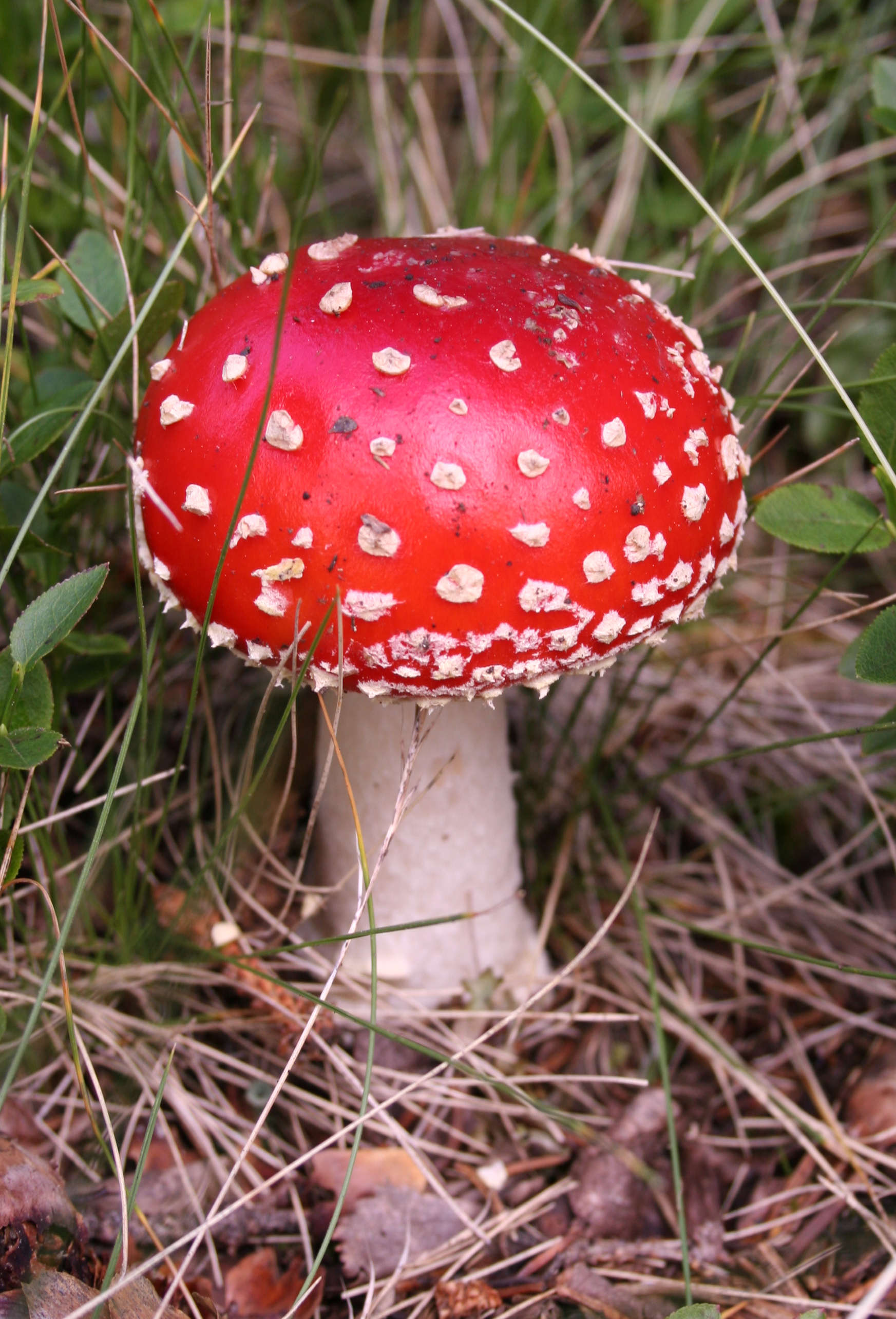 Fly agaric (Amanita muscaria) is one of the natural products toxic to the liver
 -
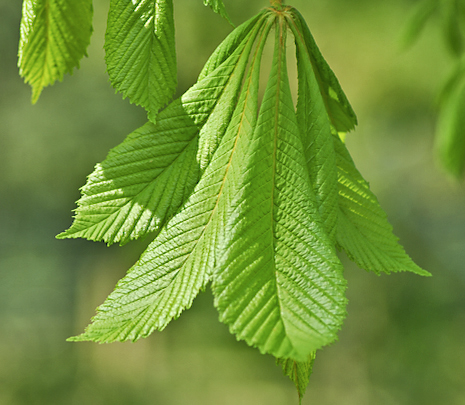 Horse chestnut leaf
 -
 Ackee fruit
 -
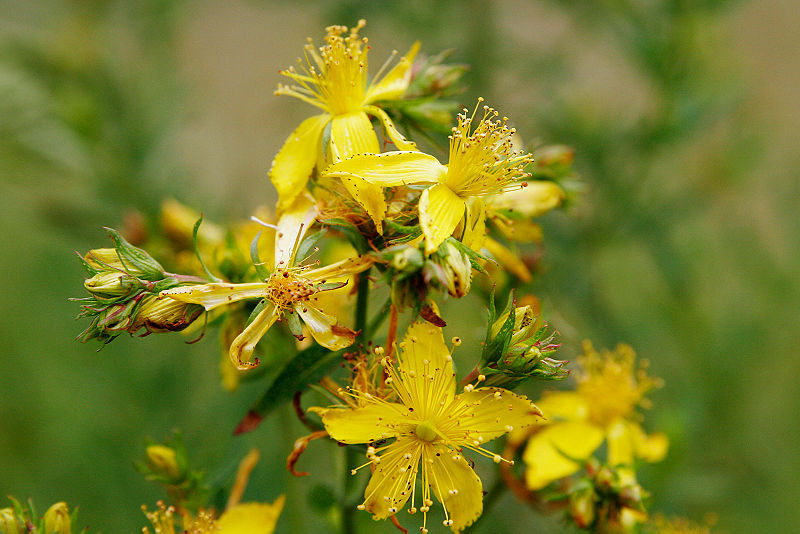 Saint John’s wort Induces Cytochrome P-450 enzyme


References
- ↑ Friedman, Scott E.; Grendell, James H.; McQuaid, Kenneth R. (2003). Current diagnosis & treatment in gastroenterology. New York: Lang Medical Books/McGraw-Hill. pp. p664–679. ISBN 0-8385-1551-7.
- ↑ McNally, Peter F. GI/Liver Secrets: with STUDENT CONSULT Access. Saint Louis: C.V. Mosby. ISBN 1-56053-618-7.
- ↑ Ostapowicz G, Fontana RJ, Schiødt FV; et al. (2002). “Results of a prospective study of acute liver failure at 17 tertiary care centers in the United States”. Ann. Intern. Med. 137 (12): 947–54. PMID 12484709.
- ↑ Keeffe, Emmet B; Friedman, Lawrence M. (2004). Handbook of liver diseases. Edinburgh: Churchill Livingstone. pp. 104–123. ISBN 0-443-06633-7.
|access-date=requires|url=(help) - ↑ Wallace JL (2004). “Acetaminophen hepatotoxicity: NO to the rescue”. Br. J. Pharmacol. 143 (1): 1–2. doi:10.1038/sj.bjp.0705781. PMID 15345657.
- ↑ James LP, Mayeux PR, Hinson JA (2003). “Acetaminophen-induced hepatotoxicity”. Drug Metab. Dispos. 31 (12): 1499–506. doi:10.1124/dmd.31.12.1499. PMID 14625346.
- ↑ Manov I, Motanis H, Frumin I, Iancu TC (2006). “Hepatotoxicity of anti-inflammatory and analgesic drugs: ultrastructural aspects”. Acta Pharmacol. Sin. 27 (3): 259–72. doi:10.1111/j.1745-7254.2006.00278.x. PMID 16490160.
- ↑ Iancu TC, Shiloh H, Dembo L (1986). “Hepatomegaly following short-term high-dose steroid therapy”. J. Pediatr. Gastroenterol. Nutr. 5 (1): 41–6. PMID 3944744.
- ↑
Alpers DH, Sabesin SM (1982). Diseases of the liver. Philadelphia: JB Lippincott. pp. 813–45. Unknown parameter
|coauthors=ignored (help) - ↑ Sarich TC, Adams SP, Petricca G, Wright JM (1999). “Inhibition of isoniazid-induced hepatotoxicity in rabbits by pretreatment with an amidase inhibitor”. J. Pharmacol. Exp. Ther. 289 (2): 695–702. PMID 10215642.
- ↑ Pak E, Esrason KT, Wu VH (2004). “Hepatotoxicity of herbal remedies: an emerging dilemma”. Progress in transplantation (Aliso Viejo, Calif.). 14 (2): 91–6. PMID 15264453.
Editor-In-Chief: C. Michael Gibson, M.S., M.D. [1] Associate Editor(s)-in-Chief:
Differentiating Hepatotoxicity from other Diseases
Please help WikiDoc by adding content here. It’s easy! Click here to learn about editing.
Overview
Differentiating Hepatotoxicity from other Diseases
References
Editor-In-Chief: C. Michael Gibson, M.S., M.D. [1] Associate Editor(s)-in-Chief:
Epidemiology and Demographics
Please help WikiDoc by adding content here. It’s easy! Click here to learn about editing.
Overview
Drug-related hepatotoxicity is generally considered as an uncommon complication for many drugs, with an incidence between 1 in 10,000 and 1 in 100,000.[1] The true incidence of drug-induced liver injury is hard to determine, partly because of difficulties in detection as well as lack of unified criteria for diagnosis.
Epidemiology and Demographics
Drug-induced liver injury (DILI) has an approximate annual incidence between 10 and 15 per 10,000 to 100,000 persons. One study from France reported a crude annual incidence of 13.9 ± 2.4 per 100,000 inhabitants, which is 16 times greater than the number noted by spontaneous reporting to French regulatory authorities.[2] The true incidence of hepatic adverse events in the general population remains unknown and is often underestimated.
More than a thousand drugs have been associated with DILI, the most common among them are antimicrobial agents, central venous system medications, and herbal supplements. Women were found to be more prone to developing DILI than men.[3]
It has been suggested that for every 10 cases of elevations in alanine aminotransferase (ALT) in a clinical trial, there will be at least one case of severe DILI that develops once the drug becomes widely available.[4][5]
References
- ↑ Sgro, C.; Clinard, F.; Ouazir, K.; Chanay, H.; Allard, C.; Guilleminet, C.; Lenoir, C.; Lemoine, A.; Hillon, P. (2002). “Incidence of drug-induced hepatic injuries: a French population-based study”. Hepatology. 36 (2): 451–5. doi:10.1053/jhep.2002.34857. PMID 12143055. Unknown parameter
|month=ignored (help) - ↑ Chalasani, N.; Fontana, RJ.; Bonkovsky, HL.; Watkins, PB.; Davern, T.; Serrano, J.; Yang, H.; Rochon, J.; Chalasani, N. (2008). “Causes, clinical features, and outcomes from a prospective study of drug-induced liver injury in the United States”. Gastroenterology. 135 (6): 1924–34, 1934.e1–4. doi:10.1053/j.gastro.2008.09.011. PMID 18955056. Unknown parameter
|month=ignored (help) - ↑ Maddur, H.; Chalasani, N. (2011). “Idiosyncratic drug-induced liver injury: a clinical update”. Curr Gastroenterol Rep. 13 (1): 65–71. doi:10.1007/s11894-010-0154-8. PMID 21049293. Unknown parameter
|month=ignored (help) - ↑ Lewis, JH. (2006). “‘Hy’s law,’ the ‘Rezulin Rule,’ and other predictors of severe drug-induced hepatotoxicity: putting risk-benefit into perspective”. Pharmacoepidemiol Drug Saf. 15 (4): 221–9. doi:10.1002/pds.1209. PMID 16444771. Unknown parameter
|month=ignored (help)
Editor-In-Chief: C. Michael Gibson, M.S., M.D. [1] Associate Editor(s)-in-Chief: Jesus Rosario Hernandez, M.D. [2]
Risk Factors
Please help WikiDoc by adding content here. It’s easy! Click here to learn about editing.
Overview
Risk Factors
References
Editor-In-Chief: C. Michael Gibson, M.S., M.D. [1] Associate Editor(s)-in-Chief:
Screening
Please help WikiDoc by adding content here. It’s easy! Click here to learn about editing.
Overview
Screening
References
Editor-In-Chief: C. Michael Gibson, M.S., M.D. [1] Associate Editor(s)-in-Chief:
Natural History, Complications and Prognosis
Please help WikiDoc by adding content here. It’s easy! Click here to learn about editing.
Overview
Natural History
Complications
Prognosis
References
Editor-In-Chief: C. Michael Gibson, M.S., M.D. [1] Associate Editor(s)-in-Chief:
Diagnosis
Diagnosis
History and Symptoms | Physical Examination | Laboratory Findings | X Ray | CT | MRI | Ultrasound | Other Imaging Findings | Other Diagnostic Studies
Treatment
Treatment
Medical Therapy | Surgery | Primary Prevention | Secondary Prevention | Cost-Effectiveness of Therapy | Future or Investigational Therapies
Editor-In-Chief: C. Michael Gibson, M.S., M.D. [1]