

Health Dictionary
Reliable, easy-to-read patient information on common medical conditions — written in plain language, free of jargon, and grounded in current evidence. Browse the most frequent diagnoses, understand what they mean for everyday life, and learn which steps and questions help you have a focused conversation with your doctor.
Ingrown toenails
Introduction
For patient information, click here
Synonyms and keywords: Ingrown toenails; ingrowing nails; ingrown nails; unguis incarnatus
Overview
Overview
Ingrown nail is a common form of nail disease. It is a painful condition in which the nail grows or cuts into one or both sides of the nail bed. While ingrown nails can occur in both the nails of the hand and feet, they occur most commonly with toenails.
References
Editor-In-Chief: C. Michael Gibson, M.S., M.D. [1]
Historical Perspective
Please help WikiDoc by adding content here. It’s easy! Click here to learn about editing.
References
Classification
Please help WikiDoc by adding content here. It’s easy! Click here to learn about editing.
References
Pathophysiology
Pathophysiology
If an ingrown nail is left untreated, there exists a high risk of dangerous infection. The mechanism of how and why this infection occurs is as follows: When the skin around the nail gets infected, it begins to swell up and put even more pressure against the nail. Ingrown nails can produce a spear shaped wedge of nail on the lateral side of the toe which will progressively become more embedded into the toe tissue as the nail grows forward. In the worst case, the swelling will begin putting sideways pressure on the nail, causing it to grow at a slant. This will cause both sides of the nail to eventually become ingrown and swollen. Eventually the swollen parts of the skin will begin to harden and fold over the nail.
Gross Pathology
-
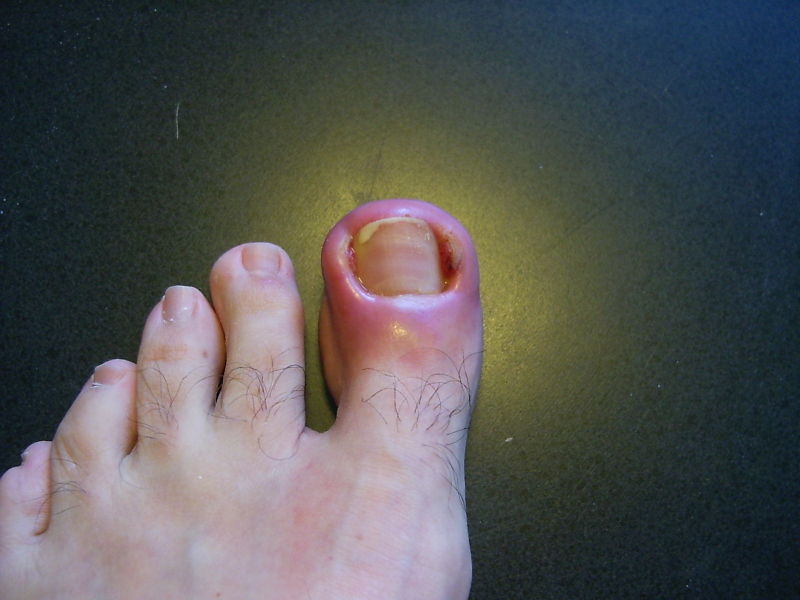 Chronically ingrown toenail (that twice had failed wedge resections on both sides)
 -
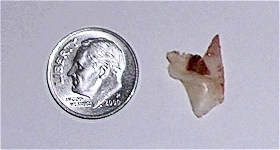 A resected wedge from the left side of the left big toe, shown to scale.
 -
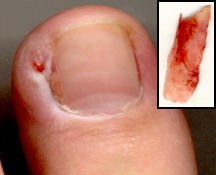 Post-surgery toe with removed nail shard


References
Editor-In-Chief: C. Michael Gibson, M.S., M.D. [1]
Causes
Causes
Common Causes
- Poor maintenance: Cutting the nail too short, rounded off at the tip or peeled off at the edges (versus being cut straight across), is likely to cause ingrowth.
- Ill-fitting shoes: Those that are too narrow or too short, can cause bunching of the toes in the developmental stages of the foot (frequently in people under 21), causing the nail to curl and dig into the skin.
- Trauma to the nail plate or toe, such as stubbing the toenail, dropping things on the toe and ‘going through the end of your shoes’ in sports, can cause the flesh to become injured and the nail to grow irregularly and press into the flesh.
- Predisposition, like abnormally shaped nail beds, nail deformities caused by diseases, and a genetic susceptibility to nail problems can mean a tendency for ingrowth.
Drugs
References
Editor-In-Chief: C. Michael Gibson, M.S., M.D. [1]
Differentiating Ingrown nail from other Diseases
Please help WikiDoc by adding content here. It’s easy! Click here to learn about editing.
References
Epidemiology and Demographics
Please help WikiDoc by adding content here. It’s easy! Click here to learn about editing.
References
Risk Factors
Please help WikiDoc by adding content here. It’s easy! Click here to learn about editing.
References
Natural History, Complications and Prognosis
Please help WikiDoc by adding more content here. It’s easy! Click here to learn about editing.
Natural History, Complications and Prognosis
Complications
Many complications of an ingrown nail exist, especially if the nail is left untreated. An untreated ingrown toenail will cause a person to walk with a limp, which over a long period of time may cause further pain and injury to the foot, leg and back owing to improper distribution of weight. Other non-direct effects of seriously ingrown nails include lack of exercise, constant and unrelenting pain and pressure, the spread of infection, loss of appetite, inability to move around, and psychological effects (like anxiety, stress and feelings of despair). Amputation of the toe, foot or leg may be the final outcome if the infection is left untreated long enough for gangrene to set in. An untreated infection may also lead to a condition known as osteomyelitis, where the infection spreads to the bone of the infected digit. Once in the bone, the infection is more difficult to remove and may require the intravenous treatment of antibiotics. One should always consult a doctor when infection is present.
References
Editor-In-Chief: C. Michael Gibson, M.S., M.D. [1]
Treatment
Treatment
Medical Therapy | Surgery | Primary Prevention | Secondary Prevention | Cost Effectiveness of Therapy
Editor-In-Chief: C. Michael Gibson, M.S., M.D. [1]; Associate Editor(s)-in-Chief: Ogheneochuko Ajari, MB.BS, MS [2] Kiran Singh, M.D. [3]