

Health Dictionary
Reliable, easy-to-read patient information on common medical conditions — written in plain language, free of jargon, and grounded in current evidence. Browse the most frequent diagnoses, understand what they mean for everyday life, and learn which steps and questions help you have a focused conversation with your doctor.
Crocq disease
Introduction
For patient information, click here
Synonyms and keywords: Cassirer syndrome; Crocq disease
Overview
Overview
Acrocyanosis refer to a persistent blue or cyanotic discoloration of the digits, most commonly occurring in the hands although also occurring in the face and feet as well. The blue color is typically associated with poor oxygenation such as in asthma or emphysema
References
Editor-In-Chief: C. Michael Gibson, M.S., M.D. [1]
Historical Perspective
Please help WikiDoc by adding content here. It’s easy! Click here to learn about editing.
References
Classifications
Overview
Classification
Acrocyanosis can be placed into two categories. They are:
- Acrocyanosis (benign) – The more common condition that requires little, if any, medical intervention.
- Acrocyanosis (not benign) – A sign that may allude to a more serious medical problem.
References
Editor-In-Chief: C. Michael Gibson, M.S., M.D. [1]
Pathophysiology
Overview
Pathophysiology
Gross Pathology
-
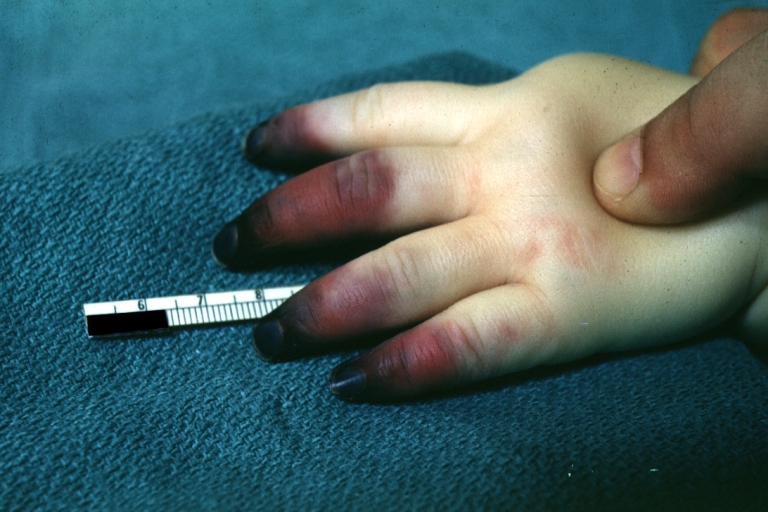 Acrocyanosis: Gross natural color outstandingly horrible example in infant with apparent gangrene of distal and middle phalanges. Pseudomonas sepsis
 -
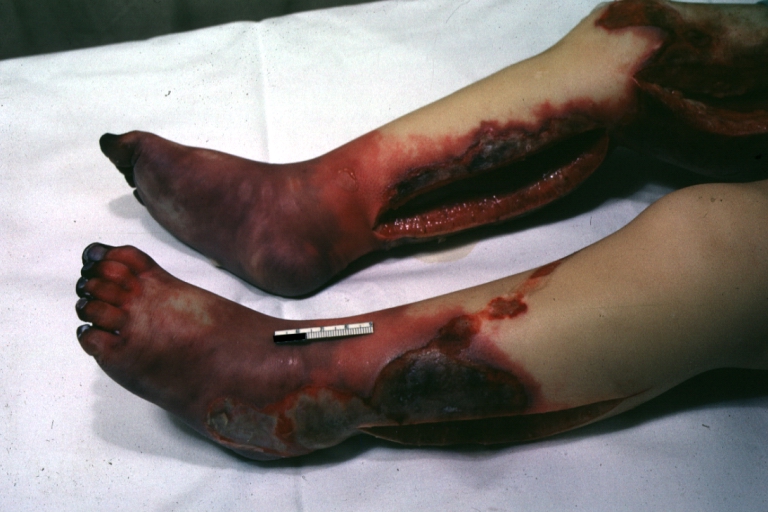 Acrocyanosis: Gross natural color horrible example of gangrene of feet and skin of legs with Pseudomonas sepsis
 -
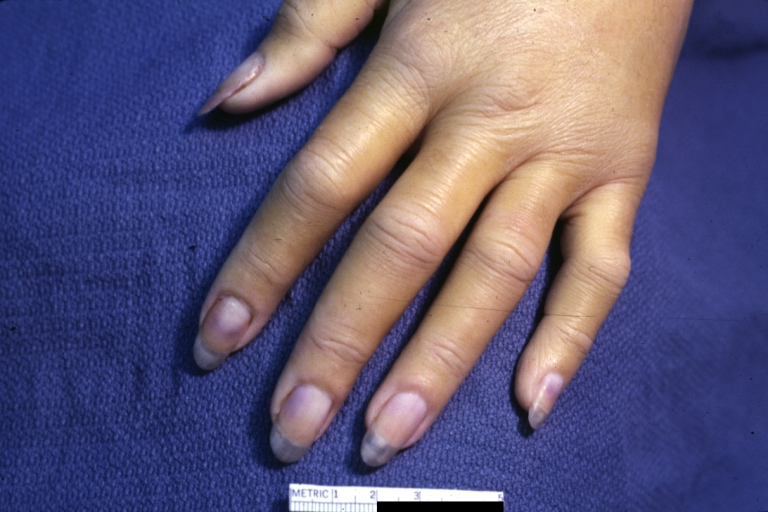 Acrocyanosis: Gross, a case of DIC, distal phalangeal cyanosis


-
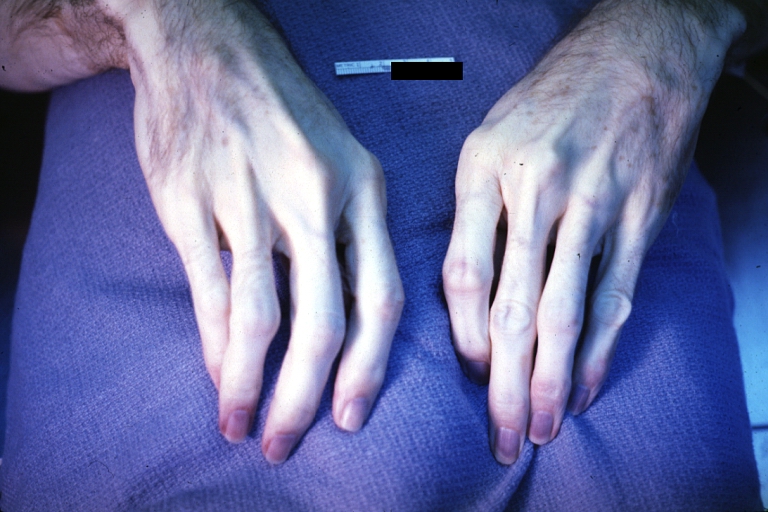 Hand: Acrocyanosis: Gross, an excellent example
 -
 Acrocyanosis: Gross, excellent example of cyanotic nail beds


References
Editor-In-Chief: C. Michael Gibson, M.S., M.D. [1]
Causes
Overview
Acrocyanosis results from central or local tissue oxygenation defects[1]. Acrocyanosis could be due to both primary and secondary causes, from neurologic, psychiatric, autoimmune, infective, metabolic or other causes and its treatment depends on the underlying cause.
Causes
Life Threatening Causes
Life-threatening causes include conditions which may result in death or permanent disability within 24 hours if left untreated.
Common Causes
Causes by Organ System
Causes in Alphabetical Order
References
- ↑ Das S, Maiti A (2013). “Acrocyanosis: an overview”. Indian J Dermatol. 58 (6): 417–20. doi:10.4103/0019-5154.119946. PMC 3827510. PMID 24249890.
- ↑ Pavlou E, Augoustides-Savvopoulou P, Gregersen N, Haas D, Gkampeta A, Athanassiadou-Piperopoulou F (2013). “An infant with ethylmalonic encephalopathy masquerading as a hematologic disorder”. J Child Neurol. 28 (5): 668–71. doi:10.1177/0883073812449070. PMID 22805253.
- ↑ Gayraud M (2007). “Raynaud’s phenomenon”. Joint Bone Spine. 74 (1): e1–8. doi:10.1016/j.jbspin.2006.07.002. PMID 17218139.
- ↑ 4.0 4.1 Stewart JM, Gewitz MH, Weldon A, Arlievsky N, Li K, Munoz J (1999). “Orthostatic intolerance in adolescent chronic fatigue syndrome”. Pediatrics. 103 (1): 116–21. PMID 9917448.
- ↑ Abdel-Salam GM, Zaki MS, Lebon P, Meguid NA (2004). “Aicardi-Goutières syndrome: clinical and neuroradiological findings of 10 new cases”. Acta Paediatr. 93 (7): 929–36. PMID 15303808.
- ↑ Ozaras R, Yemisen M, Mete B, Mert A, Ozturk R, Tabak F (2007). “Acrocyanosis developed with amphotericin B deoxycholate but not with amphotericin B lipid complex”. Mycoses. 50 (3): 242. doi:10.1111/j.1439-0507.2007.01360.x. PMID 17472626.
- ↑ 7.0 7.1 Mitchell JE, Crow S (2006). “Medical complications of anorexia nervosa and bulimia nervosa”. Curr Opin Psychiatry. 19 (4): 438–43. doi:10.1097/01.yco.0000228768.79097.3e. PMID 16721178.
- ↑ 8.0 8.1 Strumia R (2005). “Dermatologic signs in patients with eating disorders”. Am J Clin Dermatol. 6 (3): 165–73. PMID 15943493.
- ↑ Salluh JI, Soares M, De Meis E (2009). “Antiphospholipid antibodies and multiple organ failure in critically ill cancer patients”. Clinics (Sao Paulo). 64 (2): 79–82. PMC 2666481. PMID 19219311.
- ↑ Diallo M, Niang SO, Kane A, Dieng MT, Ndiaye B (2007). “[Antiphospholipid antibodies syndrome in dermatology in Dakar: 11 case report]”. Dakar Med. 52 (1): 41–5. PMID 19102091.
- ↑ Hall AH (2002). “Chronic arsenic poisoning”. Toxicol Lett. 128 (1–3): 69–72. PMID 11869818.
- ↑ Rubin DI, Schomberg PJ, Shepherd RF, Panneton JM (2001). “Arteritis and brachial plexus neuropathy as delayed complications of radiation therapy”. Mayo Clin Proc. 76 (8): 849–52. doi:10.1016/S0025-6196(11)63232-1. PMID 11499827.
- ↑ Smith P, Rice M, Ricci N, Toogood I, Roberton D (1993). “A case of Burkitt’s lymphoma presenting with digital ischaemia”. Acta Paediatr. 82 (2): 217–9. PMID 8477174.
- ↑ Hoegl L, Thoma-Greber E, Poppinger J, Röcken M (1999). “Butyl nitrite-induced acrocyanosis in an HIV-infected patient”. Arch Dermatol. 135 (1): 90–1. PMID 9923790.
- ↑ Di Lucca J, Mahé E, Saiag P (2007). “[Severe acrocyanosis in carcinoid syndrome]”. Ann Dermatol Venereol. 134 (11): 895–6. PMID 18033083.
- ↑ Hirono H, Kubota T, Funakoshi K, Watanabe T, Hasegawa K, Soga K; et al. (2011). “[A case of superior mesenteric artery occlusion associated with idiopathic chronic cold agglutinin disease]”. Nihon Shokakibyo Gakkai Zasshi. 108 (5): 791–8. PMID 21558747.
- ↑ 17.0 17.1 Lauritano D, Bussolati A, Baldoni M, Leonida A (2011). “Scleroderma and CREST syndrome: a case report in dentistry”. Minerva Stomatol. 60 (9): 443–65. PMID 21956352.
- ↑ Iguchi S, Toba K, Fuse I, Wada Y, Maruyama S, Takahashi M; et al. (1996). “Severe cryoglobulinemia in a patient with asymptomatic hepatitis C virus infection”. Intern Med. 35 (9): 712–6. PMID 8915697.
- ↑ Bruno B, Barbier C, Lambilliotte A, Rey C, Turck D (2002). “Auto-immune pancytopenia in a child with DiGeorge syndrome”. Eur J Pediatr. 161 (7): 390–2. doi:10.1007/s00431-002-0976-y. PMID 12111192.
- ↑ Tarach JS, Nowicka-Tarach BM, Matuszek B, Nowakowski A (2000). “Erythromelalgia–a thrombotic complication in chronic myeloproliferative disorders”. Med Sci Monit. 6 (1): 204–8. PMID 11208311.
- ↑ Koudstaal PJ, Koudstaal A (1997). “Neurologic and visual symptoms in essential thrombocythemia: efficacy of low-dose aspirin”. Semin Thromb Hemost. 23 (4): 365–70. doi:10.1055/s-2007-996110. PMID 9263353.
- ↑ Ozand PT, Rashed M, Millington DS, Sakati N, Hazzaa S, Rahbeeni Z; et al. (1994). “Ethylmalonic aciduria: an organic acidemia with CNS involvement and vasculopathy”. Brain Dev. 16 Suppl: 12–22. PMID 7726376.
- ↑ Heberle LC, Al Tawari AA, Ramadan DG, Ibrahim JK (2006). “Ethylmalonic encephalopathy-report of two cases”. Brain Dev. 28 (5): 329–31. doi:10.1016/j.braindev.2005.10.005. PMID 16376514.
- ↑ Fleming C, Rennie A, Fallowfield M, McHenry PM (1997). “Cutaneous manifestations of fucosidosis”. Br J Dermatol. 136 (4): 594–7. PMID 9155966.
- ↑ Holstein A, Bätge R, Egberts EH (2010). “Gemcitabine induced digital ischaemia and necrosis”. Eur J Cancer Care (Engl). 19 (3): 408–9. doi:10.1111/j.1365-2354.2008.01057.x. PMID 19490003.
- ↑ Solak Y, Aksoy S, Kilickap S, Celik I (2006). “Acrocyanosis as a presenting symptom of Hodgkin lymphoma”. Am J Hematol. 81 (2): 151–2. doi:10.1002/ajh.20479. PMID 16432859.
- ↑ Nousari HC, Kimyai-Asadi A, Anhalt GJ (2001). “Chronic idiopathic acrocyanosis”. J Am Acad Dermatol. 45 (6 Suppl): S207–8. PMID 11712060.
- ↑ Anderson RP, Morris BA (1988). “Acrocyanosis due to imipramine”. Arch Dis Child. 63 (2): 204–5. PMC 1778745. PMID 3348672.
- ↑ Campo-Voegeli A, Estrach T, Marti RM, Corominas N, Tuset M, Mascaró JM (1998). “Acrocyanosis induced by interferon alpha(2a)”. Dermatology. 196 (3): 361–3. PMID 9621152.
- ↑ Jiminez MA, Polena S, Coplan NL, Patel K, Gintautas J (2007). “Methemoglobinemia and transesophageal echo”. Proc West Pharmacol Soc. 50: 134–5. PMID 18605250.
- ↑ Bodemer C, Rötig A, Rustin P, Cormier V, Niaudet P, Saudubray JM; et al. (1999). “Hair and skin disorders as signs of mitochondrial disease”. Pediatrics. 103 (2): 428–33. PMID 9925836.
- ↑ Legrain S, Raguin G, Piette JC (1999). “Digital necrosis revealing ovarian cancer”. Dermatology. 199 (2): 183–4. doi:18235 Check
|doi=value (help). PMID 10559594. - ↑ Jorquera-Barquero E, Súarez-Marrero MC, Fernández Girón F, Borrero Martín JJ (2013). “Oxalosis and livedo reticularis”. Actas Dermosifiliogr. 104 (9): 815–8. doi:10.1016/j.ad.2012.04.019. PMID 23103120.
- ↑ Blackmon JA, Jeffy BG, Malone JC, Knable AL (2011). “Oxalosis involving the skin: case report and literature review”. Arch Dermatol. 147 (11): 1302–5. doi:10.1001/archdermatol.2011.182. PMID 21768445.
- ↑ Penouil MH, Estève E, Millotte B, Bressieux JM (1997). “[Parvovirus B19 atypical acrosyndrome]”. Ann Dermatol Venereol. 124 (3): 254–6. PMID 9686060.
- ↑ Kermani TA, Pislaru SV, Osborn TG (2009). “Acrocyanosis from phenazopyridine-induced sulfhemoglobinemia mistaken for Raynaud phenomenon”. J Clin Rheumatol. 15 (3): 127–9. doi:10.1097/RHU.0b013e31819db6db. PMID 19300288.
- ↑ Miest RY, Comfere NI, Dispenzieri A, Lohse CM, el-Azhary RA (2013). “Cutaneous manifestations in patients with POEMS syndrome”. Int J Dermatol. 52 (11): 1349–56. doi:10.1111/j.1365-4632.2012.05648.x. PMID 23557151.
- ↑ Stewart JM, Weldon A (2000). “Vascular perturbations in the chronic orthostatic intolerance of the postural orthostatic tachycardia syndrome”. J Appl Physiol (1985). 89 (4): 1505–12. PMID 11007589.
- ↑ Semel JD (1984). “Cutaneous findings in a case of psittacosis”. Arch Dermatol. 120 (9): 1227–9. PMID 6476861.
- ↑ Das S, Roy AK, Maiti A (2010). “Remittent idiopathic necrotizing acrocyanosis – a rare entity”. Indian J Dermatol. 55 (1): 95–6. doi:10.4103/0019-5154.60362. PMC 2856383. PMID 20418987.
- ↑ Lotz BP, Schutte CM, Colin PF, Biermann LD (1993). “Sneddon’s syndrome with anticardiolipin antibodies–complications and treatment”. S Afr Med J. 83 (9): 663–4. PMID 8310361.
- ↑ Richter JG, Sander O, Schneider M, Klein-Weigel P (2010). “Diagnostic algorithm for Raynaud’s phenomenon and vascular skin lesions in systemic lupus erythematosus”. Lupus. 19 (9): 1087–95. doi:10.1177/0961203310374304. PMID 20693202.
- ↑ Feito Rodríguez M, García Macarrón J, Martín Díaz MA, Rubio Flores C, Vidaurrázaga Díaz-Arcaya C (2006). “[Acrocyanosis as a form of presentation of progressive systemic sclerosis]”. An Med Interna. 23 (10): 490–2. PMID 17134313.
- ↑ Cornejo R, Gatica H, Segovia E, Cortés C (2002). “[Intestinal necrosis as clinical presentation of Takayasu arteritis]”. Rev Med Chil. 130 (10): 1159–64. PMID 12491834.
- ↑ Karakaya I, Aydoğan M, Coşkun A, Gökalp AS (2003). “Acrocyanosis as a side effect of tricyclic antidepressants: a case report”. Turk J Pediatr. 45 (2): 155–7. PMID 12921305.
Editor-In-Chief: C. Michael Gibson, M.S., M.D. [1]; Associate Editor(s)-in-Chief: Ogheneochuko Ajari, MB.BS, MS [2]
Differentiating Acrocyanosis from other Disorders
Please help WikiDoc by adding more content here. It’s easy! Click here to learn about editing.
Differential Diagnosis
The blue discoloration that is seen in a person with acrocyanosis may also be caused by argyria or DADPS
References
Editor-In-Chief: C. Michael Gibson, M.S., M.D. [1]
Epidemiology and Demographics
Please help WikiDoc by adding content here. It’s easy! Click here to learn about editing.
References
Risk Factors
Please help WikiDoc by adding content here. It’s easy! Click here to learn about editing.
References
Screening
Please help WikiDoc by adding content here. It’s easy! Click here to learn about editing.
References
Natural History, Complications, and Prognosis
Please help WikiDoc by adding content here. It’s easy! Click here to learn about editing.
References
Diagnosis
Diagnosis
History and Symptoms | Physical Examination | Laboratory Findings | Electrocardiogram | X Rays | CT | MRI | Echocardiography or Ultrasound | Other Imaging Findings | Other Diagnostic Studies
Treatment
Treatment
Medical Therapy | Primary Prevention | Secondary Prevention | Cost-Effectiveness of Therapy | Future or Investigational Therapies
Editor-In-Chief: C. Michael Gibson, M.S., M.D. [1]