

Health Dictionary
Reliable, easy-to-read patient information on common medical conditions — written in plain language, free of jargon, and grounded in current evidence. Browse the most frequent diagnoses, understand what they mean for everyday life, and learn which steps and questions help you have a focused conversation with your doctor.
Gonococcal Infections
Introduction
Template:DiseaseDisorder infobox
For patient information click here
Synonyms and keywords: Neisseria gonorrhoeae infection; the clap; gonococcemia; gonorrhoea; disseminated gonococcal infection; gonococcal infection; gonococcus infection; Gonococcemia; Gonococcaemia; Gonococcal septicaemia; Gonococcal septicemia; Systemic gonococcal infection; Complicated systemic gonorrhea
Overview
Overview
Gonorrhea (gonorrhoea in British English) is among the most common sexually transmitted diseases in the world. In the United States, gonorrhea is the second most common STD (after chlamydia).[1] Neisseria gonorrhoeae is a species of Gram-negative, coffee bean-shaped diplococci bacteria responsible for the sexually transmitted infection gonorrhea.[2]
Gonorrhea can infect mucus-secreting epithelial cells in both men and women. The first place this bacterium infects is usually the columnar epithelium of the urethra and endocervix. Non-genital sites in which this bacterium thrives include the rectum, the oropharynx, and the conjunctivae of the eyes. Established routes of transmission of Neisseria gonorrhoeae include vaginal and rectal intercourse, fellatio, cunnilingus, and perinatal. The main pathogenicity of the Neisseria gonorrhea stems from the ability of the surface pili to attach to the surface of the urethra, fallopian tubes, and endocervix.[3] In pregnancy, gonococcus can be transmitted to the fetus at the time of delivery. Additionally, development of disseminated gonococcal infection is the result of Neisserial organisms’ dissemination to the blood.[4][5]
Common risk factors in the development of gonorrhea include sexual activity, multiple sex partners, previous history of sexually transmitted diseases, having a sexual partner with a past history of any sexually transmitted disease, and failure to use condoms during sex.[6] In 50 to 70% of women, the initial infection with Neisseria gonorrhea may be asymptomatic. The most common complication of untreated gonorrhea is pelvic inflammatory disease (PID), which may lead to increased risks of ectopic pregnancy. If left untreated, ectopic pregnancy can be life-threatening to the mother.[7] In men, gonorrhea usually results in urethritis, which may result in dysuria. If left untreated, gonorrhea may result in inflammation of the epididymis (epididymitis), prostate gland (prostatitis), and urethral structure. Disseminated gonococcal infection (DGI) occurs in about 0.5 to 3% of patients, commonly following asymptomatic mucosal infection in both sexes.
Empiric treatment for gonorrhea is usually initiated prior to receipt of laboratory results. Nucleic acid amplification tests (NAATs) are the test of choice in all individuals who present with urogenital symptoms.[8] The mainstay of therapy for gonococcal infections is antimicrobial therapy. Gonorrhea treatment is complicated by the ability of N. gonorrhoeae to develop resistance to antimicrobials; accordingly, a combination therapy with azithromycin and a cephalosporin is used to improve treatment efficacy and potentially slow the emergence and spread of antibiotic resistance.[9] Effective measures for the primary prevention of gonorrhea infection include practicing abstinence, avoiding high-risk sexual behaviors (e.g., having unprotected sex or multiple sexual partners), and using latex condoms. Measure for the secondary prevention of gonorrhea infection include early detection, treatment of sexual partners, and treatment of other sexually transmitted infections (e.g., chlamydia).[10][11][12]
Historical Perspective
Gonorrhea is an ancient disease with biblical references. However, the exact time of onset of gonorrhea in history cannot be accurately determined from the extant historical record.[13] In 1879, gonorrhea was referred to as “the clap” by German bacteriologist Albert Neisser.[14]
Classification
Based on anatomic location, gonorrhea may be classified into three subtypes: urogenital, extragenital, and disseminated gonococcal infection. Additionally, gonococcal infections may be classified into many subtypes according to the affected organ system.[15][16][17]
Pathophysiology
Gonorrhea is a sexually transmitted disease (STD) that is caused by the bacterium Neisseria gonorrhea. It can infect mucus-secreting epithelial cells in both men and women. Established routes of transmission of the Neisseria gonorrhoeae include vaginal intercourse, rectal intercourse, fellatio, cunnilingus, and perinatal. The main pathogenicity of the Neisseria gonorrhea stems from the ability of the surface pili to attach to the surface of the urethra, fallopian tubes, and endocervix.[3][18][19] Another virulence factor of gonorrhea is porin. There are two main porin serotypes: PorB.1A strains (resulting in a disseminated gonococcal infection) and PorB.1B strains (resulting in local genital infections).[20][21][22]
In pregnancy, gonococcus can be transmitted to the fetus at the time of delivery. This results in infection of the conjuctiva. This appears 1 to 4 days after birth as severe discharge with marked swelling and redness of the eyelids and conjunctiva. Additionally, development of disseminated gonococcal infection is the result of Neisserial organisms’ dissemination to the blood due to a variety of predisposing factors, such as change in PH, pregnancy, menstruation, PorB.1A strains, and complement deficiencies.[4][5][23][24]
Causes
Neisseria gonorrhoeae, also known as gonococci (plural), gonococcus (singular), or gonorrhoea (in British English), is a species of Gram-negative, coffee bean-shaped diplococci bacteria that is responsible for the sexually transmitted infection gonorrhea.[2] Gonorrhea (gonorrhoea in British English) is among the most common sexually transmitted diseases in the world. The term comes from the Ancient Greek word γονόρροια (gonórrhoia), literally “flow of seed”; in ancient times, it was incorrectly believed that the pus discharge associated with the disease contained semen.[25]
Differential diagnosis
Gonorrhea must be differentiated from other sexually transmitted pathogens, nongonococcal urethritis, vaginitis, cervicitis, urinary tract infections, prostatitis, and orchitis. Additionally, disseminated gonococcal infection must be differentiated from herpes simplex virus (HSV), nongonococcal septic arthritis, syphilis, HIV infection, rheumatic fever, reactive arthritis , and Lyme disease.[15][16][17]
Epidemiology
Gonorrhea is a very common infectious disease. In the United State, gonorrhea is the second most common STD (after chlamydia).[1] In 2012, the incidence of gonorrhea was reported as 106 million cases worldwide.[26] In 2014, a total 350,062 cases of gonorrhea were reported in United States.[27]
Risk factors
Common risk factors for the development of gonorrhea include sexual activity, having multiple sex partners, previous history of sexually transmitted diseases, having a partner with a past history of any sexually transmitted disease, and failure to use a condom during sex.[6][28][29]
Screening
The U.S. Preventive Services and Task Force (USSTF) recommends screening for gonorrhea in sexually active women age 24 years and younger and in older women who are at increased risk for infection. Current evidence is insufficient to assess the balance of benefits and harms of screening for gonorrhea in heterosexual men. However, USSTF recommends at least annual screening for gonorrhea among men who have sex with men (MSM).[30][31][32]
Natural history, complications, and prognosis
In 50 to 70% of women, the initial infection with Neisseria gonorrhea may be asymptomatic. Initial infection is usually observed in the cervical region, but due to the presence of the surface pili, the infection may ascend through the uterus into the fallopian tubes and finally out into the peritoneal cavity. The exact incubation period of gonorrhea is unknown. It may result in cervicitis and urethritis, which may present with dysuria, vaginal pruritus, and vaginal mucopurulent discharge. If gonococcal infection is left untreated, it can progress to fibrosis. Fibrosis can result in fallopian tube stricture, tubo-ovarian cyst or abscess, pelvic inflammatory disease (PID), Perihepatitis (Fitz-Hugh-Curtis syndrome), and/or bartholinitis. The most common complication of untreated gonorrhea is pelvic inflammatory disease (PID), which may lead to an increased risk of ectopic pregnancy. If left untreated, ectopic pregnancy can be life-threatening for the mother.[7][33] In men, gonorrhea usually results in urethritis, which may result in dysuria. If left untreated, gonorrhea may result in inflammation of the epididymis (epididymitis), prostate gland (prostatitis), and urethral structure (urethritis). Disseminated gonococcal infection (DGI) occurs in about 0.5 to 3% of patients, commonly following asymptomatic mucosal infection in both sexes. Disseminated gonococcal infection can lead to the infection of multiple distant sites such as the brain, heart, and joints. The most common signs and symptoms include arthritis or arthralgias, tenosynovitis, and multiple skin lesions.
Common complications of gonococcal infection in women may include salpingitis, pelvic inflammatory disease, Infertility, dyspareunia, and ectopic pregnancy. Common complications of gonococcal infection in men may include post-inflammatory urethral strictures, urethral abscess, penile lymphangitis, penile edema, urinary tract infection, and kidney failure. The prognosis of urogenital and disseminated gonococcal infection are generally good with adequate treatment.
Diagnosis
History and Symptoms
It is critical to obtain a detailed and thorough sexual history from the patient. Specific areas of focus when obtaining a history from the patient include number and type of sexual partners, contraception use, and previous history of sexually transmitted diseases. The majority of women with gonorrhea are asymptomatic, while some have vaginal discharge, lower abdominal pain, or pain during intercourse. Common symptoms of gonococcal infection among men include urethritis, which is associated with burning with urination and discharge from the penis. Either sex may also acquire gonorrhea of the throat from performing oral sex on an infected partner, usually a male partner. Such infection is asymptomatic in 90% of cases, and produces a sore throat in the remaining 10%. The incubation period is 2 to 14 days, with most of these symptoms occurring between 4 and 6 days after infection.[15][34][35][36] Rarely, gonorrhea may cause skin lesions and joint infection (pain and swelling in the joints) after traveling through the blood stream. Very rarely, it may settle in the heart, causing endocarditis, or in the spinal column, causing meningitis.[17]
Physical examination
Women with gonococcal infection usually appear to be well until the development of such complications as PID. Physical examinations of women with gonococcal infection are usually remarkable for mucopurulent urethral, cervical, or vaginal discharge; friable appearance of the cervix; and cervical motion tenderness. Common physical examination finding of gonococcal infection in men include mucopurulent urethral discharge. Less commonly, penile edema and epididymal tenderness and edema (epididymitis) may also be seen as part of a complicated gonococcal infection.[15][34][35]
Physical examination of patients with pharyngeal gonococcal infection is usually remarkable for mild pharyngeal exudates and rectal gonococcal infection is usually remarkable for mucopurulent anal discharge. Physical examination of patients with disseminated gonococcal infection (DGI) is usually remarkable for fever, pustular or vesicular rash, and musculoskeletal findings.[15][17]
Images
The following images are associated with gonorrhea physical examination.[37][38]
-
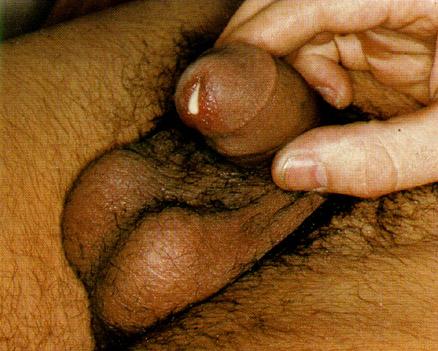 Penile discharge in a patient with gonorrhea – Source: https://www.std.gov/
 -
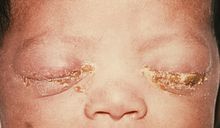 Ophthalmia neonatorum – Source: https://www.cdc.gov/
 -
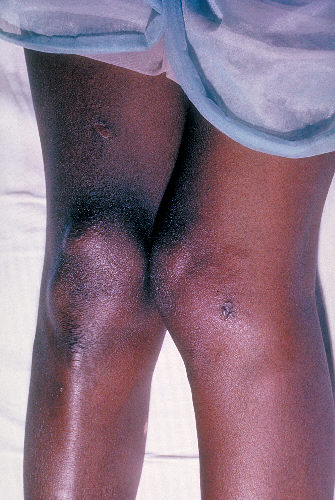 Lesions of skin and arthritic knee joints due to Neisseria gonorrhea – Source: https://www.cdc.gov/


Laboratory tests
Empiric treatment for gonorrhea is usually initiated prior to the receipt of laboratory result. A microbiologic diagnosis is important for further management in order to determine the need for further testing, partner management, and public health considerations. Any sexually active man or women presenting with signs and symptoms of urethritis, cervicitis, pelvic inflammatory disease, and epididymitis should undergo diagnostic testing for Neisseria gonorrhea. Additionally, the possibility of disseminated gonococcal infection (DGI) should be considered in all young sexually active individuals who present with arthralgias or suspected septic arthritis. Common laboratory tests for gonococcal infection may include gram stain, culture, nucleic acid amplification tests (NAAT), and non-amplified tests. Nucleic acid amplification tests are the test of choice in all individuals who present with urogenital symptoms.[8][17] Additionally, synovial fluid analysis is usually sent for cell count, differential, gram stain, bacterial culture and NAAT in patients with suspected DGI.[39]
Other diagnostic studies
Other diagnostic studies are used when NAAT or culture are not available. Other diagnostic studies for gonorrhea infection include rapid NAAT assay (modular-cartridge based platform), leukocyte esterase urine test, immunochromatographic tests, nucleic acid hybridization tests, and enzyme immunoassay (EIA).[40][41][42]
Treatment
Medical therapy
The mainstay of therapy for gonococcal infections is antimicrobial therapy. Gonorrhea treatment is complicated by the ability of N. gonorrhoeae to develop resistance to antimicrobials; accordingly, a combination therapy with azithromycin and a cephalosporin is used to improve treatment efficacy and potentially slow the emergence and spread of antibiotic resistance.[43]
| Type of gonococcal infection | Regimen |
|---|---|
| Uncomplicated Recommended regimen |
|
| Uncomplicated Alternative regimen |
|
| Alternative regimens for severe Cephalosporin allergy |
|
| Arthritis and arthritis-dermatitis syndrome |
|
| Gonococcal meningitis and endocarditis |
|
Antibiotic resistant
Gonorrhea treatment is complicated by the ability of Neisseria gonorrhoeae to develop resistance to antimicrobials. High-level resistance to expanded-spectrum cephalosporins and azithromycin is now reported, and it seems that developing another effective treatment has become unaffordable for pharmaceutical companies, though new combination antibiotic treatments are being evaluated. There are no affordable alternative therapeutic options currently available for the treatment of gonococcal disease, and it seems even newly developed antibiotics will be short-term solutions, as the bacterium may well develop resistance to them, too.[44]
In 2006, CDC had five recommended treatment options for gonorrhea. Currently, the U.S. has only one remaining option.

Primary prevention
Effective measures for the primary prevention of gonococcal infection include accurate risk assessment and counseling, practicing abstinence, avoiding high-risk sexual behaviors (e.g., unprotected sex or multiple sexual partners), using latex condoms, and being in a long-term and monogamous relationship with an uninfected partner.[10][11][12]
Secondary prevention
Strategies for the secondary prevention of gonococcal infection include early detection, treatment of sexual partners, and treatment of other sexually transmitted infections (e.g., chlamydia).[10][11][12]
References
- ↑ 1.0 1.1 CDC. Sexually transmitted disease surveillance 2013. Atlanta: US Department of Health and Human Services; 2014.
- ↑ 2.0 2.1 Ryan, KJ; Ray, CG, eds. (2004). Sherris Medical Microbiology (4th ed.). McGraw Hill. ISBN 0-8385-8529-9.
- ↑ 3.0 3.1 Sparling PF (1966). “Genetic transformation of Neisseria gonorrhoeae to streptomycin resistance”. J Bacteriol. 92 (5): 1364–71. PMC 276432. PMID 4958881.
- ↑ 4.0 4.1 WATRING, WATSON G., and DANIEL L. VAUGHN. “Gonococcemia in pregnancy.” Obstetrics & Gynecology 48.4 (1976): 428-430.
- ↑ 5.0 5.1 Angulo, Juan M., and Luis R. Espinoza. “Gonococcal arthritis.” Comprehensive therapy 25.3 (1999): 155-162.
- ↑ 6.0 6.1 Klausner JD, Barrett DC, Dithmer D, Boyer CB, Brooks GF, Bolan G (1998). “Risk factors for repeated gonococcal infections: San Francisco, 1990-1992”. J Infect Dis. 177 (6): 1766–9. PMID 9607868.
- ↑ 7.0 7.1 McNeeley SG (1989). “Gonococcal infections in women”. Obstet Gynecol Clin North Am. 16 (3): 467–78. PMID 2512520.
- ↑ 8.0 8.1 “Sexually transmitted diseases treatment guidelines (2015).” Reproductive Endocrinology 24 (2015): 51-56.http://www.cdc.gov/std/tg2015/gonorrhea.htm Accessed on September 2015
- ↑ Workowski, Kimberly A.; Bolan, Gail A. (2015-06-05). “Sexually transmitted diseases treatment guidelines, 2015”. MMWR. Recommendations and reports: Morbidity and mortality weekly report. Recommendations and reports / Centers for Disease Control. 64 (RR-03): 1–137. ISSN 1545-8601. PMID 26042815.
- ↑ 10.0 10.1 10.2 Centers for Disease Control and Pevention. clinical prevention guidance (2015). http://www.cdc.gov/std/tg2015/clinical.htm Accessed on September 25, 2016
- ↑ 11.0 11.1 11.2 LeFevre ML. USPSTF: behavioral counseling interventions to prevent sexually transmitted infections. Ann Intern Med 2014;161:894–901.
- ↑ 12.0 12.1 12.2 Warner L, Stone KM, Macaluso M, et al. Condom use and risk of gonorrhea and Chlamydia: a systematic review of design and measurement factors assessed in epidemiologic studies. Sex Transm Dis 2006;33:36–51.
- ↑ Genco, Caroline Attardo. Neisseria: molecular mechanisms of pathogenesis. Horizon Scientific Press, 2010.
- ↑ Unemo M, Shafer WM. Antimicrobial resistance in Neisseria gonorrhoeae in the 21st century: past, evolution, and future. Clin Microbiol Rev 2014;27:587–613.
- ↑ 15.0 15.1 15.2 15.3 15.4 Workowski KA, Bolan GA, Centers for Disease Control and Prevention (2015). “Sexually transmitted diseases treatment guidelines, 2015”. MMWR Recomm Rep. 64 (RR-03): 1–137. PMID 26042815.
- ↑ 16.0 16.1 Rompalo AM, Hook EW, Roberts PL, Ramsey PG, Handsfield HH, Holmes KK (1987). “The acute arthritis-dermatitis syndrome. The changing importance of Neisseria gonorrhoeae and Neisseria meningitidis”. Arch Intern Med. 147 (2): 281–3. PMID 3101626.
- ↑ 17.0 17.1 17.2 17.3 17.4 Rice PA (2005). “Gonococcal arthritis (disseminated gonococcal infection)”. Infect Dis Clin North Am. 19 (4): 853–61. doi:10.1016/j.idc.2005.07.003. PMID 16297736.
- ↑ Swanson J (1973). “Studies on gonococcus infection. IV. Pili: their role in attachment of gonococci to tissue culture cells”. J Exp Med. 137 (3): 571–89. PMC 2139381. PMID 4631989.
- ↑ Wolfgang M, Lauer P, Park HS, Brossay L, Hébert J, Koomey M (1998). “PilT mutations lead to simultaneous defects in competence for natural transformation and twitching motility in piliated Neisseria gonorrhoeae”. Mol Microbiol. 29 (1): 321–30. PMID 9701824.
- ↑ Young JD, Blake M, Mauro A, Cohn ZA (1983). “Properties of the major outer membrane protein from Neisseria gonorrhoeae incorporated into model lipid membranes”. Proc Natl Acad Sci U S A. 80 (12): 3831–5. PMC 394146. PMID 6407021.
- ↑ Ram S, Cullinane M, Blom AM, Gulati S, McQuillen DP, Monks BG; et al. (2001). “Binding of C4b-binding protein to porin: a molecular mechanism of serum resistance of Neisseria gonorrhoeae”. J Exp Med. 193 (3): 281–95. PMC 2195916. PMID 11157049.
- ↑ Ram S, McQuillen DP, Gulati S, Elkins C, Pangburn MK, Rice PA (1998). “Binding of complement factor H to loop 5 of porin protein 1A: a molecular mechanism of serum resistance of nonsialylated Neisseria gonorrhoeae”. J Exp Med. 188 (4): 671–80. PMC 2213355. PMID 9705949.
- ↑ Bohnhoff M, Morello JA, Lerner SA (1986). “Auxotypes, penicillin susceptibility, and serogroups of Neisseria gonorrhoeae from disseminated and uncomplicated infections”. J Infect Dis. 154 (2): 225–30. PMID 3088132.
- ↑ O’Brien JP, Goldenberg DL, Rice PA (1983). “Disseminated gonococcal infection: a prospective analysis of 49 patients and a review of pathophysiology and immune mechanisms”. Medicine (Baltimore). 62 (6): 395–406. PMID 6415361.
- ↑ Definition of the term gonorrhea
- ↑ World Health Organization. Emergence of multi-drug resistant Neisseria gonorrhoeae http://apps.who.int/iris/bitstream/10665/70603/1/WHO_RHR_11.14_eng.pdf Accessed on September 8, 2016
- ↑ Centers for Disease Control and Prevention. Reported STDs in the United States 2014 National Data for Chlamydia, Gonorrhea, and Syphilis http://www.cdc.gov/std/stats14/std-trends-508.pdf
- ↑ Centers for Disease Control and Prevention http://www.cdc.gov/std/gonorrhea/stdfact-gonorrhea.htm Accessed September 20, 2016
- ↑ Mertz KJ, Levine WC, Mosure DJ, Berman SM, Dorian KJ, Hadgu A (1997). “Screening women for gonorrhea: demographic screening criteria for general clinical use”. Am J Public Health. 87 (9): 1535–8. PMC 1380985. PMID 9314811.
- ↑ “2015 Sexually Transmitted Diseases Treatment Guidelines (CDC)”.
- ↑ Workowski KA, Bolan GA. Sexually transmitted diseases treat- ment guidelines, 2015. MMWR Recomm Rep 2015;64:60–68.
- ↑ US preventive services task forces. Gonorrhea and chlamydia screening (2014) https://www.uspreventiveservicestaskforce.org/Page/Document/ClinicalSummaryFinal/chlamydia-and-gonorrhea-screening Accessed on September 28, 2016
- ↑ Stansfield VA (1980). “Diagnosis and management of anorectal gonorrhoea in women”. Br J Vener Dis. 56 (5): 319–21. PMC 1045815. PMID 7427703.
- ↑ 34.0 34.1 Sherrard J, Barlow D (1996). “Gonorrhoea in men: clinical and diagnostic aspects”. Genitourin Med. 72 (6): 422–6. PMC 1195730. PMID 9038638.
- ↑ 35.0 35.1 Barlow D, Phillips I (1978). “Gonorrhoea in women. Diagnostic, clinical, and laboratory aspects”. Lancet. 1 (8067): 761–4. PMID 76760.
- ↑ Osborne NG, Grubin L (1979). “Colonization of the pharynx with Neisseria gonorrhoeae: experience in a clinic for sexually transmitted diseases”. Sex Transm Dis. 6 (4): 253–6. PMID 119330.
- ↑ STD Gonorrhea Infection Gallery http://www.std-gov.org/std_picture/gonorrhea_w.htm Accessed on September 22, 2016
- ↑ Centers for Disease Control and Prevention. Public Health Image Library (PHIL) http://phil.cdc.gov/phil/home.asp Accessed on September 22, 2016
- ↑ Muralidhar B, Rumore PM, Steinman CR (1994). “Use of the polymerase chain reaction to study arthritis due to Neisseria gonorrhoeae”. Arthritis Rheum. 37 (5): 710–7. PMID 8185698.
- ↑ Gaydos CA, Van Der Pol B, Jett-Goheen M, Barnes M, Quinn N, Clark C; et al. (2013). “Performance of the Cepheid CT/NG Xpert Rapid PCR Test for Detection of Chlamydia trachomatis and Neisseria gonorrhoeae”. J Clin Microbiol. 51 (6): 1666–72. doi:10.1128/JCM.03461-12. PMC 3716060. PMID 23467600.
- ↑ Watchirs Smith LA, Hillman R, Ward J, Whiley DM, Causer L, Skov S; et al. (2013). “Point-of-care tests for the diagnosis of Neisseria gonorrhoeae infection: a systematic review of operational and performance characteristics”. Sex Transm Infect. 89 (4): 320–6. doi:10.1136/sextrans-2012-050656. PMID 23093736.
- ↑ Vlaspolder F, Mutsaers JA, Blog F, Notowicz A (1993). “Value of a DNA probe assay (Gen-Probe) compared with that of culture for diagnosis of gonococcal infection”. J Clin Microbiol. 31 (1): 107–10. PMC 262630. PMID 8417014.
- ↑ Workowski, Kimberly A.; Bolan, Gail A. (2015-06-05). “Sexually transmitted diseases treatment guidelines, 2015”. MMWR. Recommendations and reports: Morbidity and mortality weekly report. Recommendations and reports / Centers for Disease Control. 64 (RR-03): 1–137. ISSN 1545-8601. PMID 26042815.
- ↑ Centers for Disease Control and Prevention. Combating the Threat of Antibiotic-Resistant Gonorrhea. (2016) http://www.cdc.gov/std/gonorrhea/arg/carb.htm Accessed on September 25, 2016
Editor-In-Chief: C. Michael Gibson, M.S., M.D. [1]; Associate Editor(s)-in-Chief: Sara Mehrsefat, M.D. [2]
Historical Perspective
Overview
Gonorrhea is an ancient disease with biblical references. However, the exact time of onset of gonorrhea in history cannot be accurately determined from the extant historical record. The term comes from Ancient Greek γονόρροια (gonórrhoia), which literally means “flow of seed.” In ancient times, it was incorrectly believed that the pus discharge associated with the disease contained semen.[1] In 1879, gonorrhea was referred to as “the clap” by German bacteriologist Albert Neisser.[2]
Historical perspective
- Gonorrhea is an ancient disease with biblical references. However, the exact time of onset of gonorrhea in history cannot be accurately determined from the extant historical record.[3]
- In 150 AD, gonorrhea was first described and given its present day name (gon = semen + rhea = flowa/flow of semen) by Galen, a Greek physician.[4]
- In 1161, one of the first reliable notations occur in the Acts of the (English) Parliament, which passed a law to reduce the spread of “…the perilous infirmity of burning.” The symptoms described are consistent with, but not diagnostic of, the disease we now recognize as gonorrhea.[5]
- In 1256, a similar decree was passed by Louis IX in France with the intent of reducing the spread of similar symptoms, which were noted at the siege of Acre by Crusaders.[6]
- In 1378, the term “the clap” was first introduced to refer to gonorrhea. The moniker likely descended from the name of the old Parisian district (Les Clapiers), where prostitutes were housed.
- In 1879, gonorrhea was referred to as “the clap” by German bacteriologist Albert Neisser.[2]
Historical Trend of Gonorrhea in United States
- In 2009, the national rate of reported gonorrhea cases reached an historic low.

Historical Perspective of Treatment
- Historically, treatments for gonorrhea have included thermotherapy, plant-based extracts (e.g., cubebs, copaiba), and metals (mercury and arsenic).[3]
- Surgeons’ tools on board the recovered English warship the Mary Rose included a syringe that, according to some, was used to inject mercury via the urinary meatus into any crewman suffering from gonorrhea.[7]
- In the 19th century, silver nitrate was one of the most widely used treatments.
- In 1897, silver nitrate was replaced by collodial silver after its invention by Arthur Eichengrün. This new type of silver was marketed by Bayer.[8]
- In 1930s, the first reliable antibiotic (sulfonamides) proved effective against gonorrhea.[3]
- In 1940s, gonorrhea began to show resistance to sulfanomides and penicillin became the treatment of choice.
- In the late 1960s, gonorrhea showed resistance to penicillin by producing the penicillinase enzyme.
- In the 1980s, strains of gonorrhea began developing resistance to penicillin by other mechanism rather than making penicillinase. Penicillin and tetracycline were no longer indicated in the treatment of gonorrhea.
- Since 1986, the United States Gonococcal Isolate Surveillance Project (GISP) has been monitoring antibiotic resistance to gonorrhea.
- In 2009, the first extensively drug-resistant (XDR) gonococcal strain of gonorrhea (H041) was isolated in Japan.[9]
- In 2010, it was claimed that 27,000 per 100,000 gonorrhea samples were resistant to penicillin, tetracycline, and ciprofloxacin, or some combination of these drugs.
- In 2012, the CDC updated its treatment guidelines and recommended combination therapy with ceftriaxone and azithromycin.[10]
- In 2015, ceftriaxone plus azithromycin is the only recommended treatment for gonorrhea.[11]
References
- ↑ Definition of the term gonorrhea
- ↑ 2.0 2.1 Unemo M, Shafer WM. Antimicrobial resistance in Neisseria gonorrhoeae in the 21st century: past, evolution, and future. Clin Microbiol Rev 2014;27:587–613.
- ↑ 3.0 3.1 3.2 Genco, Caroline Attardo. Neisseria: molecular mechanisms of pathogenesis. Horizon Scientific Press, 2010.
- ↑ Tortora, Gerard J., Berdell R. Funke, and Christine L. Case. Introducción a la microbiología. Ed. Médica Panamericana, 2007.
- ↑ W Sanger. History of Prostitution. NY, Harper, 1910.
- ↑ P. LaCroix. The History of Prostitution Vol. 2. NY, MacMillan, 1931
- ↑ Higgins, John (1587). The Mirror for Magistrates. as cited in the Oxford English Dictionary entry for “clap”
- ↑ Bender, Max. “Ueber neuere Antigonorrhoica (insbes. Argonin und Protargol).” Archives of Dermatological Research 43.1 (1898): 31-36.
- ↑ Ohnishi M, Golparian D, Shimuta K, Saika T, Hoshina S, Iwasaku K; et al. (2011). “Is Neisseria gonorrhoeae initiating a future era of untreatable gonorrhea?: detailed characterization of the first strain with high-level resistance to ceftriaxone”. Antimicrob Agents Chemother. 55 (7): 3538–45. doi:10.1128/AAC.00325-11. PMC 3122416. PMID 21576437.
- ↑ Center of Disease Control, Update to CDC’s Sexually Transmitted Diseases Treatment Guidelines, 2010 http://www.cdc.gov/mmwr/preview/mmwrhtml/mm6131a3.htm?s_cid=mm6131a3_w#box Accessed on September 9, 2016
- ↑ Center of Disease Control Addressing the Threat of SHEET Drug-Resistant Gonorrhea https://www.cdc.gov/nchhstp/newsroom/docs/factsheets/drug-resistant-gonorrhea.pdf
Editor-In-Chief: C. Michael Gibson, M.S., M.D. [1]; Associate Editor(s)-in-Chief: ; Sara Mehrsefat, M.D. [2]; Priyamvada Singh, MBBS [3]
Classification
Overview
Based on anatomic location, gonorrhea may be classified into three subtypes: urogenital, extragenital, and disseminated gonococcal infection. Additionally, gonococcal infections may be classified into many subtypes according to the affected organ system.[1][2][3]
Classification
Based on anatomic location, gonorrhea may be classified into three subtypes: urogenital, extragenital, and disseminated gonococcal infection.[1][2][3]
- Urogenital infection
- Urogenital infection in women
- Urogenital infection in men
- Extragenital infection
- Disseminated gonococcal infection
Gonococcal infections may be classified into many subtypes according to the affected organ system.
- Abscess gonococcal
- Acute gonorrhea of genitourinary tract
- Chronic gonorrhea
- Gonococcal anal infection
- Gonococcal bursitis
- Gonococcal cystitis
- Gonococcal epididymo-orchitis
- Gonococcal female pelvic infection
- Gonococcal heart disease
- Gonococcal hepatitis
- Gonococcal infection of eye
- Gonococcal infection of the central nervous system
- Gonococcal keratosis
- Gonococcal lymphangitis of penis
- Gonococcal perihepatitis
- Gonococcal peritonitis
- Gonococcal prostatitis
- Gonococcal seminal vesiculitis
- Gonococcal spondylitis
- Gonococcal synovitis or tenosynovitis
- Gonococcal tysonitis
- Gonococcal urethritis
- Gonococcemia
- Gonorrhea of pharynx
- Gonorrhea of rectum
- Gonorrhea with local complication
- Maternal gonorrhea during pregnancy, childbirth and the puerperium
- Neonatal gonococcal infection
References
- ↑ 1.0 1.1 Workowski KA, Bolan GA, Centers for Disease Control and Prevention (2015). “Sexually transmitted diseases treatment guidelines, 2015”. MMWR Recomm Rep. 64 (RR-03): 1–137. PMID 26042815.
- ↑ 2.0 2.1 Rompalo AM, Hook EW, Roberts PL, Ramsey PG, Handsfield HH, Holmes KK (1987). “The acute arthritis-dermatitis syndrome. The changing importance of Neisseria gonorrhoeae and Neisseria meningitidis”. Arch Intern Med. 147 (2): 281–3. PMID 3101626.
- ↑ 3.0 3.1 Rice PA (2005). “Gonococcal arthritis (disseminated gonococcal infection)”. Infect Dis Clin North Am. 19 (4): 853–61. doi:10.1016/j.idc.2005.07.003. PMID 16297736.
Editor-In-Chief: C. Michael Gibson, M.S., M.D. [1]; Associate Editor(s)-in-Chief: Sara Mehrsefat, M.D. [2]
Pathophysiology
Overview
Gonorrhea is a sexually transmitted disease (STD) caused by Neisseria gonorrhea. It can infect mucus-secreting epithelial cells both in men and women. Established routes of transmission of the Neisseria gonorrhoeae bacterium include vaginal intercourse, rectal intercourse, fellatio, cunnilingus, and perinatal. The main pathogenicity of the Neisseria gonorrhea stems from the ability of its surface pili to attach to the surface of the urethra, fallopian tubes, and endocervix.[1][2][3] Anotehr virulence factor of gonorrhea is porin. The two main porin serotypes include PorB.1A strains (resulting in a disseminated gonococcal infection) and PorB.1B strains (resulting in local genital infections).[4][5][6]
In pregnancy, gonococcus can be transmitted to the fetus at the time of delivery. This results in infection of the conjuctiva. This appears 1 to 4 days after birth as severe discharge with marked swelling and redness of the eyelids and conjunctiva. Additionally, development of disseminated gonococcal infection is the result of Neisserial organisms’ dissemination into the blood due to a variety of predisposing factors such as change in PH, pregnancy, menstruation, PorB.1A strains, and complement deficiencies.[7][8][9][10]
Pathophysiology
Gonorrhea is a sexually transmitted disease (STD) that is caused by Neisseria gonorrhea, a gram-negative intracellular diplococcus, oxidase-positive bacterium that utilizes glucose, but not sucrose, maltose, or lactose. It can infect mucus-secreting epithelial cells in both men and women.
Transmission
Established routes of transmission of the Neisseria gonorrhoeae include:
- Male to female via semen (transmission rate is estimated to be 50%-70% per episode)
- Female vagina to male urethra (transmission rate is estimated to be 20% per episode)
- Rectal intercourse
- Fellatio and, less commonly, cunnilingus can result in pharyngeal gonorrhea
- Perinatal
Virulence factors
Established virulence factors of Neisseria gonorrhoeae include:
- The main pathogenicity of the Neisseria gonorrhea stems from the surface pili by following mechanisms:[1][2][3]
- Mediate attachment to the surface of the urethra, fallopian tubes, and endocervix
- Preventing phagocytosis by neutrophils
- Opa proteins (opacity-associated protein) are surface proteins that help gonococcus binds to receptors on immune cells[11][12][13]
- Down-regulate activated CD4+ T cells (prevent an immune response)
- Inhibit B-cell antibody production (unable to establish immunological memory against gonorrhea)
- Porin, two main serotypes of which have been identified:[4][5][6]
- PorB.1A strains
- Bind to complement inhibitory molecules, resulting in a diminished inflammatory response (disseminated gonococcal infection)
- PorB.1B strains
- Cause local genital infections only
- PorB.1A strains
- Lipooligosaccharides (LOS)[14][15]
- LOS binds to human asialoglycoprotein receptor (ASGP-R) expressed on sperm cells and urethral epithelial cells
- Gonococcal ribosomal protein L12[16][17]
- Allows attachment to and invasion of an endometrial cell line via interaction with the lutropin receptor (LHr), which lead to pelvic inflammatory disease (PID) or disseminated gonococcal infection (DGI) in women
- Release of IgA1 proteases[18][19]
- The exact pathogenesis is not fully understood, but it is thought that IgA protease may play a role gonococcal infection in women
In pregnancy, gonococcus can be transmitted to the fetus at the time of delivery. This results in infection of the conjuctiva. This appears 1 to 4 days after birth as severe discharge with marked swelling and redness of the eyelids and conjunctiva.
Development of disseminated gonococcal infection is the result of Neisserial organisms’ dissemination into the blood due to a variety of predisposing factors such as:[7][8][9][10]
- Host factors
- Change in pH
- Pregnancy
- Menstruation
- Change in pH
- Virulence factors of the organism itself
- PorB.1A strains
- Result in serum resistance
- PorB.1A strains
- Failures of the host’s immune defenses
- Complement deficiencies
Host Factors
Host factors play an important role in mediating entry of gonococci into nonphagocytic cells by following methods:[20][21]
- N. gonorrhea activates phosphatidylcholine specific phospholipase C and acidic sphingomyelinase and release of diacylglycerol and ceramide
- Accumulation of ceramide results in apoptosis
- Apoptosis may cause disruption of epithelial integrity
- Disturbed epithelium facilitate entry of gonococci into sub epithelial tissue
- Additionally, gonococcus can survive in neutrophils and macrophages by preventing the formation of degradative phagolysosomes[22]
- Inflammatory cytokines may be released as a result of toxic effect of LOS
- Complement activation may result in chemotactic factors release which contributes to inflammation
Associated Conditions
HIV infection
Gonorrhea is associated with increased susceptibility to the transmission and acquisition of HIV infection by the following mechanisms:[23][24][25]
- Increased HIV expression and viral production by activation of HIV infected CD4 (transmission)
- Altered HIV specific CD8 cell response (acquisition)
HIV RNA concentrations in semen are eightfold higher among those with gonococcal urethritis.
References
- ↑ 1.0 1.1 Sparling PF (1966). “Genetic transformation of Neisseria gonorrhoeae to streptomycin resistance”. J Bacteriol. 92 (5): 1364–71. PMC 276432. PMID 4958881.
- ↑ 2.0 2.1 Swanson J (1973). “Studies on gonococcus infection. IV. Pili: their role in attachment of gonococci to tissue culture cells”. J Exp Med. 137 (3): 571–89. PMC 2139381. PMID 4631989.
- ↑ 3.0 3.1 Wolfgang M, Lauer P, Park HS, Brossay L, Hébert J, Koomey M (1998). “PilT mutations lead to simultaneous defects in competence for natural transformation and twitching motility in piliated Neisseria gonorrhoeae”. Mol Microbiol. 29 (1): 321–30. PMID 9701824.
- ↑ 4.0 4.1 Young JD, Blake M, Mauro A, Cohn ZA (1983). “Properties of the major outer membrane protein from Neisseria gonorrhoeae incorporated into model lipid membranes”. Proc Natl Acad Sci U S A. 80 (12): 3831–5. PMC 394146. PMID 6407021.
- ↑ 5.0 5.1 Ram S, Cullinane M, Blom AM, Gulati S, McQuillen DP, Monks BG; et al. (2001). “Binding of C4b-binding protein to porin: a molecular mechanism of serum resistance of Neisseria gonorrhoeae”. J Exp Med. 193 (3): 281–95. PMC 2195916. PMID 11157049.
- ↑ 6.0 6.1 Ram S, McQuillen DP, Gulati S, Elkins C, Pangburn MK, Rice PA (1998). “Binding of complement factor H to loop 5 of porin protein 1A: a molecular mechanism of serum resistance of nonsialylated Neisseria gonorrhoeae”. J Exp Med. 188 (4): 671–80. PMC 2213355. PMID 9705949.
- ↑ 7.0 7.1 WATRING, WATSON G., and DANIEL L. VAUGHN. “Gonococcemia in pregnancy.” Obstetrics & Gynecology 48.4 (1976): 428-430.
- ↑ 8.0 8.1 Angulo, Juan M., and Luis R. Espinoza. “Gonococcal arthritis.” Comprehensive therapy 25.3 (1999): 155-162.
- ↑ 9.0 9.1 Bohnhoff M, Morello JA, Lerner SA (1986). “Auxotypes, penicillin susceptibility, and serogroups of Neisseria gonorrhoeae from disseminated and uncomplicated infections”. J Infect Dis. 154 (2): 225–30. PMID 3088132.
- ↑ 10.0 10.1 O’Brien JP, Goldenberg DL, Rice PA (1983). “Disseminated gonococcal infection: a prospective analysis of 49 patients and a review of pathophysiology and immune mechanisms”. Medicine (Baltimore). 62 (6): 395–406. PMID 6415361.
- ↑ Jerse AE, Cohen MS, Drown PM, Whicker LG, Isbey SF, Seifert HS; et al. (1994). “Multiple gonococcal opacity proteins are expressed during experimental urethral infection in the male”. J Exp Med. 179 (3): 911–20. PMC 2191399. PMID 8113683.
- ↑ Boulton IC, Gray-Owen SD (2002). “Neisserial binding to CEACAM1 arrests the activation and proliferation of CD4+ T lymphocytes”. Nat Immunol. 3 (3): 229–36. doi:10.1038/ni769. PMID 11850628.
- ↑ Pantelic M, Kim YJ, Bolland S, Chen I, Shively J, Chen T (2005). “Neisseria gonorrhoeae kills carcinoembryonic antigen-related cellular adhesion molecule 1 (CD66a)-expressing human B cells and inhibits antibody production”. Infect Immun. 73 (7): 4171–9. doi:10.1128/IAI.73.7.4171-4179.2005. PMC 1168567. PMID 15972507.
- ↑ Harvey HA, Jennings MP, Campbell CA, Williams R, Apicella MA (2001). “Receptor-mediated endocytosis of Neisseria gonorrhoeae into primary human urethral epithelial cells: the role of the asialoglycoprotein receptor”. Mol Microbiol. 42 (3): 659–72. PMID 11722733.
- ↑ Harvey HA, Porat N, Campbell CA, Jennings M, Gibson BW, Phillips NJ; et al. (2000). “Gonococcal lipooligosaccharide is a ligand for the asialoglycoprotein receptor on human sperm”. Mol Microbiol. 36 (5): 1059–70. PMID 10844691.
- ↑ Spence JM, Clark VL (2000). “Role of ribosomal protein L12 in gonococcal invasion of Hec1B cells”. Infect Immun. 68 (9): 5002–10. PMC 101722. PMID 10948117.
- ↑ Tsampalas M, Gridelet V, Berndt S, Foidart JM, Geenen V, Perrier d’Hauterive S (2010). “Human chorionic gonadotropin: a hormone with immunological and angiogenic properties”. J Reprod Immunol. 85 (1): 93–8. doi:10.1016/j.jri.2009.11.008. PMID 20227765.
- ↑ Lin L, Ayala P, Larson J, Mulks M, Fukuda M, Carlsson SR; et al. (1997). “The Neisseria type 2 IgA1 protease cleaves LAMP1 and promotes survival of bacteria within epithelial cells”. Mol Microbiol. 24 (5): 1083–94. PMID 9220014.
- ↑ Hobbs MM, Sparling PF, Cohen MS, Shafer WM, Deal CD, Jerse AE (2011). “Experimental Gonococcal Infection in Male Volunteers: Cumulative Experience with Neisseria gonorrhoeae Strains FA1090 and MS11mkC”. Front Microbiol. 2: 123. doi:10.3389/fmicb.2011.00123. PMC 3119411. PMID 21734909.
- ↑ Duncan JA, Gao X, Huang MT, O’Connor BP, Thomas CE, Willingham SB; et al. (2009). “Neisseria gonorrhoeae activates the proteinase cathepsin B to mediate the signaling activities of the NLRP3 and ASC-containing inflammasome”. J Immunol. 182 (10): 6460–9. doi:10.4049/jimmunol.0802696. PMC 2722440. PMID 19414800.
- ↑ Mosleh IM, Huber LA, Steinlein P, Pasquali C, Günther D, Meyer TF (1998). “Neisseria gonorrhoeae porin modulates phagosome maturation”. J Biol Chem. 273 (52): 35332–8. PMID 9857075.
- ↑ Johnson MB, Criss AK (2013). “Neisseria gonorrhoeae phagosomes delay fusion with primary granules to enhance bacterial survival inside human neutrophils”. Cell Microbiol. 15 (8): 1323–40. doi:10.1111/cmi.12117. PMC 3713093. PMID 23374609.
- ↑ Cohen MS, Hoffman IF, Royce RA, Kazembe P, Dyer JR, Daly CC; et al. (1997). “Reduction of concentration of HIV-1 in semen after treatment of urethritis: implications for prevention of sexual transmission of HIV-1. AIDSCAP Malawi Research Group”. Lancet. 349 (9069): 1868–73. PMID 9217758.
- ↑ Laga M, Manoka A, Kivuvu M, Malele B, Tuliza M, Nzila N; et al. (1993). “Non-ulcerative sexually transmitted diseases as risk factors for HIV-1 transmission in women: results from a cohort study”. AIDS. 7 (1): 95–102. PMID 8442924.
- ↑ Malott RJ, Keller BO, Gaudet RG, McCaw SE, Lai CC, Dobson-Belaire WN; et al. (2013). “Neisseria gonorrhoeae-derived heptose elicits an innate immune response and drives HIV-1 expression”. Proc Natl Acad Sci U S A. 110 (25): 10234–9. doi:10.1073/pnas.1303738110. PMC 3690901. PMID 23733950.
Editor-In-Chief: C. Michael Gibson, M.S., M.D. [1]; Associate Editor(s)-in-Chief: Sara Mehrsefat, M.D. [2]
Causes
Overview
Neisseria gonorrhoeae, also known as gonococci (plural), or gonococcus (singular), is a species of Gram-negative coffee bean-shaped diplococci bacteria responsible for the sexually transmitted infection gonorrhea.[1] N. gonorrhoeae was first described by Albert Neisser in 1879.
Microbiology
Neisseria are fastidious Gram-negative cocci that require nutrient supplementation to grow in laboratory cultures. To be specific, they grow on chocolate agar with carbon dioxide. These cocci are facultatively intracellular and typically appear in pairs (diplococci), in the shape of coffee beans. Of the eleven species of Neisseria that colonize humans, only two are pathogens. N. gonorrhoeae is the causative agent of gonorrhea (also called “The Clap”) and is transmitted via sexual contact.[2]
Neisseria is usually isolated on Thayer-Martin agar (or VPN agar)—an agar plate containing antibiotics (vancomycin, colistin, nystatin, and trimethoprim) and nutrients that facilitate the growth of Neisseria species while inhibiting the growth of contaminating bacteria and fungi. Further testing to differentiate the species includes testing for oxidase (all clinically relevant Neisseria show a positive reaction) and the carbohydrates maltose, sucrose, and glucose test in which N. gonorrhoeae will oxidize (that is, utilize) only the glucose.
N. gonorrhoeae are non-motile and possess type IV pili to adhere to surfaces. The type IV pili operate mechanistically similar to a grappling hook. Pili extend and attach to a substrate that signals the pilus to retract, dragging the cell forward. N. gonorrhoeae are able to pull 100,000 times their own weight, and it has been claimed that the pili used to do so are the strongest biological motor known to date, exerting one nanonewton.[3]
N. gonorrhoeae has surface proteins called Opa proteins, which bind to receptors on immune cells. In so doing, N. gonorrhoeae is able to prevent an immune response. The host is also unable to develop an immunological memory against N. gonorrhoeae – which means that future reinfection is possible. N. gonorrhoeae can also evade the immune system through a process called antigenic variation, in which the N. gonorrhoeae bacterium is able to alter the antigenic determinants (sites where antibodies bind) such as the Opa proteins[4] and Type IV pili[5] that adorn its surface. The many permutations of surface proteins make it more difficult for immune cells to recognize N. gonorrhoeae and mount a defense.[6]
N. gonorrhoeae is naturally competent for DNA transformation as well as being capable of conjugation. These processes allow for the DNA of N. gonorrhoeae to acquire or spread new genes. Especially dangerous from the aspect of healthcare is the ability to conjugate, since this can lead to antibiotic resistance.[7]
-
![N. gonorrhea (Gram-negative diplococci) in conjunctivitis.[8]](https://www.wikidoc.org/images/8/8a/N._gonorrhea_%28GN_diplococci%29.jpg) N. gonorrhea (Gram-negative diplococci) in conjunctivitis.[8]
N. gonorrhea (Gram-negative diplococci) in conjunctivitis.[8]
![N. gonorrhea (Gram-negative diplococci) in conjunctivitis.[8]](https://www.wikidoc.org/index.php/File%3AN._gonorrhea_%28GN_diplococci%29.jpg)
Genome
The genomes of several strains of N. gonorrhoeae have been sequenced. Most of them are about 2.1 Mb in size and encode 2,100 to 2,600 proteins (although most seem to be in the lower range).[9] For instance, strain NCCP11945 consists of one circular chromosome (2,232,025 bp) encoding 2,662 predicted ORFs and one plasmid (4,153 bp) encoding 12 predicted ORFs. The estimated coding density over the entire genome is 87%, and the average G+C content is 52.4%, values that are similar to those of strain FA1090. The NCCP11945 genome encodes 54 tRNAs and four copies of 16S-23S-5S rRNA operons.[10]
In 2011, researchers at Northwestern University found evidence of a human DNA fragment in a Neisseria gonorrhoeae genome, the first example of horizontal gene transfer from humans to a bacterial pathogen.[11][12]
Transmission
N. gonorrhoeae is transmitted from person to person during sexual relations. Traditionally, the bacteria was thought to move attached to spermatozoon, but this hypothesis did not explain female to male transmission of the disease. A recent study suggests that rather than “surf” on wiggling sperm, N. gonorrhoeae bacteria uses hairlike structures called pili to anchor onto proteins in the sperm and move through coital liquid.[13]
Survival of gonococci
The exudates from infected individuals contain many polymorphonuclear leukocytes (PMN) with ingested gonococci. These gonococci stimulate the PMN to release an internal oxidative burst involving reactive oxygen species in order to kill the gonococci.[14] However, a significant fraction of the gonococci can resist killing and are able to reproduce within the PMN phagosomes.
Stohl and Seifert showed that the bacterial RecA protein, that mediates recombinational repair of DNA damage, plays an important role in gonococcal survival.[15] The protection afforded by RecA protein may be linked to transformation, the process by which recipient gonococci take up DNA from neighboring gonococci and integrate this DNA into the recipient genome through recombination. Michod et al. have suggested that an important benefit of transformation in N. gonorrhoeae may be recombinational repair of oxidative DNA damages caused by oxidative attack by the hosts phagocytic cells.[16]
Gallery
-
![Photomicrograph of Gram-negative Neisseria gonorrhoeae bacteria, accompanied by a number of polymorphonuclear leukocytes (PMN). From Public Health Image Library (PHIL). [17]](https://www.wikidoc.org/images/0/00/Gonorrhea10.jpeg) Photomicrograph of Gram-negative Neisseria gonorrhoeae bacteria, accompanied by a number of polymorphonuclear leukocytes (PMN). From Public Health Image Library (PHIL). [17]
Photomicrograph of Gram-negative Neisseria gonorrhoeae bacteria, accompanied by a number of polymorphonuclear leukocytes (PMN). From Public Health Image Library (PHIL). [17] -
![3D computer-generated image of drug-resistant Neisseria gonorrhoeae diplococcal bacteria. From Public Health Image Library (PHIL). [17]](https://www.wikidoc.org/images/b/b7/Gonorrhea02.jpeg) 3D computer-generated image of drug-resistant Neisseria gonorrhoeae diplococcal bacteria. From Public Health Image Library (PHIL). [17]
3D computer-generated image of drug-resistant Neisseria gonorrhoeae diplococcal bacteria. From Public Health Image Library (PHIL). [17] -
![Gram-stained photomicrograph revealed gram-negative diplococcal bacteria, Neisseria gonorrhoea. From Public Health Image Library (PHIL). [17]](https://www.wikidoc.org/images/a/a7/Gonorrhea06.jpeg) Gram-stained photomicrograph revealed gram-negative diplococcal bacteria, Neisseria gonorrhoea. From Public Health Image Library (PHIL). [17]
Gram-stained photomicrograph revealed gram-negative diplococcal bacteria, Neisseria gonorrhoea. From Public Health Image Library (PHIL). [17]
![Photomicrograph of Gram-negative Neisseria gonorrhoeae bacteria, accompanied by a number of polymorphonuclear leukocytes (PMN). From Public Health Image Library (PHIL). [17]](https://www.wikidoc.org/index.php/File%3AGonorrhea10.jpeg)
![3D computer-generated image of drug-resistant Neisseria gonorrhoeae diplococcal bacteria. From Public Health Image Library (PHIL). [17]](https://www.wikidoc.org/index.php/File%3AGonorrhea02.jpeg)
![Gram-stained photomicrograph revealed gram-negative diplococcal bacteria, Neisseria gonorrhoea. From Public Health Image Library (PHIL). [17]](https://www.wikidoc.org/index.php/File%3AGonorrhea06.jpeg)
References
- ↑ Ryan, KJ; Ray, CG, eds. (2004). Sherris Medical Microbiology (4th ed.). McGraw Hill. ISBN 0-8385-8529-9.
- ↑ Genco, C; Wetzler, L, eds. (2010). Neisseria: Molecular Mechanisms of Pathogenesis. Caister Academic Press. ISBN 978-1-904455-51-6.
- ↑ Biais N, Ladoux B, Higashi D, So M, Sheetz M (2008). “Cooperative retraction of bundled type IV pili enables nanonewton force generation”. PLoS Biol. 6 (4): e87. doi:10.1371/journal.pbio.0060087. PMC 2292754. PMID 18416602. Lay summary – New Scientist (19 April 2008).
- ↑ Stern, Anne; Brown, Melissa; Nickel, Peter; Meyer, Thomas F. (1986). “Opacity genes in Neisseria gonorrhoeae: Control of phase and antigenic variation”. Cell. 47 (1): 61–71. doi:10.1016/0092-8674(86)90366-1. PMID 3093085.
- ↑ Cahoon, Laty A.; Seifert, H. Steven (2011). “Focusing homologous recombination: Pilin antigenic variation in the pathogenic Neisseria”. Molecular Microbiology. 81 (5): 1136–43. doi:10.1111/j.1365-2958.2011.07773.x. PMID 21812841.
- ↑ STI Awareness: Gonorrhea. Planned Parenthood Advocates of Arizona. 11 April 2011. Retrieved 31 August 2011.
- ↑ Aas, Finn Erik; Wolfgang, Matthew; Frye, Stephan; Dunham, Steven; Løvold, Cecilia; Koomey, Michael (2002). “Competence for natural transformation in Neisseria gonorrhoeae: Components of DNA binding and uptake linked to type IV pilus expression”. Molecular Microbiology. 46 (3): 749–60. doi:10.1046/j.1365-2958.2002.03193.x. PMID 12410832.
- ↑ http://picasaweb.google.com/mcmumbi/USMLEIIImages
- ↑ Neisseria gonorrhoeae genome statistics, Broad Institute
- ↑ PMID 18586945 (PMID 18586945)
Citation will be completed automatically in a few minutes. Jump the queue or expand by hand - ↑ Anderson, Mark T.; Seifert, H. Steven (2014). “Neisseria gonorrhoeae and humans perform an evolutionary LINE dance”. Mobile Genetic Elements. 1 (1): 85–87. doi:10.4161/mge.1.1.15868. PMC 3190277. PMID 22016852. Lay summary – ScienceDaily (February 14, 2011).
- ↑ Anderson, M. T.; Seifert, H. S. (2011). “Opportunity and Means: Horizontal Gene Transfer from the Human Host to a Bacterial Pathogen”. MBio. 2 (1): e00005–11. doi:10.1128/mBio.00005-11. PMC 3042738. PMID 21325040.
- ↑ Anderson, M. T.; Dewenter, L.; Maier, B.; Seifert, H. S. (2014). “Seminal Plasma Initiates a Neisseria gonorrhoeae Transmission State”. MBio. 5 (2): e01004–13. doi:10.1128/mBio.01004-13. PMID 24595372.
- ↑ Simons, M. P.; Nauseef, W. M.; Apicella, M. A. (2005). “Interactions of Neisseria gonorrhoeae with Adherent Polymorphonuclear Leukocytes”. Infection and Immunity. 73 (4): 1971–7. doi:10.1128/iai.73.4.1971-1977.2005. PMC 1087443. PMID 15784537.
- ↑ Stohl, E. A.; Seifert, H. S. (2006). “Neisseria gonorrhoeae DNA Recombination and Repair Enzymes Protect against Oxidative Damage Caused by Hydrogen Peroxide”. Journal of Bacteriology. 188 (21): 7645–51. doi:10.1128/JB.00801-06. PMC 1636252. PMID 16936020.
- ↑ Michod, Richard E.; Bernstein, Harris; Nedelcu, Aurora M. (2008). “Adaptive value of sex in microbial pathogens”. Infection, Genetics and Evolution. 8 (3): 267–85. doi:10.1016/j.meegid.2008.01.002. PMID 18295550.
- ↑ 17.0 17.1 17.2 “Public Health Image Library (PHIL)”.
- Todar, Kenneth. “Pathogenic Neisseriae: Gonorrhea, Neonatal Ophthalmia and Meningococcal Meningitis”. Todar’s Online Textbook of Bacteriology.
- Gonorrhea at eMedicine
Editor-In-Chief: C. Michael Gibson, M.S., M.D. [1]
Differentiating Gonorrhea from other Diseases
Overview
Gonorrhea must be differentiated from other sexually transmitted pathogens, nongonococcal urethritis, vaginitis, cervicitis, urinary tract infections, prostatitis, and orchitis. Additionally, disseminated gonococcal infection must be differentiated from herpes simplex virus (HSV), nongonococcal septic arthritis, syphilis, HIV infection, rheumatic fever, reactive arthritis , and Lyme disease.[1][2][3]
Differentiating gonorrhea from other diseases
Gonorrhea must be differentiated from other sexually transmitted pathogens including Chlamydia trachomatis, Trichomonas vaginalis, Mycoplasma genitalium, herpes simplex virus (HSV), and syphilis. Conditions that must be considered in the differential diagnosis of gonorrhea include:[1]
- In women
- Non gonorrheal urethritis
- Vaginitis
- Cervicitis
- Urinary tract infections
- Pregnancy
- Endometriosis
- In men
- Non gonorrheal urethritis
- Prostatitis
- Orchitis
- Testicular torsion
- Urinary tract infections
Disseminated gonococcal infection
Disseminated gonococcal infection must be differentiated from:[2][3][4]
| Disease | Findings |
|---|---|
| Nongonococcal septic arthritis |
|
| Acute rheumatic fever |
|
| Syphilis |
|
| Reactive arthritis (Reiter syndrome) |
|
| Hepatitis B virus (HBV) infection |
|
| Herpes simplex virus (HSV) |
|
| HIV infection |
|
| Gout and other crystal-induced arthritis |
|
| Lyme disease |
|
References
- ↑ 1.0 1.1 Workowski KA, Bolan GA, Centers for Disease Control and Prevention (2015). “Sexually transmitted diseases treatment guidelines, 2015”. MMWR Recomm Rep. 64 (RR-03): 1–137. PMID 26042815.
- ↑ 2.0 2.1 Rompalo AM, Hook EW, Roberts PL, Ramsey PG, Handsfield HH, Holmes KK (1987). “The acute arthritis-dermatitis syndrome. The changing importance of Neisseria gonorrhoeae and Neisseria meningitidis”. Arch Intern Med. 147 (2): 281–3. PMID 3101626.
- ↑ 3.0 3.1 Rice PA (2005). “Gonococcal arthritis (disseminated gonococcal infection)”. Infect Dis Clin North Am. 19 (4): 853–61. doi:10.1016/j.idc.2005.07.003. PMID 16297736.
- ↑ Bleich AT, Sheffield JS, Wendel GD, Sigman A, Cunningham FG (2012). “Disseminated gonococcal infection in women”. Obstet Gynecol. 119 (3): 597–602. doi:10.1097/AOG.0b013e318244eda9. PMID 22353959.
Editor-In-Chief: C. Michael Gibson, M.S., M.D. [1]; Associate Editor(s)-in-Chief: Sara Mehrsefat, M.D. [2]
Epidemiology and Demographics
Overview
Gonorrhea is a very common infectious disease. In the United States, gonorrhea is the second most common STD (after chlamydia).[1] In 2012, the incidence of gonorrhea was reported to be 106 million cases worldwide.[2] In 2014, a total of 350,062 cases of gonorrhea were reported in the United States.[3]
Epidemiology and demographics
Incidence and Prevalence
- In 2012, the incidence of gonorrhea was reported to be 106 million cases worldwide.[2]
- Based on data for the period between 2005 and 2012, the estimated pooled prevalence for gonorrhea in women globally was 0.8% (0.6–1.0%) and 0.6% (0.4–0.9%) in men.
- In 2012, the global incidence rate for gonorrhea was estimated to be 1900 cases per 100,000 in women and 2400 per 100,000 in men.[4]
- In 2014, a total of 350,062 cases of gonorrhea were reported in the United States or about 1000 per 100,000 people.[3]
Age
- In 2014, rates of reported gonorrhea cases in the United States continued to be highest among adolescents and young adults.
- In 2014, the highest rates in women were observed among those aged 20–24 years (500 cases per 100,000 females) and 15–19 years (430 cases per 100,000 females).
- In 2014, the highest rates in men were observed among those aged 20–24 years (480 cases per 100,000 males) and 25–29 years (370 cases per 100,000 males).[5]
- In 2015, the highest rates in men and women were observed among those aged 20–24 years (547 cases per 100,000 females and 539 cases per 100,000 males).[6]
Gender
- Globally, men are more commonly affected with gonorrhea than women. This suggests increased transmission among gay men, bisexual men, or men who have sex with men (MSM).
- Disseminated gonococcal infection (DGI) is more common in women than men.[7]
- In 2012, the global prevalence of gonorrhea among women aged 15–49 years was estimated to range from 600 to 1,000 cases per 100,000 individuals.
- In 2012, the global prevalence of gonorrhea among men was estimated to range from 400 to 900 cases per 100,000 individuals.
- In 2014, the United States’ incidence of gonorrhea was reported to be 120 cases per 100,000 males and 100 cases per 100,000 females.[8]
- In 2015, the United States’ incidence of gonorrhea was reported to be 141 cases per 100,000 males and 107 cases per 100,000 females.[6]
 |
 |
|---|
Race
In 2014, the United States’ incidence of gonococcal infection among African-Americans was 400 cases per 100,000; 160 cases per 100,000 among American Indians/Alaska Natives; 100 cases per 100,000 among Native Hawaiians/Other Pacific Islanders; and 38 cases per 100,000 among Whites.
- The incidence in Blacks is 10.6 times the incidence in Whites.[5]
- The incidence in American Indians/ Alaska Native was 4.2 times the incidence in Whites.
- The incidence in Native Hawaiians/Other Pacific Islanders was 2.7 times the incidence in Whites.
In 2015, the United States’ incidence of gonococcal infection remained highest among African-Americans was (425 cases per 100,000); 192,8 cases per 100,000 among American Indians/Alaska Natives; 123 cases per 100,000 among Native Hawaiians/Other Pacific Islanders; and 38 cases per 100,000 among Whites.[9]
- The incidence in Blacks is 9.6 times the incidence in Whites.[9]
- The incidence in American Indians/ Alaska Native was 4.4 times the incidence in Whites.
- The incidence in Native Hawaiians/Other Pacific Islanders was 2.8 times the incidence in Whites.

Developed Country
- In the United State, gonorrhea is the second most common STD (after chlamydia).[1]
- In the United States, the CDC estimates more than 300,000 reported cases of gonorrhea per year, yet the CDC estimates that 820,000 new infections may actually occur each year.[10]
Gonorrhea by Region in the United States
- In 2014, a total of 350,062 gonorrhea cases were reported, and the national gonorrhea rate increased to 124 cases per 100,000 population[3]
- In 2014, the state with the lowest prevalence of gonorrhea was Vermont, with 13 cases per 100,000 people. The state with the highest prevalence was the District of Columbia, with 291.3 cases per 100,000 people.[8]
- In 2015, a total of 395,216 gonorrhea cases were reported, and the national gonorrhea rate increased to 110.7 cases per 100,000 population meaning that the rate of reported gonorrhea increased by 12.8% since 2014 and 19.9% since 2011.[9]
- In 2015, the state with the lowest prevalence of gonorrhea was New Hampshire, with 18.5 cases per 100,000 people. The state with the highest prevalence was the District of Columbia, with 416.2 cases per 100,000 people.[9]Source: Centers for disease control: https://www.cdc.gov/
 |
 |
|---|
- In 2014, among the four region of the United States (South, Midwest, West, and Northeast), the South had the highest rate of reported gonorrhea cases.
- In 2015, South had the highest incidence (146 cases per 100,000) followed by the West (118 cases per 100,000) then the Midwest (115.7 per 100,000) and the Northeast (94.2 per 100,000). [9]
 |
 |
|---|
References
- ↑ 1.0 1.1 CDC. Sexually transmitted disease surveillance 2013. Atlanta: US Department of Health and Human Services; 2014.
- ↑ 2.0 2.1 World Health Organization. Emergence of multidrug resistant Neisseria gonorrhoeae http://apps.who.int/iris/bitstream/10665/70603/1/WHO_RHR_11.14_eng.pdf Accessed on September 8, 2016
- ↑ 3.0 3.1 3.2 Centers for Disease Control and Prevention. Reported STDs in the United States 2014 National Data for Chlamydia, Gonorrhea, and Syphilis http://www.cdc.gov/std/stats14/std-trends-508.pdf
- ↑ Newman, Lori, et al. “Global estimates of the prevalence and incidence of four curable sexually transmitted infections in 2012 based on systematic review and global reporting.” PloS one 10.12 (2015): e0143304.
- ↑ 5.0 5.1 2014 Sexually Transmitted Diseases Surveillance. Gonorrhea (2014) http://www.cdc.gov/std/stats14/gonorrhea.htm
- ↑ 6.0 6.1 “CDC – Gonorrhea Statistics”.
- ↑ O’Brien JP, Goldenberg DL, Rice PA (1983). “Disseminated gonococcal infection: a prospective analysis of 49 patients and a review of pathophysiology and immune mechanisms”. Medicine (Baltimore). 62 (6): 395–406. PMID 6415361.
- ↑ 8.0 8.1 8.2 Centers for Disease Control and Prevention. Sexually Transmitted Disease Surveillance 2014. http://www.cdc.gov/std/stats14/surv-2014-print.pdf Accessed on September 29, 2016
- ↑ 9.0 9.1 9.2 9.3 9.4 “Gonorrhea – 2015 STD Surveillance”.
- ↑ Satterwhite CL, Torrone E, Meites E, et al. Sexually transmitted infections among US women and men: prevalence and incidence estimates, 2008. Sex Transm Dis 2013;40:187–93.
Editor-In-Chief: C. Michael Gibson, M.S., M.D. [1]; Associate Editor(s)-in-Chief: Sara Mehrsefat, M.D. [2], Priyamvada Singh, MBBS [3]
Risk Factors
Overview
Common risk factors in the development of gonorrhea include sexual activity, multiple sex partners, previous history of sexually transmitted diseases, partner with a past history of any sexually transmitted disease, and failure to use a condom during sex.[1][2][3]
Risk factors
Any sexually active person can become infected with gonorrhea. In the United States, the highest reported rates of infection are observed among sexually active teenagers, young adults, and African-Americans. Common risk factors for the development of gonococcal infection include:[1][2][3][4]
- Having multiple sexual partners
- Having a sexual partner with a past history of any sexually transmitted disease
- Failure to use condoms during sexual intercourse
- Having a drug addiction
- Male homosexuality
- Multiple anonymous partners
- Abuse of substances (crystal methamphetamine)
- History of HIV infection
- Low socioeconomic status
- Being of Black, Hispanic, or Native Americans descent
- Abuse of substances (e.g., crack, cocaine)
- Early age of onset of sexual activity
- Pelvic inflammatory disease (PID)
- History of HIV infection
- Use of an intrauterine device (IUD)
Common risk factors in the development of disseminate gonococcal infection include:[5][6][7][8][9]
- Recent menstruation
- Pregnancy
- Immediate post-partum state
- Complement deficiencies (C5, C6, C7, or C8)
- Systemic lupus erythematous (SLE)
References
- ↑ 1.0 1.1 Klausner JD, Barrett DC, Dithmer D, Boyer CB, Brooks GF, Bolan G (1998). “Risk factors for repeated gonococcal infections: San Francisco, 1990-1992”. J Infect Dis. 177 (6): 1766–9. PMID 9607868.
- ↑ 2.0 2.1 Centers for Disease Control and Prevention http://www.cdc.gov/std/gonorrhea/stdfact-gonorrhea.htm Accessed September 20, 2016
- ↑ 3.0 3.1 Mertz KJ, Levine WC, Mosure DJ, Berman SM, Dorian KJ, Hadgu A (1997). “Screening women for gonorrhea: demographic screening criteria for general clinical use”. Am J Public Health. 87 (9): 1535–8. PMC 1380985. PMID 9314811.
- ↑ Hook EW, Reichart CA, Upchurch DM, Ray P, Celentano D, Quinn TC (1992). “Comparative behavioral epidemiology of gonococcal and chlamydial infections among patients attending a Baltimore, Maryland, sexually transmitted disease clinic”. Am J Epidemiol. 136 (6): 662–72. PMID 1442733.
- ↑ Meador, Robert, and H. Ralph Schumacher. “Evaluating and treating patients with polyarthritis of recent onset.” Hospital Physician 39 (2003): 37-45.
- ↑ WATRING, WATSON G., and DANIEL L. VAUGHN. “Gonococcemia in pregnancy.” Obstetrics & Gynecology 48.4 (1976): 428-430.
- ↑ Phupong V, Sittisomwong T, Wisawasukmongchol W (2005). “Disseminated gonococcal infection during pregnancy”. Arch Gynecol Obstet. 273 (3): 185–6. doi:10.1007/s00404-005-0057-3. PMID 16136359.
- ↑ Petersen BH, Lee TJ, Snyderman R, Brooks GF (1979). “Neisseria meningitidis and Neisseria gonorrhoeae bacteremia associated with C6, C7, or C8 deficiency”. Ann Intern Med. 90 (6): 917–20. PMID 109025.
- ↑ Wise CM, Morris CR, Wasilauskas BL, Salzer WL (1994). “Gonococcal arthritis in an era of increasing penicillin resistance. Presentations and outcomes in 41 recent cases (1985-1991)”. Arch Intern Med. 154 (23): 2690–5. PMID 7993152.
Editor-In-Chief: C. Michael Gibson, M.S., M.D. [1]; Associate Editor(s)-in-Chief: Sara Mehrsefat, M.D. [2], Priyamvada Singh, MBBS [3]
Screening
Overview
The U.S. Preventive Services and Task Force (USSTF) recommends screening for gonorrhea in sexually active women age 24 years and younger and in older women who are at increased risk for infection. Currently available evidence is insufficient to assess the balance of benefits and harms of screening for gonorrhea in heterosexual men. USSTF recommends at least annual screenings for gonorrhea among men who have sex with men (MSM).
Screening
The U.S. Preventive Services and Task Force (USSTF) recommends screening for gonorrhea in sexually active women age 24 years and younger and in older women who are at increased risk for infection. The table below outlines the screening recommendations for gonorrhea.[1][2][3][4]
| Population | Screening Recommendations |
|---|---|
| Women |
|
| Men Who have Sex With Men (MSM) |
|
| Pregnant women |
|
| HIV positive patients |
|
References
- ↑ “2015 Sexually Transmitted Diseases Treatment Guidelines (CDC)”.
- ↑ Workowski KA, Bolan GA. Sexually transmitted diseases treat- ment guidelines, 2015. MMWR Recomm Rep 2015;64:60–68.
- ↑ US preventive services task forces. Gonorrhea and chlamydia screening (2014) https://www.uspreventiveservicestaskforce.org/Page/Document/ClinicalSummaryFinal/chlamydia-and-gonorrhea-screening Accessed on September 28, 2016
- ↑ “Gonococcal Infections Among Adolescents and Adults – STI Treatment Guidelines”.
Editor-In-Chief: C. Michael Gibson, M.S., M.D. [1]; Associate Editor(s)-in-Chief: Sara Mehrsefat, M.D. [2]
Natural History, Complications, and Prognosis
Overview
In 50 to 70% of women, the Initial infection with Neisseria gonorrhea may be asymptomatic. Initial infection is usually observed in the cervical region, but due to the presence of the surface pili, the infection may ascend through the uterus into the fallopian tubes and finally out into the peritoneal cavity. The exact incubation period of gonorrhea is unknown. It may result in cervicitis and urethritis, which can present with dysuria, vaginal pruritus, and vaginal mucopurulent discharge. If gonococcal infection is left untreated, it can progress to fibrosis, which can result in fallopian tube stricture, tubo-ovarian cyst or abscess, pelvic inflammatory disease (PID), Perihepatitis (Fitz-Hugh-Curtis syndrome), and/or bartholinitis. The most common complication of untreated gonorrhea is pelvic inflammatory disease (PID), which may lead to increased risks of ectopic pregnancy. If left untreated, ectopic pregnancy can be life-threatening for the mother.[1][2] In men, untreated gonorrhea may result in inflammation of the epididymis (epididymitis), prostate gland (prostatitis), and urethral structure (urethritis). Disseminated gonococcal infection (DGI) occurs in about 0.5 to 3% of patients, commonly following asymptomatic mucosal infection in both sexes. Women are more likely to develop disseminated gonococcal infection than men. Disseminated gonococcal infection can lead to the infection of multiple distant sites such as the brain, the heart, and joints. The most common signs and symptoms include arthritis or arthralgias, tenosynovitis, and multiple skin lesions.
Common complications of gonococcal infection in women may include salpingitis, pelvic inflammatory disease, infertility, dyspareunia, and ectopic pregnancy. Common complications of gonococcal infection in men may include post-inflammatory urethral strictures, urethral abscess, Penile lymphangitis, penile edema, urinary tract infection, and kidney failure. The prognosis of urogenital and disseminated gonococcal infection are generally good with adequate treatment.
Natural history, complications, and prognosis
Natural History
Gonococcal infection in women
- In 50 to 70% of women, the Initial infection with Neisseria gonorrhea may be asymptomatic.[1][2]
- Initial infection is usually observed in the cervical region though, due to the presence of the surface pili, the infection may ascend through the uterus into the fallopian tubes and, finally, out into the peritoneal cavity.
- The exact incubation period of gonorrhea is unknown. It may result in cervicitis and urethritis, which can cause dysuria, vaginal pruritus, and vaginal mucopurulent discharge.
- If gonococcal infection is left untreated, it can progress to fibrosis, which can result in fallopian tube stricture, tubo-ovarian cyst or abscess, pelvic inflammatory disease (PID), Perihepatitis (Fitz-Hugh-Curtis syndrome), and bartholinitis.
- The most common complication of untreated gonorrhea is pelvic inflammatory disease (PID).
- PID caused by gonorrhea can lead to scarring of the fallopian tubes. As a result of scarring and fibrosis of fallopian tubes, the fertilized egg may not be able to pass through the narrowed and scarred fallopian tube, which may lead to increased risks of ectopic pregnancy and infertility. If left untreated, ectopic pregnancy can be life-threatening for the mother.
Gonococcal infection in men
- In men, untreated gonorrhea may result in inflammation of the epididymis (epididymitis), prostate gland (prostatitis), and urethral structure (urethritis).
Disseminated gonococcal infection
- In both sexes, disseminated gonococcal infection (DGI) can occur. Women are more likely to developed disseminated gonococcal infection than men.
- Disseminated gonococcal infection is a result of bacteremic spread of Neisseria gonorrhea from the primary site of infection (endocervix, urethra, pharynx, or rectum).
- Disseminated gonococcal infection (DGI) occurs in about 0.5 to 3% of patients, commonly following asymptomatic mucosal infection.
- Disseminated gonococcal infection can lead to the infection of multiple distant sites such as the brain, heart, and joints. The most common signs and symptoms include arthritis or arthralgias, tenosynovitis, and multiple skin lesions.
- When joints become involved, gonococcal arthritis can develop.
- Disseminated gonococcal infection usually presents as an arthritis-dermatitis syndrome. Typical symptoms include a 5–7 day history of fever, shaking, chills, multiple skin lesions, and fleeting migratory polyarthralgias and tenosynovitis in fingers, wrists, toes or ankles. This should be evaluated promptly with a culture of the synovial fluid, blood, cervix, urethra, rectum, skin lesion fluid, or pharynx.
Gonorrhea in pregnancy
- In the absence of adequate prophylaxis, 30% to 42% of infants born by vaginal delivery to infected mothers will develop gonococcal conjunctivitis. Gonococcal conjunctivitis tends to occur 2-7 days after birth, and tends to be more severe than ophthalmia neonatorum arising as the result of other causes. If left untreated, it may cause corneal involvement such as corneal ulceration, diffuse opacification, and corneal perforation. This may lead to blindness, sepsis, or death. The onset of chlamydial conjunctivitis is usually later than gonococcal conjunctivitis.[3][4][5]
Possible complications
Complications in women may include:
- Salpingitis (scarring of the fallopian tubes), which can lead to infertility or ectopic pregnancy
- Pelvic inflammatory disease
- Infertility
- Painful intercourse (dyspareunia)
Complications in men may include:
- Post-inflammatory urethral strictures
- Abscess (collection of pus around the urethra)
- Penile lymphangitis
- Penile edema
- Urination problems
- Urinary tract infection
- Kidney failure
Complications in both men and women may include:
- Disseminated infection
- Long-term joint pain
- Endocarditis
- Meningitis
Prognosis
The prognosis of gonococcal infection is generally good with adequate treatment.
- Disseminated gonococcal infection is a more serious infection, but is often associated with a favorable long-term prognosis with adequate treatment.
References
- ↑ 1.0 1.1 McNeeley SG (1989). “Gonococcal infections in women”. Obstet Gynecol Clin North Am. 16 (3): 467–78. PMID 2512520.
- ↑ 2.0 2.1 Stansfield VA (1980). “Diagnosis and management of anorectal gonorrhoea in women”. Br J Vener Dis. 56 (5): 319–21. PMC 1045815. PMID 7427703.
- ↑ Mallika P, Asok T, Faisal H, Aziz S, Tan A, Intan G (2008). “Neonatal conjunctivitis – a review”. Malays Fam Physician. 3 (2): 77–81. PMC 4170304. PMID 25606121.
- ↑ Matejcek A, Goldman RD (2013). “Treatment and prevention of ophthalmia neonatorum”. Can Fam Physician. 59 (11): 1187–90. PMC 3828094. PMID 24235191.
- ↑ Fransen L, Nsanze H, Klauss V, Van der Stuyft P, D’Costa L, Brunham RC; et al. (1986). “Ophthalmia neonatorum in Nairobi, Kenya: the roles of [[Neisseria gonorrhoeae]] and [[Chlamydia trachomatis]]“. J Infect Dis. 153 (5): 862–9. PMID 3084664. URL–wikilink conflict (help)
Editor-In-Chief: C. Michael Gibson, M.S., M.D. [1]; Associate Editor(s)-in-Chief: Sara Mehrsefat, M.D. [2]
Diagnosis
Diagnosis
History and Symptoms | Physical Examination | Lab Tests | Other Diagnostic Studies
Editor-In-Chief: C. Michael Gibson, M.S., M.D. [1]; Associate Editor(s)-in-Chief: Sara Mehrsefat, M.D. [2]