Health Dictionary Find a Doctor

Lisch nodule

Editor-In-Chief: C. Michael Gibson, M.S., M.D. [1]; Associate Editor(s)-in-Chief: Swathi Venkatesan, M.B.B.S.[2]

Synonyms and keywords: Sakurai-lisch nodule

Overview

Overview

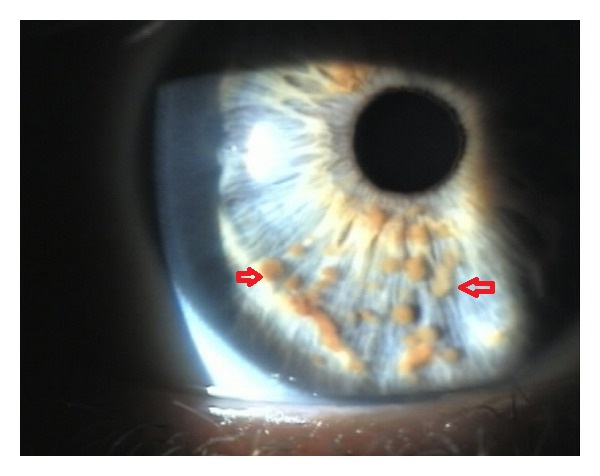
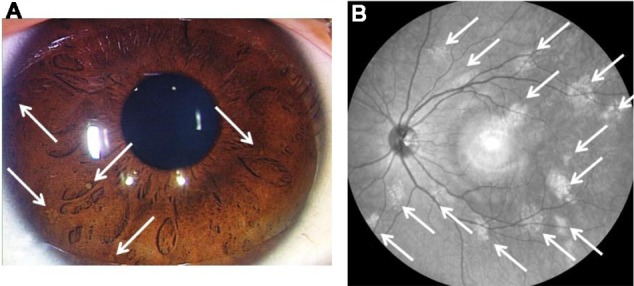
Lisch nodules are well defined melanocytic hamartomas of the iris. Lisch nodules generally appear as dome-shaped gelatinous masses. Lisch nodules masses are more commonly develop on the surface of the iris, also known as iris hamartomas. Lisch nodules are gold-tan to brown in color, they may grow up to 2 mm in diameter and can be of different sizes on the same iris. Lisch nodules arise from mast cells, pigmented cells and fibroblast-like cells. The presence of Lisch nodules is the most common clinical sign of Neurofibromatosis 1; ninety-three percent of cases are bilaterally affected and an average of 25 nodules can be counted on each iris. Once iris hamartomas have developed, they remain stable throughout life. In 80% of eyes, Lisch nodules may be found in the inferior quadrants of the iris and this may be related to greater sun exposure, one of the postulated factors in the development of these benign tumefactions.

Historical Perspective

Historical Perspective


Editor-In-Chief: C. Michael Gibson, M.S., M.D. [1] Swathi Venkatesan, M.B.B.S.[2]

Historical Perspective

  • Neurofibromatosis (NF), a disease described in 1882 by Friedrich Daniel Von Recklinghausen. [1]
  • NF is a neuroectodermal abnormality constituted by a set of clinical symptoms that compromise the skin, nervous system, bones, eyes and other sites.
  • Lisch Nodules were named after the infamous Austrian ophthalmologist Karl Lisch (1907-1999). [2]
  • Lisch was a well known ophthalmologist; his patients came from all parts of Austria, Germany, and Italy. In the region of North Tyrol he was called “Ophthalmological Pope”.
  • Besides general ophthalmology, Lisch was interested in scientific research. He published more than 120 scientific papers in German science journals.
  • In 1937, Karl Lisch published an article on the iris hamartomas and their association with neurofibromatosis 1, now known as “Lisch nodules”, while at the University Eye Clinic in Munich.
  • Lisch’a article described his observations in 3 patients with neurofibromatosis
    • Patient 1: a 39 year old male who had been affected with several nodules and pigmented lesions on the skin, typical of neurofibromatosis, since the age of 15 years. His mother and his sisters had a similar disorder. Lisch observed several brown nodules on the surface of the iris. The nodules could be seen even without the slit lamp due to the greyish-blue color of the iris.
    • Patient 2: 27 year old patient with similar cutaneous and iris lesions could be detected along with a family history of neurofibromatosis. In comparison to the first patient the iris nodules were much more pigmented.
    • Patient 3: a 44 year old male suffered form bilateral optic nerve gliomas with chiasmal involvement. The slit lamp examination revealed tiny iris nodules in both eyes.

References

  1. Antônio JR, Goloni-Bertollo EM, Trídico LA (2013). “Neurofibromatosis: chronological history and current issues”. An Bras Dermatol. 88 (3): 329–43. doi:10.1590/abd1806-4841.20132125. PMC 3754363. PMID 23793209.
  2. Singh, Arun D. (2009). “Karl Lisch, MD: Remembered July 24, 1907 – February 5, 1999”. Ophthalmic Genetics. 21 (2): 129–131. doi:10.1076/1381-6810(200006)2121-8FT129. ISSN 1381-6810.


Template:WikiDoc Sources

Classification

Classification

  • There is no established system for the classification of Lisch nodules.


Editor-In-Chief: C. Michael Gibson, M.S., M.D. [1] Swathi Venkatesan, M.B.B.S.[2]

Classification of Lisch Nodule

No specific classification for Lisch Nodules.

References


Template:WikiDoc Sources

Pathophysiology

Pathophysiology


Editor-In-Chief: C. Michael Gibson, M.S., M.D. [1] Swathi Venkatesan, M.B.B.S.[2]

Pathophysiology of Lisch Nodule

  • A hamartoma is defined as a benign tumor or nodular growth that is composed of proliferating mature histologically normal cells that normally reside at the affected tissue
    • In ophthalmic jargon, iris hamartomas traditionally refer to Lisch nodules which are encountered in patients with neurofibromatosis type 1 (NF1).
  • NF1 is due to mutations in the NF1 gene, located at chromosome 17q11.2
  • Neurofibromin, the protein product encoded by the gene, is expressed in many tissues, including brain, kidney, spleen, and thymus
  • Mutations in the NF1 gene result in loss of production or reduced function of protein; this causes a wide spectrum of clinical findings, including NF1-associated tumors
  • Histopathologically, Lisch nodules are composed of melanocytes and spindle cells, usually concentrated on the superficial layers of the iris stroma. [1]
  • The spindle cells are larger than the normal iris melanocytes.
  • Immunohistochemical studies show positive reaction against vimentin, smooth muscle actin and neuron specific enolase.

References

  1. Kiratli, H (2011). “Head and Neck: Iris Hamartomas”. Atlas of Genetics and Cytogenetics in Oncology and Haematology (1). doi:10.4267/2042/44673. ISSN 1768-3262.


Template:WikiDoc Sources

Causes

Causes


Please help WikiDoc by adding content here. It’s easy! Click here to learn about editing.

References


Template:WikiDoc Sources

Differential diagnosis

Differential diagnosis


Editor-In-Chief: C. Michael Gibson, M.S., M.D. [1] Swathi Venkatesan, M.B.B.S.[2]

Differential Diagnosis of Lisch Nodule

The differential diagnosis of Lisch nodules must include:[1]

  • Iris mamillations
  • Irido-corneo-endothelial syndrome
  • Rieger’s anomaly or syndrome
  • Iris nevi
  • Melanoma
  • Inflammatory conditions
    • Sarcoidosis
    • Lepra
    • Tuberculosis
    • Syphilis


References

  1. Kiratli, H (2011). “Head and Neck: Iris Hamartomas”. Atlas of Genetics and Cytogenetics in Oncology and Haematology (1). doi:10.4267/2042/44673. ISSN 1768-3262.


Template:WikiDoc Sources

Epidemiology and Demographics

Epidemiology and Demographics

Incidence

Prevalence

  • The prevalence of Lisch nodules is approximately 1 in 3500 individuals worldwide.[23]

Age

  • Lisch nodules are predominantly visible in children usually after the age of six years.[24]
  • Lisch Nodule incidence in NF1 increases with age and their prevalence raises by about 10% per year of life, up to age 9.
  • Lisch nodules are found in 93% of adults with NF-1 but have not been described in NF-2.
  • Lisch Nodules may be found in a very limited number of individuals without NF.
  • The de novo mutations occur primarily in paternally derived chromosomes, and the likelihood of de novo NF1 increases with advanced paternal age.


Editor-In-Chief: C. Michael Gibson, M.S., M.D. [1] Swathi Venkatesan, M.B.B.S.[2]

Epidemiology & Demographics

  • NF1 is an autosomal dominant genetic disorder with an incidence of approximately 1 in 2600 to 3000 individuals.
    • Approximately one-half of the cases are familial (inherited)
    • The remainder are the result of de novo (sporadic) mutations.
    • The de novo mutations occur primarily in paternally derived chromosomes, and the likelihood of de novo NF1 increases with advanced paternal age
  • Lisch nodules are predominantly visible in children usually after the age of six years.[1]
  • Lisch Nodule incidence in NF1 increases with age and their prevalence raises by about 10% per year of life, up to age 9.
  • Lisch nodules are found in 93% of adults with NF-1 but have not been described in NF-2.[2]
  • Lisch Nodules may be found in a very limited number of individuals without NF.[3]
  • Multiple Lisch nodules appear to be found only in patients with peripheral neurofibromatosis (neurofibromatosis type 1, or von Recklinghausen’s disease), an autosomal disorder with a prevalence of 1 in 3500.

References

  1. Maharaj, A; Singh,, VRS; Lalchan, SA (2014). “Lisch and the Importance of His Nodules”. West Indian Medical Journal. doi:10.7727/wimj.2013.323. ISSN 0043-3144.
  2. Charles, S. J. (1989). “Lisch Nodules in Neurofibromatosis Type 2”. Archives of Ophthalmology. 107 (11): 1571. doi:10.1001/archopht.1989.01070020649012. ISSN 0003-9950.
  3. Greene, Carol L; Male, Wendy S; Coleman, Shelley H; Ohrliok, Martin E; Gordon, Robert A (1987). “LISCH NODULES IN AN UNSELECTED POPULATION: PREVALENCE AND USEFULNESS AS INDICATION OF NEUROFIBROMATOSIS”. Pediatric Research. 21 (4): 227A–227A. doi:10.1203/00006450-198704010-00368. ISSN 0031-3998.


Template:WikiDoc Sources

Risk Factors

Risk Factors


Editor-In-Chief: C. Michael Gibson, M.S., M.D. [1] Swathi Venkatesan, M.B.B.S.[2]

Lisch Nodule Risk Factors

  • The biggest risk factor for neurofibromatosis is a family history of the disorder. [1]
    • NF1 and NF2 are both autosomal dominant disorders, which means that any child of a parent with the disorder has a 50 percent chance of inheriting the genetic mutation.
    • About half of people with NF1 and NF2 inherited the disease from the affected parent.
  • People with NF1 and NF2 that don’t have affected relatives likely have a new gene mutation.
  • Neurofibromatosis is caused by genetic defects (mutations) that either are passed on by a parent or occur spontaneously at conception.
    • The NF1 gene is located on chromosome 17. This gene produces a protein called neurofibromin that helps regulate cell growth. The mutated gene causes a loss of neurofibromin, which allows cells to grow uncontrolled.
    • The NF2 gene is located on chromosome 22, and produces a protein called merlin (also called schwannomin), which suppresses tumors. The mutated gene causes a loss of merlin, leading to uncontrolled cell growth.
    • Two genes are known to cause schwannomatosis. Mutations of the genes SMARCB1 and LZTR1, which suppress tumors, are associated with this type of neurofibromatosis.


References


Template:WikiDoc Sources

Screening

Screening

  • However, Lisch nodules are seen in 95% of children with NF1 by age 20.[26]


Please help WikiDoc by adding content here. It’s easy! Click here to learn about editing.

Editor-In-Chief: C. Michael Gibson, M.S., M.D. [1] Swathi Venkatesan, M.B.B.S.[2]

Lisch Nodule Screening

  • Lisch Nodules are not regularly screened, they’re usually detected when other signs and symptoms of neurofibromatosis appear. [1]
  • However, Lisch nodules are seen in 95% of children with NF1 by age 20
  • They can often be seen with no magnification, especially in adults, who usually have multiple, bilateral nodules
  • A slit-lamp examination, however, is required to distinguish them from nevi on the iris, which are flat or minimally elevated, densely pigmented lesions with blurred margins.

References

  1. Ferner, R. E; Huson, S. M; Thomas, N.; Moss, C.; Willshaw, H.; Evans, D G.; Upadhyaya, M.; Towers, R.; Gleeson, M.; Steiger, C.; Kirby, A. (2006). “Guidelines for the diagnosis and management of individuals with neurofibromatosis 1”. Journal of Medical Genetics. 44 (2): 81–88. doi:10.1136/jmg.2006.045906. ISSN 1468-6244.


Template:WikiDoc Sources

Natural History, Complications and Prognosis

Natural History, Complications and Prognosis

Natural History

  • The symptoms of Lisch Nodules usually develop in the first decade of life, and mostly asymptomatic.

Complications

Prognosis

  • Prognosis is generally good of patients with Lisch Nodules.
Diagnosis

Diagnosis

Diagnostic Criteria for neurofibromatosis 1

  • The diagnosis is primarily based on clinical assessment and two or more of the features are required to confirm the diagnosis.
Physical Examination

Physical Examination


Please help WikiDoc by adding content here. It’s easy! Click here to learn about editing.

References


Template:WikiDoc Sources

Diagnostic Studies

Diagnostic Studies

Treatment

Treatment

Medical Therapy

Primary Prevention

Primary Prevention


Please help WikiDoc by adding content here. It’s easy! Click here to learn about editing.

References


Template:WikiDoc Sources

Secondary Prevention

Secondary Prevention


Please help WikiDoc by adding content here. It’s easy! Click here to learn about editing.

References


Template:WikiDoc Sources

References

References

  1. “Multiple, Unilateral Lisch Nodules in the Absence of Other Manifestations of Neurofibromatosis Type 1”.
  2. Antônio JR, Goloni-Bertollo EM, Trídico LA (2013). “Neurofibromatosis: chronological history and current issues”. An Bras Dermatol. 88 (3): 329–43. doi:10.1590/abd1806-4841.20132125. PMC 3754363. PMID 23793209.
  3. Hosoi, Kiyoshi (1931). “MULTIPLE NEUROFIBROMATOSIS (von RECKLINGHAUSEN’S DISEASE)”. Archives of Surgery. 22 (2): 258. doi:10.1001/archsurg.1931.01160020081004. ISSN 0272-5533.
  4. Gabhane SK, Kotwal MN, Bobhate SK (2010). “Segmental neurofibromatosis: a report of 3 cases”. Indian J Dermatol. 55 (1): 105–8. doi:10.4103/0019-5154.60366. PMC 2856359. PMID 20418991.
  5. Dimitrova, Valentina (2009). “A CASE OF NEUROFIBROMATOSIS TYPE 1”. Journal of IMAB – Annual Proceeding (Scientific Papers). 14, 1 (2008): 63–67. doi:10.5272/jimab.14-1-2010.63. ISSN 1312-773X.
  6. Terzi YK, Oguzkan-Balci S, Anlar B, Aysun S, Guran S, Ayter S (2009). “Reproductive decisions after prenatal diagnosis in neurofibromatosis type 1: importance of genetic counseling”. Genet Couns. 20 (2): 195–202. PMID 19650418.
  7. Boley S, Sloan JL, Pemov A, Stewart DR (2009). “A quantitative assessment of the burden and distribution of Lisch nodules in adults with neurofibromatosis type 1”. Invest Ophthalmol Vis Sci. 50 (11): 5035–43. doi:10.1167/iovs.09-3650. PMC 2883270. PMID 19516012.
  8. Boyd KP, Korf BR, Theos A (2009). “Neurofibromatosis type 1”. J Am Acad Dermatol. 61 (1): 1–14, quiz 15-6. doi:10.1016/j.jaad.2008.12.051. PMC 2716546. PMID 19539839.
  9. Theos, Amy; Korf, Bruce R. (2006). “Pathophysiology of Neurofibromatosis Type 1”. Annals of Internal Medicine. 144 (11): 842. doi:10.7326/0003-4819-144-11-200606060-00010. ISSN 0003-4819.
  10. Cohen R, Shuper A (2010). “[Developmental manifestation in children with neurofibromatosis type 1]”. Harefuah. 149 (1): 49–52, 61. PMID 20422842.
  11. de Goede-Bolder A, Cnossen MH, Dooijes D, van den Ouweland AM, Niermeijer MF (2001). “[From gene to disease; neurofibromatosis type 1]”. Ned Tijdschr Geneeskd. 145 (36): 1736–8. PMID 11572174.
  12. Lubs, Marie-Louise E.; Bauer, Mislen S.; Formas, Maria E.; Djokic, Borivoje (1991). “Lisch Nodules in Neurofibromatosis Type 1”. New England Journal of Medicine. 324 (18): 1264–1266. doi:10.1056/NEJM199105023241807. ISSN 0028-4793.
  13. Dimitrova, Valentina (2009). “A CASE OF NEUROFIBROMATOSIS TYPE 1”. Journal of IMAB – Annual Proceeding (Scientific Papers). 14, 1 (2008): 63–67. doi:10.5272/jimab.14-1-2010.63. ISSN 1312-773X.
  14. Abaloun Y, Ajhoun Y (2017). “[Lisch nodule in neurofibromatosis type 1]”. Pan Afr Med J. 27: 218. doi:10.11604/pamj.2017.27.218.11517. PMC 5622834. PMID 28979620.
  15. Richetta A, Giustini S, Recupero SM, Pezza M, Carlomagno V, Amoruso G; et al. (2004). “Lisch nodules of the iris in neurofibromatosis type 1”. J Eur Acad Dermatol Venereol. 18 (3): 342–4. doi:10.1111/j.1468-3083.2004.00915.x. PMID 15096151.
  16. Richetta, A; Giustini, S; Recupero, SM; Pezza, M; Carlomagno, V; Amoruso, G; Calvieri, S (2004). “Lisch nodules of the iris in neurofibromatosis type 1”. Journal of the European Academy of Dermatology and Venereology. 18 (3): 342–344. doi:10.1111/j.1468-3083.2004.00915.x. ISSN 0926-9959.
  17. Radius RL, Herschler J (1980). “Histopathology in the iris-nevus (Cogan-Reese) syndrome”. Am J Ophthalmol. 89 (6): 780–6. doi:10.1016/0002-9394(80)90165-8. PMID 6992584.
  18. Makley TA, Kapetansky FM (1988). “Iris nevus syndrome”. Ann Ophthalmol. 20 (8): 311–5. PMID 3190109.
  19. Lubs, Marie-Louise E.; Bauer, Mislen S.; Formas, Maria E.; Djokic, Borivoje (1991). “Lisch Nodules in Neurofibromatosis Type 1”. New England Journal of Medicine. 324 (18): 1264–1266. doi:10.1056/NEJM199105023241807. ISSN 0028-4793.
  20. Terzi YK, Oguzkan-Balci S, Anlar B, Aysun S, Guran S, Ayter S (2009). “Reproductive decisions after prenatal diagnosis in neurofibromatosis type 1: importance of genetic counseling”. Genet Couns. 20 (2): 195–202. PMID 19650418.
  21. Evans DG, Howard E, Giblin C, Clancy T, Spencer H, Huson SM; et al. (2010). “Birth incidence and prevalence of tumor-prone syndromes: estimates from a UK family genetic register service”. Am J Med Genet A. 152A (2): 327–32. doi:10.1002/ajmg.a.33139. PMID 20082463.
  22. Richetta A, Giustini S, Recupero SM, Pezza M, Carlomagno V, Amoruso G; et al. (2004). “Lisch nodules of the iris in neurofibromatosis type 1”. J Eur Acad Dermatol Venereol. 18 (3): 342–4. doi:10.1111/j.1468-3083.2004.00915.x. PMID 15096151.
  23. Lammert M, Friedman JM, Kluwe L, Mautner VF (2005). “Prevalence of neurofibromatosis 1 in German children at elementary school enrollment”. Arch Dermatol. 141 (1): 71–4. doi:10.1001/archderm.141.1.71. PMID 15655144.
  24. Cohen R, Shuper A (2010). “[Developmental manifestation in children with neurofibromatosis type 1]”. Harefuah. 149 (1): 49–52, 61. PMID 20422842.
  25. Lubs, Marie-Louise E.; Bauer, Mislen S.; Formas, Maria E.; Djokic, Borivoje (1991). “Lisch Nodules in Neurofibromatosis Type 1”. New England Journal of Medicine. 324 (18): 1264–1266. doi:10.1056/NEJM199105023241807. ISSN 0028-4793.
  26. Huson S, Jones D, Beck L (1987). “Ophthalmic manifestations of neurofibromatosis”. Br J Ophthalmol. 71 (3): 235–8. doi:10.1136/bjo.71.3.235. PMC 1041127. PMID 3103673.
  27. Richetta A, Giustini S, Recupero SM, Pezza M, Carlomagno V, Amoruso G; et al. (2004). “Lisch nodules of the iris in neurofibromatosis type 1”. J Eur Acad Dermatol Venereol. 18 (3): 342–4. doi:10.1111/j.1468-3083.2004.00915.x. PMID 15096151.
  28. Dimitrova, Valentina (2009). “A CASE OF NEUROFIBROMATOSIS TYPE 1”. Journal of IMAB – Annual Proceeding (Scientific Papers). 14, 1 (2008): 63–67. doi:10.5272/jimab.14-1-2010.63. ISSN 1312-773X.
  29. Lewis RA, Riccardi VM (1981). “Von Recklinghausen neurofibromatosis. Incidence of iris hamartomata”. Ophthalmology. 88 (4): 348–54. doi:10.1016/s0161-6420(81)35034-9. PMID 6789269.
  30. Huson S, Jones D, Beck L (1987). “Ophthalmic manifestations of neurofibromatosis”. Br J Ophthalmol. 71 (3): 235–8. doi:10.1136/bjo.71.3.235. PMC 1041127. PMID 3103673.
  31. Abaloun Y, Ajhoun Y (2017). “[Lisch nodule in neurofibromatosis type 1]”. Pan Afr Med J. 27: 218. doi:10.11604/pamj.2017.27.218.11517. PMC 5622834. PMID 28979620.
  32. Flüeler U, Boltshauser E, Kilchhofer A (1986). “Iris hamartomata as diagnostic criterion in neurofibromatosis”. Neuropediatrics. 17 (4): 183–5. doi:10.1055/s-2008-1052525. PMID 3100979.
  33. Cohen R, Shuper A (2010). “[Developmental manifestation in children with neurofibromatosis type 1]”. Harefuah. 149 (1): 49–52, 61. PMID 20422842.
  34. Sabol Z, Kipke-Sabol L (2005). “[Neurofibromatosis type 1 (von Recklinghausen’s disease or peripheral neurofibromatosis): from phenotype to gene]”. Lijec Vjesn. 127 (11–12): 303–11. PMID 16583938.
  35. Yang CC, Happle R, Chao SC, Yu-Yun Lee J, Chen W (2008). “Giant café-au-lait macule in neurofibromatosis 1: a type 2 segmental manifestation of neurofibromatosis 1?”. J Am Acad Dermatol. 58 (3): 493–7. doi:10.1016/j.jaad.2007.03.013. PMID 18280349.
  36. de Goede-Bolder A, Cnossen MH, Dooijes D, van den Ouweland AM, Niermeijer MF (2001). “[From gene to disease; neurofibromatosis type 1]”. Ned Tijdschr Geneeskd. 145 (36): 1736–8. PMID 11572174.
  37. Terzi YK, Oguzkan-Balci S, Anlar B, Aysun S, Guran S, Ayter S (2009). “Reproductive decisions after prenatal diagnosis in neurofibromatosis type 1: importance of genetic counseling”. Genet Couns. 20 (2): 195–202. PMID 19650418.
  38. “Correlations between choroidal abnormalities, Lisch nodules, and age in patients with neurofibromatosis type 1”.
  39. Lewis RA, Riccardi VM (1981). “Von Recklinghausen neurofibromatosis. Incidence of iris hamartomata”. Ophthalmology. 88 (4): 348–54. doi:10.1016/s0161-6420(81)35034-9. PMID 6789269.
  40. Huson S, Jones D, Beck L (1987). “Ophthalmic manifestations of neurofibromatosis”. Br J Ophthalmol. 71 (3): 235–8. doi:10.1136/bjo.71.3.235. PMC 1041127. PMID 3103673.
  41. Abaloun Y, Ajhoun Y (2017). “[Lisch nodule in neurofibromatosis type 1]”. Pan Afr Med J. 27: 218. doi:10.11604/pamj.2017.27.218.11517. PMC 5622834. PMID 28979620.
  42. Yang CC, Happle R, Chao SC, Yu-Yun Lee J, Chen W (2008). “Giant café-au-lait macule in neurofibromatosis 1: a type 2 segmental manifestation of neurofibromatosis 1?”. J Am Acad Dermatol. 58 (3): 493–7. doi:10.1016/j.jaad.2007.03.013. PMID 18280349.
  43. Cohen R, Shuper A (2010). “[Developmental manifestation in children with neurofibromatosis type 1]”. Harefuah. 149 (1): 49–52, 61. PMID 20422842.
  44. Dimitrova, Valentina (2009). “A CASE OF NEUROFIBROMATOSIS TYPE 1”. Journal of IMAB – Annual Proceeding (Scientific Papers). 14, 1 (2008): 63–67. doi:10.5272/jimab.14-1-2010.63. ISSN 1312-773X.
  45. Nichols JC, Amato JE, Chung SM (2003). “Characteristics of Lisch nodules in patients with neurofibromatosis type 1”. J Pediatr Ophthalmol Strabismus. 40 (5): 293–6. PMID 14560838.
  46. Lewis RA, Riccardi VM (1981). “Von Recklinghausen neurofibromatosis. Incidence of iris hamartomata”. Ophthalmology. 88 (4): 348–54. doi:10.1016/s0161-6420(81)35034-9. PMID 6789269.
  47. Huson S, Jones D, Beck L (1987). “Ophthalmic manifestations of neurofibromatosis”. Br J Ophthalmol. 71 (3): 235–8. doi:10.1136/bjo.71.3.235. PMC 1041127. PMID 3103673.
  48. Abaloun Y, Ajhoun Y (2017). “[Lisch nodule in neurofibromatosis type 1]”. Pan Afr Med J. 27: 218. doi:10.11604/pamj.2017.27.218.11517. PMC 5622834. PMID 28979620.
  49. Cohen R, Shuper A (2010). “[Developmental manifestation in children with neurofibromatosis type 1]”. Harefuah. 149 (1): 49–52, 61. PMID 20422842.
  50. Crişan M, Talu S, Florea M, Coprean D, Cosgarea R, Crişan D (2008). “[Lisch nodules. Markers for a non-invasive diagnosis in Recklinghausen neurofibromatosis]”. Oftalmologia. 52 (4): 56–61. PMID 19354164.
  51. “Multifocal Head and Neck Neurofibromas with Osseous Abnormalities and Muscular Hypoplasia in a Child with Neurofibromatosis: Type I”.
  52. Yang CC, Happle R, Chao SC, Yu-Yun Lee J, Chen W (2008). “Giant café-au-lait macule in neurofibromatosis 1: a type 2 segmental manifestation of neurofibromatosis 1?”. J Am Acad Dermatol. 58 (3): 493–7. doi:10.1016/j.jaad.2007.03.013. PMID 18280349.
  53. Terzi YK, Oguzkan-Balci S, Anlar B, Aysun S, Guran S, Ayter S (2009). “Reproductive decisions after prenatal diagnosis in neurofibromatosis type 1: importance of genetic counseling”. Genet Couns. 20 (2): 195–202. PMID 19650418.
  54. Dimitrova, Valentina (2009). “A CASE OF NEUROFIBROMATOSIS TYPE 1”. Journal of IMAB – Annual Proceeding (Scientific Papers). 14, 1 (2008): 63–67. doi:10.5272/jimab.14-1-2010.63. ISSN 1312-773X.

Looking for the patient version?

Back to the patient-friendly article

© 2026 MyEClinic – IFTM Institut für Telematik in der Medizin GmbH