

Health Dictionary
Reliable, easy-to-read patient information on common medical conditions — written in plain language, free of jargon, and grounded in current evidence. Browse the most frequent diagnoses, understand what they mean for everyday life, and learn which steps and questions help you have a focused conversation with your doctor.
Parathyroid adenoma
Introduction
Overview
Overview
A parathyroid adenoma is a benign tumor of the parathyroid gland. Parathyroid adenoma can be associated with overexpression of the cyclin D1 gene. An elevated concentration of serum calcium and serum parathyroid hormone is diagnostic of parathyroid gland. A specific test for parathyroid adenoma is sestamibi parathyroid scintigraphy, the sestamibi scan. Surgery is the mainstay of treatment for parathyroid cancer.
Pathophysiology
- A parathyroid adenoma is a benign tumor of the parathyroid gland. It generally causes hyperparathyroidism; there are very few reports of parathyroid adenomas that were not associated with hyperparathyroidism.[1]
- A human being usually has four parathyroid glands located on the back surface of the thyroid in the neck. The parathyroids secrete parathyroid hormone (PTH), which increases the concentration of calcium in the blood by inducing the bones to release calcium into the blood and the kidneys to reabsorb it from the urine. When a parathyroid adenoma causes hyperparathyroidism, more parathyroid hormone is secreted, causing the calcium concentration of the blood to rise, resulting in hypercalcemia.[2]
Genetics
Gallery
-
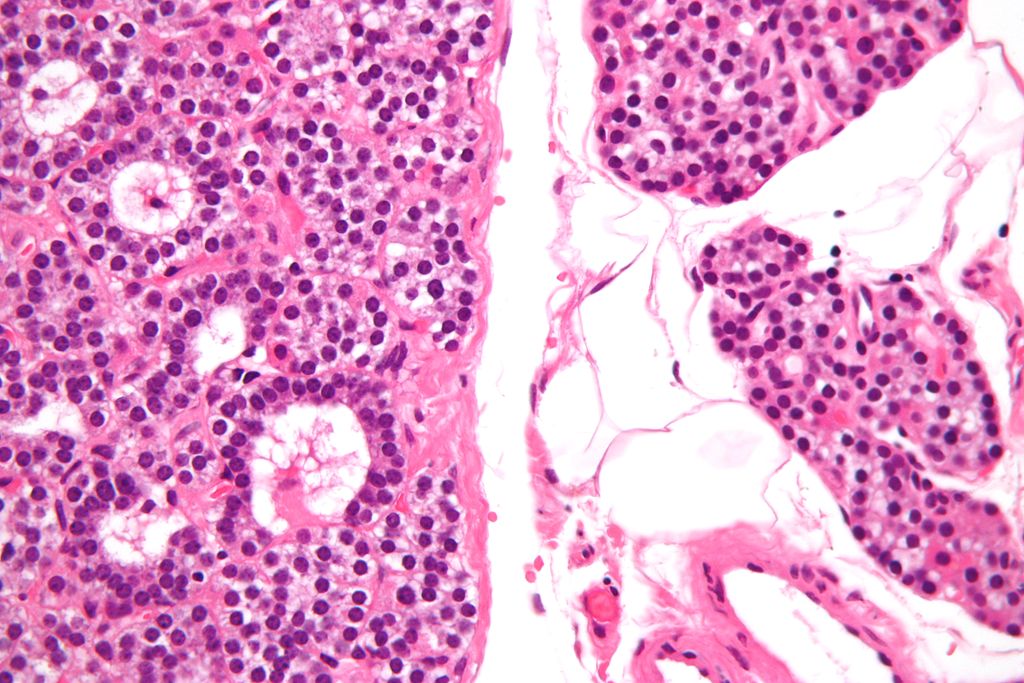
![Intermediate/Low magnification micrograph of parathyroid adenoma. H&E stain. Features: Single cell population forming a single mass. Thin capsule. No adipose tissue. +/-Glandular architecture (which may lead to confusion with thyroid tissue). Normal parathyroid gland with prominent adipose tissue is seen on the right of the image.[4]](https://www.wikidoc.org/images/e/e3/Adenoma_01.jpg) Adenoma 01.jpg Intermediate/Low magnification micrograph of parathyroid adenoma. H&E stain. Features: Single cell population forming a single mass. Thin capsule. No adipose tissue. +/-Glandular architecture (which may lead to confusion with thyroid tissue). Normal parathyroid gland with prominent adipose tissue is seen on the right of the image.[4]
Adenoma 01.jpg Intermediate/Low magnification micrograph of parathyroid adenoma. H&E stain. Features: Single cell population forming a single mass. Thin capsule. No adipose tissue. +/-Glandular architecture (which may lead to confusion with thyroid tissue). Normal parathyroid gland with prominent adipose tissue is seen on the right of the image.[4]
![Intermediate/Low magnification micrograph of parathyroid adenoma. H&E stain. Features: Single cell population forming a single mass. Thin capsule. No adipose tissue. +/-Glandular architecture (which may lead to confusion with thyroid tissue). Normal parathyroid gland with prominent adipose tissue is seen on the right of the image.[4]](https://www.wikidoc.org/index.php/File%3AAdenoma_01.jpg)
Risk Factors
- The following risk factors may increase a person’s chance of developing a parathyroid adenoma:
- Multiple endocrine neoplasia type 1 (MEN 1)[5]
- Familial isolated hyperparathyroidism(FIHP)
- Hyperparathyroidism–jaw tumour (HPT-JT) syndrome
- Radiation therapy to the head or neck
Diagnosis
Diagnostic Criteria
Hyperparathyroidism is confirmed by blood tests such as calcium and parathormone levels.[6]
Symptoms
CT
- CT can be very useful for localising the lesion when the site is not known. Shows increased uptake with agents such as Technetium (Tc) 99m Sestamibi (MIBI) (commonly used agent) and Tc-99m tetrofosmin. The nuclear medicine scan can be fused with the CT scan as a SPECT scan increase diagnostic accuracy.
- In the past CT was more commonly used in the setting of a failed parathyroidectomy for the detection of suspected ectopic glands (often mediastinal). However, in recent years, 4D-CT has emerged as valuable modality especially in the era of minimally invasive parathyroidectomy. This type of surgery requires precise localization with anatomical detail and a confident diagnosis of parathyroid adenoma. 4DCT has been shown to be more sensitive than sonography and scintigraphy for preoperative localisation of parathyroid adenomas.
- Enhancement on 4D-CT
- On 4D-CT parathyroid adenomas typically demonstrate intense enhancement on arterial phase, washout of contrast on delayed phase, and low attenuation on non-contrast imaging.
- Secondary signs include:
- The polar vessel which represents an enlarged feeding artery or draining vein to the hypervascular parathyroid adenoma
- A larger lesion size increases the confidence of diagnosis
- Parathyroid adenomas can also have cystic change
MRI
- MRI is infrequently utilized in initial work up because of lower spatial resolution and artifacts. Adenomas can show variable signal intensity on MRI. Reported signal characteristics include:
- T1
- Typically intermediate to low signal
- Subacute haemorrhage can cause high signal intensiy
- Fibrosis or old haemorrhage can cause low signal intensity
- T2
- Typically hyperintense
- Subacute haemorrhage can cause high signal intensity
- Fibrosis or old haemorrhage can cause low signal intensity
- Since most lesions demonstrate high T2 signal intensity, the addition of contrast for MR scanning does not significantly increase detection.
Ultrasound
- Ultrasound is one of most commonly used initial imaging modalities.
- Greyscale
- Most nodules need to be >1cm to be confidently seen on ultrasound
- Parathyroid adenomas tend to be homogeneously hypoechoic to the overlying thyroid gland
- An echogenic thyroid capsule separating the thyroid from the parathyroid may be seen
- Doppler ultrasound
- Can commonly show a characteristic extrathyroidal feeding vessel (typically a branch off the inferior thyroidal artery), which enters the parathyroid gland at one of the poles. Internal vascularity is also commonly seen in a peripheral distribution. This feeding artery tends to branch around the periphery of the gland before penetration. This feature can give a characteristic arc or rim of vascularity. The overlying thyroid gland may also show an area of asymmetric hypervascularity that may help to locate an underlying adenoma.
Other Imaging Findings
- A specific test for parathyroid adenoma is sestamibi parathyroid scintigraphy, the sestamibi scan. This nuclear imaging technique reveals the presence and location of pathological parathyroid tissue.[7]
Gallery
-
![Sharply marginated, hypoechogenic lesion at the dorsal lower pole of the left thyroid lobe.[8]](https://www.wikidoc.org/images/c/ce/Parathyroid_adenoma_ultrasound.jpg) Sharply marginated, hypoechogenic lesion at the dorsal lower pole of the left thyroid lobe.[8]
Sharply marginated, hypoechogenic lesion at the dorsal lower pole of the left thyroid lobe.[8] -
![High magnification micrograph of a parathyroid adenoma. H&E stain. Features: Single cell population forming a single mass. Thin capsule. No adipose tissue. +/-Glandular architecture (which may lead to confusion with thyroid tissue). Normal parathyroid gland with prominent adipose tissue is seen on the right of the image[8]](https://www.wikidoc.org/images/6/62/Tc99m_MIBI_scintigraphy.jpg) High magnification micrograph of a parathyroid adenoma. H&E stain. Features: Single cell population forming a single mass. Thin capsule. No adipose tissue. +/-Glandular architecture (which may lead to confusion with thyroid tissue). Normal parathyroid gland with prominent adipose tissue is seen on the right of the image[8]
High magnification micrograph of a parathyroid adenoma. H&E stain. Features: Single cell population forming a single mass. Thin capsule. No adipose tissue. +/-Glandular architecture (which may lead to confusion with thyroid tissue). Normal parathyroid gland with prominent adipose tissue is seen on the right of the image[8] -
![Parathyroid adenoma[8]](https://www.wikidoc.org/images/a/aa/Parathyroid-adenoma-001.jpg) Parathyroid adenoma[8]
Parathyroid adenoma[8] -
![Parathyroid adenoma[8]](https://www.wikidoc.org/images/c/c6/Parathyroid-adenoma-002.jpg) Parathyroid adenoma[8]
Parathyroid adenoma[8] -
![Parathyroid adenoma[8]](https://www.wikidoc.org/images/1/14/Parathyroid-adenoma-101.jpg) Parathyroid adenoma[8]
Parathyroid adenoma[8] -
![Parathyroid adenoma[8]](https://www.wikidoc.org/images/6/65/Parathyroid-adenoma-102.jpg) Parathyroid adenoma[8]
Parathyroid adenoma[8] -
![Parathyroid adenoma[8]](https://www.wikidoc.org/images/f/f1/Parathyroid-adenoma-103.jpg) Parathyroid adenoma[8]
Parathyroid adenoma[8]
![Sharply marginated, hypoechogenic lesion at the dorsal lower pole of the left thyroid lobe.[8]](https://www.wikidoc.org/index.php/File%3AParathyroid_adenoma_ultrasound.jpg)
![High magnification micrograph of a parathyroid adenoma. H&E stain. Features: Single cell population forming a single mass. Thin capsule. No adipose tissue. +/-Glandular architecture (which may lead to confusion with thyroid tissue). Normal parathyroid gland with prominent adipose tissue is seen on the right of the image[8]](https://www.wikidoc.org/index.php/File%3ATc99m_MIBI_scintigraphy.jpg)
![Parathyroid adenoma[8]](https://www.wikidoc.org/index.php/File%3AParathyroid-adenoma-001.jpg)
![Parathyroid adenoma[8]](https://www.wikidoc.org/index.php/File%3AParathyroid-adenoma-002.jpg)
![Parathyroid adenoma[8]](https://www.wikidoc.org/index.php/File%3AParathyroid-adenoma-101.jpg)
![Parathyroid adenoma[8]](https://www.wikidoc.org/index.php/File%3AParathyroid-adenoma-102.jpg)
![Parathyroid adenoma[8]](https://www.wikidoc.org/index.php/File%3AParathyroid-adenoma-103.jpg)
Treatment
Surgery
- Surgery is the only cure for parathyroid adenomas.[9] It is successful about 95% of the time. Parathyroidectomy is the removal of the affected gland(s). The standard of treatment of primary hyperparathyroidism was formerly a surgical technique called bilateral neck exploration, in which the neck was opened on both sides, the parathyroids were identified, and the affected tissue was removed.[10] By the 1980s, unilateral exploration became more common.[10] Parathyroidectomy can now be performed in a minimally invasive fashion, mainly because imaging techniques can pinpoint the location of the tissue.[10] Minimally invasive techniques include smaller open procedures, radio-guided and video-assisted procedures, and totally endoscopic surgery.[10]
- Before surgery is attempted, the affected glandular tissue must be located. Though the parathyroid glands are usually located on the back of the thyroid, their position is variable. Some people have one or more parathyroid glands elsewhere in the neck anatomy or in the chest. About 10% of parathyroid adenomas are ectopic, located not along the back of the thyroid but elsewhere in the body, sometimes in the mediastinum of the chest.[9] This can make them difficult to locate, so various imaging techniques are used, such as the sestamibi scan, single-photon emission computed tomography (SPECT), ultrasound, MRI,[9] and CT scans.[9][11]
References
- ↑ Sekine O, Hozumi Y, Takemoto N, Kiyozaki H, Yamada S, Konishi F (March 2004). “Parathyroid adenoma without hyperparathyroidism”. Japanese Journal of Clinical Oncology. 34 (3): 155–8. doi:10.1093/jjco/hyh028. PMID 15078912.
- ↑ Felsenfeld AJ, Rodríguez M, Aguilera-Tejero E (November 2007). “Dynamics of parathyroid hormone secretion in health and secondary hyperparathyroidism”. Clinical Journal of the American Society of Nephrology. 2 (6): 1283–305. doi:10.2215/CJN.01520407. PMID 17942777.
- ↑ Hsi ED, Zukerberg LR, Yang WI, Arnold A (May 1996). “Cyclin D1/PRAD1 expression in parathyroid adenomas: an immunohistochemical study”. The Journal of Clinical Endocrinology and Metabolism. 81 (5): 1736–9. doi:10.1210/jcem.81.5.8626826. PMID 8626826.
- ↑ Parathyroid adenoma. Wikipedia(2015). https://en.wikipedia.org/wiki/Parathyroid_adenoma Accessed on December 29, 2015
- ↑ Parathyroid adenoma. Canadian cancer society(2015). http://www.cancer.ca/en/cancer-information/cancer-type/parathyroid/parathyroid-cancer/benign-tumours/?region=on Accessed on December 29, 2015
- ↑ Parathyroid adenoma. Wikipedia(2015). https://en.wikipedia.org/wiki/Parathyroid_adenoma Accessed on December 29, 2015
- ↑ Goldstein RE, Billheimer D, Martin WH, Richards K (May 2003). “Sestamibi scanning and minimally invasive radioguided parathyroidectomy without intraoperative parathyroid hormone measurement”. Annals of Surgery. 237 (5): 722–30, discussion 730–1. doi:10.1097/01.SLA.0000064362.58751.59. PMC 1514518. PMID 12724639.
- ↑ 8.0 8.1 8.2 8.3 8.4 8.5 8.6 Image courtesy of Dr Roberto Schubert. Radiopaedia (original file ‘’here’’). Creative Commons BYSANC
- ↑ 9.0 9.1 9.2 9.3 Dsouza, Caren; Gopalakrishnan; Bhagavan, KR; Rakesh, K (2012). “Ectopic parathyroid adenoma”. Thyroid Research and Practice. 9 (2): 68–70. doi:10.4103/0973-0354.96061.
- ↑ 10.0 10.1 10.2 10.3 Bellantone R, Raffaelli M, DE Crea C, Traini E, Lombardi CP (August 2011). “Minimally-invasive parathyroid surgery”. Acta Otorhinolaryngologica Italica. 31 (4): 207–15. PMC 3203720. PMID 22065831.
- ↑ Zald PB, Hamilton BE, Larsen ML, Cohen JI (August 2008). “The role of computed tomography for localization of parathyroid adenomas”. The Laryngoscope. 118 (8): 1405–10. doi:10.1097/MLG.0b013e318177098c. PMID 18528308.
Editor-In-Chief: C. Michael Gibson, M.S., M.D. [1] ; Associate Editor(s)-in-Chief: Syed Musadiq Ali M.B.B.S.[2]
Historical Perspective
Overview
The oldest known case of hyperparathyroidism was found in a cadaver from a Early Neolithic cemetery in southwest Germany. In 1880, Ivar Sandström, a Swedish anatomist, described parathyroids in human following 50 autopsies. He found two parathyroid glands bilaterally in 43 out of 50 autopsies. In 1925, Felix Mandl, a viennese surgeon, was the first who performed parathyroidectomy to treat a patient suffering from osteitis fibrosa cystica.
Historical Perspective
Discovery
- The oldest known case of hyperparathyroidism was found in a cadaver from a Early Neolithic cemetery in southwest Germany.[1]
- In 1852, Sir Richard Owen, Hunterian Professor and Conservator of the Museum in the Royal College of Surgeons of England, described parathyroids in rhinoceros.[2]
- In 1880, Ivar Sandström, a Swedish anatomist, described parathyroids in human following 50 autopsies. He found two parathyroid glands bilaterally in 43 out of 50 autopsies.[3]
- In 1891, Friedrich van Rechlinghausen, a German pathologist described ‘osteitis fibrosa cystica‘ (the parathyroid cystic bone disease).[3]
Landmark Events in the Development of Treatment Strategies
- In 1925, Felix Mandl, a viennese surgeon, was the first who performed parathyroidectomy to treat a patient suffering from osteitis fibrosa cystica.[4]
Famous Cases
- Garry Shandling, a famous comedian suffered from hyperparathyroidism.[5]
References
- ↑ Zink AR, Panzer S, Fesq-Martin M, Burger-Heinrich E, Wahl J, Nerlich AG (2005). “Evidence for a 7000-year-old case of primary hyperparathyroidism”. JAMA. 293 (1): 40–2. doi:10.1001/jama.293.1.40-c. PMID 15632333.
- ↑ Modarai B, Sawyer A, Ellis H (2004). “The glands of Owen”. J R Soc Med. 97 (10): 494–5. doi:10.1258/jrsm.97.10.494. PMC 1079622. PMID 15459265.
- ↑ 3.0 3.1 Johansson H (2015). “The Uppsala anatomist Ivar Sandström and the parathyroid gland”. Ups. J. Med. Sci. 120 (2): 72–7. doi:10.3109/03009734.2015.1027426. PMC 4463479. PMID 25913489.
- ↑ Thompson, Scott M.; Thompson, Geoffrey B. (April 8, 2015). Felix Mandl. Surgical Endocrinopathies. p. 153-156. ISBN 978-3-319-13661-5.
- ↑ “Garry Shandling and the Disease You Didn’t Know About – The Atlantic”.
Editor-In-Chief: C. Michael Gibson, M.S., M.D. [1]; Associate Editor(s)-in-Chief: Anmol Pitliya, M.B.B.S. M.D.[2]
Classification
Overview
Parathyroid adenoma may be classified according to location into 7 subtypes from type A gland to type G gland.
Classification
Parathyroid adenoma may be classified according to location into 7 subtypes: [1][1][2][3]
| Type | Location |
|---|---|
| Type A |
|
| Type B |
|
| Type C |
|
| Type D |
|
| Type E |
|
| Type F |
|
| Type G |
|
References
- ↑ 1.0 1.1 Perrier ND, Edeiken B, Nunez R, Gayed I, Jimenez C, Busaidy N; et al. (2009). “A novel nomenclature to classify parathyroid adenomas”. World J Surg. 33 (3): 412–6. doi:10.1007/s00268-008-9894-0. PMID 19148701.
- ↑ Hamidi S, Hedayat A, Esfahanian F, Kamalian N (October 2007). “Distribution of solitary parathyroid adenoma over the parathyroid glands and its surgical management”. J Coll Physicians Surg Pak. 17 (10): 619–21. doi:10.2007/JCPSP.619621. PMID 17999854.
- ↑ Debruyne F, Ostyn F, Delaere P (May 1997). “Distribution of the solitary adenoma over the parathyroid glands”. J Laryngol Otol. 111 (5): 459–60. doi:10.1017/s0022215100137636. PMID 9205609.
Editor-In-Chief: C. Michael Gibson, M.S., M.D. [1]; Associate Editor(s)-in-Chief: Anmol Pitliya, M.B.B.S. M.D.[2]
Pathophysiology
Overview
Parathyroid adenoma results in an increase in parathyroid hormone secretion. Calcium-sensing receptor expression in reduced in parathyroid adenoma resulting in an increase in calcium sensing set point.The development of parathyroid adenoma is the result of multiple genetic mutations in minority of cases. Genes involved in the pathogenesis of parathyroid adenoma include calcium-sensing receptor gene, HRPT2 gene (CDC73 gene), Cyclin D1 gene (CCND1)/PRAD1 gene, MEN1 gene, and RET gene. Familial hypocalciuric hypercalcemia (FHH) and neonatal severe hyperparathyroidism are transmitted in autosomal dominant pattern. On gross pathology, parathyroid adenoma is a soft, tan nodule which is well-circumscribed by a delicate capsule. It is most commonly present in single gland. Some times multiple glands are involved.The tissue of parathyroid gland that is not involved in parathyroid adenoma is typically atrophied and compressed.
Pathophysiology
Physiology
The effect of parathyroid hormone on mineral metabolism is as follows:[1][2]
- Effect of parathyroid hormone on inorganic phosphate metabolism:
- Increases excretion of inorganic phosphate from kidney resulting in decreased serum concentration of phosphate.
- Effect on parathyroid hormone on calcium metabolism:
- Direct effect:
- Increased resorption of bones.
- Decreases excretion from kidney.
- Indirect effect:
- Increases conversion of inactive 25-hydroxy vitamin D to the active 1,25-dihydroxy vitamin D which increases absorption of calcium from gut. Decreased phosphate concentration also increases this conversion process. Vitamin D shows synergism with parathyroid hormone action on bone.
- Decreased serum inorganic phosphate concentration prevents precipitation of calcium phosphate in bones.
- Both these direct and indirect mechanism results in an increased serum calcium concentration.
- Direct effect:
- Effect of parathyroid hormone on magnesium concentration:
Effect of minerals and vitamin D on parathyroid hormone:
- Decrease in serum calcium concentration stimulates parathyroid hormone.
- Calcium provides negative feedback on parathyroid hormone.
- Magnesium provides negative feedback on parathyroid hormone.
- Vitamin D decreases the concentration of parathyroid hormone.
| Parathyroid hormone | |||||||||||||||||||||||||||||||||||||||||||||||||||||||||||||||||||
| Kidney | Bone | ||||||||||||||||||||||||||||||||||||||||||||||||||||||||||||||||||
| Decreased excretion of magnesium | Increasead conversion of inactive 25-hydroxy vitamin D to the active 1,25-dihydroxy vitamin D | Increase excretion of inorganic phosphate | Decrease excretion of calcium | Increased resorption of bone | |||||||||||||||||||||||||||||||||||||||||||||||||||||||||||||||
| Increased serum concentration of magnesium | Increased absorption of calcium from gut | Decreased serum concentration of inorganic phosphate | |||||||||||||||||||||||||||||||||||||||||||||||||||||||||||||||||
| Prevents precipitation of calcium phosphate in bones | |||||||||||||||||||||||||||||||||||||||||||||||||||||||||||||||||||
| Increased serum concentration of calcium | |||||||||||||||||||||||||||||||||||||||||||||||||||||||||||||||||||
Pathogenesis
- Parathyroid adenoma results in an increase in parathyroid hormone secretion.[3]
- Calcium-sensing receptor expression in reduced in parathyroid adenoma resulting in an increase in calcium sensing set point.[4][5]
Calcium-sensing receptors
- Calcium-sensing receptors are present on parathyroid glands. They are a type of 7-transmembrane receptors in G-protein coupled receptors superfamily of receptors.[6]
- Calcium-sensing receptors sense change in extracellular concentration of ionized calcium.[7]
- Calcium-sensing receptor expression in reduced in primary hyperparathyroidism (parathyroid adenoma) and secondary hyperparathyroidism.[4]
- This reduced expression of receptor causes an increases in calcium sensing set point.[5]
- This in turn leads to increase in secretion of parathyroid hormone in presence on normal serum concentration of extracellular ionized calcium.
Genetics
The development of parathyroid adenoma is the result of multiple genetic mutations in minority of cases. Genes involved in the pathogenesis of parathyroid adenoma include calcium-sensing receptor gene, HRPT2 gene (CDC73 gene), Cyclin D1 gene (CCND1)/PRAD1 gene, MEN1 gene, and RET gene.
- Calcium-sensing receptor gene mutation:[8]
- Calcium-sensing receptor (CSR) gene is present on chromosome 3q.
- Few individuals carries an inherited mutation in the extracellular calcium-sensing receptor gene.
- The first identified mutation in CSR gene is a point mutation in which phenylalanine is replaced with leucine at codon 881 of CSR gene.[9]
- This mutation reduces the activity of calcium-sensing receptor.
- This mutation can be heterozygous or homozygous.
- Individuals carrying heterozygous mutation have familial hypocalciuric hypercalcemia (FHH) or familial benign hypercalcemia. FHH is characterized by parathyroid dependent hypercalcemia and decreased responsiveness of parathyroid and kidney to hypercalcemia.
- Individuals carrying homozygous mutation have neonatal severe hyperparathyroidism. Neonatal severe hyperparathyroidism is characterized by marked parathyroid hyperplasia.
- Familial hypocalciuric hypercalcemia (FHH) and neonatal severe hyperparathyroidism are transmitted in autosomal dominant pattern.
- HRPT2 gene(CDC73 gene) mutations:[10]
- HRPT2 gene code for parafibromin protein.
- HRPT2 gene mutations are found in a type of familial hyperparathyroidism, hyperparathyroidism-jaw tumor (HPT-JT) syndrome.
- HRTP2 gene mutations increases risk of parathyroid carcinoma.
- Cyclin D1 gene (CCND1)/PRAD1 gene:[11][12]
- PRAD1 (parathyroid adenoma 1) is a protooncogene located on chromosome 11q13.
- Cyclin D1 gene translocation and oncogene action observed in 8% of adenomas.
- Cyclin D1 gene overexpression is observed in 20% to 40% of parathyroid adenomas.
- MEN1 gene:[11][13]
- MEN 1 ics a tumor supressor gene on chromosome 11q13.
- Somatic loss of single MEN1 allele is observed in 25% to 40% of sporadic parathyroid adenomas.
- RET gene:[14]
- RET gene is a proto-oncogene.
- RET proto-oncogene is associated with multiple endocrine neoplasia type 2 (MEN 2).
- MEN2A caries increased risk of parathyroid adenoma and/or parathyroid hyperplasia.
- CDNK1B gene:[15]
- CDNK1B mutation causes Multiple endocrine neoplasia type 4 (MEN 4).
- Parathyroid tumors are found along with anterior pituitary, gonadal, adrenal, and renal tumors in MEN 4 syndrome.
- CDNK1B encodes for the cyclin-dependent kinase inhibitor p27kip1.
Associated Conditions
The conditions associated with parathyroid adenoma include:[16][17][18][8][10][13][19][20][21][22][23][24]
- Brown tumor
- Chronic renal failure
- Depression
- Familial hypocalciuric hypercalcemia
- Hyperparathyroid-jaw tumor syndrome
- Hypertension
- Multiple endocrine neoplasia type 1
- Multiple endocrine neoplasia type 2A
- Multiple endocrine neoplasia type 4
- Neonatal severe hyperparathyroidism
- Osteitis fibrosa cystica
- Osteoporosis
- Osteomalacia
- Osteoarthritis
- Pancreatitis
Gross Pathology
- On gross pathology, parathyroid adenoma is a soft, tan nodule which is well-circumscribed by a delicate capsule.[25]
- Most commonly, parathyroid adenoma is present in single gland. Some times multiple glands are involved.
- If single gland is involved, the other glands may shrink due to negative feedback.
- Majority of times, parathyroid adenoma weight ranges between 0.5 gram to 5 gram.
- Typically, cut surface of parathyroid adenoma is smooth, soft, and reddish brown in color. It should be differentiated from normal parathyroid gland tissue which is yellow-brown color.[26]
- The tissue of parathyroid gland that is not involved in parathyroid adenoma is typically atrophied and compressed. Fat component of normal parathyroid tissue is also observed.
- On rare occasion, parathyroid adenoma may be cystic.
 |
 |
 |
Microscopic Pathology
- Chief cells are predominant in parathyroid adenoma on microcopy.
- In majority of cases, a few nests of larger oxyphil cells are also present.
- Adenoma is seperated from a rim of non-neoplastic tissue on the edge by a fibrous capsule.
- Chief cells present in adenoma larger than normal chief cells and shows greater variability on nuclear size.
- Endocrine atypia (cells with bizarre and pleomorphic nuclei) is often seen in parathyroid adenoma. It should not be mistaken as a sign of malignancy.
- Mitotic figures are rarely present.
- Parathyroid adenoma has incospicuous adipose tissue when compared with normal parathyroid gland.
-
Intermediate/Low magnification micrograph of parathyroid adenoma. H&E stain. Features: Single cell population forming a single mass. Thin capsule. No adipose tissue. +/-Glandular architecture (which may lead to confusion with thyroid tissue). Normal parathyroid gland with prominent adipose tissue is seen on the right of the image. – Source: Wikipedia
-
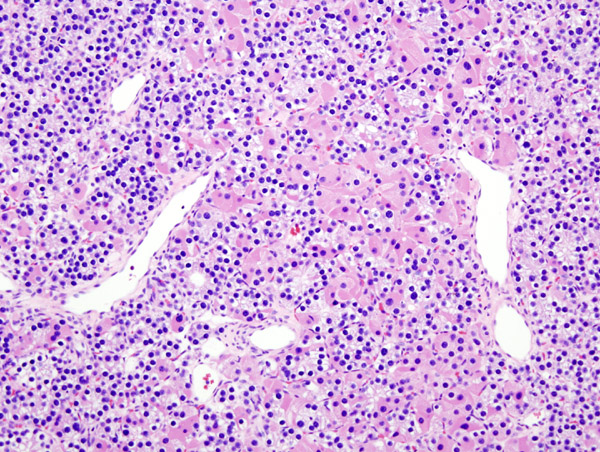
 High magnification micrograph of a parathyroid adenoma. H&E stain. Features: Single cell population forming a single mass. Thin capsule. No adipose tissue. +/-Glandular architecture (which may lead to confusion with thyroid tissue). Normal parathyroid gland with prominent adipose tissue is seen on the right of the image. – Source:wikipeida
 -
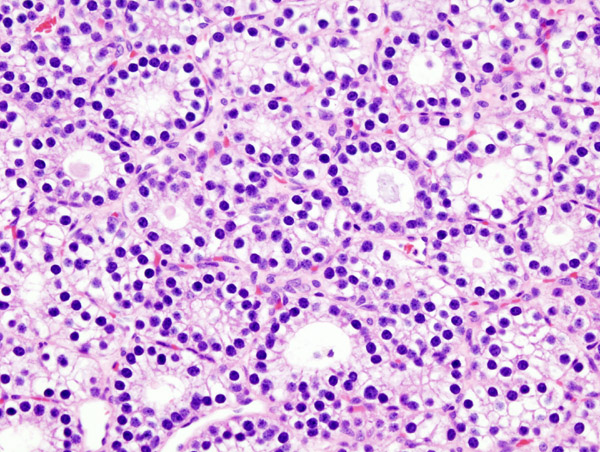
 Histopatholgical image of parathyroid adenoma in a patient with primary hyperparathyroidism. Hematoxylin and eosin stain. – Source: Wikipedia
 -
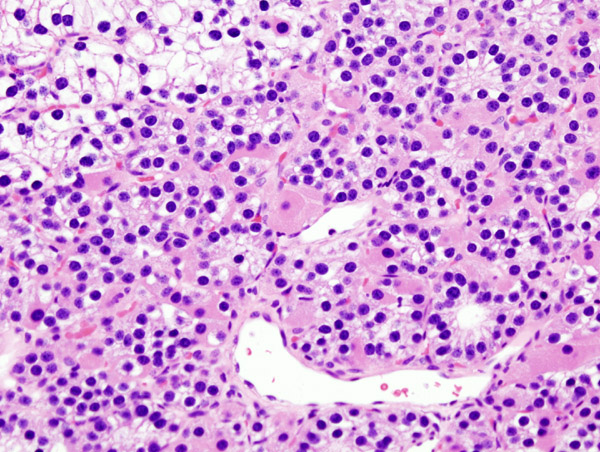
 Histopatholgical image of parathyroid adenoma in a patient with primary hyperparathyroidism. Hematoxylin and eosin stain. – Source: Wikipedia
 -
 Histopatholgical image of parathyroid adenoma in a patient with primary hyperparathyroidism. – Source: Wikipedia


References
- ↑ HARRISON MT (1964). “INTERRELATIONSHIPS OF VITAMIN D AND PARATHYROID HORMONE IN CALCIUM HOMEOSTASIS”. Postgrad Med J. 40: 497–505. PMC 2482768. PMID 14184232.
- ↑ Nussey, Stephen (2001). Endocrinology : an integrated approach. Oxford, UK Bethesda, Md: Bios NCBI. ISBN 1-85996-252-1.
- ↑ Wieneke JA, Smith A (2008). “Parathyroid adenoma”. Head Neck Pathol. 2 (4): 305–8. doi:10.1007/s12105-008-0088-8. PMC 2807581. PMID 20614300.
- ↑ 4.0 4.1 Gogusev J, Duchambon P, Hory B, Giovannini M, Goureau Y, Sarfati E; et al. (1997). “Depressed expression of calcium receptor in parathyroid gland tissue of patients with hyperparathyroidism”. Kidney Int. 51 (1): 328–36. PMID 8995751.
- ↑ 5.0 5.1 Kifor O, Moore FD, Wang P, Goldstein M, Vassilev P, Kifor I; et al. (1996). “Reduced immunostaining for the extracellular Ca2+-sensing receptor in primary and uremic secondary hyperparathyroidism”. J Clin Endocrinol Metab. 81 (4): 1598–606. doi:10.1210/jcem.81.4.8636374. PMID 8636374.
- ↑ Brown EM, Gamba G, Riccardi D, Lombardi M, Butters R, Kifor O; et al. (1993). “Cloning and characterization of an extracellular Ca(2+)-sensing receptor from bovine parathyroid”. Nature. 366 (6455): 575–80. doi:10.1038/366575a0. PMID 8255296.
- ↑ Brown EM, Pollak M, Seidman CE, Seidman JG, Chou YH, Riccardi D; et al. (1995). “Calcium-ion-sensing cell-surface receptors”. N Engl J Med. 333 (4): 234–40. doi:10.1056/NEJM199507273330407. PMID 7791841.
- ↑ 8.0 8.1 Hosokawa Y, Pollak MR, Brown EM, Arnold A (1995). “Mutational analysis of the extracellular Ca(2+)-sensing receptor gene in human parathyroid tumors”. J. Clin. Endocrinol. Metab. 80 (11): 3107–10. doi:10.1210/jcem.80.11.7593409. PMID 7593409.
- ↑ Carling T, Szabo E, Bai M, Ridefelt P, Westin G, Gustavsson P, Trivedi S, Hellman P, Brown EM, Dahl N, Rastad J (2000). “Familial hypercalcemia and hypercalciuria caused by a novel mutation in the cytoplasmic tail of the calcium receptor”. J. Clin. Endocrinol. Metab. 85 (5): 2042–7. doi:10.1210/jcem.85.5.6477. PMID 10843194.
- ↑ 10.0 10.1 Shattuck TM, Välimäki S, Obara T, Gaz RD, Clark OH, Shoback D; et al. (2003). “Somatic and germ-line mutations of the HRPT2 gene in sporadic parathyroid carcinoma”. N Engl J Med. 349 (18): 1722–9. doi:10.1056/NEJMoa031237. PMID 14585940.
- ↑ 11.0 11.1 Westin G, Björklund P, Akerström G (2009). “Molecular genetics of parathyroid disease”. World J Surg. 33 (11): 2224–33. doi:10.1007/s00268-009-0022-6. PMID 19373510.
- ↑ Hsi ED, Zukerberg LR, Yang WI, Arnold A (1996). “Cyclin D1/PRAD1 expression in parathyroid adenomas: an immunohistochemical study”. J Clin Endocrinol Metab. 81 (5): 1736–9. doi:10.1210/jcem.81.5.8626826. PMID 8626826.
- ↑ 13.0 13.1 Agarwal SK, Kester MB, Debelenko LV, Heppner C, Emmert-Buck MR, Skarulis MC; et al. (1997). “Germline mutations of the MEN1 gene in familial multiple endocrine neoplasia type 1 and related states”. Hum Mol Genet. 6 (7): 1169–75. PMID 9215689.
- ↑ Marquard, Jessica; Eng, Charis (September 27, 1999). “Multiple Endocrine Neoplasia Type 2”. GeneReviews® [Internet].
- ↑ Bilezikian JP (January 15, 2017). De Groot LJ, Chrousos G, Dungan K, et al., eds. Primary Hyperparathyroidism. Endotext [Internet]: South Dartmouth (MA): MDText.com, Inc.
- ↑ Bandeira F, Cusano NE, Silva BC, Cassibba S, Almeida CB, Machado VC, Bilezikian JP (2014). “Bone disease in primary hyperparathyroidism”. Arq Bras Endocrinol Metabol. 58 (5): 553–61. PMC 4315357. PMID 25166047.
- ↑ Rodriguez M, Nemeth E, Martin D (2005). “The calcium-sensing receptor: a key factor in the pathogenesis of secondary hyperparathyroidism”. Am J Physiol Renal Physiol. 288 (2): F253–64. doi:10.1152/ajprenal.00302.2004. PMID 15507543.
- ↑ Espiritu RP, Kearns AE, Vickers KS, Grant C, Ryu E, Wermers RA (2011). “Depression in primary hyperparathyroidism: prevalence and benefit of surgery”. J. Clin. Endocrinol. Metab. 96 (11): E1737–45. doi:10.1210/jc.2011-1486. PMID 21917870.
- ↑ Marquard, Jessica; Eng, Charis (September 27, 1999). “Multiple Endocrine Neoplasia Type 2”. GeneReviews® [Internet].
- ↑ Bilezikian JP (January 15, 2017). De Groot LJ, Chrousos G, Dungan K, et al., eds. Primary Hyperparathyroidism. Endotext [Internet]: South Dartmouth (MA): MDText.com, Inc.
- ↑ Mazzuoli GF, D’Erasmo E, Pisani D (1998). “Primary hyperparathyroidism and osteoporosis”. Aging (Milano). 10 (3): 225–31. PMID 9801732.
- ↑ Lips P (2001). “Vitamin D deficiency and secondary hyperparathyroidism in the elderly: consequences for bone loss and fractures and therapeutic implications”. Endocr Rev. 22 (4): 477–501. doi:10.1210/edrv.22.4.0437. PMID 11493580.
- ↑ Michael JW, Schlüter-Brust KU, Eysel P (2010). “The epidemiology, etiology, diagnosis, and treatment of osteoarthritis of the knee”. Dtsch Arztebl Int. 107 (9): 152–62. doi:10.3238/arztebl.2010.0152. PMC 2841860. PMID 20305774.
- ↑ Bai HX, Giefer M, Patel M, Orabi AI, Husain SZ (2012). “The association of primary hyperparathyroidism with pancreatitis”. J. Clin. Gastroenterol. 46 (8): 656–61. doi:10.1097/MCG.0b013e31825c446c. PMC 4428665. PMID 22874807.
- ↑ Kumar, Vinay (2013). Robbins basic pathology. Philadelphia, PA: Elsevier/Saunders. p. 736-737. ISBN 9781437717815.
- ↑ Wieneke JA, Smith A (2008). “Parathyroid adenoma”. Head Neck Pathol. 2 (4): 305–8. doi:10.1007/s12105-008-0088-8. PMC 2807581. PMID 20614300.
Editor-In-Chief: C. Michael Gibson, M.S., M.D. [1]; Associate Editor(s)-in-Chief: Anmol Pitliya, M.B.B.S. M.D.[2], Preeti Singh, M.B.B.S.[3]
Causes
Overview
The cause of most parathyroid adenomas is unknown. However, about 10% are said to be hereditary. It can be the result of multiple genetic mutations in genes such as the calcium-sensing receptor gene, HRPT2 gene (CDC73 gene), Cyclin D1 gene (CCND1)/PRAD1 gene, MEN1 gene, and RET gene.
Causes
Parathyroid adenoma is idiopathic in approximately 90% of the individuals. However, approximately 10% of parathyroid adenoma are caused by mutation in genes.[1]
Genetic Causes
- Parathyroid adenoma can be caused by a mutation of the following genes.
References
- ↑ Duan K, Gomez Hernandez K, Mete O (October 2015). “Clinicopathological correlates of hyperparathyroidism”. J. Clin. Pathol. 68 (10): 771–87. doi:10.1136/jclinpath-2015-203186. PMID 26163537.
- ↑ Hosokawa Y, Pollak MR, Brown EM, Arnold A (1995). “Mutational analysis of the extracellular Ca(2+)-sensing receptor gene in human parathyroid tumors”. J. Clin. Endocrinol. Metab. 80 (11): 3107–10. doi:10.1210/jcem.80.11.7593409. PMID 7593409.
- ↑ Carling T, Szabo E, Bai M, Ridefelt P, Westin G, Gustavsson P, Trivedi S, Hellman P, Brown EM, Dahl N, Rastad J (2000). “Familial hypercalcemia and hypercalciuria caused by a novel mutation in the cytoplasmic tail of the calcium receptor”. J. Clin. Endocrinol. Metab. 85 (5): 2042–7. doi:10.1210/jcem.85.5.6477. PMID 10843194.
- ↑ Shattuck TM, Välimäki S, Obara T, Gaz RD, Clark OH, Shoback D; et al. (2003). “Somatic and germ-line mutations of the HRPT2 gene in sporadic parathyroid carcinoma”. N Engl J Med. 349 (18): 1722–9. doi:10.1056/NEJMoa031237. PMID 14585940.
- ↑ Westin G, Björklund P, Akerström G (2009). “Molecular genetics of parathyroid disease”. World J Surg. 33 (11): 2224–33. doi:10.1007/s00268-009-0022-6. PMID 19373510.
- ↑ Hsi ED, Zukerberg LR, Yang WI, Arnold A (1996). “Cyclin D1/PRAD1 expression in parathyroid adenomas: an immunohistochemical study”. J Clin Endocrinol Metab. 81 (5): 1736–9. doi:10.1210/jcem.81.5.8626826. PMID 8626826.
- ↑ Westin G, Björklund P, Akerström G (2009). “Molecular genetics of parathyroid disease”. World J Surg. 33 (11): 2224–33. doi:10.1007/s00268-009-0022-6. PMID 19373510.
- ↑ Agarwal SK, Kester MB, Debelenko LV, Heppner C, Emmert-Buck MR, Skarulis MC; et al. (1997). “Germline mutations of the MEN1 gene in familial multiple endocrine neoplasia type 1 and related states”. Hum Mol Genet. 6 (7): 1169–75. PMID 9215689.
- ↑ Marquard, Jessica; Eng, Charis (September 27, 1999). “Multiple Endocrine Neoplasia Type 2”. GeneReviews® [Internet].
- ↑ Bilezikian JP (January 15, 2017). De Groot LJ, Chrousos G, Dungan K, et al., eds. Primary Hyperparathyroidism. Endotext [Internet]: South Dartmouth (MA): MDText.com, Inc.
Editor-In-Chief: C. Michael Gibson, M.S., M.D. [1]; Associate Editor(s)-in-Chief: Preeti Singh, M.B.B.S.[2], Anmol Pitliya, M.B.B.S. M.D.[3]
Differentiating Vulvar cancer from other Diseases

Overview
Majority of parathyroid adenoma are asymptomatic. However, most common presentation of a parathyroid adenoma is hypercalcemia. So, parathyroid adenoma shall be differentiated from other conditions presenting pimarily as hypercalcemia.
Differential Diagnosis
- Majority of parathyroid adenoma are asymptomatic.
- However, most common presentation of a parathyroid adenoma is hypercalcemia.
- So, parathyroid adenoma shall be differentiated from other conditions presenting primarily as hypercalcemia.[1]
- Common conditions presenting as hypercalcemia include:
- Parathyroid adenoma (primary hyperparathyroidism)
- Secondary hyperthyroidism (long term)
- Tertiary hyperparathyroidism
- Familial hypocalceuric hypercalcemia
- Hypercalcemia due to malignancy
- Humoral hypercalcemia of malignancy
- Osteolytic tumors
- Production of calcitriol
- Ectopic parathyroid gland
- Medication induced
- Nutritional
- Milk alkali syndrome
- Vitamin D toxicity
- Granulomatous disease
Differential Diagnosis
| Differential diagnosis of parathyroid adenoma on the basis of hypercalcemia | ||||||||
|---|---|---|---|---|---|---|---|---|
| Disorder | Mechanism of hypercalcemia | Clinical features | Laboratory findings | Imaging & diagnostic modalities | ||||
| PTH | Calcium | Phosphate | Other findings | |||||
| Parathyroid adenoma (Primary hyperparathyroidism) | Increase in secretion of parathyroid hormone (PTH) from a primary process in parathyroid gland. Parathyroid hormone causes increase in serum calcium. |
|
↑ | ↑ | ↓/Normal | Normal/↑ calcitriol | Findings of bone resorption:
Preoperative localization of hyperfunctioning parathyroid gland:
Predicting post-operative success:
| |
| Secondary hyperparathyroidism (long term) | Increase in secretion of parathyroid hormone (PTH) from a secondary process. Parathyroid hormone causes increase in serum calcium after long periods. |
|
↑ | ↓/Normal | ↑ | — | ||
| Tertiary hyperparathyroidism | Continuous elevation of parathyroid hormone (PTH) even after successful treatment of the secondary cause of elevated parathyroid hormone. Parathyroid hormone causes increase in serum calcium. |
|
↑ | ↑ | ↑ | — | ||
| Familial hypocalciuric hypercalcemia | This is a genetic disorder caused my mutation in calcium-sensing receptor gene. |
|
Normal/↑ | Normal/↑ | — | — |
| |
| Malignancy[2][3] | Humoral hypercalcemia of malignancy[4][5][6][7] | Tumor cells secretes parathyroid hormone-related protein (PTHrP) which has similar action as parathyroid hormone. |
|
— | ↑ | ↓/Normal | ↑ PTHrP
Normal/↑ calcitriol |
|
| Osteolytic tumors[8][9] | Multiple myeloma produces osteolysis of bones causing hypercalcemia. Osteolytic metasteses can cause bone resorption causing hypercalcemia. |
|
↓ | ↑ | — | — | ||
| Production of calcitirol[10] | Some tumors has ectopic activity of 1-alpha-hydroxylase leading to increased production of calcitriol. Calcitriol is active form of vitamin D and causes hypercalcemia. |
|
— | ↑ | — | ↑ Calcitriol | ||
| Ectopic parathyroid hormone[11] | Some tumors leads to ectopic production of parathyroid hormone. |
|
↑ | ↑ | ↓/Normal | Normal/↑ calcitriol | ||
| Medication induced | Lithium[12] | Lithium lowers urinary calcium and causes hypercalcemia. Lithium has been reported to cause an increase in parathyroid hormone and enlargement if parathyroid gland after weeks to months of therapy. |
|
↑ | ↑ | — | — |
|
| Thiazide diuretics[13] | Thiazide diuretics lowers urinary calcium excretion and causes hypercalcemia. |
|
— | ↑ | — | — | — | |
| Nutritional | Milk-alkali syndrome | Hypercalcemia is be caused by high intake of calcium carbonate. |
|
— | ↑ | — | ↓ calcitriol | |
| Vitamin D toxicity[14][15][16] | Excess vitamin D causes increased absorption of calcium from intestine causing hypercalcemia. |
|
— | ↑ | — | ↑ Vitamin D (calcidiol and/or calcitriol) | — | |
| Granulomatous disease | Sarcoidosis[19] | Hypercalcemia is causes by endogeous production of calcitriol by disease-activated macrophages. |
|
— | ↑ | — | ↑ Calcitriol
↑ ACE levels |
|
References
- ↑ Marcocci, Claudio; Cetani, Filomena (2011). “Primary Hyperparathyroidism”. New England Journal of Medicine. 365 (25): 2389–2397. doi:10.1056/NEJMcp1106636. ISSN 0028-4793.
- ↑ Mirrakhimov AE (2015). “Hypercalcemia of Malignancy: An Update on Pathogenesis and Management”. N Am J Med Sci. 7 (11): 483–93. doi:10.4103/1947-2714.170600. PMC 4683803. PMID 26713296.
- ↑ Stewart AF (2005). “Clinical practice. Hypercalcemia associated with cancer”. N Engl J Med. 352 (4): 373–9. doi:10.1056/NEJMcp042806. PMID 15673803.
- ↑ Ratcliffe WA, Hutchesson AC, Bundred NJ, Ratcliffe JG (1992). “Role of assays for parathyroid-hormone-related protein in investigation of hypercalcaemia”. Lancet. 339 (8786): 164–7. doi:10.1016/0140-6736(92)90220-W. PMID 1346019.
- ↑ Ikeda K, Ohno H, Hane M, Yokoi H, Okada M, Honma T, Yamada A, Tatsumi Y, Tanaka T, Saitoh T (1994). “Development of a sensitive two-site immunoradiometric assay for parathyroid hormone-related peptide: evidence for elevated levels in plasma from patients with adult T-cell leukemia/lymphoma and B-cell lymphoma”. J. Clin. Endocrinol. Metab. 79 (5): 1322–7. doi:10.1210/jcem.79.5.7962324. PMID 7962324.
- ↑ Horwitz MJ, Tedesco MB, Sereika SM, Hollis BW, Garcia-Ocaña A, Stewart AF (2003). “Direct comparison of sustained infusion of human parathyroid hormone-related protein-(1-36) [hPTHrP-(1-36)] versus hPTH-(1-34) on serum calcium, plasma 1,25-dihydroxyvitamin D concentrations, and fractional calcium excretion in healthy human volunteers”. J. Clin. Endocrinol. Metab. 88 (4): 1603–9. doi:10.1210/jc.2002-020773. PMID 12679445.
- ↑ Stewart AF, Vignery A, Silverglate A, Ravin ND, LiVolsi V, Broadus AE; et al. (1982). “Quantitative bone histomorphometry in humoral hypercalcemia of malignancy: uncoupling of bone cell activity”. J Clin Endocrinol Metab. 55 (2): 219–27. doi:10.1210/jcem-55-2-219. PMID 7085851.
- ↑ Roodman GD (2004). “Mechanisms of bone metastasis”. N Engl J Med. 350 (16): 1655–64. doi:10.1056/NEJMra030831. PMID 15084698.
- ↑ Guise TA, Yin JJ, Taylor SD, Kumagai Y, Dallas M, Boyce BF; et al. (1996). “Evidence for a causal role of parathyroid hormone-related protein in the pathogenesis of human breast cancer-mediated osteolysis”. J Clin Invest. 98 (7): 1544–9. doi:10.1172/JCI118947. PMC 507586. PMID 8833902.
- ↑ Seymour JF, Gagel RF, Hagemeister FB, Dimopoulos MA, Cabanillas F (1994). “Calcitriol production in hypercalcemic and normocalcemic patients with non-Hodgkin lymphoma”. Ann Intern Med. 121 (9): 633–40. PMID 7944070.
- ↑ VanHouten JN, Yu N, Rimm D, Dotto J, Arnold A, Wysolmerski JJ, Udelsman R (2006). “Hypercalcemia of malignancy due to ectopic transactivation of the parathyroid hormone gene”. J. Clin. Endocrinol. Metab. 91 (2): 580–3. doi:10.1210/jc.2005-2095. PMID 16263810.
- ↑ Mallette LE, Khouri K, Zengotita H, Hollis BW, Malini S (1989). “Lithium treatment increases intact and midregion parathyroid hormone and parathyroid volume”. J. Clin. Endocrinol. Metab. 68 (3): 654–60. doi:10.1210/jcem-68-3-654. PMID 2918061.
- ↑ Griebeler ML, Kearns AE, Ryu E, Thapa P, Hathcock MA, Melton LJ; et al. (2016). “Thiazide-Associated Hypercalcemia: Incidence and Association With Primary Hyperparathyroidism Over Two Decades”. J Clin Endocrinol Metab. 101 (3): 1166–73. doi:10.1210/jc.2015-3964. PMC 4803175. PMID 26751196.
- ↑ Hoeck HC, Laurberg G, Laurberg P (1994). “Hypercalcaemic crisis after excessive topical use of a vitamin D derivative”. J. Intern. Med. 235 (3): 281–2. PMID 8120527.
- ↑ Jacobus CH, Holick MF, Shao Q, Chen TC, Holm IA, Kolodny JM, Fuleihan GE, Seely EW (1992). “Hypervitaminosis D associated with drinking milk”. N. Engl. J. Med. 326 (18): 1173–7. doi:10.1056/NEJM199204303261801. PMID 1313547.
- ↑ Sharma OP (1996). “Vitamin D, calcium, and sarcoidosis”. Chest. 109 (2): 535–9. PMID 8620732.
- ↑ Jacobus CH, Holick MF, Shao Q, Chen TC, Holm IA, Kolodny JM, Fuleihan GE, Seely EW (1992). “Hypervitaminosis D associated with drinking milk”. N. Engl. J. Med. 326 (18): 1173–7. doi:10.1056/NEJM199204303261801. PMID 1313547.
- ↑ Hoeck HC, Laurberg G, Laurberg P (1994). “Hypercalcaemic crisis after excessive topical use of a vitamin D derivative”. J. Intern. Med. 235 (3): 281–2. PMID 8120527.
- ↑ Dusso AS, Kamimura S, Gallieni M, Zhong M, Negrea L, Shapiro S, Slatopolsky E (1997). “gamma-Interferon-induced resistance to 1,25-(OH)2 D3 in human monocytes and macrophages: a mechanism for the hypercalcemia of various granulomatoses”. J. Clin. Endocrinol. Metab. 82 (7): 2222–32. doi:10.1210/jcem.82.7.4074. PMID 9215298.
Editor-In-Chief: C. Michael Gibson, M.S., M.D. [1]; Associate Editor(s)-in-Chief: Anmol Pitliya, M.B.B.S. M.D.[2]
Epidemiology and Demographics
Overview
A single parathyroid adenoma is responsible for 80% to 85% of hyperparathyroidism[1]. A double adenomas the culprit in 4% to 5%, and parathyroid hyperplasia in 10% to 12%[2]. Parathyroid carcinomas are very rare causes of hyperparathyroidism and account for less than 1% of disease. Adenomas are most common in patients 50 to 70 years old.They can occur at any age. Women are affected 3-times as often as men
Epidemiology and Demographics
Prevalence
- A parathyroid adenoma is a benign tumor of the parathyroid gland. It generally causes hyperparathyroidism[3].
- Approximately 100,000 Americans develop primary hyperparathyroidism each year from parathyroid adenoma[4].
Incidence
- A single parathyroid adenoma is responsible for 80% to 85% of hyperparathyroidism.
- Parathyroid carcinomas are very rare causes of hyperparathyroidism and account for less than 1% of disease.
Age
- They can occur at any age[5].
Gender
- Women are affected 3-times as often as men
References
- ↑ Edafe O, Collins EE, Ubhi CS, Balasubramanian SP (February 2018). “Current predictive models do not accurately differentiate between single and multi gland disease in primary hyperparathyroidism: a retrospective cohort study of two endocrine surgery units”. Ann R Coll Surg Engl. 100 (2): 140–145. doi:10.1308/rcsann.2017.0112. PMC 5838681. PMID 29022783.
- ↑ Wolfe SA, Sharma S. PMID 29939647. Missing or empty
|title=(help) - ↑ Yeh MW, Ituarte PH, Zhou HC, Nishimoto S, Liu IL, Harari A, Haigh PI, Adams AL (March 2013). “Incidence and prevalence of primary hyperparathyroidism in a racially mixed population”. J. Clin. Endocrinol. Metab. 98 (3): 1122–9. doi:10.1210/jc.2012-4022. PMC 3590475. PMID 23418315.
- ↑ Pamathy G, Jayarajah U, Wangmo T, Banagala A (2018). “Lithium-induced Symptomatic Hypercalcemia and Hyperparathyroidism in a Patient with Bipolar Affective Disorder: A Case Report and Review of Literature”. Indian J Psychol Med. 40 (4): 378–380. doi:10.4103/IJPSYM.IJPSYM_305_17. PMC 6065126. PMID 30093752. Vancouver style error: initials (help)
- ↑ Sahli ZT, Karipineni F, Zeiger MA (August 2017). “A garden of parathyroid adenomas”. BMJ Case Rep. 2017. doi:10.1136/bcr-2017-221130. PMC 5747797. PMID 28775107.
Editor-In-Chief: C. Michael Gibson, M.S., M.D. [1]; Associate Editor(s)-in-Chief: Syed Musadiq Ali M.B.B.S.[2]
Risk Factors
Overview
There are no established risk factors for Parathyroid adenoma.
Risk Factors
There are no established risk factors for Parathyroid adenoma.
Editor-In-Chief: C. Michael Gibson, M.S., M.D. [1]; Associate Editor(s)-in-Chief: Syed Musadiq Ali M.B.B.S.[2]
Screening
Overview
There is insufficient evidence to recommend routine screening for parathyroid adenoma.
Screening
There is insufficient evidence to recommend routine screening for parathyroid adenoma.
References
Editor-In-Chief: C. Michael Gibson, M.S., M.D. [1]; Associate Editor(s)-in-Chief: Anmol Pitliya, M.B.B.S. M.D.[2] Syed Musadiq Ali M.B.B.S.[3]
Natural history, complications and prognosis
Overview
Parathyroid adenoma usually presents as asymptomatic hypercalcemia in presence of increased parathyroid hormone. If left untreated, some of the patients with parathyroid adenoma may develop marked hypercalcemia, hypercalciuria, cortical bone demineralization and nephrolithiasis. Prognosis of parathyroid adenoma is generally excellent after parathyroidectomy.
Natural History, Complications, and Prognosis
Natural History
- Parathyroid adenoma usually presents as asymptomatic hypercalcemia in presence of increased parathyroid hormone.
- If left untreated, some of the patients with parathyroid adenoma may develop marked hypercalcemia, hypercalciuria, cortical bone demineralization and nephrolithiasis.[1][2]
Complications
Organ system specific complication caused by primary hyperparathyroidism due to parathyroid adenoma include:
| Complications involving Organ system | Complications due to Primary Hyperparathyroidism |
|---|---|
| Cardiaovascular complications |
|
| Endocrine complications[5] | |
| Gastrointestinal complications[6] | |
| Metabolic complications |
|
| Musculo-skeletal complications | |
| Neuromuscular complications |
|
| Pregnancy related complications[21] |
|
| Psychiatric complications |
|
| Renal complications |
|
| Rheumatologic complications |
Prognosis
- Prognosis of parathyroid adenoma is generally excellent after parathyroidectomy.
- The complications of parathyroid adenoma resolves after the treatment.
- Untreated complication of parathyroid adenoma may be fatal.[33]
References
- ↑ Peacock M (2002). “Primary hyperparathyroidism and the kidney: biochemical and clinical spectrum”. J. Bone Miner. Res. 17 Suppl 2: N87–94. PMID 12412783.
- ↑ Silverberg SJ, Shane E, de la Cruz L, Dempster DW, Feldman F, Seldin D, Jacobs TP, Siris ES, Cafferty M, Parisien MV (1989). “Skeletal disease in primary hyperparathyroidism”. J. Bone Miner. Res. 4 (3): 283–91. doi:10.1002/jbmr.5650040302. PMID 2763869.
- ↑ Stefenelli T, Abela C, Frank H, Koller-Strametz J, Globits S, Bergler-Klein J, Niederle B (1997). “Cardiac abnormalities in patients with primary hyperparathyroidism: implications for follow-up”. J. Clin. Endocrinol. Metab. 82 (1): 106–12. doi:10.1210/jcem.82.1.3666. PMID 8989242.
- ↑ Strózecki P, Adamowicz A, Nartowicz E, Odrowaz-Sypniewska G, Włodarczyk Z, Manitius J (2001). “Parathormon, calcium, phosphorus, and left ventricular structure and function in normotensive hemodialysis patients”. Ren Fail. 23 (1): 115–26. PMID 11256521.
- ↑ Bai HX, Giefer M, Patel M, Orabi AI, Husain SZ (2012). “The association of primary hyperparathyroidism with pancreatitis”. J. Clin. Gastroenterol. 46 (8): 656–61. doi:10.1097/MCG.0b013e31825c446c. PMC 4428665. PMID 22874807.
- ↑ 6.0 6.1 Corlew DS, Bryda SL, Bradley EL, DiGirolamo M (1985). “Observations on the course of untreated primary hyperparathyroidism”. Surgery. 98 (6): 1064–71. PMID 3878002.
- ↑ Fitzpatrick LA, Bilezikian JP (1987). “Acute primary hyperparathyroidism”. Am. J. Med. 82 (2): 275–82. PMID 3812520.
- ↑ Ahmad S, Kuraganti G, Steenkamp D (2015). “Hypercalcemic crisis: a clinical review”. Am. J. Med. 128 (3): 239–45. doi:10.1016/j.amjmed.2014.09.030. PMID 25447624.
- ↑ Lips P (2001). “Vitamin D deficiency and secondary hyperparathyroidism in the elderly: consequences for bone loss and fractures and therapeutic implications”. Endocr Rev. 22 (4): 477–501. doi:10.1210/edrv.22.4.0437. PMID 11493580.
- ↑ Saab G, Whaley-Connell A, Bombeck A, Kurella Tamura M, Li S, Chen SC, McFarlane SI, Sowers JR, Norris K, Bakris GL, McCullough PA (2011). “The Association between Parathyroid Hormone Levels and the Cardiorenal Metabolic Syndrome in Non-Diabetic Chronic Kidney Disease”. Cardiorenal Med. 1 (2): 123–130. doi:10.1159/000327149. PMC 3101512. PMID 22258399.
- ↑ Hjelmesæth, Jøran; Hofsø, Dag; Aasheim, Erlend T; Jenssen, Trond; Moan, Johan; Hager, Helle; Røislien, Jo; Bollerslev, Jens (2009). “Parathyroid hormone, but not vitamin D, is associated with the metabolic syndrome in morbidly obese women and men: a cross-sectional study”. Cardiovascular Diabetology. 8 (1): 7. doi:10.1186/1475-2840-8-7. ISSN 1475-2840.
- ↑ Barbur MA, Kurjak M, Becker K (1997). “[Systematic calciphylaxis in chronic renal failure: fulminant course after kidney transplantation]”. Pathologe (in German). 18 (6): 453–8. PMID 9451734.
- ↑ Bandeira F, Cusano NE, Silva BC, Cassibba S, Almeida CB, Machado VC, Bilezikian JP (2014). “Bone disease in primary hyperparathyroidism”. Arq Bras Endocrinol Metabol. 58 (5): 553–61. PMC 4315357. PMID 25166047.
- ↑ Mazzuoli GF, D’Erasmo E, Pisani D (1998). “Primary hyperparathyroidism and osteoporosis”. Aging (Milano). 10 (3): 225–31. PMID 9801732.
- ↑ Spaulding CM, Young G (1997). “Osteitis fibrosa cystica and chronic renal failure”. J Am Podiatr Med Assoc. 87 (5): 238–40. doi:10.7547/87507315-87-5-238. PMID 9158318.
- ↑ Eastwood JB (1977). “Renal osteodystrophy–a radiological review”. CRC Crit Rev Diagn Imaging. 9 (1): 77–104. PMID 328228.
- ↑ Adams JE (1999). “Renal bone disease: radiological investigation”. Kidney Int. Suppl. 73: S38–41. PMID 10633462.
- ↑ Jevtic V (2003). “Imaging of renal osteodystrophy”. Eur J Radiol. 46 (2): 85–95. doi:10.1016/S0720-048X(03)00072-X. PMID 12714225.
- ↑ Mallette LE, Patten BM, Engel WK (1975). “Neuromuscular disease in secondary hyperparathyroidism”. Ann. Intern. Med. 82 (4): 474–83. PMID 47234.
- ↑ Gerhardt RE, Zeitlin EL (1978). “Neuromuscular disease in tertiary hyperparathyroidism”. Arch. Intern. Med. 138 (6): 1013–5. PMID 646555.
- ↑ Poomthavorn P, Ongphiphadhanakul B, Mahachoklertwattana P (2008). “Transient neonatal hypoparathyroidism in two siblings unmasking maternal normocalcemic hyperparathyroidism”. Eur. J. Pediatr. 167 (4): 431–4. doi:10.1007/s00431-007-0528-6. PMID 17569990.
- ↑ Walker MD, McMahon DJ, Inabnet WB, Lazar RM, Brown I, Vardy S, Cosman F, Silverberg SJ (2009). “Neuropsychological features in primary hyperparathyroidism: a prospective study”. J. Clin. Endocrinol. Metab. 94 (6): 1951–8. doi:10.1210/jc.2008-2574. PMC 2690425. PMID 19336505.
- ↑ Espiritu RP, Kearns AE, Vickers KS, Grant C, Ryu E, Wermers RA (2011). “Depression in primary hyperparathyroidism: prevalence and benefit of surgery”. J. Clin. Endocrinol. Metab. 96 (11): E1737–45. doi:10.1210/jc.2011-1486. PMID 21917870.
- ↑ McAllion SJ, Paterson CR (1989). “Psychiatric morbidity in primary hyperparathyroidism”. Postgrad Med J. 65 (767): 628–31. PMC 2429194. PMID 2608590.
- ↑ Peacock M (2002). “Primary hyperparathyroidism and the kidney: biochemical and clinical spectrum”. J. Bone Miner. Res. 17 Suppl 2: N87–94. PMID 12412783.
- ↑ Lila AR, Sarathi V, Jagtap V, Bandgar T, Menon PS, Shah NS (2012). “Renal manifestations of primary hyperparathyroidism”. Indian J Endocrinol Metab. 16 (2): 258–62. doi:10.4103/2230-8210.93745. PMC 3313745. PMID 22470864.
- ↑ Tassone F, Gianotti L, Emmolo I, Ghio M, Borretta G (2009). “Glomerular filtration rate and parathyroid hormone secretion in primary hyperparathyroidism”. J. Clin. Endocrinol. Metab. 94 (11): 4458–61. doi:10.1210/jc.2009-0587. PMID 19808852.
- ↑ Kim H, Cheigh JS, Ham HW (2001). “Urinary stones following renal transplantation”. Korean J. Intern. Med. 16 (2): 118–22. PMC 4531707. PMID 11590898.
- ↑ Michael JW, Schlüter-Brust KU, Eysel P (2010). “The epidemiology, etiology, diagnosis, and treatment of osteoarthritis of the knee”. Dtsch Arztebl Int. 107 (9): 152–62. doi:10.3238/arztebl.2010.0152. PMC 2841860. PMID 20305774.
- ↑ Hochberg, Marc (2015). “204. Primary hyperparathyroidism: rheumatologic manifestations and bone disease”. Rheumatology. Philadelphia, PA: Mosby/Elsevier. p. 1668. ISBN 9780323091381.
- ↑ Rubin MR, Silverberg SJ (2002). “Rheumatic manifestations of primary hyperparathyroidism and parathyroid hormone therapy”. Curr Rheumatol Rep. 4 (2): 179–85. PMID 11890884.
- ↑ Adler JS, Cameron DC (1989). “Erosive spondylo-arthropathy and tertiary hyperparathyroidism”. Australas Radiol. 33 (1): 90–2. PMID 2712794.
- ↑ Corlew DS, Bryda SL, Bradley EL, DiGirolamo M (1985). “Observations on the course of untreated primary hyperparathyroidism”. Surgery. 98 (6): 1064–71. PMID 3878002.
Editor-In-Chief: C. Michael Gibson, M.S., M.D. [1]; Associate Editor(s)-in-Chief: Anmol Pitliya, M.B.B.S. M.D.[2] Syed Musadiq Ali M.B.B.S.[3]
Diagnosis
Diagnosis
History and Symptoms | Physical Examination CT | MRI | Other Imaging Findings | Other Diagnostic Studies
Editor-In-Chief: C. Michael Gibson, M.S., M.D. [1]Associate Editor(s)-in-Chief: Syed Musadiq Ali M.B.B.S.[2]