

Health Dictionary
Reliable, easy-to-read patient information on common medical conditions — written in plain language, free of jargon, and grounded in current evidence. Browse the most frequent diagnoses, understand what they mean for everyday life, and learn which steps and questions help you have a focused conversation with your doctor.
Pulmonary embolization
Introduction
For patient information, click here
For economy class syndrome, click here
Synonyms and keywords: PE; lung blood clot; blood clot-lung; embolism-pulmonary
Overview
Overview
Pulmonary embolism (PE) is an acute obstruction of the pulmonary artery (or one of its branches). The obstruction in the pulmonary artery that causes a PE can be due to thrombus, air, tumor, or fat. Most often, this is due to a venous thrombosis (blood clot from a vein), which has been dislodged from its site of formation in the lower extremities. It has then embolized to the arterial blood supply of one of the lungs. This process is termed thromboembolism. PE is a potentially lethal condition. The patient can present with a range of signs and symptoms, including dyspnea, chest pain while breathing, and in more severe cases collapse, shock, and cardiac arrest. PE treatment requires rapid and accurate risk stratification before the development of hemodynamic collapse and cardiogenic shock. Treatment consists of an anticoagulant medication, such as heparin or warfarin, and in severe cases, thrombolysis or surgery. Pulmonary embolism can be classified based on the time course of symptom presentation (acute and chronic) and the overall severity of disease (stratified based upon three levels of risk: massive, submassive, and low-risk).
Historical Perspective
Throughout history, many renowned researchers and health care professionals have contributed to the understanding, definition, and treatment of pulmonary embolism. Though the first documented case of pulmonary embolism occurred in 1837, historical record of thrombotic disease dates as far back as the 7th century BCE.[1]
Classification
PE can be classified based on the time course of symptom presentation (acute and chronic) and the overall severity of disease (stratified based upon three levels of risk: massive, submassive, and low-risk). Massive PE is characterised by the presence of either sustained hypotension, or pulselessness, or bradycardia. Submassive PE is characterized by the presence of either right ventricular dysfunction or myocardial necrosis in the absence of hypotension. In low risk PE, there is absence of hypotension, shock, right ventricular dysfunction and myocardial necrosis.[2]
Pathophysiology
PE occurs when there is an acute obstruction of the pulmonary artery or one of its branches. It is commonly caused by a venous thrombus that has dislodged from its site of formation and embolized to the arterial blood supply of one of the lungs. The process of clot formation and embolization is termed thromboembolism. PE results in the elevation of the pulmonary vessel resistance as a consequence of not only mechanical obstruction of the capillary by the embolism, but also due to pulmonary vasoconstriction. When pulmonary vascular resistance occurs following an acute PE, the rapid increase in the right ventricular afterload might lead to the dilatation of the right ventricular wall and subsequent right heart failure.[3][4]
Causes
Pulmonary embolism (PE) is the acute obstruction of the pulmonary artery or one of its branches by a thrombus, air, tumor, or fat. Most often, PE is due to a venous thrombus which has been dislodged from its site of formation in the deep veins of the lower extremities, a process referred to as venous thromboembolism.
Differentiation of Pulmonary Embolism from other Diseases
Pulmonary embolism must be distinguished from other life-threatening causes of chest pain including acute myocardial infarction, aortic dissection, and pericardial tamponade, as well as a large list of non-life-threatening causes of chest discomfort and shortness of breath.
Epidemiology and Demographics
The precise number of people affected by venous thromboembolism (VTE), that is either deep vein thrombosis, PE, or both, is unknown, but estimates range from 300,000 to 600,000 (1 to 2 per 1,000, and in those over 80 years of age, as high as 1 in 100) each year in the United States. Approximately 5 to 8% of the U.S. population has one of several genetic risk factors, also known as inherited thrombophilias in which a genetic defect can be identified that increases the risk for thrombosis.[5][6]
Risk Factors
The most common sources of PE are proximal leg deep venous thromboses (DVTs) or pelvic vein thromboses; therefore, any risk factor for DVT also increases the risk of PE. Approximately 15% of patients with a DVT will develop a PE. In these chapters on venous thromboembolism (VTE), the word risk factors refers to those epidemiologic and genetic variables that expose someone to a higher risk of developing venous thrombosis. The word triggers refer to those factors in the patients immediate history or environment that may have lead to the occurrence of the venous thrombosis. The risk factors for VTE are a constellation of predisposing conditions which stem from the three principles of Virchow’s triad: stasis of the blood flow, damage to the vascular endothelial cells, and hypercoagulability. Approximately 5 to 8% of the U.S. population has one of several genetic risk factors, also known as inherited thrombophilias in which a genetic defect can be identified that increases the risk for thrombosis.[7][6] The risk factors for VTE can be classified as temporary, modifiable and non-modifiable. It is suggested that venous thrombosis also shares risk factors with arterial thrombosis, such as obesity, hypertension, smoking, and diabetes mellitus.[8]
Triggers
The triggers of VTE include injury to a deep vein from surgery, a fracture, or other trauma, especially a paralytic spinal cord injury.[9] Another trigger for VTE is prolonged immobilization that causes stasis in the deep veins which may occur after surgery, prolonged bed-rest, or prolonged seating during travel.
Natural History, Complications and Prognosis
PE can be acutely complicated by the development of cardiogenic shock, pulseless electrical activity and sudden cardiac death and chronically by the development of pulmonary hypertension. The medical management of PE often requires the administration of potent parenteral anticoagulants and fibrinolytics and massive bleeding can be a complication of their administration. If left untreated almost one-third of patients with PE die, typically from recurrent PE. However, with prompt diagnosis and treatment, the mortality rate is approximately 2–8%. The true mortality associated with PE may be underestimated as two-thirds of all PE cases are diagnosed by autopsy. Estimates suggest that 60,000-100,000 Americans die of VTE, 10 to 30% of which will die within one month of diagnosis. Sudden death is the first symptom in about one-quarter (25%) of people who have a PE. One-third (about 33%) of people with VTE will have a recurrence within 10 years.[10][6]
Diagnosis
Diagnostic Algorithm
When a patient presents with the cardinal symptoms of PE, such as sudden onset of dyspnea, pleuritic chest pain, tachypnea, and/or tachycardia, the initial step is to stratify the patient into high risk or non-high risk depending on their hemodynamic status. Patients who are suspected to have PE and who are hemodynamically unstable should be administered anticoagulants and should undergo a CT scan or echocardiography if CT scan is unavailable. Among patients who are hemodynamically stable, the pretest probability of PE should be estimated using one of the available scoring systems, the most used of which is the Wells score. Patients who have a low or intermediate pretest probability of PE should undergo D-dimer testing as the initial test, whereas those who have a high pretest probability of PE should undergo a CT scan without a D-dimer test. Patients at intermediate or high pretest probability of PE should be administered anticoagulation therapy before the completion of the diagnostic testing.
Assessment of Clinical Probability and Risk Scores
The diagnosis of PE is based primarily on the clinical assessment of the pretest probability of PE combined with diagnostic modalities such as spiral CT, V/Q scan, use of the D-dimer, and lower extremity ultrasound. Clinical prediction rules for PE include: the Wells score, the Geneva score and the PE rule-out criteria (PERC).
Assessment of the Probability of Subsequent PE ad Risk Scores
Venous thromboembolism (VTE) consists of deep vein thrombosis (DVT), pulmonary embolism (PE), or both. VTE is a disease associated with morbidity and mortality; therefore, VTE prophylaxis is indicated among specific categories of patients at elevated risk for VTE. Several scores have been developed for the assessment of risk of subsequent VTE such as the Padua prediction score and the IMPROVE score among hospitalized medically ill patients, and Roger’s score and Caprini score among surgical patients.
History and Symptoms
A proper history and physical exam is crucial to establish an accurate diagnosis of PE. The symptoms of PE depend on the severity of the disease, ranging from mild dyspnea, chest pain, and cough, to sustained hypotension and shock.[11][12] A PE may also be an incidental finding in so far as many patients are asymptomatic.[12][13] Sudden death can be the initial presentation of PE. One of the first steps in the management of PE is the determination of the Wells score for PE, whose criteria can be ascertained solely on the basis of history and physical exam. Symptoms of DVT of the lower extremity may be present.
Physical Examination
PE is associated with the presence of tachycardia and tachypnea. Signs of right ventricular failure include jugular venous distension, a right sided S3, and a parasternal lift. These signs are often present in cases of massive and submassive pulmonary emboli, also known as intermediate-risk and high-risk respectively.[11][14] Since PE most commonly occurs as a complication of deep vein thrombosis (DVT), the physical examination should include an assessment of the lower extremities for erythema, tenderness, and/or swelling.
Laboratory Findings
The results of routine laboratory tests including arterial blood gas analysis are non-specific in making the diagnosis of PE. These laboratory studies can be obtained to rule-out other cause of chest discomfort and tachypnea. In patients with acute PE, non-specific lab findings include: leukocytosis, elevated ESR with an elevated serum LDH and serum transaminase (especially AST or SGOT). A negative D-dimer in a patient with low to intermediate probability of PE strongly suggests PE is not present.
Arterial Blood Gas Analysis
Hypoxemia, hypocapnia, increased alveolar-arterial gradient, and respiratory alkalosis are the typical findings that may be observed in patients with PE. The absence of the typical results of the arterial blood gas (ABG) analysis, however, does not exclude PE.[15] ABG analysis results do not contribute reliably to tailoring the management of the patients among whom PE is suspected.[16]
D-dimer
D-dimer is used in the diagnosis of deep vein thrombosis and pulmonary embolism among patients with low or unlikely probability of venous thromboembolism.[17][18] While 500 ng/mL has long been the most commonly used cut off value for abnormal D-dimer concentration, recent studies suggest the use of an age adjusted cut-off concentration of D-dimer. The age adjusted cut-off value of D-dimer is 500 ng/mL for subjects whose age is less than 50 years, and the age multiplied by 10 for subjects older than 50 years.[19][20][21]
Biomarkers
Although the usefulness of brain natriuretic peptide (BNP) concentrations to diagnose PE is limited,[22] elevated BNP and pro-BNP levels are associated with right ventricular dysfunction and increased mortality, and are therefore useful prognostic markers.[12] The evaluation of troponin concentration also serves as a useful prognostic marker to identify myocardial necrosis[23][24] and mortality associated with acute PE.[25]
Electrocardiogram
The electrocardiogram (ECG) in the cases of PE is often abnormal; however, the ECG abnormalities are neither sensitive nor specific.[26][27] Some of the most common ECG abnormalities in PE include T wave inversion in the anterior leads and sinus tachycardia.[28][29][27] The ECG abnormalities reported in PE are also present in a variety of other conditions rendering the utility of ECG for the diagnosis of PE limited. Nevertheless, an ECG is routinely performed in all patients with suspected PE in order to rule out other differential diagnoses such as myocardial infarction.
Chest X Ray
The majority of chest X-rays (CXR) of patients with PE are abnormal; however, CXR findings are of limited value to establish a diagnosis of a pulmonary embolus (PE).[30] The importance of a CXR obtained in patients with shortness of breath or chest pain suspected to have a PE is to rule out alternative diagnoses such as pneumonia, congestive heart failure, and rib fracture.[31] The most common findings reported among patients with PE include atelectasis and/or increased opacity in parenchymal areas[32] and cardiomegaly.[33]
Ventilation/Perfusion Scan
A ventilation/perfusion scan (otherwise known as V/Q scan or lung scintigraphy) is a study which shows whether an area of the lung is being ventilated with oxygen and perfused with blood. In the setting of a PE, perfusion can be obstructed due to the formation of a clot. The ventilation/perfusion scan is less commonly used due to the more widespread availability of computed tomography (CT) technology, however it may be useful in patients who have an allergy to iodinated contrast. It may also be useful in pregnant patients in an attempt to minimize radiation exposure. The diagnostic value of the results of the V/Q scan is improved when combined with the clinical pretest probability of PE. A high probability scan coupled with a high clinical pretest probability of PE is diagnostic for PE, while a normal scan regardless of the clinical pretest probability excludes PE. For the majority of the cases of suspected PE, however, the ventilation/perfusion scan does not establish the diagnosis nor exclude PE and further tests are required.[34]
Echocardiography
Routine echocardiography in patients with suspected pulmonary embolism (PE) is not required.[35] In fact, the majority of patients with PE have a normal echocardiography.[35] However if elevations in the cardiac troponins or brain natriuretic peptide are present, then acute right ventricular (RV) dysfunction may be present and echocardiography is warranted.[36] Echocardiography is also valuable for the evaluation of hemodynamically unstable patients with acute dyspnea, right heart failure, or syncope who are suspected to have PE.[35] The presence of right ventricular dysfunction is a predictor of early death among patients with PE.[37] When evidence of RV dysfunction is present, PE is risk stratified into submassive PE or massive PE depending on the absence or presence of hypotension respectively.[2][38]
Compression Ultrasonography
Compression ultrasonography of the legs is used to evaluate the presence of deep venous thrombosis (DVT) in the lower extremities, which can lead to the development of a PE. The presence of a DVT demonstrated by ultrasonography is enough to warrant anticoagulation without a V/Q or spiral CT scans. The decision to administer anticoagulation therapy to a patient with a positive compression ultrasound is due to the strong association between DVT and subsequent PE. Compression ultrasonography is not the routine initial method of evaluation in a suspected PE during pregnancy unless the patient has coexisting symptoms and signs of DVT.[39] In case the compression ultrasound is negative for DVT and there is persistent clinical suspicion of PE, the negative ultrasound does not rule out PE and additional imaging tests are required.[39]
CT
CT pulmonary angiography (CTPA) is the recommended first line diagnostic imaging test in most people. A negative CT pulmonary angiogram excludes a clinically important pulmonary embolism.[40] Multi-Detector Computed Tomography (MDCT) has rapidly replaced the use of pulmonary angiography in the clinical setting because MDCT is less invasive and easier to perform. Therefore, pulmonary angiography should only be performed first if MDCTA is unavailable or contraindicated.
MRI
Magnetic resonance pulmonary angiography should be considered in the setting of a pulmonary embolism only at centers that routinely perform it well and only for patients for whom standard tests are contraindicated. MRA has a sensitivity and specificity of 78% and 99% respectively.[41]
Other Imaging Findings
Pulmonary angiography is the gold standard for diagnosing a PE. The pulmonary angiogram has a sensitivity and specificity of >95% in diagnosing a PE. The estimated false-negative rate is 0.5% – 1.7%. Pulmonary angiography is presently used less frequently in the diagnosis of pulmonary embolism due to wider acceptance of CT scans, which are non-invasive. CT pulmonary angiography is the recommended first line diagnostic imaging test in most people. A negative CT pulmonary angiogram excludes a clinically important pulmonary embolism.[40] Multi-Detector Computed Tomography (MDCTA) has rapidly replaced the use of pulmonary angiography in the clinical setting because MDCT is less invasive and easier to perform. Therefore, pulmonary angiography should only be performed first if MDCTA is unavailable or contraindicated.
Treatment
Treatment Algorithm
Prompt recognition, diagnosis and treatment of pulmonary embolism is critical. Anticoagulant therapy is the mainstay of treatment for patients who are hemodynamically stable. If hemodynamic compromise is present, then fibrinolytic therapy is recommended.
Medical Therapy
Medical therapy for PE includes anticoagulation therapy and fibrinolytic therapy. Parenteral anticoagulation therapy with either unfractionated heparin, low molecular weight heparin (LMWH), or fondaparinux is indicated in the initial treatment of patients with PE who do not have any contraindications for anticoagulation. Initial parenteral anticoagulation therapy should be started before the completion of the diagnostic workup among patients who have a high pretest probability of PE as well as among those with intermediate pretest probability of PE and an expected delay in the diagnostic results of more than 4 hours.[42] Thrombolytic therapy is indicated for the treatment of massive PE, also known as high-risk PE.[43] Patients with PE require long term anticoagulation therapy with agents such as vitamin K antagonists, LMWH, dabigatran, or rivaroxaban.
IVC Filter
Inferior vena cava (IVC) filter is not indicated for the treatment of pulmonary embolism unless the patient has contraindications to anticoagulation therapy due to an elevated risk of bleeding. Anticoagulation therapy should be initiated when the bleeding risk subsides.[43][2][14]
Embolectomy
In thoracic surgery, a pulmonary thrombectomy, is an emergency procedure that removes clotted blood (thrombus) from the pulmonary arteries. There are two types of pulmonary embolectomy: surgical pulmonary embolectomy and percutaneous catheter embolectomy. Pulmonary embolectomy is indicated for the treatment of PE in patients with massive PE among whom fibrinolytic therapy is contraindicated or who fail to improve after initial treatment with fibrinolytic therapy. In addition, pulmonary embolectomy is indicated in patients with submassive PE who fail to improve on the initial treatment and have contraindications to fibrinolytic therapy.[43][2][14]
Thromboendarterectomy
In thoracic surgery, a pulmonary thromboendarterectomy, is an operation that removes organized clotted blood (thrombus) from the pulmonary arteries. PTE is a treatment for chronic thromboembolic pulmonary hypertension (pulmonary hypertension induced by recurrent/chronic pulmonary emboli).[44][45]
Discharge Care and Long Term Treatment
While hospital admission is necessary for patients who have a massive or submassive pulmonary embolism (PE), patients with low risk PE who have no evidence of hypotension, right ventricular dysfunction, or myocardial necrosis can be discharged early on and put on an outpatient treatment regimen.[12] The long term management of PE depends on whether the episode is the first one or not, whether it is provoked or unprovoked, and on the risk of bleeding of the patient. Among non cancer patients, the first line therapy for long term outpatient anticoagulation therapy is vitamin K antagonists (VKA); whereas the first line treatment among cancer patients is low molecular weight heparin (LMWH).
Prevention
Venous thromboembolism (VTE) is a disease associated with morbidity and mortality; therefore, VTE prophylaxis is indicated among specific categories of patients at elevated risk for VTE. VTE prophylaxis can be either pharmacological through the administration of medications such as low molecular weight heparin (LMWH) or fondaparinux among others, or mechanical through intermittent pneumatic compression or elastic stockings. The decision to administer VTE prophylaxis, the duration of the prophylaxis treatment and the choice of the modality depend on the reason for hospitalization such as medical illness, non orthopedic surgery or orthopedic surgery, as well as on the estimated risk of subsequent VTE and the estimated risk of bleeding.
Cost Effectivess of Therapy
When indicated, early discharge and outpatient treatment for pulmonary embolism is more cost effective than inpatient treatment.[46] The inpatient treatment with low molecular weight heparin has been reported to be more cost effective than that with unfractionated heparin.[46]
Future or Investigational Therapies
There are several ongoing studies on future therapies for the prevention of venous thromboembolism (VTE). The APEX study is a multicenter, randomized, active-controlled efficacy and safety study comparing extended duration betrixaban with standard of care enoxaparin for the prevention of VTE in acute medically ill patients.[3] MARINER is a randomized, double-blind, placebo-controlled, event-driven, multicenter study in patients who are hospitalized for a specific acute medical illness and have other risk factors for VTE, which aims to evaluate rivaroxaban in the prevention of symptomatic VTE events and VTE-related deaths for a period of 45 days post-hospital discharge.[4]
Support Group
In a support group, members provide each other with various types of nonprofessional, nonmaterial help to pulmonary embolism patients. The help may take the form of providing relevant information, relating personal experiences, listening to others’ experiences, providing sympathetic understanding, and establishing social networks. A support group may also provide ancillary support, such as serving as a voice for the public or engaging in advocacy.
PE in Pregnancy
When anticoagulation is indicated for the prevention or treatment of venous thromboembolism in pregnancy, low molecular weight heparin (LMWH) should be administered instead of vitamin K antagonists (VKA).[47] In fact, VKA can cross the placenta and lead to embryopathy as well as fetal loss. Some of the teratogenic effect of VKA include midfacial hypoplasia, stippled epiphysis, and limb hypoplasia.[47][48][49] The teratogenic effect of VKA is particularly important during the first trimester of pregnancy.[47]
PE in Cancer
Cancer patients who have an episode of pulmonary embolism should receive an extended anticoagulation therapy for at least 3 months. The first line long term anticoagulation therapy for venous thromboembolism (VTE) in cancer patients is vitamin K antagonist (VKA) over low molecular weight heparin (LMWH). Outpatient cancer patients with no additional risk factors for VTE should not receive any routine VTE prophylaxis.[50]
References
- ↑ Wood KE (2009). “A history of pulmonary embolism and deep venous thrombosis”. Crit Care Clin. 25 (1): 115–31, viii. doi:10.1016/j.ccc.2008.12.014. PMID 19268798.
- ↑ 2.0 2.1 2.2 2.3 Jaff MR, McMurtry MS, Archer SL, Cushman M, Goldenberg N, Goldhaber SZ; et al. (2011). “Management of massive and submassive pulmonary embolism, iliofemoral deep vein thrombosis, and chronic thromboembolic pulmonary hypertension: a scientific statement from the American Heart Association”. Circulation. 123 (16): 1788–830. doi:10.1161/CIR.0b013e318214914f. PMID 21422387.
- ↑ Wiedemann HP, Matthay RA (1985). “Acute right heart failure”. Crit Care Clin. 1 (3): 631–61. PMID 3916797.
- ↑ Lualdi JC, Goldhaber SZ (1995). “Right ventricular dysfunction after acute pulmonary embolism: pathophysiologic factors, detection, and therapeutic implications”. Am Heart J. 130 (6): 1276–82. PMID 7484782.
- ↑ CDC- Deep Vein Thrombosis (DVT) / PE — Blood Clot Forming in a Vein
- ↑ 6.0 6.1 6.2 Beckman MG, Hooper WC, Critchley SE, Ortel TL (2010). “Venous thromboembolism: a public health concern”. Am J Prev Med. 38 (4 Suppl): S495–501. doi:10.1016/j.amepre.2009.12.017. PMID 20331949.
- ↑ CDC- Deep Vein Thrombosis (DVT) / PE — Blood Clot Forming in a Vein
- ↑ Goldhaber SZ (2010). “Risk factors for venous thromboembolism”. J Am Coll Cardiol. 56 (1): 1–7. doi:10.1016/j.jacc.2010.01.057. PMID 20620709.
- ↑ Anderson FA, Spencer FA (2003). “Risk factors for venous thromboembolism”. Circulation. 107 (23 Suppl 1): I9–16. doi:10.1161/01.CIR.0000078469.07362.E6. PMID 12814980. Unknown parameter
|month=ignored (help) - ↑ CDC- Deep Vein Thrombosis (DVT) / PE — Blood Clot Forming in a Vein
- ↑ 11.0 11.1 Stein PD, Beemath A, Matta F, Weg JG, Yusen RD, Hales CA, Hull RD, Leeper KV, Sostman HD, Tapson VF, Buckley JD, Gottschalk A, Goodman LR, Wakefied TW, Woodard PK (2007). “Clinical characteristics of patients with acute pulmonary embolism: data from PIOPED II”. The American Journal of Medicine. 120 (10): 871–9. doi:10.1016/j.amjmed.2007.03.024. PMC 2071924. PMID 17904458. Retrieved 2012-04-26. Unknown parameter
|month=ignored (help) - ↑ 12.0 12.1 12.2 12.3 Agnelli G, Becattini C (2010). “Acute pulmonary embolism”. The New England Journal of Medicine. 363 (3): 266–74. doi:10.1056/NEJMra0907731. PMID 20592294. Retrieved 2012-04-26. Unknown parameter
|month=ignored (help) - ↑ Stein PD, Matta F, Musani MH, Diaczok B (2010). “Silent pulmonary embolism in patients with deep venous thrombosis: a systematic review”. The American Journal of Medicine. 123 (5): 426–31. doi:10.1016/j.amjmed.2009.09.037. PMID 20399319. Retrieved 2012-04-26. Unknown parameter
|month=ignored (help) - ↑ 14.0 14.1 14.2 Torbicki A, Perrier A, Konstantinides S, Agnelli G, Galiè N, Pruszczyk P; et al. (2008). “Guidelines on the diagnosis and management of acute pulmonary embolism: the Task Force for the Diagnosis and Management of Acute Pulmonary Embolism of the European Society of Cardiology (ESC)”. Eur Heart J. 29 (18): 2276–315. doi:10.1093/eurheartj/ehn310. PMID 18757870.
- ↑ Stein PD, Goldhaber SZ, Henry JW, Miller AC (1996). “Arterial blood gas analysis in the assessment of suspected acute pulmonary embolism”. Chest. 109 (1): 78–81. PMID 8549223.
- ↑ Rodger MA, Carrier M, Jones GN, Rasuli P, Raymond F, Djunaedi H, Wells PS (2000). “Diagnostic value of arterial blood gas measurement in suspected pulmonary embolism”. American Journal of Respiratory and Critical Care Medicine. 162 (6): 2105–8. PMID 11112122. Retrieved 2012-04-30. Unknown parameter
|month=ignored (help) - ↑ Wells PS, Owen C, Doucette S, Fergusson D, Tran H (2006). “Does this patient have deep vein thrombosis?”. JAMA. 295 (2): 199–207. doi:10.1001/jama.295.2.199. PMID 16403932. Review in: Evid Based Med. 2006 Aug;11(4):119 Review in: ACP J Club. 2006 Jul-Aug;145(1):24
- ↑ Wells PS, Anderson DR, Rodger M, Stiell I, Dreyer JF, Barnes D; et al. (2001). “Excluding pulmonary embolism at the bedside without diagnostic imaging: management of patients with suspected pulmonary embolism presenting to the emergency department by using a simple clinical model and d-dimer”. Ann Intern Med. 135 (2): 98–107. PMID 11453709.
- ↑ Douma RA, Tan M, Schutgens RE, Bates SM, Perrier A, Legnani C; et al. (2012). “Using an age-dependent D-dimer cut-off value increases the number of older patients in whom deep vein thrombosis can be safely excluded”. Haematologica. 97 (10): 1507–13. doi:10.3324/haematol.2011.060657. PMC 3487551. PMID 22511491.
- ↑ Schouten HJ, Geersing GJ, Koek HL, Zuithoff NP, Janssen KJ, Douma RA; et al. (2013). “Diagnostic accuracy of conventional or age adjusted D-dimer cut-off values in older patients with suspected venous thromboembolism: systematic review and meta-analysis”. BMJ. 346: f2492. doi:10.1136/bmj.f2492. PMC 3643284. PMID 23645857.
- ↑ Righini M, Van Es J, Den Exter PL, et al. Age-Adjusted D-Dimer Cutoff Levels to Rule Out Pulmonary Embolism: The ADJUST-PE Study. JAMA. 2014;311(11):1117-1124. doi:10.1001/jama.2014.2135.
- ↑ Söhne M, Ten Wolde M, Boomsma F, Reitsma JB, Douketis JD, Büller HR (2006). “Brain natriuretic peptide in hemodynamically stable acute pulmonary embolism”. Journal of Thrombosis and Haemostasis : JTH. 4 (3): 552–6. doi:10.1111/j.1538-7836.2005.01752.x. PMID 16405522. Retrieved 2012-05-01. Unknown parameter
|month=ignored (help) - ↑ Meyer T, Binder L, Hruska N, Luthe H, Buchwald AB (2000). “Cardiac troponin I elevation in acute pulmonary embolism is associated with right ventricular dysfunction”. Journal of the American College of Cardiology. 36 (5): 1632–6. PMID 11079669. Retrieved 2012-05-02. Unknown parameter
|month=ignored (help) - ↑ Horlander KT, Leeper KV (2003). “Troponin levels as a guide to treatment of pulmonary embolism”. Current Opinion in Pulmonary Medicine. 9 (5): 374–7. PMID 12904706. Retrieved 2012-05-02. Unknown parameter
|month=ignored (help) - ↑ Jiménez D, Díaz G, Molina J, Martí D, Del Rey J, García-Rull S; et al. (2008). “Troponin I and risk stratification of patients with acute nonmassive pulmonary embolism”. Eur Respir J. 31 (4): 847–53. doi:10.1183/09031936.00113307. PMID 18094010.
- ↑ Geibel A, Zehender M, Kasper W, Olschewski M, Klima C, Konstantinides SV (2005). “Prognostic value of the ECG on admission in patients with acute major pulmonary embolism”. Eur Respir J. 25 (5): 843–8. doi:10.1183/09031936.05.00119704. PMID 15863641.
- ↑ 27.0 27.1 Rodger M, Makropoulos D, Turek M, Quevillon J, Raymond F, Rasuli P; et al. (2000). “Diagnostic value of the electrocardiogram in suspected pulmonary embolism”. Am J Cardiol. 86 (7): 807–9, A10. PMID 11018210.
- ↑ Ferrari E, Imbert A, Chevalier T, Mihoubi A, Morand P, Baudouy M (1997). “The ECG in pulmonary embolism. Predictive value of negative T waves in precordial leads–80 case reports”. Chest. 111 (3): 537–43. PMID 9118684.
- ↑ Stein PD, Dalen JE, McIntyre KM, Sasahara AA, Wenger NK, Willis PW (1975). “The electrocardiogram in acute pulmonary embolism”. Prog Cardiovasc Dis. 17 (4): 247–57. PMID 123074.
- ↑ Worsley D, Alavi A, Aronchick J, Chen J, Greenspan R, Ravin C (1993). “Chest radiographic findings in patients with acute pulmonary embolism: observations from the PIOPED Study”. Radiology. 189 (1): 133–6. PMID 8372182.
- ↑ Worsley D, Alavi A, Aronchick J, Chen J, Greenspan R, Ravin C (1993). “Chest radiographic findings in patients with acute pulmonary embolism: observations from the PIOPED Study”. Radiology. 189 (1): 133–6. PMID 8372182.
- ↑ Worsley DF, Alavi A, Aronchick JM, Chen JT, Greenspan RH, Ravin CE (1993). “Chest radiographic findings in patients with acute pulmonary embolism: observations from the PIOPED Study”. Radiology. 189 (1): 133–6. doi:10.1148/radiology.189.1.8372182. PMID 8372182.
- ↑ Elliott CG, Goldhaber SZ, Visani L, DeRosa M (2000). “Chest radiographs in acute pulmonary embolism. Results from the International Cooperative Pulmonary Embolism Registry”. Chest. 118 (1): 33–8. PMID 10893356.
- ↑ PIOPED Investigators (1990). “Value of the ventilation/perfusion scan in acute pulmonary embolism. Results of the prospective investigation of pulmonary embolism diagnosis (PIOPED)”. JAMA. 263 (20): 2753–9. PMID 2332918.
- ↑ 35.0 35.1 35.2 Goldhaber SZ (2002). “Echocardiography in the management of pulmonary embolism”. Ann Intern Med. 136 (9): 691–700. PMID 11992305.
- ↑ Kucher N, Goldhaber SZ (2003). “Cardiac biomarkers for risk stratification of patients with acute pulmonary embolism”. Circulation. 108 (18): 2191–4. doi:10.1161/01.CIR.0000100687.99687.CE. PMID 14597581.
- ↑ Goldhaber SZ, Visani L, De Rosa M (1999). “Acute pulmonary embolism: clinical outcomes in the International Cooperative Pulmonary Embolism Registry (ICOPER)”. Lancet. 353 (9162): 1386–9. PMID 10227218.
- ↑ Cannon CP, Goldhaber SZ (1996). “Cardiovascular risk stratification of pulmonary embolism”. Am. J. Cardiol. 78 (10): 1149–51. PMID 8914880. Retrieved 2011-12-21. Unknown parameter
|month=ignored (help) - ↑ 39.0 39.1 Leung AN, Bull TM, Jaeschke R, Lockwood CJ, Boiselle PM, Hurwitz LM; et al. (2011). “An official American Thoracic Society/Society of Thoracic Radiology clinical practice guideline: evaluation of suspected pulmonary embolism in pregnancy”. Am J Respir Crit Care Med. 184 (10): 1200–8. doi:10.1164/rccm.201108-1575ST. PMID 22086989.
- ↑ 40.0 40.1 Stein PD, Henry JW, Gottschalk A (1999). “Reassessment of pulmonary angiography for the diagnosis of pulmonary embolism: relation of interpreter agreement to the order of the involved pulmonary arterial branch”. Radiology. 210 (3): 689–91. PMID 10207468.
- ↑ Meaney JF, Weg JG, Chenevert TL, Stafford-Johnson D, Hamilton BH, Prince MR (1997). “Diagnosis of pulmonary embolism with magnetic resonance angiography”. N. Engl. J. Med. 336 (20): 1422–7. doi:10.1056/NEJM199705153362004. PMID 9145679. Retrieved 2011-12-14. Unknown parameter
|month=ignored (help) - ↑ Garcia DA, Baglin TP, Weitz JI, Samama MM (2012). “Parenteral anticoagulants: Antithrombotic Therapy and Prevention of Thrombosis, 9th ed: American College of Chest Physicians Evidence-Based Clinical Practice Guidelines”. Chest. 141 (2 Suppl): e24S–43S. doi:10.1378/chest.11-2291. PMID 22315264. Unknown parameter
|month=ignored (help) - ↑ 43.0 43.1 43.2 Kearon C, Akl EA, Comerota AJ, Prandoni P, Bounameaux H, Goldhaber SZ; et al. (2012). “Antithrombotic therapy for VTE disease: Antithrombotic Therapy and Prevention of Thrombosis, 9th ed: American College of Chest Physicians Evidence-Based Clinical Practice Guidelines”. Chest. 141 (2 Suppl): e419S–94S. doi:10.1378/chest.11-2301. PMC 3278049. PMID 22315268.
- ↑ Rahnavardi M, Yan TD, Cao C, Vallely MP, Bannon PG, Wilson MK (2011). “Pulmonary thromboendarterectomy for chronic thromboembolic pulmonary hypertension : a systematic review”. Ann Thorac Cardiovasc Surg. 17 (5): 435–45. PMID 21881372.
- ↑ Luckraz H, Dunning J (2001). “Pulmonary thromboendarterectomy”. Ann R Coll Surg Engl. 83 (6): 427–30. PMC 2503682. PMID 11777141.
- ↑ 46.0 46.1 Aujesky D, Smith KJ, Cornuz J, Roberts MS (2005). “Cost-effectiveness of low-molecular-weight heparin for treatment of pulmonary embolism”. Chest. 128 (3): 1601–10. doi:10.1378/chest.128.3.1601. PMID 16162764.
- ↑ 47.0 47.1 47.2 Bates SM, Greer IA, Middeldorp S, Veenstra DL, Prabulos AM, Vandvik PO; et al. (2012). “VTE, thrombophilia, antithrombotic therapy, and pregnancy: Antithrombotic Therapy and Prevention of Thrombosis, 9th ed: American College of Chest Physicians Evidence-Based Clinical Practice Guidelines”. Chest. 141 (2 Suppl): e691S–736S. doi:10.1378/chest.11-2300. PMC 3278054. PMID 22315276.
- ↑ Born D, Martinez EE, Almeida PA, Santos DV, Carvalho AC, Moron AF; et al. (1992). “Pregnancy in patients with prosthetic heart valves: the effects of anticoagulation on mother, fetus, and neonate”. Am Heart J. 124 (2): 413–7. PMID 1636585.
- ↑ Chan WS, Anand S, Ginsberg JS (2000). “Anticoagulation of pregnant women with mechanical heart valves: a systematic review of the literature”. Arch Intern Med. 160 (2): 191–6. PMID 10647757.
- ↑ Guyatt GH, Akl EA, Crowther M, Gutterman DD, Schuünemann HJ, American College of Chest Physicians Antithrombotic Therapy and Prevention of Thrombosis Panel (2012). “Executive summary: Antithrombotic Therapy and Prevention of Thrombosis, 9th ed: American College of Chest Physicians Evidence-Based Clinical Practice Guidelines”. Chest. 141 (2 Suppl): 7S–47S. doi:10.1378/chest.1412S3. PMC 3278060. PMID 22315257.
Editor-In-Chief: C. Michael Gibson, M.S., M.D. [1]; The APEX Trial Investigators; Associate Editor(s)-in-Chief: Rim Halaby, M.D. [2]
Historical Perspective
Overview
Throughout history, many renowned researchers and health care professionals have contributed to the understanding, definition, and treatment of pulmonary embolism. Though the first documented case of pulmonary embolism occurred in 1837, historical record of thrombotic disease dates as far back as the 7th century BCE.[1]
Historical Perspective
| Year | Event |
| 600-1000 BCE | Ayurveda physician and surgeon, Sushruta, makes the first written reference to thrombotic disease in a patient. He notes the patient’s condition as having had a “swollen and painful leg which was difficult to treat”. |
| 1837 | French pathologist Jean Cruveilhier documents the first case report on pulmonary embolism. |
| 1922 | Researchers publish a description of pulmonary embolism characteristics visible within a chest x-ray. |
| Prior to 1930 | The practicing consensus viewed a pulmonary embolism as universally fatal. They believed surgery was the only treatment despite an operative mortality of 100%. |
| 1935 | Researchers begin to utilize heparin in clinical trials aimed at treating pulmonary embolisms. |
| 1940 | Researchers, Hampton and Castleman, describe the radiographic appearance of pulmonary embolisms and pulmonary infarctions. These observations are later referred to as Hampton’s hump. |
| 1960 | Barritt et al demonstrate that anticoagulant therapy reduces death and recurrent venous thromboembolism in patients with pulmonary embolism.[2] |
| 1977 | Physician Eugene Robin published a landmark article recommending the use of pulmonary angiography as an approach to diagnosing pulmonary embolism.[3] |
| 1995 | Goodman et al. compared Helical CT angiography (CTA) with pulmonary angiography in patients with unresolved suspicion for pulmonary thromboembolism.[4] |
| 2005 | CT replaced scintigraphy as the noninvasive test of choice for suspected pulmonary thromboembolism.[5] |
References
- ↑ Wood KE (2009). “A history of pulmonary embolism and deep venous thrombosis”. Crit Care Clin. 25 (1): 115–31, viii. doi:10.1016/j.ccc.2008.12.014. PMID 19268798.
- ↑ BARRITT DW, JORDAN SC (1960). “Anticoagulant drugs in the treatment of pulmonary embolism. A controlled trial”. Lancet. 1 (7138): 1309–12. PMID 13797091. Unknown parameter
|month=ignored (help);|access-date=requires|url=(help) - ↑ Robin ED (1977). “Overdiagnosis and overtreatment of pulmonary embolism: the emperor may have no clothes”. Ann Intern Med. 87 (6): 775–81. PMID 931212.
- ↑ Goodman LR, Curtin JJ, Mewissen MW, Foley WD, Lipchik RJ, Crain MR; et al. (1995). “Detection of pulmonary embolism in patients with unresolved clinical and scintigraphic diagnosis: helical CT versus angiography”. AJR Am J Roentgenol. 164 (6): 1369–74. PMID 7754875.
- ↑ Goldhaber SZ (2005). “Multislice computed tomography for pulmonary embolism–a technological marvel”. N Engl J Med. 352 (17): 1812–4. doi:10.1056/NEJMe058041. PMID 15858192.
Editor-In-Chief: C. Michael Gibson, M.S., M.D. [1] The APEX Trial Investigators
Classification
Overview
Pulmonary embolism (PE) can be classified based on the time course of symptom presentation (acute and chronic) and the overall severity of disease (stratified based upon three levels of risk: massive, submassive, and low-risk). Massive PE is characterised by the presence of either sustained hypotension, or pulselessness, or bradycardia. Submassive PE is characterized by the presence of either right ventricular dysfunction or myocardial necrosis in the absence of hypotension. In low risk PE, there is absence of hypotension, shock, right ventricular dysfunction and myocardial necrosis.[1]
Classification Based on Acuity
Acute Pulmonary Embolism
Acute PE is the sudden obstruction of the pulmonary arteries by an embolism, which may result in the immediate occurrence of symptoms. Acute PE can be either silent, symptomatic, or fatal. Acute PE can also classified by its severity (as discussed below) as massive PE, submassive PE, or low-risk PE.
Chronic Pulmonary Embolism
Chronic PE, referred to as chronic thromboembolic pulmonary hypertension, is the presence of persistent pulmonary hypertension for at least 6 months following acute PE.[2] The episode of acute PE preceding the chronic thromboembolic pulmonary hypertension can be either symptomatic or asymptomatic.[3]
Classification Based on Disease Severity
In addition to the time of presentation and the size of the embolus, a PE can also be classified based on the severity of disease. PE can be classified into three types based on the severity: massive (5-10% of cases), submassive (20-25% of cases), and low-risk (70% of cases).
| Classification of PE by Severity | Criteria[1] |
| Massive PE (also known as high risk PE) |
– Sustained hypotension (systolic blood pressure <90 mm Hg), not due to arrhythmia, hypovolemia, sepsis, or left ventricular dysfunction, and either lasting for at least 15 minutes or necessitating the administration of inotropes OR |
| Submassive PE (also known as intermediate risk PE) |
– Right ventricular dysfunction OR myocardial necrosis AND |
| Low risk PE | – Absence of hypotension, shock, right ventricular dysfunction and myocardial necrosis |
Massive Pulmonary Embolism
- Massive PE accounts for 5-10% of pulmonary emboli.
- Massive PE falls under the category “high risk patients” in the European guidelines. High risk PE patients have a risk of PE-related early mortality of > 15%.[4]
- According to the American Heart Association, massive PE is characterized by the presence of:
Sustained hypotension (systolic blood pressure <90 mm Hg), not due to arrhythmia, hypovolemia, sepsis, or left ventricular dysfunction, and either lasting for at least 15 minutes or necessitating the administration of inotropes
OR
Pulselessness
OR
Persistent profound bradycardia (heart rate < 40 bpm) plus findings of shock[1]
Submassive Pulmonary Embolism
- Submassive PE accounts for 20-25% of pulmonary emboli.
- Submassive PE falls under the category “intermediate risk patients” in the European guidelines. Intermediate risk PE patients have a risk of PE-related early mortality ranging between 3 and 15%.[4]
- According to the American Heart Association, submassive PE is characterized by:
Right ventricular dysfunction OR myocardial necrosis
AND
Absence of systemic hypotension (systolic blood pressure >90 mm Hg)[1][5]
- Submassive PE patients share the following characteristics:[6][7]
- A significantly higher rate of in-hospital complications.
- A higher potential for long-term pulmonary hypertension and cardiopulmonary disease.
- Though patients with submassive pulmonary emboli may initially appear hemodynamically and clinically stable, there is potential to undergo a cycle of progressive right ventricular failure. A submassive PE requires continuous monitoring to prevent irreversible damage and death.[5]
Right Ventricular Dysfunction
Right ventricular (RV) dysfunction is characterized by the presence of AT LEAST ONE of the following:[1][5]
- Echocardiography findings:
- RV dilation (ratio of apical 4-chamber RV diameter to left ventricle (LV) diameter > 0.9)
- RV systolic dysfunction
- CT findings: RV dilation (ratio of 4-chamber RV diameter to LV diameter > 0.9)
- BNP > 90 pg/mL
- N-terminal pro-BNP >500 pg/mL
- EKG findings:
- New complete or incomplete right bundle-branch block
- Anteroseptal ST elevation or ST depression
- Anteroseptal T-wave inversion
Myocardial Necrosis
Myocardial necrosis is defined as the presence of:[1][5]
- Elevation of troponin I (>0.4 ng/mL)
OR
- Elevation of troponin T (>0.1 ng/mL)
Low-Risk Pulmonary Embolism
- Low risk PE accounts for 70% of pulmonary emboli.
- Low risk PE patients have a risk of PE-related early mortality of <1%.[4] According to the American Heart Association, low risk PE is characterized by the absence of hypotension, shock, right ventricular dysfunction and myocardial necrosis.[1]
References
- ↑ 1.0 1.1 1.2 1.3 1.4 1.5 1.6 Jaff MR, McMurtry MS, Archer SL, Cushman M, Goldenberg N, Goldhaber SZ; et al. (2011). “Management of massive and submassive pulmonary embolism, iliofemoral deep vein thrombosis, and chronic thromboembolic pulmonary hypertension: a scientific statement from the American Heart Association”. Circulation. 123 (16): 1788–830. doi:10.1161/CIR.0b013e318214914f. PMID 21422387.
- ↑ Piazza G, Goldhaber SZ (2011). “Chronic thromboembolic pulmonary hypertension”. N Engl J Med. 364 (4): 351–60. doi:10.1056/NEJMra0910203. PMID 21268727.
- ↑ Hoeper MM, Madani MM, Nakanishi N, Meyer B, Cebotari S, Rubin LJ (2014). “Chronic thromboembolic pulmonary hypertension”. Lancet Respir Med. doi:10.1016/S2213-2600(14)70089-X. PMID 24898750.
- ↑ 4.0 4.1 4.2 Torbicki A, Perrier A, Konstantinides S, Agnelli G, Galiè N, Pruszczyk P; et al. (2008). “Guidelines on the diagnosis and management of acute : the Task Force for the Diagnosis and Management of Acute Pulmonary Embolism of the European Society of Cardiology (ESC)”. Eur Heart J. 29 (18): 2276–315. doi:10.1093/eurheartj/ehn310. PMID 18757870.
- ↑ 5.0 5.1 5.2 5.3 Cannon CP, Goldhaber SZ (1996). “Cardiovascular risk stratification of pulmonary embolism”. Am. J. Cardiol. 78 (10): 1149–51. PMID 8914880. Retrieved 2011-12-21. Unknown parameter
|month=ignored (help) - ↑ Ribeiro A, Lindmarker P, Johnsson H, Juhlin-Dannfelt A, Jorfeldt L (1999). “Pulmonary embolism: one-year follow-up with echocardiography doppler and five-year survival analysis”. Circulation. 99 (10): 1325–30. PMID 10077516. Retrieved 2011-12-21. Unknown parameter
|month=ignored (help) - ↑ Fengler BT, Brady WJ (2009). “Fibrinolytic therapy in pulmonary embolism: an evidence-based treatment algorithm”. Am J Emerg Med. 27 (1): 84–95. doi:10.1016/j.ajem.2007.10.021. PMID 19041539. Retrieved 2011-12-21. Unknown parameter
|month=ignored (help)
Editor-In-Chief: C. Michael Gibson, M.S., M.D. [1] The APEX Trial Investigators; Associate Editor(s)-in-Chief: Rim Halaby, M.D. [2]
Pathophysiology
Overview
Pulmonary embolism (PE) occurs when there is an acute obstruction of the pulmonary artery or one of its branches. It is commonly caused by a venous thrombus that has dislodged from its site of formation and embolized to the arterial blood supply of one of the lungs. The process of clot formation and embolization is termed thromboembolism. PE results in the elevation of the pulmonary vessel resistance as a consequence of not only mechanical obstruction of the capillary by the embolism, but also due to pulmonary vasoconstriction. When pulmonary vascular resistance occurs following an acute PE, the rapid increase in the right ventricular afterload might lead to the dilatation of the right ventricular wall and subsequent right heart failure.[1][2]
Pathophysiology
Clot Formation
- Most PE commonly originate from a thrombus that has formed in the iliofemoral vein, deep within the vasculature of the lower extremity.
- Less commonly, a PE may also arise from a thrombus in the upper extremity veins, renal veins, or pelvic veins.
- The development of thrombosis is classically due to a group of conditions referred to as Virchow’s triad. Virchow’s triad includes alterations in blood flow, factors in the vessel wall, and factors affecting the properties of the blood. It is common for more than one risk factor to be present. Shown below is an image depicting Virchow’s triad.
Embolization
- After its formation, a thrombus might dislodge from the site of origin and circulate through the inferior vena cava, into the right ventricle, and into the pulmonary vasculature.[3]
Hemodynamic Consequences
- Hemodynamic complications and the nature of the clinical manifestations of a PE depend on a number of factors:[4]
- The size of the embolus and the degree to which it occludes the vascular tree and its subsequent branches
- The presence of any preexisting cardiopulmonary conditions
- The role of chemical vasoconstriction as it is insinuated by platelets releasing serotonin and thromboxane in addition to other vasoconstrictors
- The presence of pulmonary artery dilatation and subsequent reflex vasoconstriction
- PE results in the elevation of the pulmonary vessel resistance as a consequence of not only mechanical obstruction of the capillary by the embolism, but also due to pulmonary vasoconstriction. Pulmonary vasoconstriction can be either biochemically mediated, hypoxia induced, or reflex-induced.[5][6]
- Several mediators are involved the pulmonary vasoconstriction that occurs in the setting of acute PE, such as:
- Thromboxane A2 (end product of arachidonic acid metabolism)[6]
- Serotonin (vasoconstrictor in the pulmonary circulation and vasodilator in the systemic circulation)[6]
- Endothelin 1[6]
- Prostaglandin F2α[6]
- Thrombin[7]
- Histamine[7]
- While serotonin and thromboxane A2 are mainly produced by activated platelets, the vascular wall and pulmonary neuroendocrine cells might also be the source of some vasoconstrictors.[6]
- Prostacyclin is a vasodilator produced by the endothelial cells in response to the hemodynamic changes induced by the acute PE.[6]
- When pulmonary vascular resistance occurs following an acute PE, the rapid increase in the right ventricular afterload might lead to the dilatation of the right ventricular wall and subsequent right heart failure. In addition, the elevated pulmonary vascular resistance causes a decrease in the left ventricular preload and consequently leads to systemic hypotension.[1][2] In patients with underlying cardiopulmonary disease, the cardiac output suffers substantial deterioration in overall output as compared to otherwise healthy individuals.
- Right heart failure, as well as systemic hypotension, can attenuate coronary perfusion and contribute to subsequent coronary ischemia.[1][2]
- In summary, the hemodynamic consequences of PE include:
Abnormalities in Gas Exchange
- In PE, hypoxemia occurs mainly due to the ventilation perfusion mismatch.[7] In fact, in the setting of an acute PE, the ventilation to perfusion ratio (V/Q) increases and the dead space enlarges.[8]
- In addition, the occurrence of right to left shunt also contributes to the hypoxemia among patients with PE. When right to left shunt occurs, the administration of oxygen to the patient fails to correct the hypoxemia.[7]
- Hypocapnia occurs among patients with PE secondary to a compensatory increase in the minute ventilation.[7]
References
- ↑ 1.0 1.1 1.2 Wiedemann HP, Matthay RA (1985). “Acute right heart failure”. Crit Care Clin. 1 (3): 631–61. PMID 3916797.
- ↑ 2.0 2.1 2.2 Lualdi JC, Goldhaber SZ (1995). “Right ventricular dysfunction after acute pulmonary embolism: pathophysiologic factors, detection, and therapeutic implications”. Am Heart J. 130 (6): 1276–82. PMID 7484782.
- ↑ McGill University. (2004, June 24). Pulmonary Embolism. Retrieved May 7, 2012, from McGill Virtual Stethoscope Pathophysiology.
- ↑ Kostadima, E., & Zakynthinos, E. (2007). Pulmonary Embolism: Pathophysiology, Diagnosis, Treatment. Hellenic Journal of Cardiology, 94-107.
- ↑ Elliott CG (1992). “Pulmonary physiology during pulmonary embolism”. Chest. 101 (4 Suppl): 163S–171S. PMID 1555481.
- ↑ 6.0 6.1 6.2 6.3 6.4 6.5 6.6 Smulders YM (2000). “Pathophysiology and treatment of haemodynamic instability in acute pulmonary embolism: the pivotal role of pulmonary vasoconstriction”. Cardiovasc Res. 48 (1): 23–33. PMID 11033105.
- ↑ 7.0 7.1 7.2 7.3 7.4 Goldhaber SZ, Elliott CG (2003). “Acute pulmonary embolism: part I: epidemiology, pathophysiology, and diagnosis”. Circulation. 108 (22): 2726–9. doi:10.1161/01.CIR.0000097829.89204.0C. PMID 14656907.
- ↑ Itti E, Nguyen S, Robin F, Desarnaud S, Rosso J, Harf A; et al. (2002). “Distribution of ventilation/perfusion ratios in pulmonary embolism: an adjunct to the interpretation of ventilation/perfusion lung scans”. J Nucl Med. 43 (12): 1596–602. PMID 12468507.
Editor-In-Chief: C. Michael Gibson, M.S., M.D. [1] The APEX Trial Investigators; Associate Editor(s)-in-Chief: Rim Halaby, M.D. [2]
Causes
Overview
Pulmonary embolism (PE) is the acute obstruction of the pulmonary artery or one of its branches by a thrombus, air, tumor, or fat. Most often, PE is due to a venous thrombus which has been dislodged from its site of formation in the deep veins of the lower extremities, a process referred to as venous thromboembolism.
Causes
Life Threatening Causes
Life-threatening causes include conditions which may result in death or permanent disability within 24 hours if left untreated. Pulmonary embolism is a life-threatening condition and must be treated as such irrespective of the underlying cause.
Common Causes
- The most common cause of PE is a venous thrombus which has been dislodged from its site of formation in the deep veins of the lower extremities.
- Non-thrombotic causes of PE are:
Causes by Organ System
Causes in Alphabetical Order
References
Editor-In-Chief: C. Michael Gibson, M.S., M.D. [1] The APEX Trial Investigators; Associate Editor(s)-in-Chief: Ogheneochuko Ajari, MB.BS, MS [2]
Differentiating Pulmonary Embolism from other Diseases

Overview
Pulmonary embolism must be distinguished from other life-threatening causes of chest pain including acute myocardial infarction, aortic dissection, and pericardial tamponade, as well as a large list of non-life-threatening causes of chest discomfort and shortness of breath.
Differential Diagnosis
Differential Diagnosis Based on Symptoms
Pulmonary embolism (PE) should be differentiated from other diseases presenting with chest pain, shortness of breath and tachypnea. The differentials include the following:[1]_RadioGraphics-2|[2][3][4][5][6][7][8][9][10][11][12][13][14][15][16][17][18][19][20]
| Diseases | Diagnostic tests | Physical Examination | Symptoms | Past medical history | Other Findings | ||||||||||
|---|---|---|---|---|---|---|---|---|---|---|---|---|---|---|---|
| CT scan and MRI | EKG | Chest X-ray | Tachypnea | Tachycardia | Fever | Chest Pain | Hemoptysis | Dyspnea on Exertion | Wheezing | Chest Tenderness | Nasalopharyngeal Ulceration | Carotid Bruit | |||
| Pulmonary embolism |
|
|
|
✔ | ✔ | ✔ (Low grade) | ✔ | ✔ (In case of massive PE) | ✔ | – | – | – | – |
|
|
| Congestive heart failure |
|
✔ | ✔ | ✔ | – | – | ✔ | – | – | – | – |
|
| ||
| Percarditis |
|
|
|
✔ | ✔ | ✔ (Low grade) | ✔ (Relieved by sitting up and leaning forward) | – | ✔ | – | – | – | – |
|
|
| Pneumonia |
|
|
|
✔ | ✔ | ✔ | ✔ | – | ✔ | ✔ | – | – | – |
|
|
| Vasculitis |
|
|
✔ | ✔ | ✔ | ✔ | ✔ | ✔ | – | ✔ | ✔ | ✔ |
|
||
| Chronic obstructive pulmonary disease (COPD) |
|
|
✔ | ✔ | – | – | – | ✔ | ✔ | – | – | – |
|
| |
Life Threatening Differential Diagnosis
Common Differential Diagnosis in Outpatients
Among outpatients presenting with dyspnea, <4 % are diagnosed with PE.[21] Common differential diagnoses include:[21]
Complete List of Differential Diagnosis
- Acute coronary syndrome
- Acute heart failure[21]
- Asthma acute exacerbation
- Acute respiratory distress syndrome
- Anemia
- Angina pectoris
- Anxiety disorders
- Aortic stenosis
- Atrial fibrillation (diagnosis and management)
- Bronchitis
- Cardiogenic shock
- Cardiac tamponade
- Chronic obstructive pulmonary disease exacerbation[21]
- Community acquired pneumonia[21]
- Cor pulmonale
- Costochondritis
- Dilated cardiomyopathy
- Distributive shock
- Emphysema
- Fat embolism
- Hemorrhagic shock
- Herpes zoster
- Hyperventilation
- Mediastinitis
- Mitral stenosis
- Musculoskeletal pain
- Myocardial infarction
- Myocardial ischemia
- Myocarditis
- Noncardiogenic pulmonary edema
- Pericarditis
- Pleuritis
- Pneumonia
- Pneumothorax
- Pulmonary hypertension, primary
- Pulmonary hypertension, secondary
- Restrictive cardiomyopathy
- Rib fracture
- Salicylate intoxication
- Septic shock
- Silicone pulmonary embolism[22]
- Sudden cardiac death
- Superior vena cava syndrome
- Syncope
- Toxic shock syndrome
- Trauma to the chest
- Unstable angina
References
- ↑ Brenes-Salazar JA (2014). “Westermark’s and Palla’s signs in acute and chronic pulmonary embolism: Still valid in the current computed tomography era”. J Emerg Trauma Shock. 7 (1): 57–8. doi:10.4103/0974-2700.125645. PMC 3912657. PMID 24550636.
- _RadioGraphics_2-0|↑ “CT Angiography of Pulmonary Embolism: Diagnostic Criteria and Causes of Misdiagnosis | RadioGraphics”.
- ↑ Bĕlohlávek J, Dytrych V, Linhart A (2013). “Pulmonary embolism, part I: Epidemiology, risk factors and risk stratification, pathophysiology, clinical presentation, diagnosis and nonthrombotic pulmonary embolism”. Exp Clin Cardiol. 18 (2): 129–38. PMC 3718593. PMID 23940438.
- ↑ “Pulmonary Embolism: Symptoms – National Library of Medicine – PubMed Health”.
- ↑ Ramani GV, Uber PA, Mehra MR (2010). “Chronic heart failure: contemporary diagnosis and management”. Mayo Clin. Proc. 85 (2): 180–95. doi:10.4065/mcp.2009.0494. PMC 2813829. PMID 20118395.
- ↑ Blinderman CD, Homel P, Billings JA, Portenoy RK, Tennstedt SL (2008). “Symptom distress and quality of life in patients with advanced congestive heart failure”. J Pain Symptom Manage. 35 (6): 594–603. doi:10.1016/j.jpainsymman.2007.06.007. PMC 2662445. PMID 18215495.
- ↑ Hawkins NM, Petrie MC, Jhund PS, Chalmers GW, Dunn FG, McMurray JJ (2009). “Heart failure and chronic obstructive pulmonary disease: diagnostic pitfalls and epidemiology”. Eur. J. Heart Fail. 11 (2): 130–9. doi:10.1093/eurjhf/hfn013. PMC 2639415. PMID 19168510.
- ↑ Takasugi JE, Godwin JD (1998). “Radiology of chronic obstructive pulmonary disease”. Radiol. Clin. North Am. 36 (1): 29–55. PMID 9465867.
- ↑ Wedzicha JA, Donaldson GC (2003). “Exacerbations of chronic obstructive pulmonary disease”. Respir Care. 48 (12): 1204–13, discussion 1213–5. PMID 14651761.
- ↑ Nakawah MO, Hawkins C, Barbandi F (2013). “Asthma, chronic obstructive pulmonary disease (COPD), and the overlap syndrome”. J Am Board Fam Med. 26 (4): 470–7. doi:10.3122/jabfm.2013.04.120256. PMID 23833163.
- ↑ Khandaker MH, Espinosa RE, Nishimura RA, Sinak LJ, Hayes SN, Melduni RM, Oh JK (2010). “Pericardial disease: diagnosis and management”. Mayo Clin. Proc. 85 (6): 572–93. doi:10.4065/mcp.2010.0046. PMC 2878263. PMID 20511488.
- ↑ Bogaert J, Francone M (2013). “Pericardial disease: value of CT and MR imaging”. Radiology. 267 (2): 340–56. doi:10.1148/radiol.13121059. PMID 23610095.
- ↑ Gharib AM, Stern EJ (2001). “Radiology of pneumonia”. Med. Clin. North Am. 85 (6): 1461–91, x. PMID 11680112.
- ↑ Schmidt WA (2013). “Imaging in vasculitis”. Best Pract Res Clin Rheumatol. 27 (1): 107–18. doi:10.1016/j.berh.2013.01.001. PMID 23507061.
- ↑ Suresh E (2006). “Diagnostic approach to patients with suspected vasculitis”. Postgrad Med J. 82 (970): 483–8. doi:10.1136/pgmj.2005.042648. PMC 2585712. PMID 16891436.
- ↑ Stein PD, Dalen JE, McIntyre KM, Sasahara AA, Wenger NK, Willis PW (1975). “The electrocardiogram in acute pulmonary embolism”. Prog Cardiovasc Dis. 17 (4): 247–57. PMID 123074.
- ↑ Warnier MJ, Rutten FH, Numans ME, Kors JA, Tan HL, de Boer A, Hoes AW, De Bruin ML (2013). “Electrocardiographic characteristics of patients with chronic obstructive pulmonary disease”. COPD. 10 (1): 62–71. doi:10.3109/15412555.2012.727918. PMID 23413894.
- ↑ Stein PD, Matta F, Ekkah M, Saleh T, Janjua M, Patel YR, Khadra H (2012). “Electrocardiogram in pneumonia”. Am. J. Cardiol. 110 (12): 1836–40. doi:10.1016/j.amjcard.2012.08.019. PMID 23000104.
- ↑ Hazebroek MR, Kemna MJ, Schalla S, Sanders-van Wijk S, Gerretsen SC, Dennert R, Merken J, Kuznetsova T, Staessen JA, Brunner-La Rocca HP, van Paassen P, Cohen Tervaert JW, Heymans S (2015). “Prevalence and prognostic relevance of cardiac involvement in ANCA-associated vasculitis: eosinophilic granulomatosis with polyangiitis and granulomatosis with polyangiitis”. Int. J. Cardiol. 199: 170–9. doi:10.1016/j.ijcard.2015.06.087. PMID 26209947.
- ↑ Dennert RM, van Paassen P, Schalla S, Kuznetsova T, Alzand BS, Staessen JA, Velthuis S, Crijns HJ, Tervaert JW, Heymans S (2010). “Cardiac involvement in Churg-Strauss syndrome”. Arthritis Rheum. 62 (2): 627–34. doi:10.1002/art.27263. PMID 20112390.
- ↑ 21.0 21.1 21.2 21.3 21.4 Squizzato A, Luciani D, Rubboli A, Di Gennaro L, Gennaro LD, Landolfi R; et al. (2013). “Differential diagnosis of pulmonary embolism in outpatients with non-specific cardiopulmonary symptoms”. Intern Emerg Med. 8 (8): 695–702. doi:10.1007/s11739-011-0725-1. PMID 22094406.
- ↑ Restrepo CS, Artunduaga M, Carrillo JA, Rivera AL, Ojeda P, Martinez-Jimenez S; et al. (2009). “Silicone pulmonary embolism: report of 10 cases and review of the literature”. J Comput Assist Tomogr. 33 (2): 233–7. doi:10.1097/RCT.0b013e31817ecb4e. PMID 19346851.
Editor-In-Chief: C. Michael Gibson, M.S., M.D. [1] The APEX Trial Investigators; Associate Editor(s)-in-Chief: Rim Halaby, M.D. [2]
Epidemiology and Demographics
Overview
The precise number of people affected by venous thromboembolism(VTE), that is either deep vein thrombosis, pulmonary embolism (PE), or both, is unknown, but estimates range from 300,000 to 600,000 (1 to 2 per 1,000, and in those over 80 years of age, as high as 1 in 100) each year in the United States. Approximately 5 to 8% of the U.S. population has one of several genetic risk factors, also known as inherited thrombophilias in which a genetic defect can be identified that increases the risk for thrombosis.[1][2]
Epidemiology and Demographics
Incidence
- The precise number of people affected by venous thromboembolism (VTE), that is either deep vein thrombosis (DVT), pulmonary embolism (PE), or both, is unknown, but estimates range from 300,000 to 600,000 (1 to 2 per 1,000, and in those over 80 years of age, as high as 1 in 100) each year in the United States.[1][2]
- In the United States, the annual incidence of VTE is estimated to be approximately 100 per 100,000 persons.[3]
Age
The incidence of VTE increases with age, ranging from < 5 cases per 100,000 people in childhood to 500 cases per 100,000 people in the elderly.[3] Subjects who are more than 65 years of age are at three times higher risk for VTE compared to those who are 45-54 years old.[4]
Gender
Studies about differences in the incidence of VTE by gender have mixed results.[5][6][4][7] In addition, the risk for VTE was reported to consistently increase with age across both genders.[4]
Race
- There is a significant difference in the incidence of VTE as it relates to race. African Americans characteristically have the highest incidence of VTE and Caucasians rank as the second highest incidence of VTE.[3]
- Lower thrombosis incidences in non-Caucasians may be related to a lower prevalence of disorders like Factor V Leiden or Prothrombin 20210A mutation.[8][9]
Percent Distribution of VTE by Subtypes
- As depicted by the figure below, the majority of VTE events is asymptomatic; while some cases present with fatal PE.
- The percentages of the different subtypes of PE are:
- Massive PE: 5-10%
- Submassive PE: 20-25%
- Low-risk PE: ~70%
References
- ↑ 1.0 1.1 CDC- Deep Vein Thrombosis (DVT) / Pulmonary Embolism (PE) — Blood Clot Forming in a Vein
- ↑ 2.0 2.1 Beckman MG, Hooper WC, Critchley SE, Ortel TL (2010). “Venous thromboembolism: a public health concern”. Am J Prev Med. 38 (4 Suppl): S495–501. doi:10.1016/j.amepre.2009.12.017. PMID 20331949.
- ↑ 3.0 3.1 3.2 White RH (2003). “The epidemiology of venous thromboembolism”. Circulation. 107 (23 Suppl 1): I4–8. doi:10.1161/01.CIR.0000078468.11849.66. PMID 12814979. Unknown parameter
|month=ignored (help) - ↑ 4.0 4.1 4.2 Cushman M, Tsai AW, White RH, Heckbert SR, Rosamond WD, Enright P; et al. (2004). “Deep vein thrombosis and pulmonary embolism in two cohorts: the longitudinal investigation of thromboembolism etiology”. Am J Med. 117 (1): 19–25. doi:10.1016/j.amjmed.2004.01.018. PMID 15210384.
- ↑ Silverstein MD, Heit JA, Mohr DN, Petterson TM, O’Fallon WM, Melton LJ (1998). “Trends in the incidence of deep vein thrombosis and pulmonary embolism: a 25-year population-based study”. Arch. Intern. Med. 158 (6): 585–93. PMID 9521222. Unknown parameter
|month=ignored (help) - ↑ Kniffin WD, Baron JA, Barrett J, Birkmeyer JD, Anderson FA (1994). “The epidemiology of diagnosed pulmonary embolism and deep venous thrombosis in the elderly”. Arch. Intern. Med. 154 (8): 861–6. PMID 8154949. Unknown parameter
|month=ignored (help) - ↑ “Venous Thromboembolism in Adult Hospitalizations — United States, 2007–2009”. Retrieved 2012-10-06.
- ↑ Ridker PM, Miletich JP, Hennekens CH, Buring JE (1997). “Ethnic distribution of factor V Leiden in 4047 men and women. Implications for venous thromboembolism screening”. JAMA. 277 (16): 1305–7. PMID 9109469.
- ↑ Gregg JP, Yamane AJ, Grody WW (1997). “Prevalence of the factor V-Leiden mutation in four distinct American ethnic populations”. Am J Med Genet. 73 (3): 334–6. PMID 9415695.
Editor-In-Chief: C. Michael Gibson, M.S., M.D. [1] The APEX Trial Investigators; Associate Editor(s)-in-Chief: Rim Halaby, M.D. [2]
Risk Factors
Overview
The most common sources of pulmonary embolism (PE) are proximal leg deep venous thromboses (DVTs) or pelvic vein thromboses; therefore, any risk factor for DVT also increases the risk of PE. Approximately 15% of patients with a DVT will develop a PE. In these chapters on venous thromboembolism (VTE), the word risk factors refers to those epidemiologic and genetic variables that expose someone to a higher risk of developing venous thrombosis. The word triggers refer to those factors in the patients immediate history or environment that may have lead to the occurrence of the venous thrombosis. The risk factors for VTE are a constellation of predisposing conditions which stem from the three principles of Virchow’s triad: stasis of the blood flow, damage to the vascular endothelial cells, and hypercoagulability. Approximately 5 to 8% of the U.S. population has one of several genetic risk factors, also known as inherited thrombophilias in which a genetic defect can be identified that increases the risk for thrombosis.[1][2] The risk factors for VTE can be classified as temporary, modifiable and non-modifiable. It is suggested that venous thrombosis also shares risk factors with arterial thrombosis, such as obesity, hypertension, smoking, and diabetes mellitus.[3]
Risk Factors
Shown below is a list of predisposing factors for VTE.[4][5] The risk factors are classified as moderate or weak depending on how strongly they predispose for a VTE.
| Moderate risk factors | Weak risk factors |
| ❑ Chemotherapy ❑ Chronic heart failure |
❑ Advanced age ❑ Laparoscopic surgery |
The risk factors of VTE can be further classified into modifiable, non-modifiable and temporary.
Modifiable Risk Factors
Modifiable risk factors are reversible based upon lifestyle/behavior modification.
- Smoking:[6] Smoking significantly increases the risk of DVT, particularly among women who are taking oral contraceptive pills as well as among obese people.
- Use of oral contraceptives[9]
- Hyperhomocysteinemia:[10] Hyperhomocysteinemia can be reduced with vitamin B supplementation.
Non-Modifiable Risk Factors
- Advanced age
- Heart failure
- Thrombophilia or hypercoagulable state
- Factor V Leiden
- Prothrombin G20210A mutation
- Protein C deficiency
- Protein S deficiency
- Antithrombin deficiency
- Activated protein C resistance
- Antithrombin III deficiency
- Factor VIII mutation
- Antiphospholipid syndrome
- Heparin induced thrombocytopenia
- Nephrotic syndrome
- Paroxysmal nocturnal hemoglobinuria
- Polycythemia vera
Temporary Risk Factors
- Pregnancy and the peri-partum period
- Active cancer
- Central venous catheter
Other Possible Risk Factors
Other possible factors associated with VTE include:
- Nutrition low in fish, fruits, and vegetables[11]
- Psychological stress[12]
- Cardiovascular risk factors such as diabetes and hypercholesterolemia[13]
- Acute medical illness
- Drug abuse (intravenous drugs)[14]
- Sickle cell disease[15]
- Inflammatory bowel disease[16]
- Antipsychotic drugs[17]
- Thrombocytosis[18]
- Varicose veins[19][20]
Risk Factors from the Nurse’s Health Study
The Nurse’s Health Study (NHS) investigated the risk factors for PE among 112,822 female subjects. The factors that are associated with increased PE in women are obesity, smoking, and hypertension. According to this study the relative risk (RR) and confidence interval (CI) for the occurrence of idiopathic VTE for each of the following factors are:[21]
- Obesity: RR 2.9 (95% CI, 1.5-5.4)
- Smoking:
- 25 – 34 cigarettes per day: RR 1.9 (95% CI, 0.9-3.7)
- More than 35 cigarettes per day: RR 3.3 (95% CI, 1.7-6.5)
- Hypertension: RR 1.9 (95% CI, 1.2-2.8)
- Hypercholesterolemia: 1.1 (95% CI, 0.62-1.8)
- Diabetes: RR 0.7 (95% CI, 0.3-1.9)
In addition, surgery, trauma, cancer and immobilization are associated with provoked PE.
Risk Factors from the Physician’s Health Study
The following factors have been associated with elevated risk of VTE among subjects in the Physicians Health Study. The relative risk for the occurrence of VTE among patients who have these factors compared to those who don’t is provided below.
- Anticardiolipin antibody level above the 95th percentile (RR: 5.3; 95% CI, 1.55 to 18.3; P = 0.01)[22]
- Factor V Leiden (RR: 2.7; 95% CI, 1.3 to 5.6; P = 0.008)[23]
References
- ↑ CDC- Deep Vein Thrombosis (DVT) / Pulmonary Embolism (PE) — Blood Clot Forming in a Vein
- ↑ Beckman MG, Hooper WC, Critchley SE, Ortel TL (2010). “Venous thromboembolism: a public health concern”. Am J Prev Med. 38 (4 Suppl): S495–501. doi:10.1016/j.amepre.2009.12.017. PMID 20331949.
- ↑ Goldhaber SZ (2010). “Risk factors for venous thromboembolism”. J Am Coll Cardiol. 56 (1): 1–7. doi:10.1016/j.jacc.2010.01.057. PMID 20620709.
- ↑ Anderson FA, Spencer FA (2003). “Risk factors for venous thromboembolism”. Circulation. 107 (23 Suppl 1): I9–16. doi:10.1161/01.CIR.0000078469.07362.E6. PMID 12814980.
- ↑ Torbicki A, Perrier A, Konstantinides S, Agnelli G, Galiè N, Pruszczyk P; et al. (2008). “Guidelines on the diagnosis and management of acute pulmonary embolism: the Task Force for the Diagnosis and Management of Acute Pulmonary Embolism of the European Society of Cardiology (ESC)”. Eur Heart J. 29 (18): 2276–315. doi:10.1093/eurheartj/ehn310. PMID 18757870.
- ↑ 6.0 6.1 Holst AG, Jensen G, Prescott E (2010). “Risk factors for venous thromboembolism: results from the Copenhagen City Heart Study”. Circulation. 121 (17): 1896–903. doi:10.1161/CIRCULATIONAHA.109.921460. PMID 20404252.
- ↑ Vayá A, Martínez-Triguero ML, España F, Todolí JA, Bonet E, Corella D (2011). “The metabolic syndrome and its individual components: its association with venous thromboembolism in a Mediterranean population”. Metab Syndr Relat Disord. 9 (3): 197–201. doi:10.1089/met.2010.0117. PMID 21352080.
- ↑ Eichinger S, Hron G, Bialonczyk C, Hirschl M, Minar E, Wagner O; et al. (2008). “Overweight, obesity, and the risk of recurrent venous thromboembolism”. Arch Intern Med. 168 (15): 1678–83. doi:10.1001/archinte.168.15.1678. PMID 18695082.
- ↑ Pomp ER, Rosendaal FR, Doggen CJ (2008). “Smoking increases the risk of venous thrombosis and acts synergistically with oral contraceptive use”. Am J Hematol. 83 (2): 97–102. doi:10.1002/ajh.21059. PMID 17726684.
- ↑ den Heijer M, Koster T, Blom HJ, Bos GM, Briet E, Reitsma PH; et al. (1996). “Hyperhomocysteinemia as a risk factor for deep-vein thrombosis”. N Engl J Med. 334 (12): 759–62. doi:10.1056/NEJM199603213341203. PMID 8592549.
- ↑ Steffen LM, Folsom AR, Cushman M, Jacobs DR, Rosamond WD (2007). “Greater fish, fruit, and vegetable intakes are related to lower incidence of [[venous thromboembolism]]: the Longitudinal Investigation of Thromboembolism Etiology”. Circulation. 115 (2): 188–95. doi:10.1161/CIRCULATIONAHA.106.641688. PMID 17179018. URL–wikilink conflict (help)
- ↑ Rosengren A, Fredén M, Hansson PO, Wilhelmsen L, Wedel H, Eriksson H (2008). “Psychosocial factors and [[venous thromboembolism]]: a long-term follow-up study of Swedish men”. J Thromb Haemost. 6 (4): 558–64. doi:10.1111/j.1538-7836.2007.02857.x. PMID 18045241. URL–wikilink conflict (help)
- ↑ Ageno W, Becattini C, Brighton T, Selby R, Kamphuisen PW (2008). “Cardiovascular risk factors and venous thromboembolism: a meta-analysis”. Circulation. 117 (1): 93–102. doi:10.1161/CIRCULATIONAHA.107.709204. PMID 18086925.
- ↑ McColl MD, Tait RC, Greer IA, Walker ID (2001). “Injecting drug use is a risk factor for [[deep vein thrombosis]] in women in Glasgow”. Br J Haematol. 112 (3): 641–3. PMID 11260066. URL–wikilink conflict (help)
- ↑ Naik RP, Streiff MB, Haywood C, Nelson JA, Lanzkron S (2013). “Venous thromboembolism in adults with sickle cell disease: a serious and under-recognized complication”. Am J Med. 126 (5): 443–9. doi:10.1016/j.amjmed.2012.12.016. PMC 3627211. PMID 23582935.
- ↑ Koutroumpakis EI, Tsiolakidou G, Koutroubakis IE (2013). “Risk of venous thromboembolism in patients with inflammatory bowel disease”. Semin Thromb Hemost. 39 (5): 461–8. doi:10.1055/s-0033-1343886. PMID 23629820.
- ↑ Jönsson AK, Spigset O, Hägg S (2012). “Venous thromboembolism in recipients of antipsychotics: incidence, mechanisms and management”. CNS Drugs. 26 (8): 649–62. doi:10.2165/11633920-000000000-00000. PMID 22731933.
- ↑ Ho KM, Yip CB, Duff O (2012). “Reactive thrombocytosis and risk of subsequent venous thromboembolism: a cohort study”. J Thromb Haemost. 10 (9): 1768–74. doi:10.1111/j.1538-7836.2012.04846.x. PMID 22784217.
- ↑ Müller-Bühl U, Leutgeb R, Engeser P, Achankeng EN, Szecsenyi J, Laux G (2012). “Varicose veins are a risk factor for deep venous thrombosis in general practice patients”. Vasa. 41 (5): 360–5. doi:10.1024/0301-1526/a000222. PMID 22915533.
- ↑ Königsbrügge O, Lötsch F, Reitter EM, Brodowicz T, Zielinski C, Pabinger I; et al. (2013). “Presence of varicose veins in cancer patients increases the risk for occurrence of venous thromboembolism”. J Thromb Haemost. 11 (11): 1993–2000. doi:10.1111/jth.12408. PMID 24112869.
- ↑ Goldhaber SZ, Grodstein F, Stampfer MJ, Manson JE, Colditz GA, Speizer FE; et al. (1997). “A prospective study of risk factors for pulmonary embolism in women”. JAMA. 277 (8): 642–5. PMID 9039882.
- ↑ Ginsburg KS, Liang MH, Newcomer L, Goldhaber SZ, Schur PH, Hennekens CH; et al. (1992). “Anticardiolipin antibodies and the risk for ischemic stroke and venous thrombosis”. Ann Intern Med. 117 (12): 997–1002. PMID 1443986.
- ↑ Ridker PM, Hennekens CH, Lindpaintner K, Stampfer MJ, Eisenberg PR, Miletich JP (1995). “Mutation in the gene coding for coagulation factor V and the risk of myocardial infarction, stroke, and venous thrombosis in apparently healthy men”. N Engl J Med. 332 (14): 912–7. doi:10.1056/NEJM199504063321403. PMID 7877648.
Editor-In-Chief: C. Michael Gibson, M.S., M.D. [1] The APEX Trial Investigators; Associate Editor(s)-in-Chief: Rim Halaby, M.D. [2]
Triggers
Overview
Venous thromboembolism (VTE) consists of deep vein thrombosis (DVT), pulmonary embolism (PE), or both. In these chapters on VTE, the word risk factors refer to those epidemiologic and genetic variables that expose someone to a higher risk of developing venous thrombosis. The word triggers refer to those factors in the patient’s immediate history or environment that may have lead to the occurrence of the venous thrombosis. The triggers of VTE include injury to a deep vein from surgery, a fracture, or other trauma, especially a paralytic spinal cord injury.[1] Another trigger for VTE is prolonged immobilization that causes stasis in the deep veins which may occur after surgery, prolonged bed-rest, or prolonged seating during travel.
Triggers
Shown below is a list of triggers of VTE.[1][2] The triggers are classified as strong, moderate, or weak depending on how strongly they predispose for a VTE.
| Strong triggers | Moderate triggers | Weak triggers |
| ❑ Bone fracture (hip or leg) ❑ Hip replacement surgery |
❑ Athroscopic knee surgery |
❑ Bed rest for more than 3 days ❑ Prolonged car or air travel |
References
- ↑ 1.0 1.1 Anderson FA, Spencer FA (2003). “Risk factors for venous thromboembolism”. Circulation. 107 (23 Suppl 1): I9–16. doi:10.1161/01.CIR.0000078469.07362.E6. PMID 12814980. Unknown parameter
|month=ignored (help) - ↑ Torbicki A, Perrier A, Konstantinides S, Agnelli G, Galiè N, Pruszczyk P; et al. (2008). “Guidelines on the diagnosis and management of acute pulmonary embolism: the Task Force for the Diagnosis and Management of Acute Pulmonary Embolism of the European Society of Cardiology (ESC)”. Eur Heart J. 29 (18): 2276–315. doi:10.1093/eurheartj/ehn310. PMID 18757870.
Editor-In-Chief: C. Michael Gibson, M.S., M.D. [1] The APEX Trial Investigators; Associate Editor(s)-in-Chief: Rim Halaby, M.D. [2]
Natural History, Complications and Prognosis
Overview
Pulmonary embolism (PE) can be acutely complicated by the development of cardiogenic shock, pulseless electrical activity and sudden cardiac death and chronically by the development of pulmonary hypertension. The medical management of PE often requires the administration of potent parenteral anticoagulants and fibrinolytics and massive bleeding can be a complication of their administration. If left untreated almost one-third of patients with PE die, typically from recurrent PE. However, with prompt diagnosis and treatment, the mortality rate is approximately 2–8%. The true mortality associated with PE may be underestimated as two-thirds of all PE cases are diagnosed by autopsy. Estimates suggest that 60,000-100,000 Americans die of VTE, 10 to 30% of which will die within one month of diagnosis. Sudden death is the first symptom in about one-quarter (25%) of people who have a PE. One-third (about 33%) of people with VTE will have a recurrence within 10 years.[1][2]
Subsegmental pulmonary emboli may[3] or may not[4] have a favorable prognosis.
Complications
Acute Complications
- Atrial flutter
- Heart failure or shock
- Pulmonary hypertension
- Pulseless electrical activity
- Sudden cardiac death
Chronic Complications
- Chronic thromboembolic hypertension (rare – 1%)[5]
- Pulmonary hypertension
- Recurrent pulmonary embolism
Complications of Firbrinolytic Therapy for Pulmonary Embolism[6]
- Severe bleeding can occur as a complication of fibrinolytic treatment:
- Major hemorrhage – 10%
- Non major hemorrhage – 20%
- Intracranial hemorrhage – 0.5%
Prognosis
Pulmonary Embolism Severity Index (PESI) Score
The Pulmonary Embolism Severity Index (PESI) score aims to stratify patients with PE into classes of increasing rate of mortality and adverse outcomes.[7]
Calculation of PESI Score
| Age, per yr | Age, in yr |
| Male sex | 10 |
| Cancer | 30 |
| Heart failure | 10 |
| Chronic lung disease | 10 |
| Pulse ≥110 beat/min | 20 |
| Systolic blood pressure <100 mmHg | 30 |
| Respiratory rate ≥30/min | 20 |
| Temperature <36 | 20 |
| Altered mental status | 60 |
| Arterial oxygen saturation <90% | 20 |
Interpretation of PESI Score
| Class | Score | Class–specific 30-day mortality |
| Class I, very low risk | ≤65 | 1.1% |
| Class II, low risk | 65-85 | 3.1% |
| Class III, intermediate risk | 86-105 | 6.5% |
| Class IV, high risk | 106-125 | 10.4% |
| Class V, very high risk | >125 | 24.5% |
HOPPE risk score
The HOPPE risk score contains[8]:
- Heart rate
- PaO2 (arterial partial pressure of oxygen)
- Systolic blood pressure
- Diastolic blood pressure
- Electrocardiographic score
The HOPPE has not been studied as extensively as PESI; however, initial study suggests it may prove more accurate.[8]
Hestia Clinical Decision Rule
The Hestia Clinical Decision Rule can help guide the decision for hospitalization.[9]
Hospitalization for VTE
- During 2007–2009, an estimated annual average of 547,596 hospitalizations had a diagnosis of VTE for adults aged ≥18 years. Estimates for DVT and PE diagnoses were not mutually exclusive. An estimated annual average of 348,558 adult hospitalizations had a diagnosis of DVT, and 277,549 adult hospitalizations had a diagnosis of PE. An estimated annual average of 78,511 adult hospitalizations (14% of overall VTE hospitalizations) had diagnoses of both DVT and PE.[10]
- The estimated average annual number of hospitalizations with VTE was successively greater among older age groups: 54,034 for persons aged 18–39 years; 143,354 for persons aged 40–59 years; and 350,208 for persons aged ≥60 years. The estimated average annual number of hospitalizations with VTE was comparable for men (250,973) and women (296,623).[10] Shown below is an image depicting the estimated average annual number of hospitalization with a diagnosis of DVT, PE, or VTE by age and sex (image courtesy of CDC.gov[10]).
- The average annual rates of hospitalizations with a discharge diagnosis of DVT, PE, or VTE among adults were 152, 121, and 239 per 100,000 population, respectively. For VTE, the average annual rates were 60 per 100,000 population aged 18–39 years, 143 for persons aged 40–49 years, 200 for persons aged 50–59 years, 391 for persons aged 60–69 years, 727 for persons aged 70–79 years, and 1,134 for persons aged ≥80 years. The rates of hospitalization were similar for men and women, and the point estimates increased for both sexes by age.[10]
- On average, 28,726 hospitalized adults with a VTE diagnosis died each year. Of these patients, an average of 13,164 had a DVT diagnosis and 19,297 had a PE diagnosis; 3,735 had both DVT and PE diagnoses.[10]
Recurrence of VTE
- There are mixed results regarding the rate of PE recurrence which ranged in the literature from as low as 2 to 50%.[11][12][13] According to some reports, one-third (about 33%) of people with VTE will have a recurrence within 10 years.[14][2] A follow up period of 2.2 years of subsequent observation of 265 patients reported that the risk of recurrence of VTE in patients diagnosed with first-time VTE to be around 7-8 percent per year. [15]
- Among patients with a first episode of VTE, the risk of recurrence of VTE is elevated in the first 6 to 12 months following the first episode of VTE, particularly in the first week. The risk of recurrent VTE remains up to 10 years, with an estimated cumulative incidence of first overall VTE recurrence of 30 %. Predictors for recurrence of VTE include malignancy, neurological diseases, and paresis.[16]
Mortality
- The hospital mortality rates of PE in untreated PE patients and treated PE patients are approximately 30% and 8%, respectively.[17][18][19] Unfortunately, two-thirds of all PE cases are diagnosed by autopsy. [20] Pulmonary embolism causes death in approximately 16% of hospitalized patients.
- A 26% mortality rate associated with untreated PE is often cited based upon a trial published in 1960 by Barrit and Jordan[21] which compared anti-coagulation against placebo for the management of pulmonary embolism. Barritt and Jordan performed their study in the Bristol Royal Infirmary in 1957. This study is the only placebo controlled trial ever to examine the efficacy of anticoagulants in the treatment of PE. The results of this were so convincing that the trial has not been repeated. On the other hand, the reported mortality rate of 26% in the placebo group may underestimate the true mortality insofar as the sensitivity and specificity of diagnostic technology in 1957 may have only allowed the detection of massive PE.
- Factors that are associated with an elevated rate of mortality in PE are:[13]
- Age >60 years
- Congestive heart failure
- Pulmonary hypertension
- Ischemic heart disease
- Chronic lung disease
- Cancer
- Stroke
- The presence of congestive heart failure or cancer are independent correlates of increased mortality in PE.[13]
- The one year mortality in patients who had an episode of PE was reported to be approximately 24%, only 2.5% of which is due to PE itself (usually within the first two weeks) while the two third of one-year mortality is due to other medical conditions such as heart disease, lung disease, cancer, or sepsis.[13]
- The rate of PE-related mortality varies according to the severity of PE:
- Massive PE, also known as high risk PE, is associated with a rate PE-related early mortality of > 15%.[22]
- Submassive PE, also known as intermediate risk PE, is associated with a rate of PE-related early mortality ranging from 3 to 15%.[22]
- Low risk PE is associated with a rate of PE-related early mortality of <1%.[22]
- Estimates suggest that 60,000-100,000 Americans die of VTE, 10 to 30% of which will die within one month of diagnosis.[23][2]
- An analysis of multiple-cause mortality files compiled by the National Center for Health Statistics from 1979 to 1998 reported that out of 42,932,973 deaths that occurred, almost 600,000 patients (approximately 1.5 percent) had been diagnosed with PE. PE might have caused the death of 200,000 of those patients.[24]
Clinical Correlates of Mortality among Patients with PE
Hemodynamic Status
Observational studies such as the International Co-operative Pulmonary Embolism Registry (ICOPER) and the Management and Prognosis in Pulmonary Embolism Trial (MAPPET) have shown that shock and hypotension are principal high risk markers of early death in acute PE.[25] The MAPPET study demonstrated that systemic shock was associated with mortality of 24.5% whereas hypotension (but not shock) was associated with a mortality of 15.2%.
A post-hoc analysis of the ICOPER study demonstrated that the 90-day all-cause mortality rate was 52.4% (95% CI,43.3–62.1%) among patients with a systolic blood pressure less than 90 mm Hg compared to 14.7% (95% CI, 13.3–16.2%) among patients with a normal blood pressure.[26]
Markers of Right Ventricular Dysfunction (RVD)
The presence of right ventricular dysfunction (RVD) on echocardiography has been associated with a higher mortality in the setting of pulmonary embolism.[27][28][29][30][31][32]
Brain Natriuretic Peptide
In patients with a pulmonary embolism, elevated plasma levels of natriuretic peptides (brain natriuretic peptide and N-terminal pro-brain natriuretic peptide) have been associated with higher mortality.[33] Levels of N-terminal pro-brain natriuretic peptide greater than 500 ng/L serve as an indicator of the burden of PE and are associated with death.[34]
Serum Troponin
Elevated serum troponin levels are associated with an increased risk of death among pulmonary embolism patients. The elevation of troponin in patients with a massive pulmonary embolism does not reflect epicardial coronary artery disease but rather transmural RV infarctions on autopsy.[35] [36]
Hyponatremia
Hyponatremia at the time of presentation of PE is associated with increased mortality and hospital readmission.[37]
Electrocardiographic Abnormalities
The electrocardiographic findings in pulmonary embolism lack specificity and sensitivity and their prognostic value is limited. Development of a QR wave in lead V1 has been identified as an independent risk factor for an adverse prognosis.[38]
ESC 2008 Guidelines for Prognostic Assessment (DO NOT EDIT)[22]
| Class I |
| “1. Initial risk stratification of suspected and/or confirmed PE based on the presence of shock and hypotension is recommended to distinguish between patients with high and non-high-risk of PE-related early mortality. (Level of Evidence: B) ” |
| Class II |
| “1. In non-high-risk PE patients, further stratification to an intermediate- or low-risk PE subgroup based on the presence of imaging or biochemical markers of RVD and myocardial injury should be considered.(Level of Evidence: B) ” |
References
- ↑ CDC- Deep Vein Thrombosis (DVT) / Pulmonary Embolism (PE) — Blood Clot Forming in a Vein
- ↑ 2.0 2.1 2.2 Beckman MG, Hooper WC, Critchley SE, Ortel TL (2010). “Venous thromboembolism: a public health concern”. Am J Prev Med. 38 (4 Suppl): S495–501. doi:10.1016/j.amepre.2009.12.017. PMID 20331949.
- ↑ Carrier M, Righini M, Wells PS, Perrier A, Anderson DR, Rodger MA; et al. (2010). “Subsegmental pulmonary embolism diagnosed by computed tomography: incidence and clinical implications. A systematic review and meta-analysis of the management outcome studies”. J Thromb Haemost. 8 (8): 1716–22. doi:10.1111/j.1538-7836.2010.03938.x. PMID 20546118.
- ↑ den Exter PL, van Es J, Klok FA, Kroft LJ, Kruip MJ, Kamphuisen PW; et al. (2013). “Risk profile and clinical outcome of symptomatic subsegmental acute pulmonary embolism”. Blood. 122 (7): 1144–9, quiz 1329. doi:10.1182/blood-2013-04-497545. PMID 23736701.
- ↑ “Acute pulmonary embolism: clinical outcomes in the International Cooperative Pulmonary Embolism Registry (ICOPER) : The Lancet”. Retrieved 2012-10-07.
- ↑ “Thrombolysis Compared With Heparin for the Initial Treatment of Pulmonary Embolism”. Retrieved 2012-10-06.
- ↑ Aujesky D, Obrosky DS, Stone RA, Auble TE, Perrier A, Cornuz J; et al. (2005). “Derivation and validation of a prognostic model for pulmonary embolism”. Am J Respir Crit Care Med. 172 (8): 1041–6. doi:10.1164/rccm.200506-862OC. PMC 2718410. PMID 16020800.
- ↑ 8.0 8.1 Subramanian M, Gopalan S, Ramadurai S, Arthur P, Prabhu MA, Thachathodiyl R; et al. (2017). “Derivation and Validation of a Novel Prediction Model to Identify Low-Risk Patients With Acute Pulmonary Embolism”. Am J Cardiol. 120 (4): 676–681. doi:10.1016/j.amjcard.2017.05.043. PMID 28683900.
- ↑ den Exter PL, Zondag W, Klok FA, Brouwer RE, Dolsma J, Eijsvogel M; et al. (2016). “Efficacy and Safety of Outpatient Treatment Based on the Hestia Clinical Decision Rule with or without N-Terminal Pro-Brain Natriuretic Peptide Testing in Patients with Acute Pulmonary Embolism. A Randomized Clinical Trial”. Am J Respir Crit Care Med. 194 (8): 998–1006. doi:10.1164/rccm.201512-2494OC. PMID 27030891.
- ↑ 10.0 10.1 10.2 10.3 10.4 [1] Hussain R. Yusuf, MD, James Tsai, MD, Hani K. Atrash, MD, Sheree Boulet, DrPH, Scott D. Grosse, PhD, Div of Blood Disorders, National Center on Birth Defects and Developmental Disabilities, CDC. Venous Thromboembolism in Adult Hospitalizations — United States, 2007–2009
- ↑ Paraskos JA, Adelstein SJ, Smith RE, Rickman FD, Grossman W, Dexter L; et al. (1973). “Late prognosis of acute pulmonary embolism”. N Engl J Med. 289 (2): 55–8. doi:10.1056/NEJM197307122890201. PMID 4710405.
- ↑ PHEAR D (1960). “Pulmonary embolism. A study of late prognosis”. Lancet. 2 (7155): 832–5. PMID 13735229.
- ↑ 13.0 13.1 13.2 13.3 Carson JL, Kelley MA, Duff A, Weg JG, Fulkerson WJ, Palevsky HI; et al. (1992). “The clinical course of pulmonary embolism”. N Engl J Med. 326 (19): 1240–5. doi:10.1056/NEJM199205073261902. PMID 1560799.
- ↑ CDC- Deep Vein Thrombosis (DVT) / Pulmonary Embolism (PE) — Blood Clot Forming in a Vein
- ↑ Cushman M, Tsai AW, White RH; et al. (2004). “Deep vein thrombosis and pulmonary embolism in two cohorts: the longitudinal investigation of thromboembolism etiology”. Am. J. Med. 117 (1): 19–25. doi:10.1016/j.amjmed.2004.01.018. PMID 15210384. Unknown parameter
|month=ignored (help) - ↑ Heit JA, Mohr DN, Silverstein MD, Petterson TM, O’Fallon WM, Melton LJ (2000). “Predictors of recurrence after deep vein thrombosis and pulmonary embolism: a population-based cohort study”. Arch. Intern. Med. 160 (6): 761–8. PMID 10737275. Unknown parameter
|month=ignored (help) - ↑ HERMANN RE, DAVIS JH, HOLDEN WD (1961). “Pulmonary embolism. A clinical and pathologic study with emphasis on the effect of prophylactic therapy with anticoagulants”. Am J Surg. 102: 19–28. PMID 13713631.
- ↑ MORRELL MT, TRUELOVE SC, BARR A (1963). “PULMONARY EMBOLISM”. Br Med J. 2 (5361): 830–5. PMC 1872984. PMID 14063921.
- ↑ BARRITT DW, JORDAN SC (1960). “Anticoagulant drugs in the treatment of pulmonary embolism. A controlled trial”. Lancet. 1 (7138): 1309–12. PMID 13797091.
- ↑ American Heart Association. (2007). Venous Thromboembolism & Pulmonary Embolism – Statistical Fact Sheet: 2007 Update. Retreived from http://stopdvt.org/Documents/AMA%20Fact%20Sheet%20Current%20Research.pdf
- ↑ “Anticoagulant drugs in the treatment of pulmonary embolism: a controlled trial”. Lancet. 1: 1309&ndash, 1312. 1960. PMID 13797091. Text ” Barritt DW, Jorden SC ” ignored (help)
- ↑ 22.0 22.1 22.2 22.3 Torbicki A, Perrier A, Konstantinides S, Agnelli G, Galiè N, Pruszczyk P; et al. (2008). “Guidelines on the diagnosis and management of acute pulmonary embolism: the Task Force for the Diagnosis and Management of Acute Pulmonary Embolism of the European Society of Cardiology (ESC)”. Eur Heart J. 29 (18): 2276–315. doi:10.1093/eurheartj/ehn310. PMID 18757870.
- ↑ CDC- Deep Vein Thrombosis (DVT) / Pulmonary Embolism (PE) — Blood Clot Forming in a Vein
- ↑ Horlander KT, Mannino DM, Leeper KV (2003). “Pulmonary embolism mortality in the United States, 1979-1998: an analysis using multiple-cause mortality data”. Arch Intern Med. 163 (14): 1711–7. doi:10.1001/archinte.163.14.1711. PMID 12885687.
- ↑ Kasper W, Konstantinides S, Geibel A, Olschewski M, Heinrich F, Grosser KD; et al. (1997). “Management strategies and determinants of outcome in acute major pulmonary embolism: results of a multicenter registry”. J Am Coll Cardiol. 30 (5): 1165–71. PMID 9350909.
- ↑ Kucher N, Rossi E, De Rosa M, Goldhaber SZ (2006). “Massive pulmonary embolism”. Circulation. 113 (4): 577–82. doi:10.1161/CIRCULATIONAHA.105.592592. PMID 16432055.
- ↑ Konstantinides S (2005). “Pulmonary embolism: impact of right ventricular dysfunction”. Curr Opin Cardiol. 20 (6): 496–501. PMID 16234620.
- ↑ Goldhaber SZ, Haire WD, Feldstein ML, Miller M, Toltzis R, Smith JL; et al. (1993). “Alteplase versus heparin in acute pulmonary embolism: randomised trial assessing right-ventricular function and pulmonary perfusion”. Lancet. 341 (8844): 507–11. PMID 8094768.
- ↑ Ribeiro A, Lindmarker P, Juhlin-Dannfelt A, Johnsson H, Jorfeldt L (1997). “Echocardiography Doppler in pulmonary embolism: right ventricular dysfunction as a predictor of mortality rate”. Am Heart J. 134 (3): 479–87. PMID 9327706.
- ↑ Kasper W, Konstantinides S, Geibel A, Tiede N, Krause T, Just H (1997). “Prognostic significance of right ventricular afterload stress detected by echocardiography in patients with clinically suspected pulmonary embolism”. Heart. 77 (4): 346–9. PMC 484729. PMID 9155614.
- ↑ Grifoni S, Olivotto I, Cecchini P, Pieralli F, Camaiti A, Santoro G; et al. (2000). “Short-term clinical outcome of patients with acute pulmonary embolism, normal blood pressure, and echocardiographic right ventricular dysfunction”. Circulation. 101 (24): 2817–22. PMID 10859287.
- ↑ Kucher N, Rossi E, De Rosa M, Goldhaber SZ (2005). “Prognostic role of echocardiography among patients with acute pulmonary embolism and a systolic arterial pressure of 90 mm Hg or higher”. Arch Intern Med. 165 (15): 1777–81. doi:10.1001/archinte.165.15.1777. PMID 16087827.
- ↑ Cavallazzi R, Nair A, Vasu T, Marik PE (2008). “Natriuretic peptides in acute pulmonary embolism: a systematic review”. Intensive Care Med. 34 (12): 2147–56. doi:10.1007/s00134-008-1214-5. PMID 18626627.
- ↑ Alonso-Martínez JL, Urbieta-Echezarreta M, Anniccherico-Sánchez FJ, Abínzano-Guillén ML, Garcia-Sanchotena JL (2009). “N-terminal pro-B-type natriuretic peptide predicts the burden of pulmonary embolism”. Am J Med Sci. 337 (2): 88–92. doi:10.1097/MAJ.0b013e318182d33e. PMID 19214022.
- ↑ Becattini C, Vedovati MC, Agnelli G (2007). “Prognostic value of troponins in acute pulmonary embolism: a meta-analysis”. Circulation. 116 (4): 427–33. doi:10.1161/CIRCULATIONAHA.106.680421. PMID 17606843.
- ↑ Jiménez D, Uresandi F, Otero R, Lobo JL, Monreal M, Martí D; et al. (2009). “Troponin-based risk stratification of patients with acute nonmassive pulmonary embolism: systematic review and metaanalysis”. Chest. 136 (4): 974–82. doi:10.1378/chest.09-0608. PMID 19465511.
- ↑ Scherz N, Labarère J, Méan M, Ibrahim SA, Fine MJ, Aujesky D (2010). “Prognostic importance of hyponatremia in patients with acute pulmonary embolism”. Am J Respir Crit Care Med. 182 (9): 1178–83. doi:10.1164/rccm.201003-0481OC. PMC 3001260. PMID 20595225.
- ↑ Kucher N, Walpoth N, Wustmann K, Noveanu M, Gertsch M (2003). “QR in V1–an ECG sign associated with right ventricular strain and adverse clinical outcome in pulmonary embolism”. European Heart Journal. 24 (12): 1113–9. PMID 12804925. Retrieved 2011-12-05. Unknown parameter
|month=ignored (help)
Editor-In-Chief: C. Michael Gibson, M.S., M.D. [2] The APEX Trial Investigators; Associate Editor(s)-in-Chief: Rim Halaby, M.D. [3]
Diagnosis
Diagnosis
Diagnostic Approach | Assessment of Clinical Probability and Risk Scores | Assessment of Probability of Subsequent VTE and Risk Scores | History and Symptoms | Physical Examination | Laboratory Findings | Arterial Blood Gas Analysis | D-dimer | Biomarkers | Electrocardiogram | Chest X Ray | Ventilation/Perfusion Scan | Echocardiography | Compression Ultrasonography | CT | MRI
Editor(s)-In-Chief: C. Michael Gibson, M.S., M.D. [1], The APEX Trial Investigators; Associate Editor(s)-in-Chief: Cafer Zorkun, M.D., Ph.D. [2]; Rim Halaby, M.D. [3]
Overview
The diagnosis of pulmonary embolism (PE) is based primarily on the clinical assessment of the pretest probability of PE combined with diagnostic modalities such as spiral CT, V/Q scan, use of the D-dimer, and lower extremity ultrasound. Clinical prediction rules for PE include: the Wells score, the Geneva score and the PE rule-out criteria (PERC).
Assessment of Clinical Probability
A clinical prediction rule is a type of medical research study in which the researchers try to identify the best combination of signs, symptoms, and other findings to predict the probability of a specific disease or outcome.[1] Clinical prediction rules for PE include: the Wells score, the Geneva score and the PE rule-out criteria. Its noteworthy that the use of any clinical prediction rule is associated with reduction in recurrent thromboembolism.[2]
These clinical prediction rules, coupled with diagnostic tests, are used to identify patients who should be treated.
Supportive Trial Data
- Prospective Investigation On Pulmonary Embolism Diagnosis (PIOPED) investigators demonstrated that all patients with or without PE had abnormal V/Q scans of high, intermediate, or low probability (sensitivity, 98%; specificity, 10%). Furthermore, of the 116 patients with high-probability scans and definitive angiograms, only 88% had a PE. On the contrary, only a minority of patients with pulmonary embolism demonstrated high-probability scans (sensitivity, 41%; specificity, 97%). Similarly, of the 322 patients with intermediate-probability scans and definitive angiograms, only 33% had a PE. The majority of these patients demonstrated low to moderate clinical probability which required no further intervention.[3]
- Prospective multicenter outcome study by Musset et al, demonstrated that with-holding anticoagulation treatment in patients with low or intermediate clinical probability was safe as long as there was a negative spiral CT and negative ultrasonagraphy. Of the 1041 patients enrolled in the study, 525 were assessed as having low or intermediate clinical probability and 507 were not treated with anticoagulation. During a 3-month follow-up, only 9 patients experienced venous thromboembolism (1.8% [0.8-3.3]) and the diagnostic strategy proved inconclusive in 95 (9.1%) patients.[4][5]
Wells Score
The Wells score is a simple, commonly used clinical risk prediction tool to evaluate the need for further testing in patients suspected to have pulmonary embolism.[6][7][8][9]
Calculation of Wells Score
Pulmonary embolism Wells Score Calculator
| Variable | Wells Score[8] |
| Clinically suspected DVT (leg swelling, pain with palpation) | 3.0 |
| Alternative diagnosis is less likely than PE | 3.0 |
| Immobilization/surgery in previous four weeks | 1.5 |
| Previous history of DVT or PE | 1.5 |
| Tachycardia (heart rate more than 100 bpm) | 1.5 |
| Malignancy (treatment for within 6 months, palliative) | 1.0 |
| Hemoptysis | 1.0 |
Interpretation of Wells Score
Wells Criteria
Shown below is the pretest probability of PE according to Wells criteria.[8][9][10]
- Score >6.0: High probability (Rate of PE: ~66.7%)
- Score 2.0 to 6.0: Moderate probability (Rate of PE: ~20.5%)
- Score <2.0: Low probability (Rate of PE: ~3.6%)
Modified Wells Criteria
Shown below is the pretest probability of PE according to the modified Wells Criteria.[8][9][10][11]
- The Geneva score is a clinical prediction rule used to determine the pre-test probability of pulmonary embolism based on the patient’s risk factors and clinical findings.[12]
- The Geneva score has shown to be as accurate as the Wells score, but it is less reliant on the physicians clinical judgement.[13]
- The Geneva score has been revised and simplified from its original version, but it has been shown to have the same diagnostic utility as the original score.[14]
Original Geneva Score
Calculation of the Geneva Score
The original Geneva score is calculated using 7 risk factors and clinical variables:[12]
| Variable | Score |
| Age | |
| 60–79 years | 1.0 |
| ≥80 years | 2.0 |
| Previous venous thromboembolism | |
| History of prior DVT or PE | 2.0 |
| Previous surgery | |
| Recent surgery within 4 weeks | 3.0 |
| Heart rate | |
| Heart rate >100 beats per minute | 1.0 |
| PaCO2 (partial pressure of CO2 in arterial blood) | |
| <35 mmHg (<4.8 kPa) | 2.0 |
| 35-39 mmHg (4.8-5.19 kPa) | 1.0 |
| PaO2 (partial pressure of O2 in arterial blood) | |
| <49 mmHg (<6.5 kPa) | 4.0 |
| 49-59 mmHg (6.5-7.99 kPa) | 3.0 |
| 60-71 mmHg (8-9.49 kPa) | 2.0 |
| 72-82 mmHg (9.5-10.99 kPa) | 1.0 |
| Chest X-ray findings | |
| Band atelectasis | 1.0 |
| Elevation of hemidiaphragm | 1.0 |
Interpretation of the Geneva Score
Shown below is the interpretation of the Geneva score:[12]
- Score ≤ 4 points: low probability of PE (~10%)
- Score 5 to 8 points: moderate probability of PE (~38%)
- Score ≥ 9 points: high probability of PE (~81%)
Revised Geneva Score
Recently in 2006, the revised Geneva score was introduced with a more standarized and simplified algorithm to help predict the probability that a patient has a pulmonary embolism.[15]
Calculation of the Revised Geneva Score
Revised Geneva score calculator
| Variable | Score |
| Age more than 65 years | 1.0 |
| Prior history of DVT or PE | 3.0 |
| Surgery under general anesthesia or fracture of the lower limbs within the last month | 2.0 |
| Active malignant condition (currently active or cured less than 1 year ago) | 2.0 |
| Unilateral lower limb pain | 3.0 |
| Hemoptysis | 2.0 |
| Heart rate 75 to 94 beats per minute | 3.0 |
| Heart rate 95 or more beats per minute | 5.0 |
| Pain on deep palpation of lower limb and unilateral edema | 4.0 |
Interpretation of the Revised Geneva Score
- Score 0-3 points: lower probability of PE (8%)
- Score 4-10 points: intermediate probability of PE (28%)
- Score ≥ 11 points: higher probability of PE (74%)
Simplified Geneva Score
A one-point simplified scoring system replaced the previously weighted scores for each parameter. This was done to reduce the likelihood of error when the score is used in clinical settings. The simplified Geneva score does not lead to a decrease in diagnostic utility when compared to the previous Geneva scores.[14]
Calculation of the Simplified Geneva Score
Simplified Geneva Score calculator
| Variable | Score |
| Age >65 | 1.0 |
| Previous history of DVT or PE | 1.0 |
| Surgery under general anesthesia or fracture of the lower limbs within the last month | 1.0 |
| Active malignant condition (currently active or cured less than 1 year ago) | 1.0 |
| Unilateral lower limb pain | 1.0 |
| Hemoptysis | 1.0 |
| Heart rate 75 to 94 bpm | 1.0 |
| Heart rate greater than 94 bpm* | +1 |
| Pain on deep vein palpation of lower limb and unilateral edema | 1.0 |
| * Heart rates of 75 to 94 bpm receive 1 point, while heart rates higher than 94bpm receive a further point (i.e. 2 points in total) | |
Interpretation of the Simplified Geneva Score
Trichotomous Use of the Simplified Revised Geneva Score
- Score 0-1 points: low probability of PE (7.7%)
- Score 2-4 points: intermediate probability of PE (29.4%)
- Score ≥5 points: high probability of PE (64.3%)
Dichotomous Use of the Simplified Revised Geneva Score
PE Rule-Out Criteria (PERC)
- The Pulmonary Embolism Rule-out Criteria, or PERC rule, helps to evaluate patients in whom pulmonary embolism is suspected, but is unlikely.[16]
- Unlike the Wells Score and Geneva score, which are clinical prediction rules intended to risk stratify patients with suspected PE, the PERC rule is designed to rule out the risk of PE in low-risk patients stratified clinically by the physicians; hence, to prevent unnecessary diagnostic testing in this patient population.[17]
- In 2008, Kline et al, demonstrated that the PERC rule had a sensitivity of 97.4%, specificity of 21.9% and a false negative rate of 1.0% when used as a diagnostic test. The study further concluded that among patients with low suspicion for PE, a negative PERC rule reduced the probability of VTE to below 2% and in about 20% of outpatients with suspected PE.[18] On the similar lines, among the low pretest probability population, Wolf et al, demonstrated that the use of PERC-approach had a high negative predictive value and sensitivity, but a low positive predictive value and specificity.[17] On the contrary, among patients with a higher prevalence of PE (>20%), the PERC based approach has shown to have significantly poor predictive value.[19]
| Variables in PERC[16] |
| Age less than 50 years? |
| No hemoptysis? |
| No estrogen use? |
| No prior history of DVT or PE? |
| No unilateral leg swelling? |
| No surgery or trauma requiring hospitalization within the past four weeks? |
| Heart rate less than 100 bpm? |
| Oxyhemoglobin saturation ≥95 percent? |
Interpretation of PERC
If the answer to every question above is yes, then a pulmonary embolism can be ruled out according to the PERC rule.[16]
Pulmonary Embolism Severity Index (PESI) Score
The Pulmonary Embolism Severity Index (PESI) score aims to stratify patients with PE into classes of increasing rate of mortality and adverse outcomes.[20]
Calculation of PESI Score
| Age, per yr | Age, in yr |
| Male sex | 10 |
| Cancer | 30 |
| Heart failure | 10 |
| Chronic lung disease | 10 |
| Pulse ≥110 beat/min | 20 |
| Systolic blood pressure <100 mmHg | 30 |
| Respiratory rate ≥30/min | 20 |
| Temperature <36 | 20 |
| Altered mental status | 60 |
| Arterial oxygen saturation <90% | 20 |
Interpretation of PESI Score
| Class | Score | Class–specific 30-day mortality |
| Class I, very low risk | ≤65 | 1.1% |
| Class II, low risk | 65-85 | 3.1% |
| Class III, intermediate risk | 86-105 | 6.5% |
| Class IV, high risk | 106-125 | 10.4% |
| Class V, very high risk | >125 | 24.5% |
YEARS Algorithm
A comparison of the YEARS to the original Wells found that the YEARS is more sensitive, less specific, and a very similar Youden’s J index or Gain in Certainty[21].
The YEARS algorithm uses the following three clinical variables:
- clinical signs of deep vein thrombosis (as swelling and edema)
- hemoptysis
- whether the physician considers PE to be “the most probable diagnosis.”
The YEARS algorithm excludes PE in patients who either had:
- A d-dimer level less than 1,000 ng/mL and no clinical variables of YEARS
- OR
- d-dimer level less than 500 ng/mL and one or more YEARS items
A cluster-randomized, crossover comparison of the YEARS to a strategy of “all patients underwent D-dimer testing with the threshold set at the age-adjusted level” found similar clinical outcomes but less chest imaging with the YEARS algorithm[22].
Summary of PE Clinical Probability based on Clinical Prediction Rules
| Clinical Prediction Rules | Clinical Probability of PE | ||
| Low (%) | Moderate (%) | High (%) | |
| Empirical[12] | ~10 | ~33 | ~66 |
| Extended Wells Score[23][9][7] | 4 | 20 | 68 |
| Simplified Wells Score[23][8][24] | 15 | 29 | 59 |
| Original Geneva Score[12] | 10 | 38 | 81 |
| Revised Geneva Score[15] | 8 | 28 | 74 |
Based on pooled study data. Adapted from Recommendations of The PIOPED II Investigators.[25]
2008 Guidelines on the Diagnosis and Management of Acute Pulmonary Embolism– The Task Force for the Diagnosis and Management of Acute Pulmonary Embolism of the European Society of Cardiology (ESC)(DO NOT EDIT)[26]
The clinical predictive scores of PE are important in the interpretation of the different diagnostic modalities used to diagnose the disease. The combination of the pre-test probability and the tests results helps in the inclusion/exclusion of PE.
Exclusion Criteria for PE
| Diagnostic Criteria | Clinical Probability of PE | ||
| Low | Intermediate | High | |
| Normal pulmonary angiogram | + | + | + |
| D-dimer: Negative result, highly sensitive assay | + | + | – |
| D-dimer: Negative result, moderately sensitive assay | + | – | – |
| V/Q Scan: Normal lung scan | + | + | + |
| V/Q Scan: Non-diagnostic lung scana | + | – | – |
| V/Q Scan: Non-diagnostic lung scana and negative proximal compression venous ultrasonography | + | + | ± |
| Chest CT: Normal single-detector CT and negative proximal compression venous ultrasonography | + | + | ± |
| Chest CT: Normal multi-detector CT alone | + | + | ± |
Confirmation of PE
| Diagnostic Criteria | Clinical Probability of PE | ||
| Low | Intermediate | High | |
| Pulmonary angiogram showing PE | + | + | + |
| High-probability V/Q Scan | ± | + | + |
| Compression venous ultrasonography showing proximal DVT | + | + | + |
| Chest CT: Single or multi-detector helical CT showing PE (at least segmental) | ± | + | + |
| Chest CT: Single or multi-detector helical CT showing sub-segmental PE | ± | ± | ± |
alow or intermediate probability lung scan according to the PIOPED classification
| + | Valid Criteria: No further testing required. |
| – | Invalid Criteria: Further testing necessary. |
| + | Controversial Criteria: Further testing to be considered. |
| “ |
Adapted from 2008 ESC guidelines on the diagnosis and management of acute pulmonary embolism. |
” |
References
- ↑ McGinn TG, Guyatt GH, Wyer PC, Naylor CD, Stiell IG, Richardson WS (2000). “Users’ guides to the medical literature: XXII: how to use articles about clinical decision rules. Evidence-Based Medicine Working Group”. JAMA : the Journal of the American Medical Association. 284 (1): 79–84. PMID 10872017. Retrieved 2012-04-26. Unknown parameter
|month=ignored (help) - ↑ Roy PM, Meyer G, Vielle B, Le Gall C, Verschuren F, Carpentier F, Leveau P, Furber A (2006). “Appropriateness of diagnostic management and outcomes of suspected pulmonary embolism”. Ann. Intern. Med. 144 (3): 157–64. PMID 16461959.
- ↑ “Value of the ventilation/perfusion scan in acute pulmonary embolism. Results of the prospective investigation of pulmonary embolism diagnosis (PIOPED). The PIOPED Investigators”. JAMA : the Journal of the American Medical Association. 263 (20): 2753–9. 1990. PMID 2332918.
|access-date=requires|url=(help) - ↑ Musset D, Parent F, Meyer G, Maître S, Girard P, Leroyer C, Revel MP, Carette MF, Laurent M, Charbonnier B, Laurent F, Mal H, Nonent M, Lancar R, Grenier P, Simonneau G (2002). “Diagnostic strategy for patients with suspected pulmonary embolism: a prospective multicentre outcome study”. Lancet. 360 (9349): 1914–20. doi:10.1016/S0140-6736(02)11914-3. PMID 12493257. Retrieved 2012-04-26. Unknown parameter
|month=ignored (help) - ↑ Perrier A, Miron MJ, Desmarais S, de Moerloose P, Slosman D, Didier D, Unger PF, Junod A, Patenaude JV, Bounameaux H (2000). “Using clinical evaluation and [[lung]] scan to rule out suspected pulmonary embolism: Is it a valid option in patients with normal results of lower-limb venous compression ultrasonography?”. Archives of Internal Medicine. 160 (4): 512–6. PMID 10695691. Retrieved 2012-04-26. Unknown parameter
|month=ignored (help); URL–wikilink conflict (help) - ↑ Wells PS, Hirsh J, Anderson DR, Lensing AW, Foster G, Kearon C, Weitz J, D’Ovidio R, Cogo A, Prandoni P (1995). “Accuracy of clinical assessment of deep-vein thrombosis”. Lancet. 345 (8961): 1326–30. PMID 7752753. Unknown parameter
|month=ignored (help);|access-date=requires|url=(help) - ↑ 7.0 7.1 Wells PS, Ginsberg JS, Anderson DR, Kearon C, Gent M, Turpie AG, Bormanis J, Weitz J, Chamberlain M, Bowie D, Barnes D, Hirsh J (1998). “Use of a clinical model for safe management of patients with suspected pulmonary embolism”. Ann Intern Med. 129 (12): 997–1005. PMID 9867786.
- ↑ 8.0 8.1 8.2 8.3 8.4 Wells P, Anderson D, Rodger M, Ginsberg J, Kearon C, Gent M, Turpie A, Bormanis J, Weitz J, Chamberlain M, Bowie D, Barnes D, Hirsh J (2000). “Derivation of a simple clinical model to categorize patients probability of pulmonary embolism: increasing the models utility with the SimpliRED D-dimer”. Thromb Haemost. 83 (3): 416–20. PMID 10744147.
- ↑ 9.0 9.1 9.2 9.3 Wells PS, Anderson DR, Rodger M, Stiell I, Dreyer JF, Barnes D, Forgie M, Kovacs G, Ward J, Kovacs MJ (2001). “Excluding pulmonary embolism at the bedside without diagnostic imaging: management of patients with suspected pulmonary embolism presenting to the emergency department by using a simple clinical model and d-dimer”. Ann Intern Med. 135 (2): 98–107. PMID 11453709.
- ↑ 10.0 10.1 Stein PD, Woodard PK, Weg JG, Wakefield TW, Tapson VF, Sostman HD, Sos TA, Quinn DA, Leeper KV, Hull RD, Hales CA, Gottschalk A, Goodman LR, Fowler SE, Buckley JD (2007). “Diagnostic pathways in acute pulmonary embolism: recommendations of the PIOPED II Investigators”. Radiology. 242 (1): 15–21. doi:10.1148/radiol.2421060971. PMID 17185658.
- ↑ van Belle A, Büller HR, Huisman MV, Huisman PM, Kaasjager K, Kamphuisen PW; et al. (2006). “Effectiveness of managing suspected pulmonary embolism using an algorithm combining clinical probability, D-dimer testing, and computed tomography”. JAMA. 295 (2): 172–9. doi:10.1001/jama.295.2.172. PMID 16403929.
- ↑ 12.0 12.1 12.2 12.3 12.4 Wicki J, Perneger TV, Junod AF, Bounameaux H, Perrier A (2001). “Assessing clinical probability of pulmonary embolism in the emergency ward: a simple score”. Arch. Intern. Med. 161 (1): 92–7. PMID 11146703. Retrieved 2012-04-26. Unknown parameter
|month=ignored (help) - ↑ Iles S, Hodges AM, Darley JR, Frampton C, Epton M, Beckert LE, Town GI (2003). “Clinical experience and pre-test probability scores in the diagnosis of pulmonary embolism”. QJM. 96 (3): 211–5. PMID 12615985. Retrieved 2012-04-26. Unknown parameter
|month=ignored (help) - ↑ 14.0 14.1 Klok FA, Mos IC, Nijkeuter M, Righini M, Perrier A, Le Gal G, Huisman MV (2008). “Simplification of the revised Geneva score for assessing clinical probability of pulmonary embolism”. Arch. Intern. Med. 168 (19): 2131–6. doi:10.1001/archinte.168.19.2131. PMID 18955643. Retrieved 2012-04-26. Unknown parameter
|month=ignored (help) - ↑ 15.0 15.1 Le Gal G, Righini M, Roy PM, Sanchez O, Aujesky D, Bounameaux H, Perrier A (2006). “Prediction of pulmonary embolism in the emergency department: the revised Geneva score”. Ann. Intern. Med. 144 (3): 165–71. PMID 16461960. Unknown parameter
|month=ignored (help);|access-date=requires|url=(help) - ↑ 16.0 16.1 16.2 Kline JA, Mitchell AM, Kabrhel C, Richman PB, Courtney DM (2004). “Clinical criteria to prevent unnecessary diagnostic testing in emergency department patients with suspected pulmonary embolism”. J Thromb Haemost. 2 (8): 1247–55. doi:10.1111/j.1538-7836.2004.00790.x. PMID 15304025.
- ↑ 17.0 17.1 Wolf SJ, McCubbin TR, Nordenholz KE, Naviaux NW, Haukoos JS (2008). “Assessment of the pulmonary embolism rule-out criteria rule for evaluation of suspected pulmonary embolism in the emergency department”. The American Journal of Emergency Medicine. 26 (2): 181–5. doi:10.1016/j.ajem.2007.04.026. PMID 18272098. Retrieved 2012-04-30. Unknown parameter
|month=ignored (help) - ↑ Kline JA, Courtney DM, Kabrhel C, Moore CL, Smithline HA, Plewa MC, Richman PB, O’Neil BJ, Nordenholz K (2008). “Prospective multicenter evaluation of the pulmonary embolism rule-out criteria”. J. Thromb. Haemost. 6 (5): 772–80. doi:10.1111/j.1538-7836.2008.02944.x. PMID 18318689. Retrieved 2012-04-26. Unknown parameter
|month=ignored (help) - ↑ Hugli O, Righini M, Le Gal G, Roy PM, Sanchez O, Verschuren F, Meyer G, Bounameaux H, Aujesky D (2011). “The pulmonary embolism rule-out criteria (PERC) rule does not safely exclude pulmonary embolism”. J. Thromb.Haemost. 9 (2): 300–4. doi:10.1111/j.1538-7836.2010.04147.x. PMID 21091866. Retrieved 2011-12-19. Unknown parameter
|month=ignored (help) - ↑ Aujesky D, Obrosky DS, Stone RA, Auble TE, Perrier A, Cornuz J; et al. (2005). “Derivation and validation of a prognostic model for pulmonary embolism”. Am J Respir Crit Care Med. 172 (8): 1041–6. doi:10.1164/rccm.200506-862OC. PMC 2718410. PMID 16020800.
- ↑ Abdelaal Ahmed Mahmoud M Alkhatip A, Donnelly M, Snyman L, Conroy P, Hamza MK, Murphy I; et al. (2020). “YEARS Algorithm Versus Wells’ Score: Predictive Accuracies in Pulmonary Embolism Based on the Gold Standard CT Pulmonary Angiography”. Crit Care Med. 48 (5): 704–708. doi:10.1097/CCM.0000000000004271. PMID 32079894 Check
|pmid=value (help). - ↑ Freund Y, Chauvin A, Jimenez S, Philippon AL, Curac S, Fémy F; et al. (2021). “Effect of a Diagnostic Strategy Using an Elevated and Age-Adjusted D-Dimer Threshold on Thromboembolic Events in Emergency Department Patients With Suspected Pulmonary Embolism: A Randomized Clinical Trial”. JAMA. 326 (21): 2141–2149. doi:10.1001/jama.2021.20750. PMID 34874418 Check
|pmid=value (help). - ↑ 23.0 23.1 Sanson BJ, Lijmer JG, Mac Gillavry MR, Turkstra F, Prins MH, Büller HR (2000). “Comparison of a clinical probability estimate and two clinical models in patients with suspected pulmonary embolism. ANTELOPE-Study Group”. Thrombosis and Haemostasis. 83 (2): 199–203. PMID 10739372. Retrieved 2012-04-30. Unknown parameter
|month=ignored (help) - ↑ Chagnon I, Bounameaux H, Aujesky D, Roy PM, Gourdier AL, Cornuz J, Perneger T, Perrier A (2002). “Comparison of two clinical prediction rules and implicit assessment among patients with suspected pulmonary embolism”. The American Journal of Medicine. 113 (4): 269–75. PMID 12361811. Retrieved 2012-04-30. Unknown parameter
|month=ignored (help) - ↑ {{cite journal |author=Stein PD, Woodard PK, Weg JG, Wakefield TW, Tapson VF, Sostman HD, Sos TA, Quinn DA, Leeper KV, Hull RD, Hales CA, Gottschalk A, Goodman LR, Fowler SE, Buckley JD |title=Diagnostic pathways in acute pulmonary embolism: recommendations of the PIOPED II investigators |journal=[[The American Journal of Medicine|The American Journal of Medicine]] |volume=119 |issue=12 |pages=1048–55 |year=2006 |month=December |pmid=17145249 |doi=10.1016/j.amjmed.2006.05.060 |url=http://linkinghub.elsevier.com/retrieve/pii/S0002-9343(06)00779-0 |accessdate=2012-04-30}}
- ↑ Torbicki A, Perrier A, Konstantinides S, Agnelli G, Galiè N, Pruszczyk P, Bengel F, Brady AJ, Ferreira D, Janssens U, Klepetko W, Mayer E, Remy-Jardin M, Bassand JP (2008). “Guidelines on the diagnosis and management of acute pulmonary embolism: the Task Force for the Diagnosis and Management of Acute Pulmonary Embolism of the European Society of Cardiology (ESC)”. Eur. Heart J. 29 (18): 2276–315. doi:10.1093/eurheartj/ehn310. PMID 18757870. Retrieved 2011-12-07. Unknown parameter
|month=ignored (help)
Treatment
Treatment
Treatment Approach | Medical Therapy | IVC Filter | Pulmonary Thrombectomy | Pulmonary Thromboendarterectomy | Discharge Care and Long Term Treatment | Prevention | Cost-Effectiveness of Therapy | Future or Investigational Therapies
Follow-Up
Special Scenarios
Case Studies
Case Studies
Editor(s)-In-Chief: The APEX Trial Investigators, C. Michael Gibson, M.S., M.D. [1]; Associate Editor(s)-In-Chief: Cafer Zorkun, M.D., Ph.D. [2]
Case Studies
Case Study #1
-
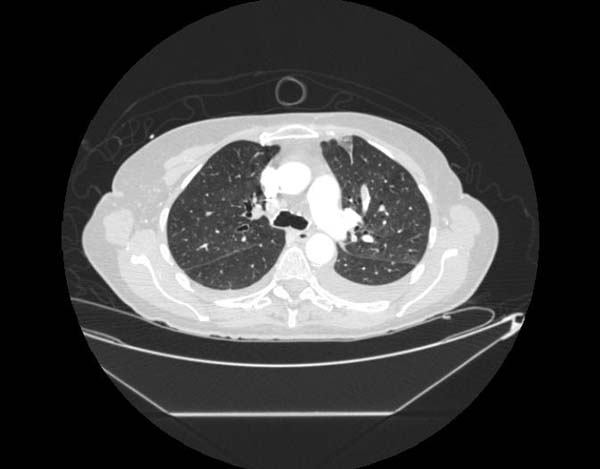 CT: Pulmonary Embolism and Infarction
 -
 CT: Pulmonary Embolism and Infarction


Case Study #2
-
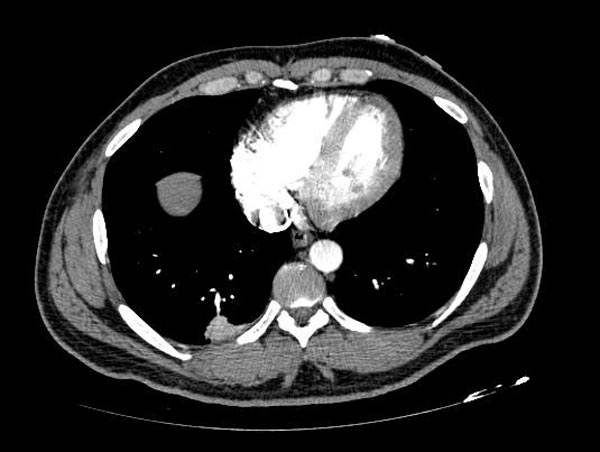 CT: Pulmonary Embolism and Infarction
 -
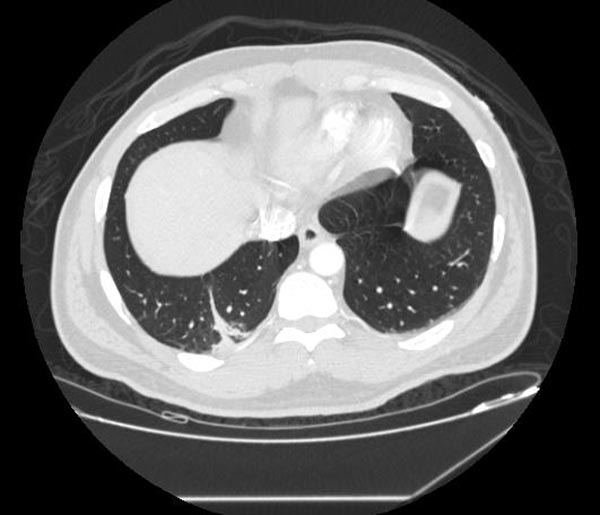 CT: Pulmonary Embolism and Infarction
 -
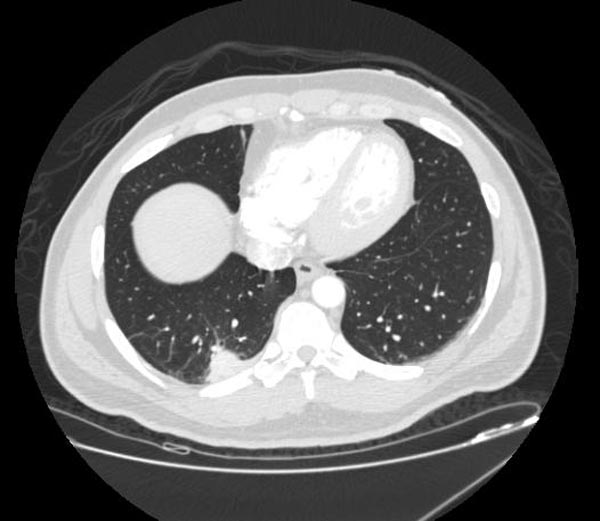 CT: Pulmonary Embolism and Infarction


Case Study #3
- A patient with shortness of breath:
Images shown below are courtesy of RadsWiki and copylefted.


Case Study #4
- A patient who had an acute RBBB;
Images shown below are courtesy of RadsWiki and copylefted.


Case Study #5
Chronic pulmonary embolism (PE) and Deep Venous Thrombosis (DVT): A 49 year old man complains of sudden onset of shortness of breath. Doppler ultrasound examination of the lower extremities revealed femoral vein thrombus. V/Q scan showed complete lack of perfusion of the right lung. A markedly dilated azygous vein is identified. Also, dilated azygous and hemiazygous veins are identified in the retrocrural space. There is acute thrombus within the common iliacs, external and internal iliac veins, and common femoral veins bilaterally. Above the confluence of the common iliac veins, the inferior vena cava is unapparent. Multiple collateral vessels are present around the aorta and the azygous and hemiazygous veins are prominent. The portal venous axis is patent.
(Images shown below are courtesy of Professor Peter Anderson DVM PhD, and published with permission. © PEIR, University of Alabama at Birmingham, Department of Pathology)


Case Study #6
- Central PE: 76 year old female had right lower lobe resection for stage II non-small cell carcinoma of the lung. Chest X-ray and CT images shown below.
- Chronic pulmonary embolism within the right pulmonary artery.
- Persistence of air within the decreased right pleural fluid collection with adjacent retraction of inflamed esophagus raises the suspicion for esophageal pleural fistula.
(Courtesy of Professor Peter Anderson DVM PhD © PEIR, University of Alabama at Birmingham, Department of Pathology)


Case Study #7
- Bilateral PE: A 74 year old male with recently diagnosed diabetes mellitus who presents with left sided chest pain and abdominal pain with a 50 pound weight loss.
The scan is performed to evaluate for occult malignancy. The patient has an apparent pulmonary embolus. Thoracoabdominal CT findings are as follow:
- Bilateral pulmonary thromboemboli involving both upper and both lower lobe pulmonary arteries, greater on the right side.
- Wedge shaped, pleural based opacities in the left upper lobe which may represent pleural effusions are probably related to the emboli.
- Dilated right ventricle. This may also be related to the pulmonary emboli.
- No signs of mass or lymphadenopathy.
- No evidence of malignancy or other significant abnormality within the abdomen or pelvis.
- Incidental findings included small calcification in the right adrenal gland, small left renal cyst, and enlarged prostate gland.
{Images shown below are courtesy of Professor Peter Anderson DVM PhD, and published with permission. © PEIR, University of Alabama at Birmingham, Department of Pathology)


Editor-In-Chief: C. Michael Gibson, M.S., M.D. [1] The APEX Trial Investigators; Associate Editor(s)-in-Chief: Cafer Zorkun, M.D., Ph.D. [2]; Rim Halaby, M.D. [3]